Colour gel flash photography uses transparent coloured filters placed over speedlights and studio strobes to add dramatic colour to photographs. From vivid cyberpunk neon portraits to subtle colour-corrected ambient blends, gels are one of the most versatile and affordable tools in the lighting photographer's kit. This guide covers gel types, colour theory, lighting setups, camera settings, and creative techniques for portrait, wedding, and editorial photography.
Types of Colour Gels
Creative/Effect Gels
Saturated colour gels (red, blue, green, magenta, orange, purple) add dramatic colour to the light itself. These are used for creative portraits, fashion, music, and editorial work. They transform neutral backgrounds into vivid colour washes and colour-tint the subject from specific directions.
Colour Correction Gels (CTO/CTB)
CTO (Colour Temperature Orange) gels warm flash output to match tungsten/incandescent ambient light. CTB (Colour Temperature Blue) gels cool flash output. These are used to colour-match flash with ambient light in mixed-lighting environments — restaurants, hotel ballrooms, evening receptions — so the flash light blends naturally with the room's existing colour temperature.
Diffusion Gels
Not technically "colour" gels, but translucent diffusion sheets that soften the light output. Often stacked with colour gels to both colour and soften the flash simultaneously.
Colour Theory for Gel Photography
Complementary colour gel combinations produce the most striking results. Blue and orange (the cinematic standard), magenta and green, red and cyan — these pairs create visual tension and depth. Analogous combinations (blue and purple, red and orange) create harmonious, warm or cool colour fields. A single colour gel against a neutral or opposite-coloured ambient light produces the most dramatic contrast.
Basic Gel Lighting Setups
Two-Light Split Colour
Place two speedlights on opposite sides of the subject — one with a blue gel, one with an orange gel (or any complementary pair). Each light colours its side of the face/body. The subject is split between two colours, creating a dramatic, editorial look. Start with equal power on both lights and adjust to taste — one colour dominant, the other as accent.
Gelled Background
Point a gelled speedlight at a white or grey background wall. The light colours the entire background. Use a different-coloured or ungelled key light on the subject. This separates the subject (natural skin tones) from a vivid coloured background without needing coloured paper or paint.
Gelled Rim/Hair Light
Place a gelled speedlight behind the subject, aimed at the back of the head and shoulders. The coloured light creates a vivid rim outline — blue, magenta, or red glow around the edge of the subject. The key light remains ungelled for accurate skin tones. This is the most common gel technique in music, sport, and commercial portraiture.
CTO Ambient Match
In a tungsten-lit room (warm ambient), gel the flash with a full CTO to match the warm ambient colour. Set the camera white balance to tungsten. The flash and the ambient light now match — the flash blends invisibly with the room light. This is essential for wedding reception photography where the venue has warm lighting and ungelled flash creates blue-white patches on subjects.
Camera Settings
Manual mode for complete control. Set white balance manually — for creative gels, daylight or flash white balance preserves the colour intensity. For colour correction, match white balance to the corrected flash. Shutter speed controls ambient light brightness; flash power controls gel light brightness. Darken the ambient (fast shutter, low ISO) to make the gels pop against a dark background, or let ambient contribute for a blended look.
Gel Flash for Weddings
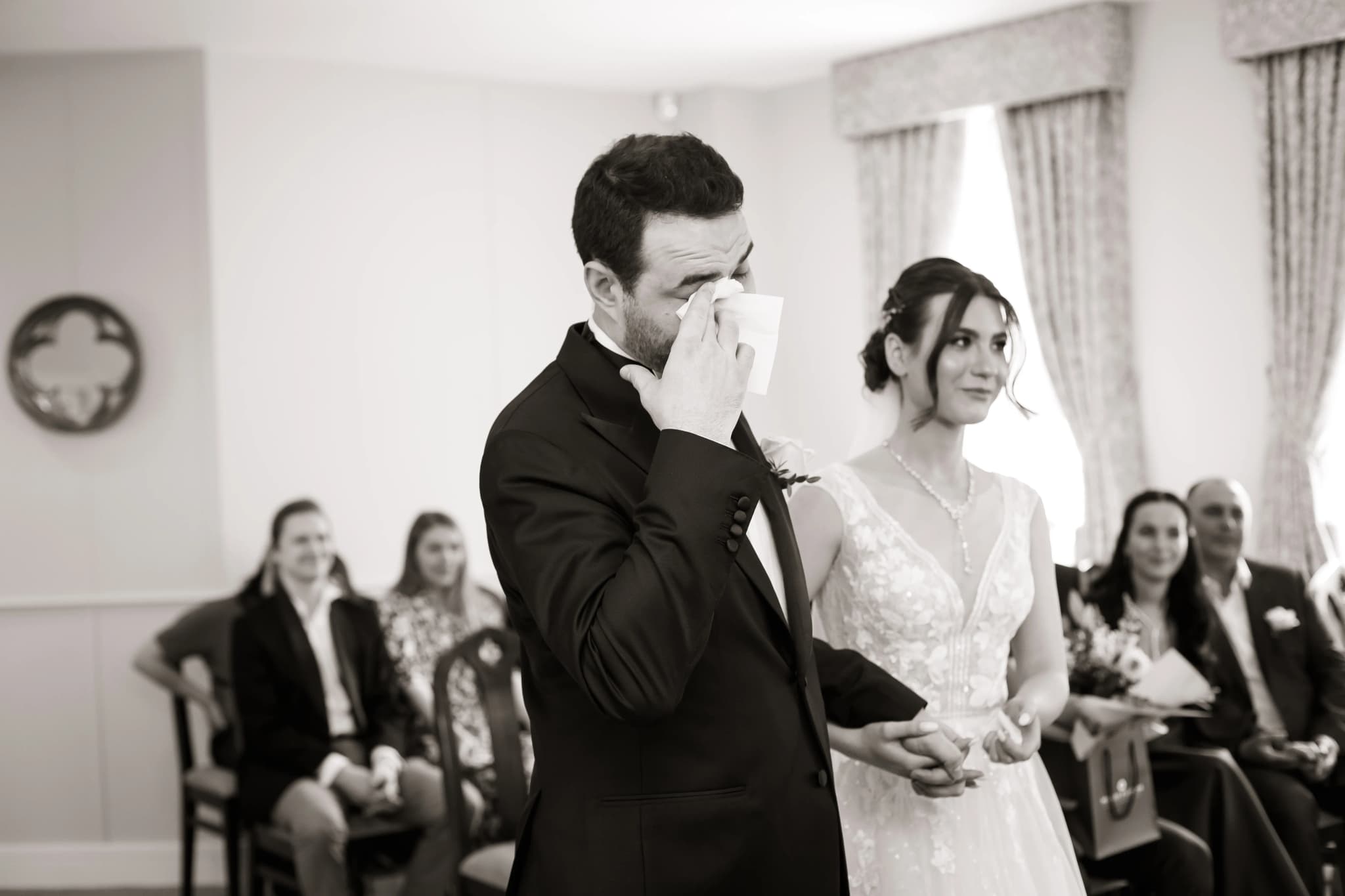
Beyond colour correction, gels add creative drama to wedding portraits. Place a magenta-gelled speedlight behind the couple as a rim light during twilight portraits. Use a gelled flash on the dance floor — blue and magenta gels create a nightclub atmosphere. For first dance photography, a gelled backlight behind the couple adds colour and depth without disrupting the moment (off-camera, triggered wirelessly).
Practical Tips
- Gel attachment: Use gaffer tape, gel clips, or elastic bands. Rosco and Lee sell pre-cut gel packs designed for speedlights. Magnetic systems (MagMod) make swapping gels fast.
- Stacking gels: Layer two gels for deeper colour saturation. A double CTO creates a very warm, sunset-like light. Stacking creative gels mixes colours — blue + red = purple.
- Power compensation: Gels reduce light output by 1-2 stops (the colour filter absorbs some light). Increase flash power to compensate.
- Test and iterate: The interplay of gel colour, ambient light, and white balance is complex. Shoot test frames, review, and adjust. Tethered shooting makes this faster.
Colour gels transform a plain speedlight into a creative tool that paints with light. A £15 gel pack opens a world of colour that no filter or preset can replicate.
Colour, shaped by intention. See lighting techniques in the portfolio.