Engagement Photo Tips for Camera-Shy Couples in the UK
Camera shyness is one of the most common concerns couples raise when thinking about engagement photography. The worry takes various forms: that you will look awkward, that you will not know what to do with your hands, that you will freeze in front of the camera, that your partner — less camera-shy — will look natural while you look uncomfortable beside them. These concerns are understandable, extremely common, and largely solvable with the right approach.
This guide is written specifically for camera-shy couples, with practical strategies for making a session work even if neither of you is naturally comfortable being photographed.
Understand That Camera Shyness Is Normal
Most people are camera-shy. The feeling that you do not know how to be in front of a camera, that you look strange in photos, that your face does something odd when you know a lens is pointing at you — these are near-universal experiences. Professional models are trained to suppress this response. Everyone else has it to some degree.
A good engagement photographer has worked with camera-shy people for their entire career. They are not expecting you to arrive already knowing how to pose. The session is partly designed to work through the discomfort, not to begin with you already having overcome it.
Tell Your Photographer Before the Session
The single most useful thing a camera-shy person can do before an engagement session is tell the photographer explicitly. This sounds obvious, but many people are embarrassed to say it — they worry it makes them seem difficult or high-maintenance.
Photographers use different approaches with different couples. Knowing that one or both partners are camera-shy, a photographer may use more conversational, activity-based direction rather than static posed standing — movement consistently helps. They may position themselves further from the couple more often, so the lens feels less intrusive. They may front-load the session with direction-heavy work and gradually move toward more documentary observation as the couple relaxes. None of these adaptations are possible unless the photographer knows.
Motion Helps
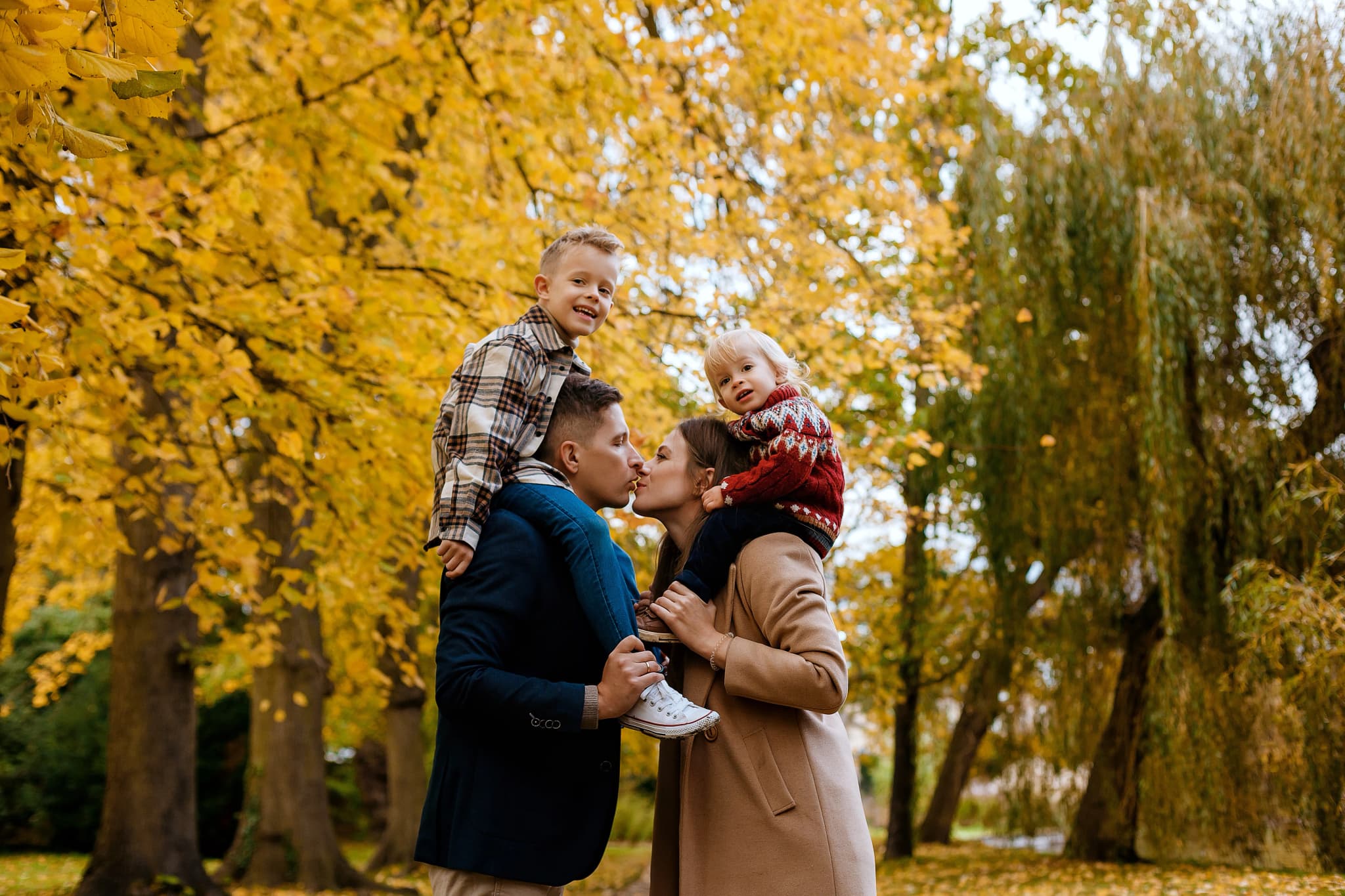
Camera-shy people almost always feel more comfortable when they are doing something than when they are standing still being looked at. Walking, sitting, picking flowers, exploring a space, throwing leaves in autumn — any activity that gives your body something natural to do removes the self-consciousness of standing still with nothing to focus on except being observed.
When choosing a location, consider whether it naturally lends itself to movement: a river path, a woodland trail, a meadow with features to walk toward. Settings that invite walking or casual interaction tend to produce better results for camera-shy couples than those that require holding a position.
Interact with Your Partner, Not the Camera
The most common mistake camera-shy people make is directing their attention at the camera — they look at the lens, think about the lens, try to manage their expression for the lens. This creates the exact stilted tension you are trying to avoid.
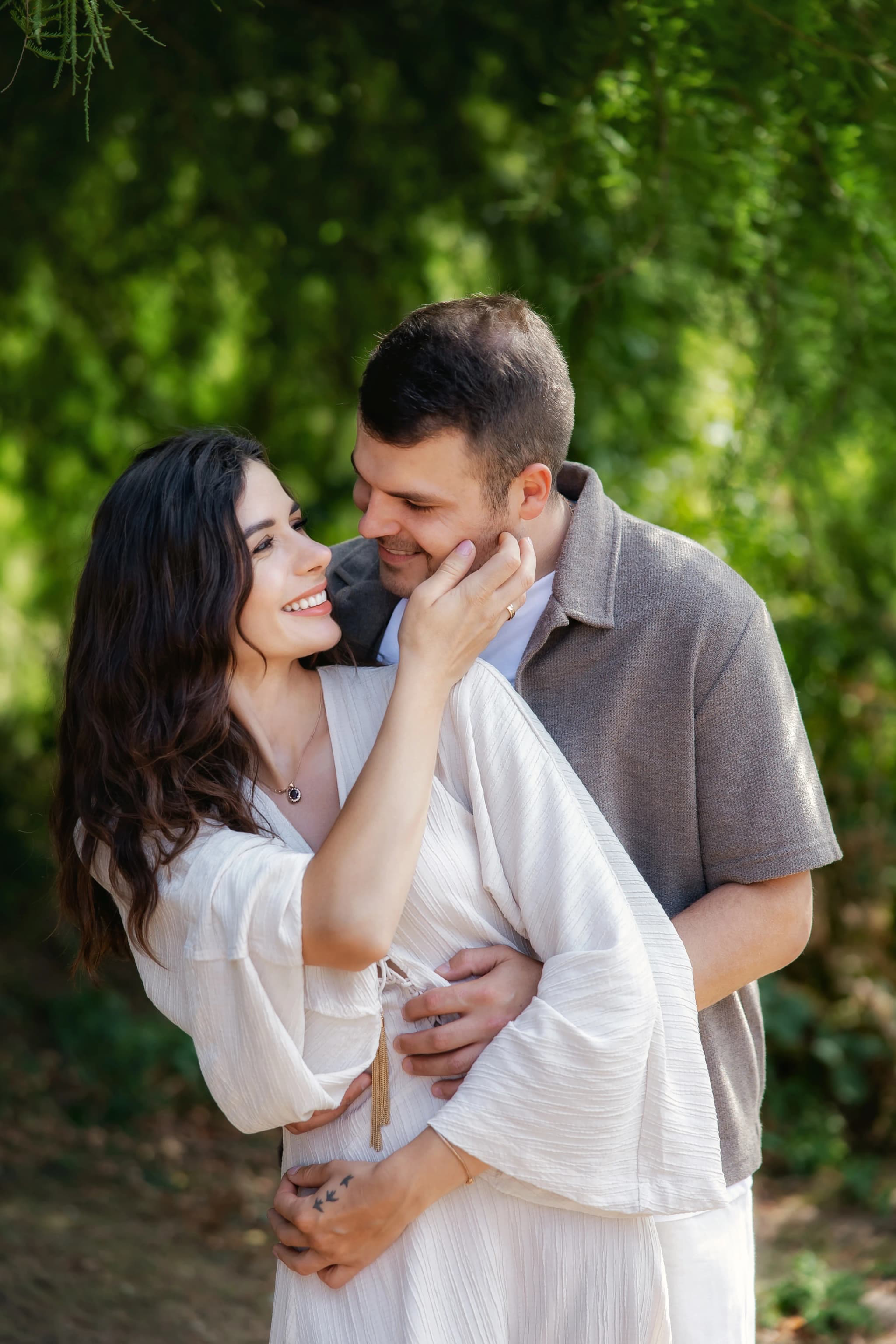
Instead, direct all your attention to your partner. Look at them, not the camera. Talk to them. React to what they say. Respond to their physical presence. When you are genuinely focused on another person, self-consciousness recedes and the photographer simply records what is there.
Photographers will often give you prompts specifically designed to redirect your attention to each other: "tell your partner one thing that made you fall for them," "describe your favourite holiday together," "what were you doing on the day you got engaged." These prompts are not arbitrary — they consistently produce authentic interaction and genuine expression.
The Warm-Up Effect
Even for very camera-shy couples, something shifts partway through a session. Once the initial strangeness wears off, once you have made each other laugh a couple of times, once the photographer has become a familiar presence rather than an observer — the session changes. Most couples describe feeling significantly more comfortable in the second half than the first.
This means that the worst thing you can do is cut a session very short. The images made in the first twenty minutes of an engagement session are almost never the strongest. Give the session enough time for the warm-up to happen.
Choose the Right Photographer
Some photographers work primarily in a direction-heavy, posed style. Others work more observationally, with lighter direction and more space for natural interaction. For camera-shy couples, the latter approach generally works better — you are less in the spotlight, less intensely directed, more free to simply be with each other while the photographer works around you.
Look at portfolio work and notice how the subjects appear. Do they look relaxed? Do the images feel natural or constructed? Does the photographer's personality feel warm and unhurried? Book a call before committing — you will learn a lot about whether you will feel comfortable with this specific person from a fifteen-minute conversation.