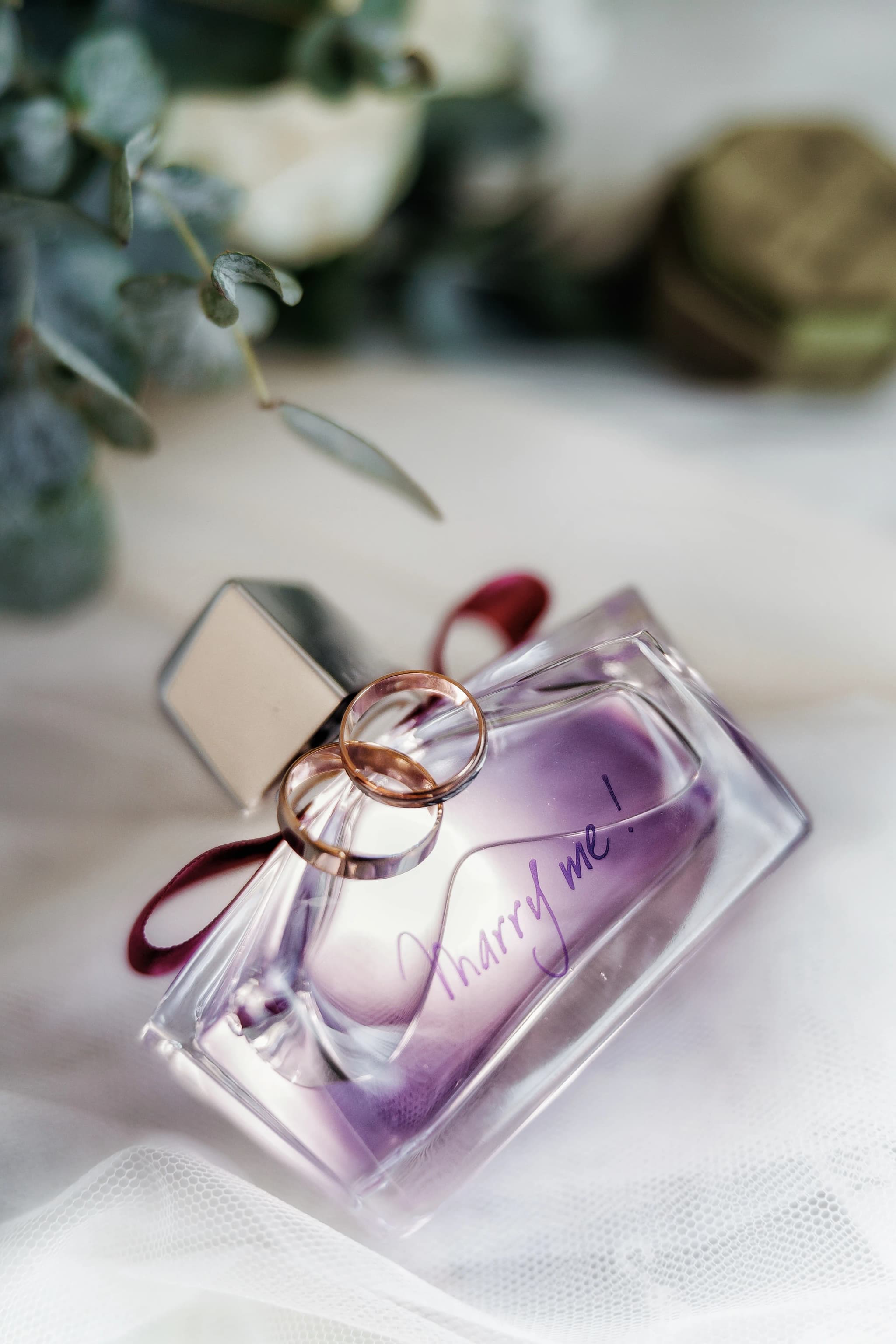
An engagement ring photograph is one of the first images a newly-engaged couple shares — on social media, in group chats, with family across the world. It deserves to look spectacular. Unlike wedding-ring photography, which focuses on paired bands and ceremony context, engagement ring photography centres on a single piece of jewellery that tells the story of a proposal. This guide covers everything from lighting and angles to backgrounds and styling, so every facet sparkles and every detail reads clearly.
Why Engagement Rings Are Difficult to Photograph
Engagement rings are small, reflective, and often contain transparent stones that refract light unpredictably. The challenges are real:
- Reflective metal: gold, platinum, and silver reflect everything around them — your camera, your hands, the ceiling. Controlling reflections is the first skill to master.
- Transparent stones: diamonds and gemstones refract and disperse light internally, creating fire and brilliance — but uncontrolled light creates blown-out white patches with no detail.
- Tiny size: a ring is typically 15-20mm across, requiring close focusing, precise depth of field, and steady technique.
- Depth of field: at close focusing distances, even f/5.6 gives razor-thin focus — the prong might be sharp while the band blurs.
Essential Equipment
Lens Selection
A dedicated macro lens (90mm, 100mm, or 105mm) is ideal — it focuses close enough to fill the frame with the ring and produces sharp, detailed images. If you don't have a macro, extension tubes on a 50mm or 85mm lens work well. Avoid wide-angle lenses — they distort ring proportions at close range.
Tripod
At macro distances, even tiny hand movements shift the focus point. A tripod eliminates this and allows for focus stacking — combining multiple images focused at different points for front-to-back sharpness.
Light Modifiers
A small softbox, a white piece of card for bouncing light, or a simple diffuser panel transforms harsh reflections into soft, controlled highlights. A piece of black card opposite the light creates contrast and definition in the metal.
Lighting Techniques for Engagement Rings
Window Light — The Simplest Beautiful Light
Place the ring near a north-facing window (or any window not receiving direct sunlight). The large, soft light source wraps around the metal, creating gentle gradients from highlight to shadow. Position a white card opposite the window to fill shadows and prevent the metal from going black on one side.
Backlight for Diamond Fire
Diamonds produce the most spectacular fire (rainbow refractions) when backlit. Place the light source behind the ring, slightly above, so light enters the stone from behind and refracts outward toward the camera. The stone becomes a prism, throwing colour in every direction. Expose for the highlights to preserve the rainbow effect.
Side Light for Metal Texture
If the ring has engraving, brushed finishes, or textured details on the band, side light at a low angle reveals these features. The light rakes across the surface, creating shadows in every indentation and highlighting every ridge.
Dark Field Lighting for Drama
Place the ring on a dark background (black velvet, dark slate) and light it from the sides with narrow light sources. The ring and stone glow against a completely dark background, creating a jeweller's catalogue look — dramatic, precise, luxurious.
Creative Placement and Styling
The environment around the ring tells the engagement story:
- On a flower: balance the ring on a rose petal, a peony bloom, or a stem. The organic texture contrasts beautifully with the geometric precision of the metal and stone.
- On a book: an open book — perhaps a literary favourite of the couple — with the ring resting on the spine or in the gutter between pages.
- In the ring box: the open jewellery box with the ring inside, perhaps on a textured surface like marble, wood, or fabric.
- On skin: resting on a hand, a finger, a wrist. Engagement ring photos often include the person wearing it — the hand extended, the ring catching light.
- Flat lay context: the ring surrounded by proposal elements — the champagne cork, a handwritten note, confetti, the restaurant menu, a boarding pass from the trip where it happened.
- In nature: balanced on a mossy stone, a lichen-covered branch, a seashell. Natural textures provide organic contrast to the precision of the jewellery.
Camera Settings for Sharp Ring Detail
- Aperture: f/5.6 to f/11 for maximum sharpness front to back. At f/2.8 macro, only a sliver of the ring will be in focus — beautiful for artistic shots, but impractical for showing the full ring clearly.
- ISO: as low as your tripod and light allow — ISO 100 or 200 for maximum detail and zero noise.
- Shutter speed: on a tripod with a remote trigger, shutter speed can be as slow as needed. 1/2 second or even 1 second is fine — the ring isn't going anywhere.
- Focus: manual focus with live view magnification. At macro distances, autofocus hunts and misses. Manual focus via the screen, zoomed in to the stone's facets, is precise and reliable.
- Focus stacking: for front-to-back sharpness at macro distances, take 3-5 images with the focus point shifted slightly each time, then merge them in Photoshop or Helicon Focus.
Common Mistakes to Avoid
- Dirty ring: fingerprints, lotions, and dust are invisible to the naked eye but glaring at macro magnification. Clean the ring with a microfibre cloth before shooting.
- Cluttered background: the ring is small — any background clutter competes for attention. Simplify ruthlessly.
- Camera reflection in metal: at macro distances, the camera body reflects clearly in polished metal. Use a longer focal length, angle the ring slightly, or use a lens hood to minimise the reflection.
- Blown-out stone: diamonds are bright — spot meter on the stone's highlights, not the shadows, to preserve detail in the sparkle.
- Over-editing: heavy saturation, excessive contrast, and over-sharpening make rings look artificial. The stone and metal are naturally beautiful — editing should enhance, not replace.
Phone Photography Tips for Quick Social Sharing
Not every engagement ring photo needs a macro lens and tripod. For the spontaneous post-proposal shot:
- Find the brightest natural light source and angle the ring toward it.
- Tap the ring on the phone screen to focus, then hold the exposure (long press on most phones) to lock it.
- Use portrait mode if available — it simulates depth of field and blurs the background.
- Clean the ring and your phone's camera lens before shooting.
- Try different angles — straight down from above, 45 degrees, and nearly level with the ring.
Stunning detail photography — every facet, every inscription, every sparkle preserved beautifully.
Macro detail work that captures the craftsmanship and emotion behind your most precious jewellery. See detail gallery and enquire.