What to Expect from an Engagement Photography Session
If you have never had a professional photography session before, the prospect of an engagement shoot can feel slightly mysterious — even vaguely nerve-wracking. Most couples arrive wondering what they are supposed to do and how they are expected to behave. This guide answers those questions plainly so you know exactly what to expect before you arrive.
Before the Session: Confirming the Details
In the days or week before your session, your photographer should confirm the meeting point, time, and any specific notes about the location or what to bring. This is also the moment to communicate anything they should know: if one partner is particularly camera-shy, if one of you has a physical limitation that affects movement, if there are animals or children joining the session. The more context your photographer has, the better they can adapt their approach.
Most photographers will also ask for outfit details before the session, as this helps them plan which areas and lighting conditions will complement what you are wearing. If you have questions about whether your outfit choices will work together or against the setting, this is the right moment to ask.
Arriving at the Location
Arrive a few minutes before the agreed time, but do not panic if you are slightly late to a location — most photographers build buffer time. Arriving at the meeting point is not the same as the session beginning; photographers typically spend a few minutes walking the location, assessing the light, and letting you settle into the environment before any actual shooting begins.
This brief settling period is valuable. Your photographer will probably be talking to you about the session structure, pointing out locations they plan to use, making general conversation. This is deliberate — it loosens the formality of the situation and gives both of you a chance to be human beings together before the camera appears.
The Opening Moments
The first ten to fifteen minutes of a session are almost always the most awkward. This is completely normal. Both partners are conscious of the camera, unsure of where to put their hands, uncertain whether their expressions look natural. A good photographer expects this and does not measure the session by what happens in these early minutes.
Photographers use different techniques to move through this initial stiffness. Some use very direct direction — telling you exactly where to stand, how to hold each other, where to look — to give you something specific to do while your nervous energy settles. Others take a more conversational approach, staying mobile and photographing from various angles while you interact with each other rather than the camera. Neither approach is better; it depends on the photographer's style and your personality.
Direction During the Session
You will receive direction from your photographer throughout the session. This typically includes where to stand or sit, which way to face, where to look, and sometimes specific prompts like "whisper something to each other" or "just walk slowly and don't look at me."
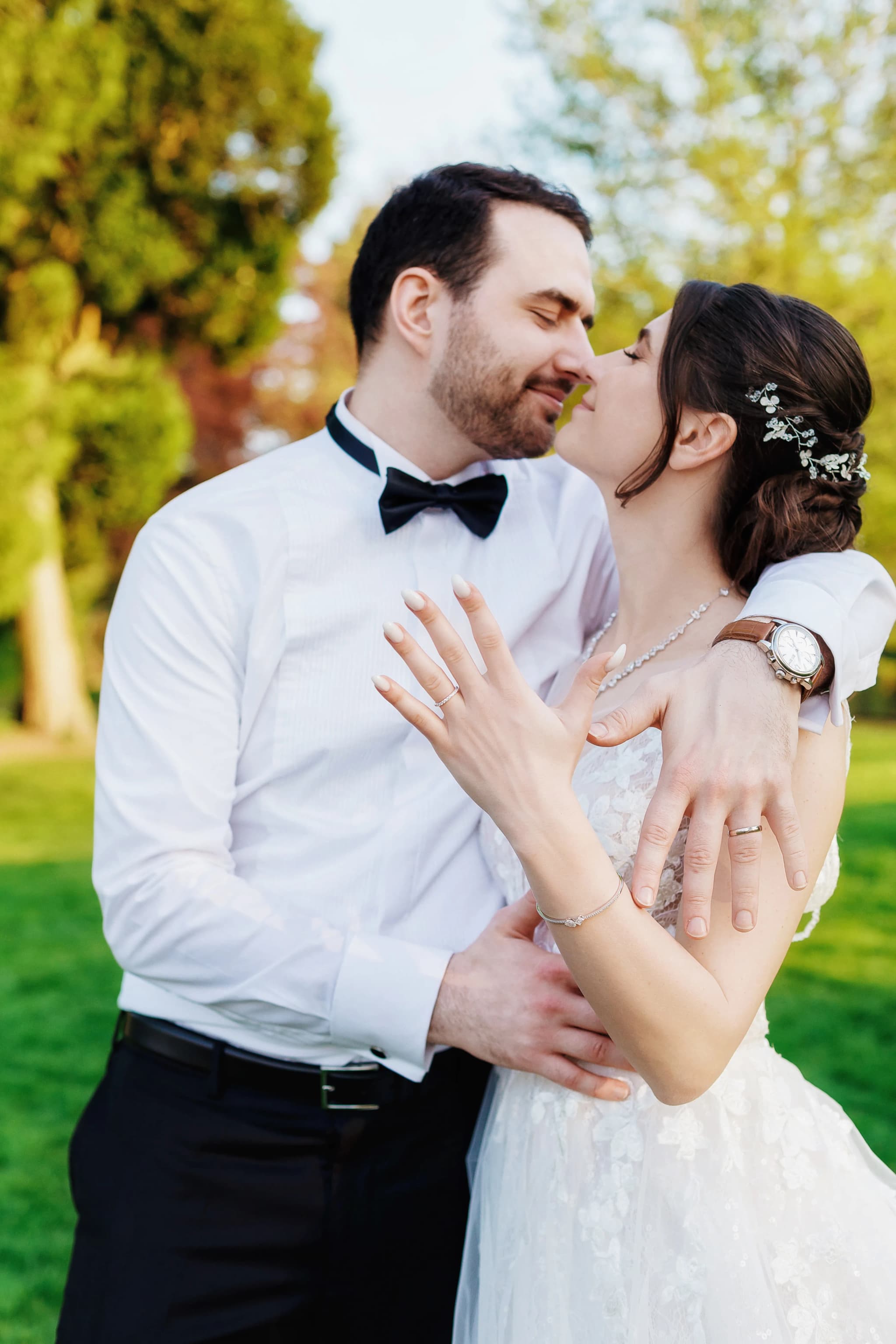
The purpose of most direction is to create a starting point — a position or interaction from which natural moments can emerge. When a photographer says "put your forehead against your partner's," they are not trying to make you look like a portrait subject; they are putting you in proximity that tends to produce the small authentic exchanges — the smile, the closed eyes, the quiet closeness — that make genuinely beautiful images.
You do not need to perform or maintain an expression on command. You just need to be there, present with your partner.
Moving Through the Location
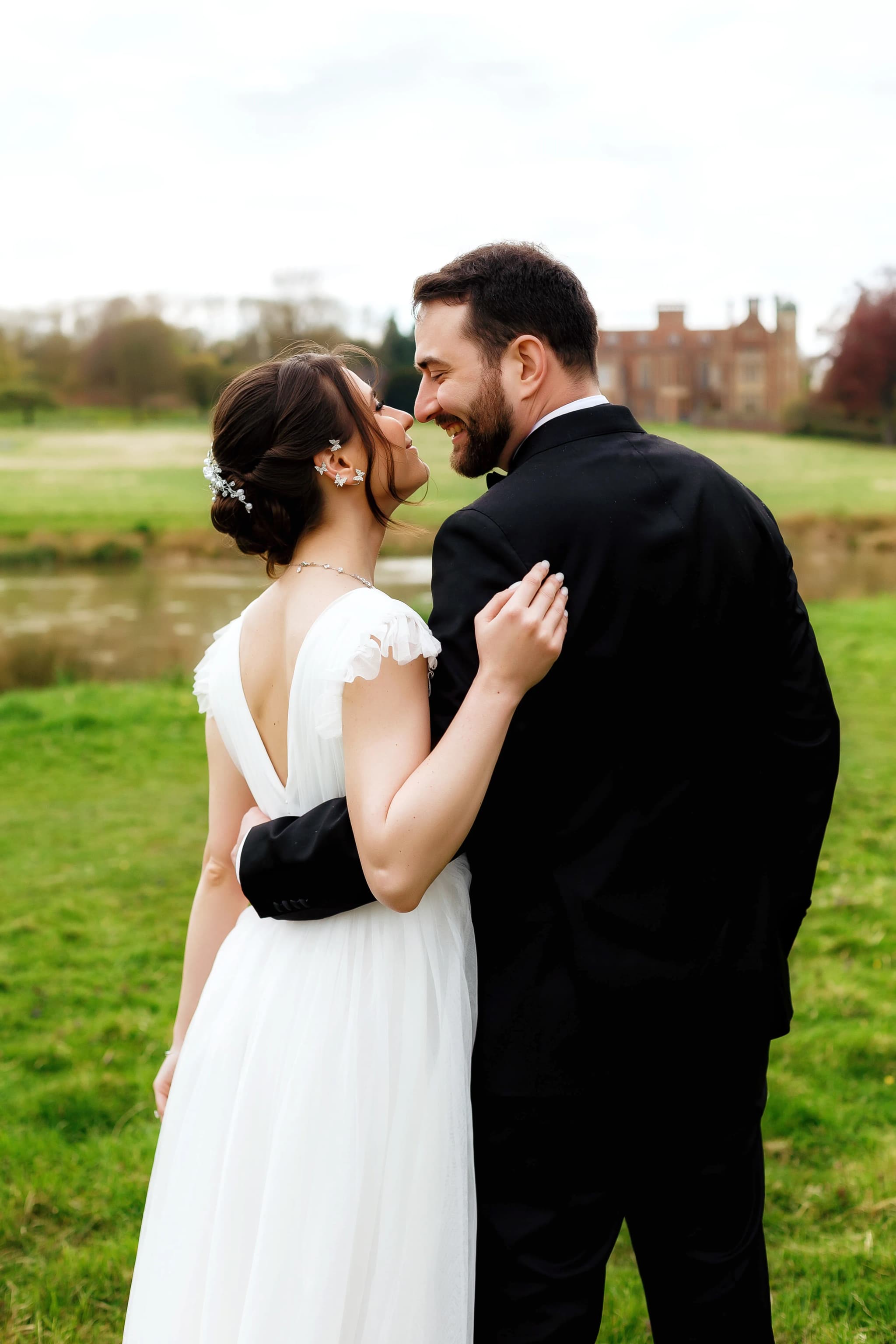
Most sessions cover multiple spots within a location — perhaps a wooded area, an open meadow, and a path beside water. Your photographer will lead the movement between these spots, and the walks between locations are often photographed as naturally as the posed moments — couples are usually more relaxed when walking and talking than when standing still expecting to be photographed.
Wear shoes appropriate for the terrain. If the location involves gravel paths, uneven ground, or grass, heels require thought — some photographers can work around them; others will suggest a second pair of shoes for certain areas.
How the Second Half Differs from the First
Almost every couple notices that the second half of a session feels different from the first. The self-consciousness that dominated the opening half has usually evaporated. The photographer no longer feels like a stranger. The dynamic has shifted from performance to something closer to shared experience.
The images from the second half of sessions are almost always the strongest. This is not a coincidence — it is why photographers give sessions enough time for this shift to happen rather than working within very tight windows.
After the Session
After the session ends, your photographer will go through several hundred frames and select the strongest images for editing and delivery. This typically takes two to four weeks. The delivered images arrive as a private online gallery and usually as high-resolution downloadable files.
The most common reaction couples report after receiving their gallery is surprise — not because the images are unexpectedly good (though they often are), but because the couple in the images looks more natural, more relaxed, more like themselves than they expected given how they felt during the session. This is almost always the case.
A Note on Expectations
Engagement photography is not about producing images of a perfect, styled couple standing beautifully in golden light, though those images exist within sessions too. It is about capturing the specific quality of two people together at this point in their lives — in love, recently engaged, beginning something significant together. The images that endure are the ones that feel true, not the ones that look flawless.