November Photography Tips for England: Making the Most of Late Autumn Light
November is consistently underestimated as a photography month in England, and I say that as someone who used to underestimate it myself. The popular windows for outdoor portrait photography — October's canopy colour, summer's long golden evenings — are well understood and heavily booked, which is exactly why November rewards those who plan around its particular qualities rather than treating it as a grey, leftover month squeezed between the two. The light is lower and more directional than at any other point in the year bar deep winter. Mist sits in the river valleys most mornings. The bare structure of trees becomes visible in a way it never is when they are in leaf. None of this is a consolation prize for missing autumn colour — it is a genuinely different and, in some ways, more forgiving set of conditions to work with. This guide is the practical version of what I tell clients who ask whether a November session is a good idea: what the light actually does through the month, which weather conditions to hope for and which to plan around, and which locations and approaches consistently deliver strong images once the leaves are down and the days have properly shortened.
Understanding November Light
By the start of November the sun rises around 7am and sets a little after 4:30pm; by the end of the month sunrise has slipped past 7:30am and sunset is close to 3:50pm, so the usable daylight window shrinks by roughly forty minutes over the course of the month. That sounds like a constraint, and for scheduling purposes it is one, but it also means the sun barely climbs above a low, flattering angle all day. In June the sun is directly overhead for hours in the middle of the day, which is precisely the light photographers try to avoid for portraits — harsh shadows under eyes, squinting, contrast that is difficult to control. In November that problem largely disappears. Even a session booked for half past midday sits in light that would count as late-afternoon quality in summer.
Golden hour still exists in November, it just arrives earlier in the clock than most people expect. On a clear day in the second half of the month, the light takes on that warm, low, directional quality from around 2:30 or 3pm, and blue hour — the soft, cool, even light in the fifteen or twenty minutes after the sun has gone but before it is properly dark — follows at roughly 4pm. This compressed timeline means an afternoon session has to be planned with more precision than a June evening one, where there is a generous two-hour window either side of sunset to work with. I build a little buffer into November bookings for exactly this reason: arriving fifteen minutes late in July costs you nothing; arriving fifteen minutes late in November can cost you the light entirely.
Overcast Days Are Genuinely Your Friend
A common November weather pattern across the east of England is thin, high overcast — the sky bright rather than blue, the sun present but diffused evenly through a layer of cloud. Clients often message me anxiously when they check the forecast and see "cloudy" for their booked date, assuming it means disappointing photographs. In my experience it usually means the opposite. Overcast cloud acts as an enormous natural softbox, wrapping light evenly around a subject without the harsh directional shadows that full midday sun creates. For portraits, and especially for family groups and couples where several faces at different heights and angles all need to be lit consistently, this is close to ideal working light. Skin tones read smoothly, eyes do not need to squint, and there is no single hard shadow line to manage across a group.
The genuine risk with thick, low overcast rather than thin bright cloud is flatness — images that read as grey and lifeless because there is no directional light at all to create dimension in a face or a scene. I manage this by exposing carefully for the subject rather than letting the camera average for the whole bright sky, and by positioning people so the brightest part of the sky sits slightly to one side rather than directly overhead, which reintroduces a gentle sense of direction and shape even under a fully clouded sky. Colour choices help too — muted, richer tones photograph with more presence under flat November cloud than pale pastels, which can look washed out against a grey sky.
Mist and Fog: The Exceptional Condition
November mornings along river valleys and low-lying ground regularly produce mist, sometimes light and burning off within an hour, sometimes thick and settled well into mid-morning. Mist behind a portrait subject does something no other condition achieves — it separates the person from the background, softens distracting detail into a pale wash, and gives the whole image an ethereal, almost painted quality. It is, without question, the single most requested effect I get asked about for November sessions, and for good reason: a handful of misty-morning frames from a season will often become the images a family keeps coming back to years later.
The honest complication is that mist is genuinely unpredictable and cannot be booked to order. What can be done is anticipated with reasonable confidence. Radiation fog — the type that forms in low ground overnight and lingers into the morning — tends to develop on still, clear, cold nights, so checking the forecast the evening before a session gives a fair idea of whether the following morning is likely to deliver it. Low-lying ground near the Cam, the water meadows around Grantchester, the fen edges out towards Wicken, and the river paths around Ely are all places I watch closely through November for exactly this reason. If a client has some flexibility on timing, I will often suggest holding a session loosely for a forecast-favourable morning rather than fixing a date weeks in advance and hoping.
Fallen Leaves and the Bare-Branch Aesthetic
By November, most of the colour that sat in the canopy through October has come down to the ground. Rather than treating this as a loss, I treat it as a change of subject. A woodland floor carpeted in fallen gold, copper, and rust-brown leaves has a beauty of its own, and in some ways it is more useful to me as a photographer than peak canopy colour, because it gives a rich, textured foreground and pathway to work with without competing visually with the people standing in the frame. Colour overhead can be lovely but it also fights for attention; colour underfoot supports the subject instead.
The window for a good leaf carpet is weather-dependent and shorter than people expect. After heavy rain and wind the leaves quickly turn sodden, dark, and slippery underfoot rather than photogenic. A dry spell following the main leaf fall can preserve good colour on the ground for a couple of weeks, so I generally check a location in person, or ask a local contact to, in the day or two immediately before a session that is depending on this effect. Once the leaves have gone entirely, the bare branch structure of the trees becomes the subject in its own right — a genuinely different, more graphic and architectural look that works particularly well for couples and for family portraits where I want the composition to feel calm and uncluttered rather than busy with foliage.
Planning a November session
Because so much of November's best light — mist, low golden hour, a fresh leaf carpet — is weather-dependent, I keep a short list of alternative dates whenever I book a November shoot, so we can shift a day or two if conditions turn out to favour it.
Ask about November availabilityWhat to Wear When the Days Turn Colder
Clothing for a November session needs to do two jobs at once: photograph well against a muted, largely brown-and-grey backdrop, and keep everyone warm enough to relax and enjoy themselves for the twenty to forty minutes a session usually runs. Deep, rich colours — forest green, burgundy, rust, charcoal, camel, and warm grey — sit beautifully against bare branches and a leaf-strewn path, far more so than they would against high summer greenery. Avoid stark white, which can look cold and flat under November's frequent overcast, and avoid thin, single-layer outfits; genuine cold is the enemy of natural expressions, and a family who is shivering does not look relaxed in photographs no matter how skilled the direction.
Coats and scarves are not something to hide before the camera comes out — they are texture and colour that add real interest to an image, and I actively encourage clients to keep them on rather than removing them "for the photo" and then standing there cold. Wellies or sturdy boots are genuinely useful for anyone with young children, since a leaf-carpeted or misty path after recent rain is often muddy underfoot, and children in appropriate footwear are children who can move and explore rather than being steered constantly away from puddles.
Where November Photography Works Well — and Where It Needs More Care
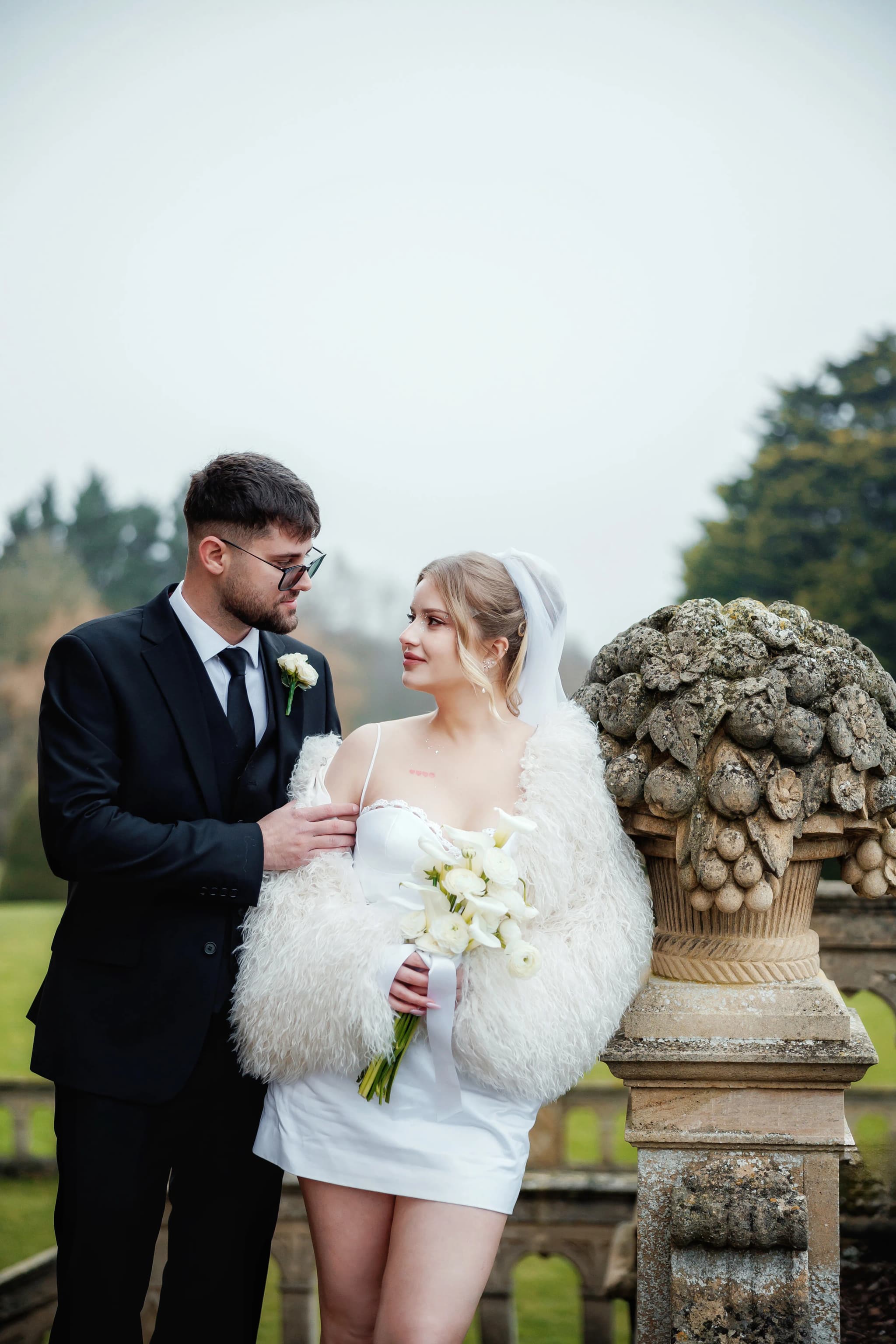
November suits woodland sessions that lean into the bare-branch, low-light aesthetic rather than chasing colour that has already gone. It suits misty morning sessions along the river, and it suits formal garden or estate settings, where clipped hedges and structured planting look just as sharp without leaves as with them, sometimes more so. It also suits urban and architectural portrait work, where shorter daylight hours and moodier skies give a very different, more atmospheric backdrop to Cambridge's streets and courtyards than the same locations offer in bright summer light. Overcast, midday sessions in open parkland are reliably strong throughout the month, since the light stays soft and even for hours rather than only around the edges of the day.
What needs more care: any session planned around canopy colour that is likely to have already fallen by the date booked, and sessions in fully open, exposed locations on a cold, windy day, where genuine physical discomfort shows through in expressions and body language no matter how the light is behaving. I also build in extra margin around anything scheduled for the very end of the month, since the daylight window by late November is tight enough that a session running even slightly over time can run straight into failing light. For families with young children or babies, I tend to favour earlier afternoon slots in November specifically because there is so much less flexibility later in the day than there would be at almost any other time of year.
November rewards a bit more planning than the more obviously photogenic months either side of it, but the results — low warm light in the early afternoon, mist over the water meadows, a gold-and-copper leaf carpet, or the quiet architectural calm of bare branches against a soft sky — are genuinely distinctive, and often become the images a family remembers most fondly precisely because the season felt properly captured rather than avoided. If you are weighing up whether a late-autumn session in or around Cambridge would work for your family, couple, or newborn, get in touch and I can talk through timing, locations, and what November's conditions are likely to be doing around your preferred dates.