Outdoor Family Portraits in Summer: Getting the Best from the Season
Summer outdoor family portraits have a distinct visual quality — warmth, abundance, a certain ease that comes from long evenings and children who genuinely want to be outside. But getting that quality on purpose, rather than by accident, requires understanding a few things about light, timing, and how summer specifically affects a portrait session. This guide covers all of it.
The Light That Defines Summer Portraits
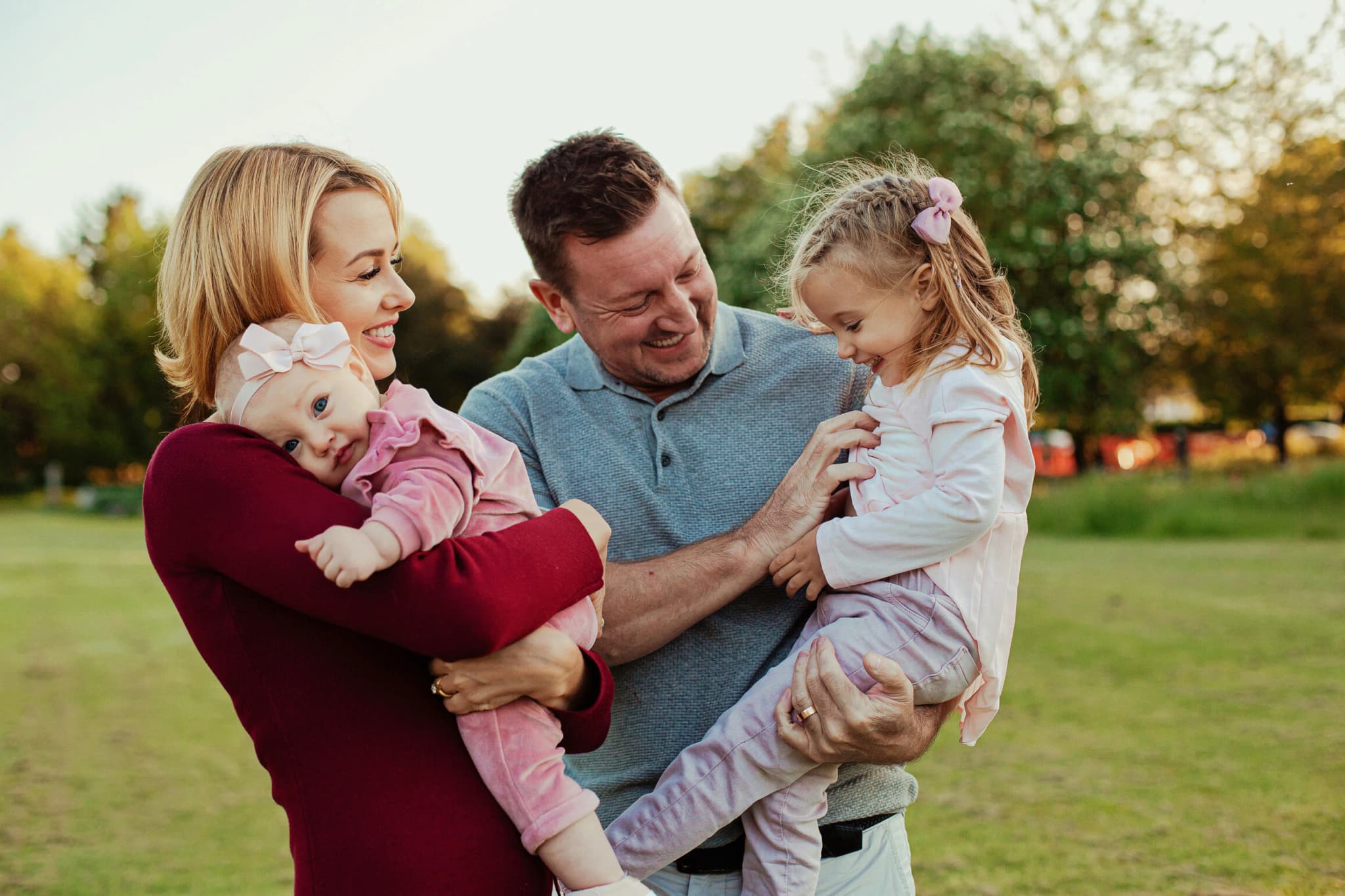
The defining characteristic of a summer outdoor portrait session is the light during golden hour — the period approximately 60 to 90 minutes before sunset. In June, this means light from around 8 pm onwards in England, with sunset around 9:20 pm. In July, the window shifts slightly earlier as days begin shortening, with golden hour around 7:45 pm.
This light is warm in colour (adding a golden cast to skin tones and landscapes), directional (coming from a low angle and creating depth through soft shadows), and soft in intensity (unlike the harsh overhead light of midday, which flattens faces and causes squinting). Portraits made in this light have a quality that is almost impossible to replicate in any other condition.
The practical implication: if you are booking an outdoor family session in summer, a late afternoon or evening slot is not a preference — it is a fundamental requirement for good results. A midday summer session in full sun will produce significantly inferior images to the same family, the same location, the same photographer at 7 pm.
Morning Light as an Alternative
For families who cannot do evening sessions — very young children who need to be in bed early, for example — early morning offers a genuine alternative. Between 6 and 9 am in summer, the light is equivalent in quality to evening golden hour: low, directional, warm. The world is also quieter in early morning, popular locations are less crowded, and the air temperature is still cool.
The practical challenge is coordination — getting a family with young children up, breakfasted, and dressed for a photography session by 7 am requires significant motivation. But families who have done it consistently say it was worth it. Some photographers prefer morning light specifically because children are typically at their freshest and most cooperative early in the day.
Choosing a Location for Summer Family Portraits
Summer gives you maximum location variety in England. The landscape is at its richest and most photogenic from late May through July. Key considerations when choosing a location:
Open parkland with mature trees is one of the most versatile summer portrait settings. The trees provide shade options during warmer periods, the open ground allows for movement and running children, and the combination of sky, grass and tree canopy creates a naturally rich environment at golden hour.
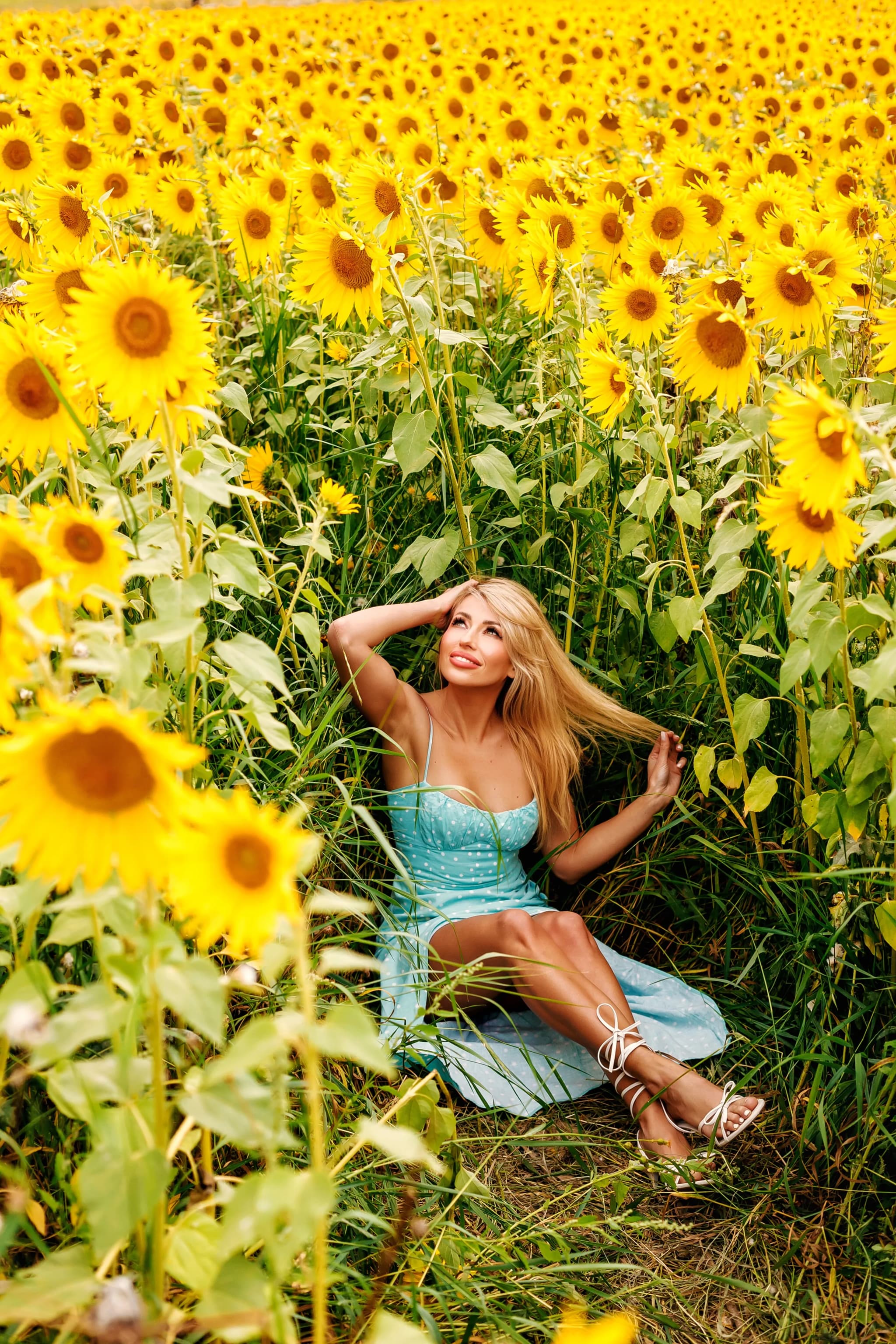
Meadow or field edges with long grass and wildflowers offer a romantic, textural quality that photographs particularly well in warm evening light. The movement of grass and flowers in a light breeze adds life to still images.
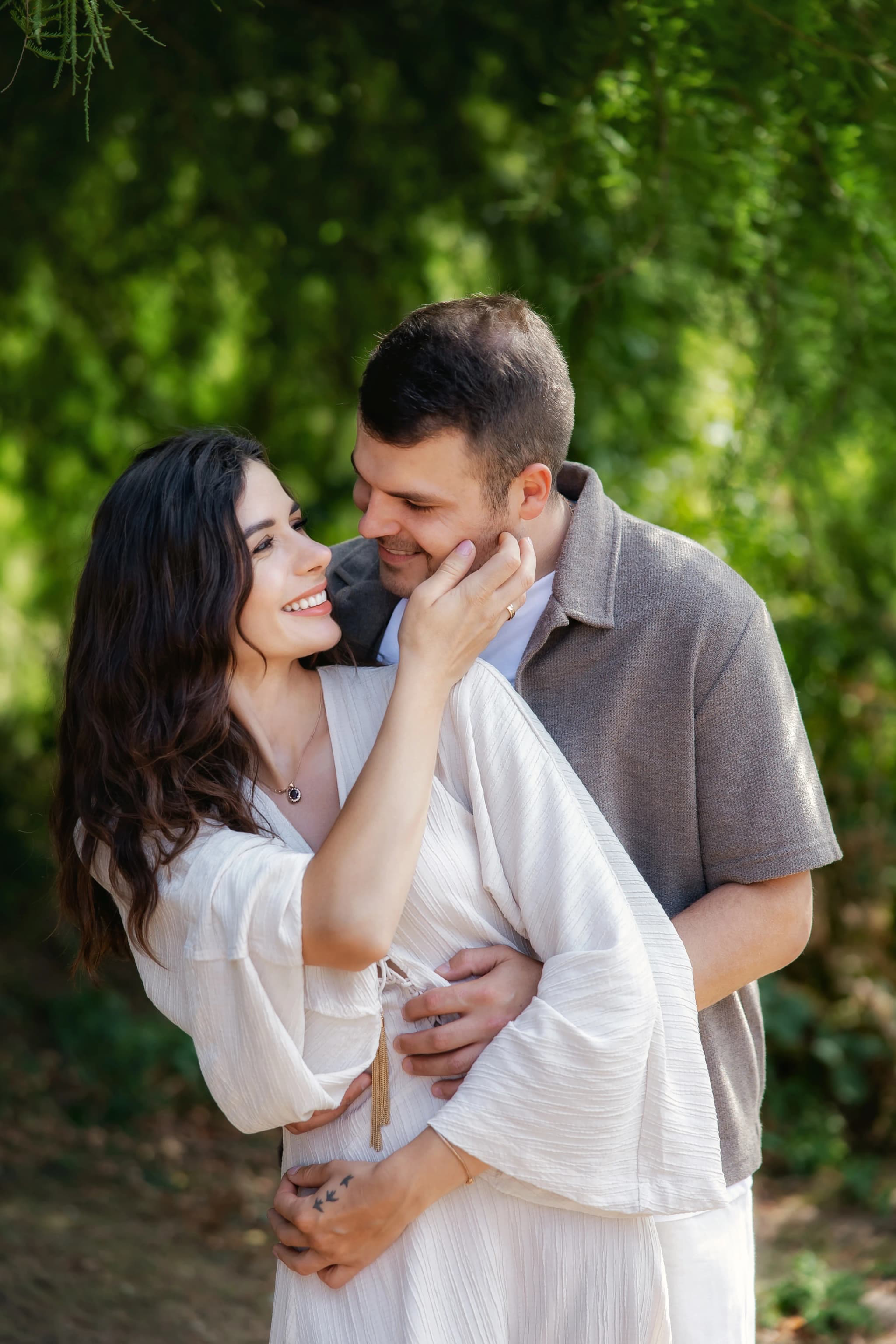
Woodland clearings provide filtered, dappled light that is usable throughout the day, not just at golden hour — making woodland the most light-forgiving location type in summer.
Riverside settings add reflective water, willows, and a horizontal compositional element that gives images a different quality from purely land-based settings.
Dressing the Family for Summer Outdoor Portraits
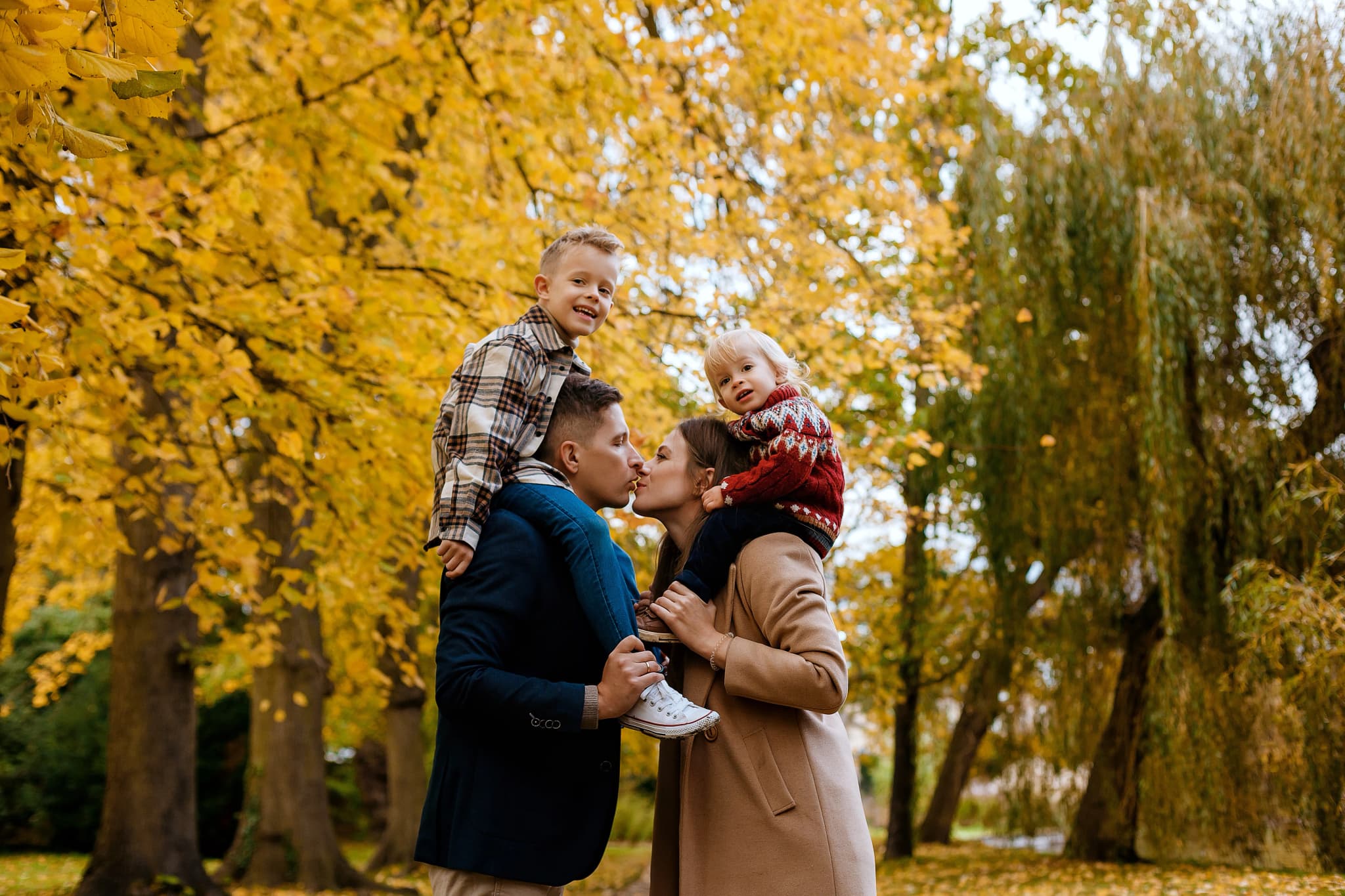
Summer outdoor portraits generally benefit from lighter, softer colours. The landscape is intensely green and saturated; clothing that competes with that creates visual noise. Clothing that complements it — warm neutrals, soft pinks, sage greens, cream, pale yellows — allows the subjects to read clearly against the background rather than blending in or clashing.
Avoid bright primaries. Red, bright blue, and neon colours punch too hard against summer greens and tend to dominate the image rather than sit within it. Black and white both work but require care — white can blow out in bright light; black can look heavy in warm golden tones.
Practically for summer: choose breathable natural fabrics. Children in synthetic materials on a warm evening will overheat and become uncomfortable, which shows directly in expressions and energy. Linen and cotton are ideal.
Managing Energy and Engagement in Summer
Summer evenings have a particular magic for children: the world outside is warm and alive, there are interesting things to find and touch and chase. The most effective approach for a family photographer working in summer is to channel this energy rather than suppress it.
Rigid posing rarely produces the best summer family portraits. The images that endure tend to be the candid ones: a child running through long grass, parents laughing at something unexpected, siblings chasing each other along a path. A photographer who creates a loose structure — a location, a general direction, a few suggested interactions — and then works within what naturally unfolds will consistently produce better results than one who directs everything.
For parents: resist the urge to manage your children too actively during the session. Children who are told to smile and stand still consistently look uncomfortable. Children who are allowed to be themselves — within reasonable limits — look like themselves.
What to Ask a Photographer Before Booking
When enquiring about a summer outdoor family session, five questions are worth asking specifically:
- What time of day do you prefer for summer sessions, and why?
- Which locations do you recommend for late June / July?
- What happens if the weather is bad on the day?
- How many edited images are included, and what is the delivery timeline?
- Do you offer prints or albums, or just digital files?
A photographer who answers these questions clearly and with genuine consideration is likely to approach the session itself with the same care. Summer outdoor family portraits done well are among the most valuable images a family can have — and the English summer, short as it is, provides exactly the right conditions.