Ring lights and beauty dishes are two of the most recognisable lighting modifiers in portrait and beauty photography — each producing a distinctive, flattering light quality that is immediately identifiable. Both create front-facing, wrap-around light that minimises texture and shadows on the face, but they achieve this through completely different mechanisms and produce distinctly different results. This guide compares both modifiers in depth and covers techniques for portrait, beauty, and fashion photography.
The Ring Light
How It Works
A ring light is a continuous or flash light source shaped as a hollow circle. The camera lens shoots through the centre of the ring. Because the light source encircles the lens, the light falls directly along the camera's axis — creating almost shadowless illumination on the subject's face. The hallmark of ring light photography is the distinctive circular catchlight in the subject's eyes — a ring-shaped reflection that is instantly recognisable.
Ring Light Characteristics
- Near-shadowless: Because the light comes from all around the lens axis, there are virtually no visible shadows on the face. This minimises texture — pores, wrinkles, and blemishes are softened by the even illumination.
- Distinctive catchlights: The ring-shaped reflection in the eyes is the defining aesthetic signature of ring light photography.
- Even facial illumination: Every plane of the face receives nearly equal light. The nose casts no visible shadow (or a very faint, perfectly symmetrical one directly behind it).
- Flat light: The lack of shadows means reduced depth and dimensionality. Ring light can make faces appear flatter — this is desirable for beauty work (where flawless skin is the goal) but less appropriate for dramatic portraiture.
Best Uses for Ring Lights
Beauty photography (makeup, skincare, cosmetics), YouTube and video work (even, flattering self-illumination), fashion headshots, close-up portrait work, and macro photography of small products. Ring lights are also widely used for social media content creation due to their simplicity and flattering output.
The Beauty Dish
How It Works
A beauty dish is a shallow, parabolic metal reflector (typically 40-65cm diameter) with a deflector plate in the centre that blocks direct flash from reaching the subject. The flash fires into the deflector, which bounces light outward to the inner surface of the dish, which then reflects it forward toward the subject. This double-bounce creates light that is harder than a softbox but softer than bare flash — a quality often described as "poppy" or "punchy" with a controlled, glamorous feel.
Beauty Dish Characteristics
- Contrast with softness: Unlike a softbox (which diffuses light evenly), a beauty dish produces light that transitions quickly from highlight to shadow — creating visible but controlled shadows that add depth and definition to facial features.
- Centre to edge falloff: The light is brighter at the centre and falls off at the edges, creating a natural spotlight effect that draws attention to the subject's face.
- Sculpting: The subtle shadows under cheekbones, along the jawline, and under the nose add three-dimensionality and definition — this is why beauty dishes are the modifier of choice for fashion and beauty editorial work.
- Catchlights: A beauty dish produces a round, soft-edged catchlight — similar to a softbox but with a brighter centre and a more defined shape.
Silver vs White Interior
A silver-interior beauty dish produces harder, more specular light with higher contrast and stronger highlights — ideal for dramatic fashion and beauty work. A white-interior beauty dish produces slightly softer, less contrasty light — more flattering for general portraiture and commercial work. Most beauty dishes also accept a fabric diffusion sock that softens the output further, making it closer to a softbox in quality.
Ring Light vs Beauty Dish: Direct Comparison
- Shadows: Ring light eliminates shadows. Beauty dish creates controlled, flattering shadows that sculpt the face.
- Skin texture: Ring light minimises it (ideal for beauty/makeup). Beauty dish reveals selective texture (cheekbone definition, jawline, contouring).
- Depth: Ring light produces flatter images. Beauty dish adds dimension and three-dimensionality.
- Catchlights: Ring light creates a distinctive ring. Beauty dish creates a soft circle.
- Mood: Ring light is clean, modern, commercial. Beauty dish is dramatic, editorial, glamorous.
- Versatility: Beauty dish works with additional modifiers (grids, socks, flags). Ring light is primarily a front-facing, single-purpose tool.
Positioning and Technique
Ring Light
Position the ring light directly in front of the subject at face height. The camera lens goes through the centre of the ring. Distance from subject: 60-120cm. Closer produces stronger illumination and more pronounced ring catchlights. Further away softens the light and produces a more natural look. For video, position the ring light behind the camera at the same height as the subject's face.
Beauty Dish
Position the beauty dish slightly above the subject's face, angled downward at 15-30 degrees. This creates a classic "butterfly" or "Paramount" lighting pattern — a small shadow under the nose with well-defined cheekbone shadows. Distance: 60-90cm for maximum impact. Add a reflector or second light below to fill under-chin shadows if needed. A grid attachment narrows the light spread for more dramatic, focused illumination.
For Wedding Photography
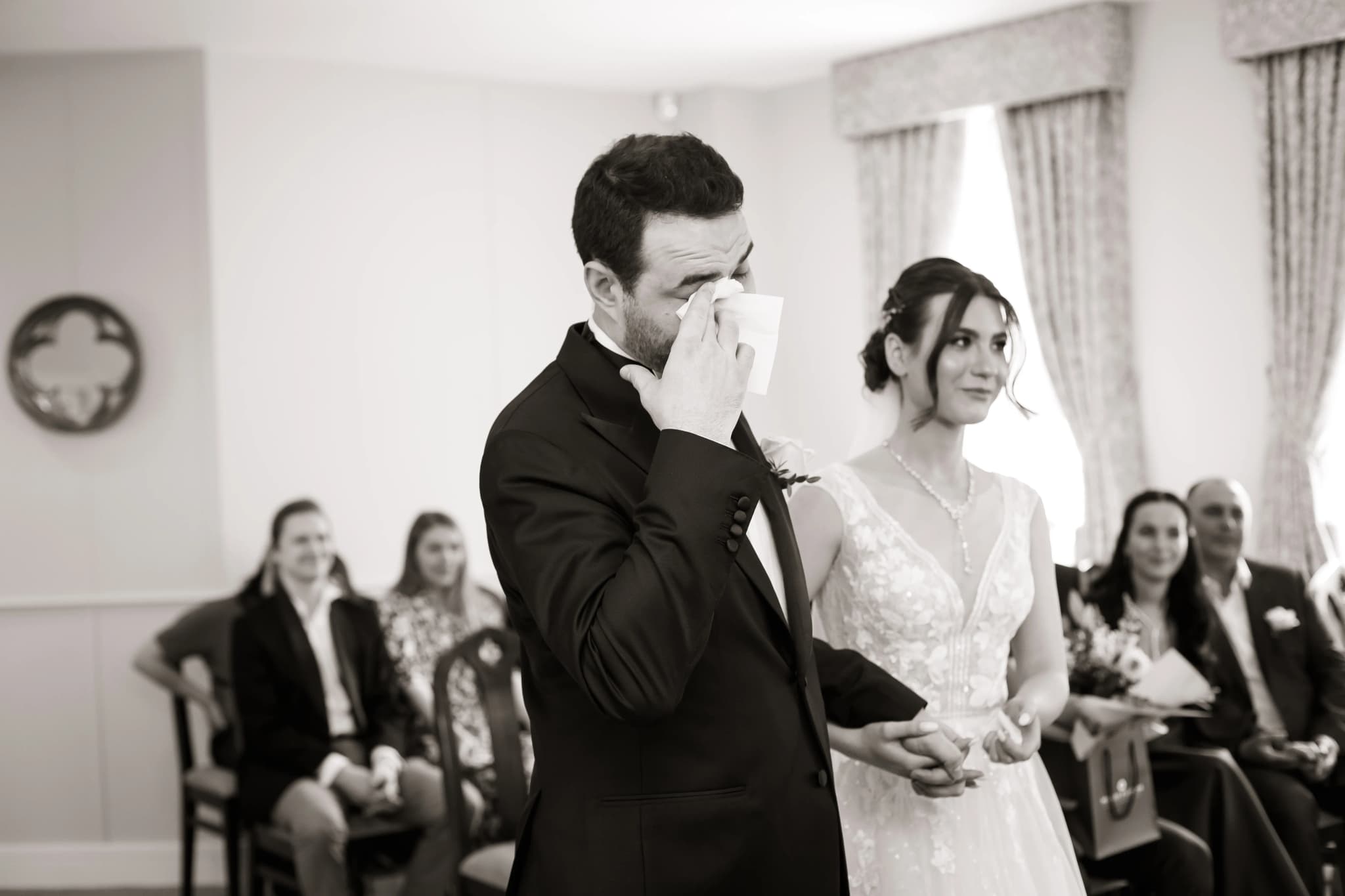
A portable beauty dish (collapsible versions exist) is invaluable for bridal portraits during getting-ready sessions — the sculpting light flatters and produces editorial-quality images in any room. Ring lights work beautifully for makeup detail shots, showing the application and finished result with flawless, even illumination. For the reception, neither modifier is practical on the dance floor — but for planned portrait sessions, these are among the most flattering tools available.
Ring light for flawless skin and clean catchlights. Beauty dish for sculpted glamour and editorial depth. Both are portrait essentials that produce looks impossible with any other modifier.
Light that flatters with intention. See lighting in the portrait portfolio.