Tilt-shift photography uses specialised lenses — or post-processing techniques — to control the plane of focus in ways impossible with regular lenses. The tilt function angles the focus plane, allowing selective sharpness across a scene that would normally be entirely sharp or entirely blurred. The shift function moves the lens parallel to the sensor, correcting perspective distortion. Together, these movements enable miniature effects, perfect architectural lines, and creative portraiture with a distinctive dreamlike quality. This guide explores both the optical principles and the practical applications of tilt-shift photography.
Understanding the Tilt Function
In a normal lens, the plane of focus is parallel to the sensor. Everything at the same distance from the camera is equally sharp. With the tilt function, the lens element angles relative to the sensor, tilting the focal plane according to the Scheimpflug principle.
Forward tilt (tilting the lens downward) angles the focal plane to follow a surface receding into the distance — a tabletop, a road, a garden path. This allows you to keep the entire surface sharp from foreground to background at wide apertures — something normally requiring f/16 or smaller.
Reverse tilt (tilting the lens upward or opposite to the scene) creates an extremely narrow band of focus in an otherwise blurred scene. This is the technique behind the famous "miniature" or "diorama" effect — real-world scenes that look like scale models because only a thin horizontal strip is in focus.
Understanding the Shift Function
The shift function moves the entire lens up, down, left, or right relative to the sensor. This corrects converging verticals — the effect where buildings appear to lean inward when photographed from ground level. Architectural photographers use shift lenses to keep vertical lines perfectly parallel, avoiding the wide-angle distortion that makes buildings look like they're falling backward.
In wedding photography, the shift function is valuable for photographing churches, manor houses, and tall venues without distortion — straight walls, parallel columns, symmetrical compositions.
The Miniature Effect — How It Works
The miniature or diorama effect exploits how the human brain interprets depth of field. When we see a photograph with an extremely narrow band of focus and heavy blur above and below, our brain assumes we're looking at something very small — because extreme background blur at close range is something we associate with macro photography. By applying this blur pattern to a real-world scene, we trick the brain into perceiving the scene as tiny.
The most effective miniature-effect images share these characteristics:
- High vantage point: shooting downward at 30-45 degrees mimics the angle at which we look at a model or diorama on a table.
- Small-looking subjects: people, cars, and buildings seen from a distance appear to shrink.
- Bright, saturated colours: miniatures and model sets are typically brightly painted — boosting saturation reinforces the illusion.
- The narrow focus band: applied horizontally, so a strip of the scene is sharp and everything above and below blurs.
Tilt-Shift in Wedding Photography
Venue Establishing Shots
A tilt-shift miniature treatment of the wedding venue shot from an elevated position — a hilltop, an upper window, a drone — transforms the venue into a charming diorama. The church, the gardens, the parked cars, guests arriving — all rendered in miniature. It's a unique, memorable opening image for an album.
Table Detail and Flat Lays
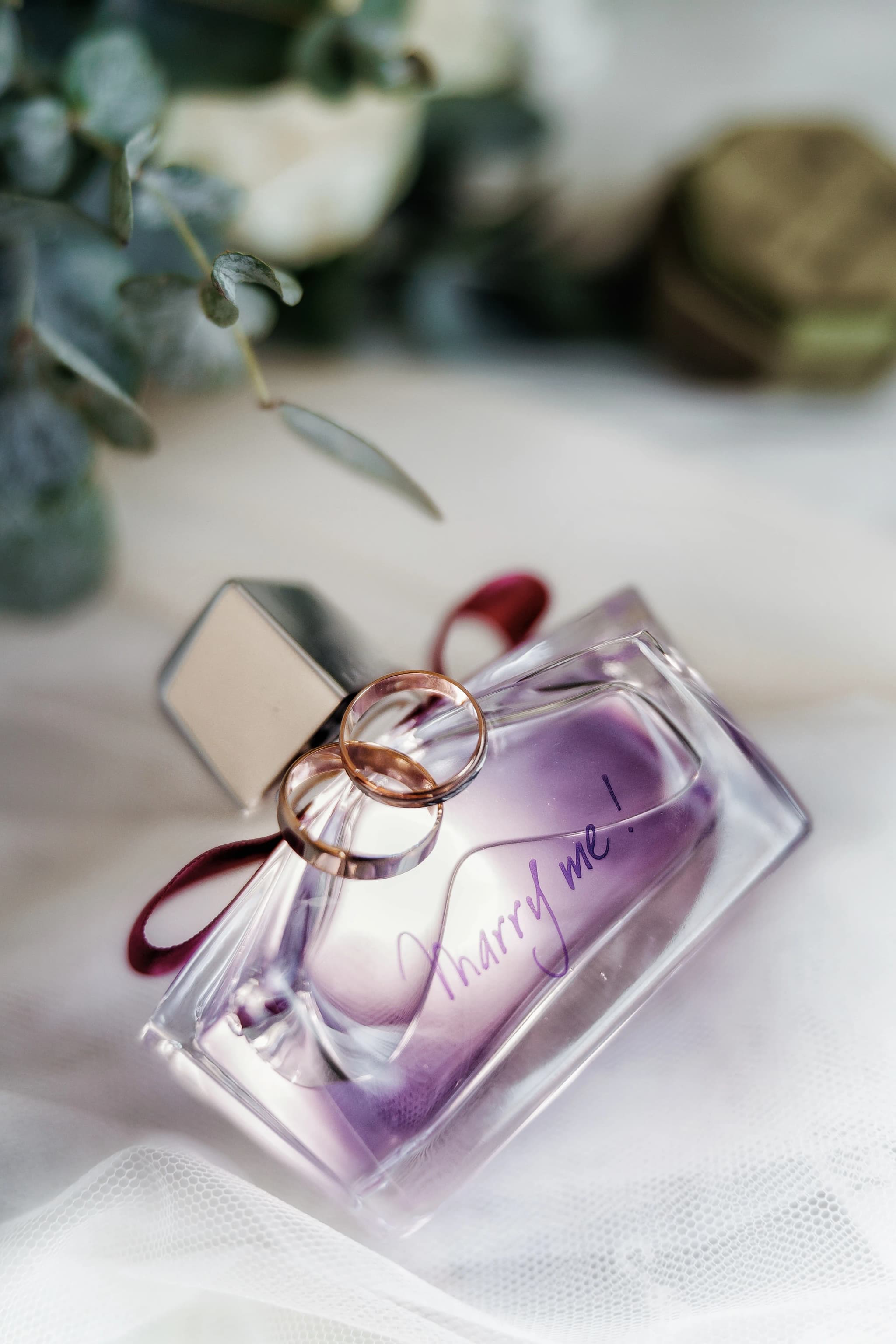
Using forward tilt, you can keep an entire table setting sharp from napkin to wine glass at f/2.8 — impossible with a regular lens. This is perfect for flat lay compositions of rings, stationery, flowers, and accessories, where every element needs to be sharp but you want that creamy wide-aperture rendering.
Architectural Corrections
When photographing churches, manor houses, or tall venues from ground level, the shift function keeps vertical lines straight. No more leaning buildings, no more converging columns. This produces architectural images worthy of magazine publication.
Creative Portraits with Selective Focus
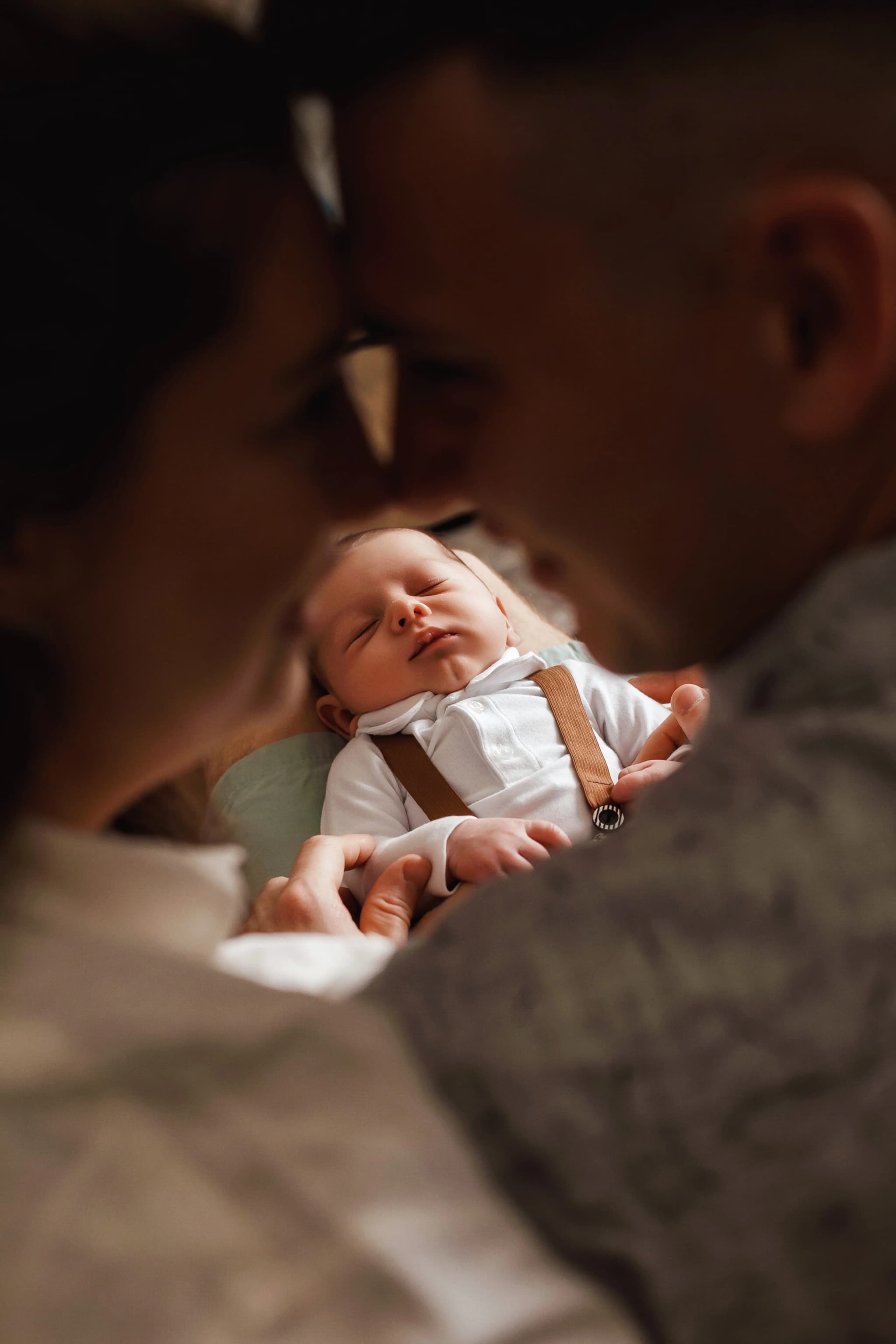
Using reverse tilt on a portrait, you can place a razor-thin band of focus across the subject's eyes while the rest of the frame — including the foreground and background — dissolves into ethereal blur. The effect is dramatic and surreal, keeping only the essential element (the eyes, the expression) sharp while everything else becomes abstract.
Ceremony Overview
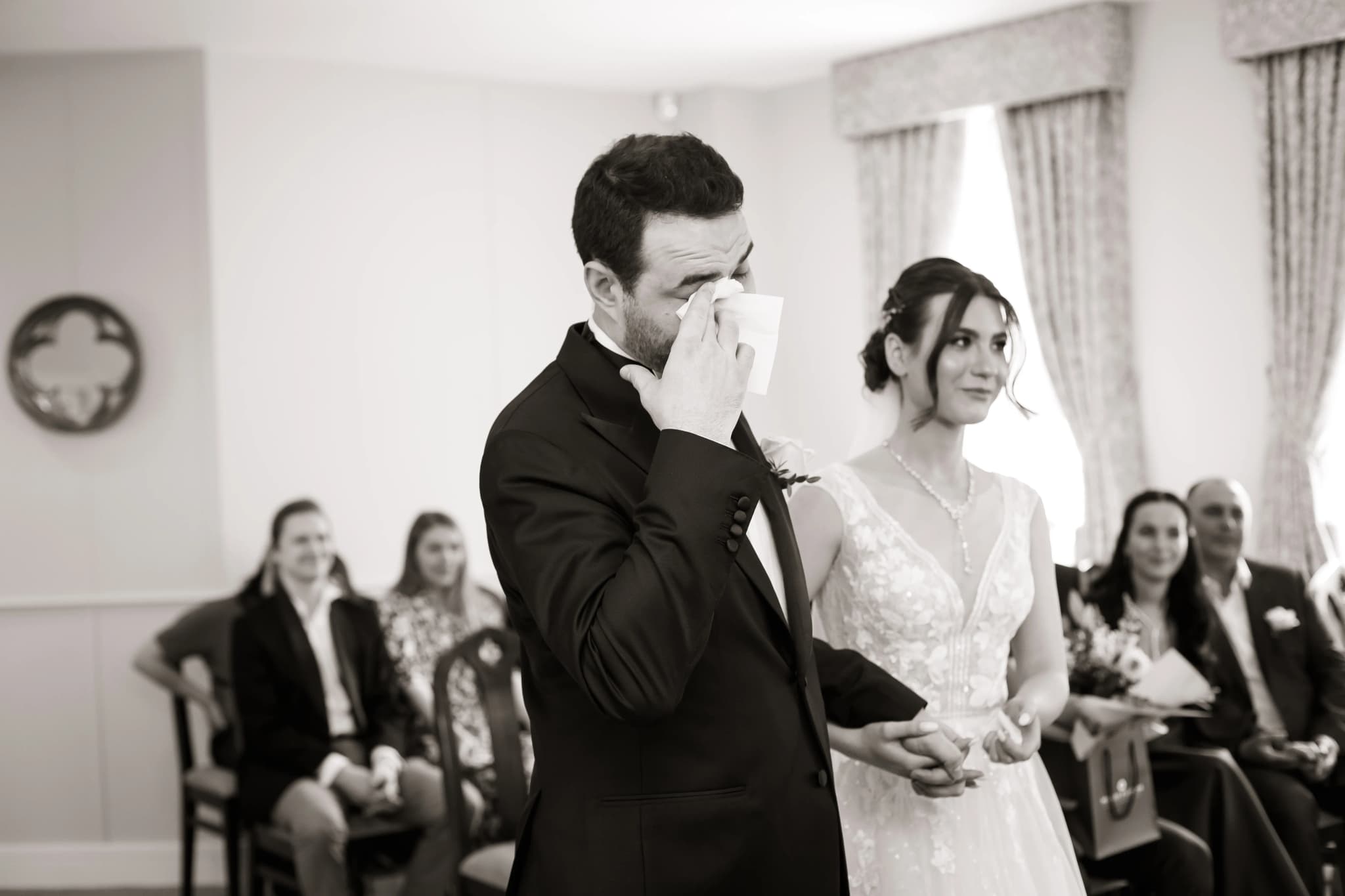
From a gallery or balcony in a church, a tilt-shift image of the ceremony below — with the couple sharp and the congregation softly blurred — draws focus to the moment while maintaining the sense of scale and setting.
Tilt-Shift Lenses: The Hardware
Dedicated tilt-shift lenses are manual-focus, manually-operated lenses with physical knobs for tilt and shift adjustments:
- Canon TS-E 24mm f/3.5L II: wide-angle, ideal for architecture and venue interiors.
- Canon TS-E 45mm f/2.8: versatile, good for table details and creative portraits.
- Canon TS-E 90mm f/2.8: telephoto, excellent for selective-focus portraits and ceremony shots from a distance.
- Nikon PC-E 24mm / 45mm / 85mm: Nikon's equivalent range, with electromagnetic aperture control.
- Laowa / Samyang / Venus: third-party options at lower price points with varying build quality.
Simulating Tilt-Shift in Post-Processing
If you don't own a tilt-shift lens, the miniature effect can be approximated in software:
- Photoshop: use the Tilt-Shift Blur filter (Filter > Blur Gallery > Tilt-Shift). Place the sharp band across the subject and adjust the blur falloff above and below.
- Lightroom: use graduated filters with clarity and sharpness at −100 above and below the sharp zone.
- Snapseed (mobile): the Lens Blur tool offers a linear blur mode that simulates tilt-shift.
Software simulation doesn't replicate the optical quality of a real tilt-shift lens — particularly the smooth focus transitions and the Scheimpflug-compliant focal plane — but for social media and casual use, the result is convincing.
Tips for Effective Tilt-Shift Images
- Shoot from above — the higher the vantage point, the more convincing the miniature effect.
- Keep the focus band parallel with the ground plane for a natural diorama look.
- Boost saturation slightly in post to enhance the model-like quality.
- For architecture, always use a spirit level on the camera — the shift correction only works if the camera is perfectly level.
- Use live view with magnification for focus — tilt-shift lenses are manual focus, and precision matters.
- Bracket exposures — tilt-shift lenses don't communicate electronically with all cameras, making exposure unpredictable. Bracket and choose the best.
Unique perspectives through specialised optics — tilt-shift, selective focus, and corrected architecture.
Creative lens choices to produce images that stand apart from every other photographer's work. Discover the full creative approach.