Yana Skakun
Bath wedding photography: A complete guide to the city's best settings
By Yana Skakun·26 January 2027·7 min read
Bath is unlike anywhere else I photograph weddings. It is the only city in Britain that holds UNESCO World Heritage status in its entirety, and that status is earned honestly — the Georgian streets, crescents, and terraces were built almost uniformly from honey-coloured Bath stone, quarried from the hills that ring the city, and the result is an architectural coherence you simply do not find anywhere else in England. When I photograph a wedding here, I am working with a backdrop that does half the work for me before I have even raised the camera.
Why Bath Stone Changes Everything
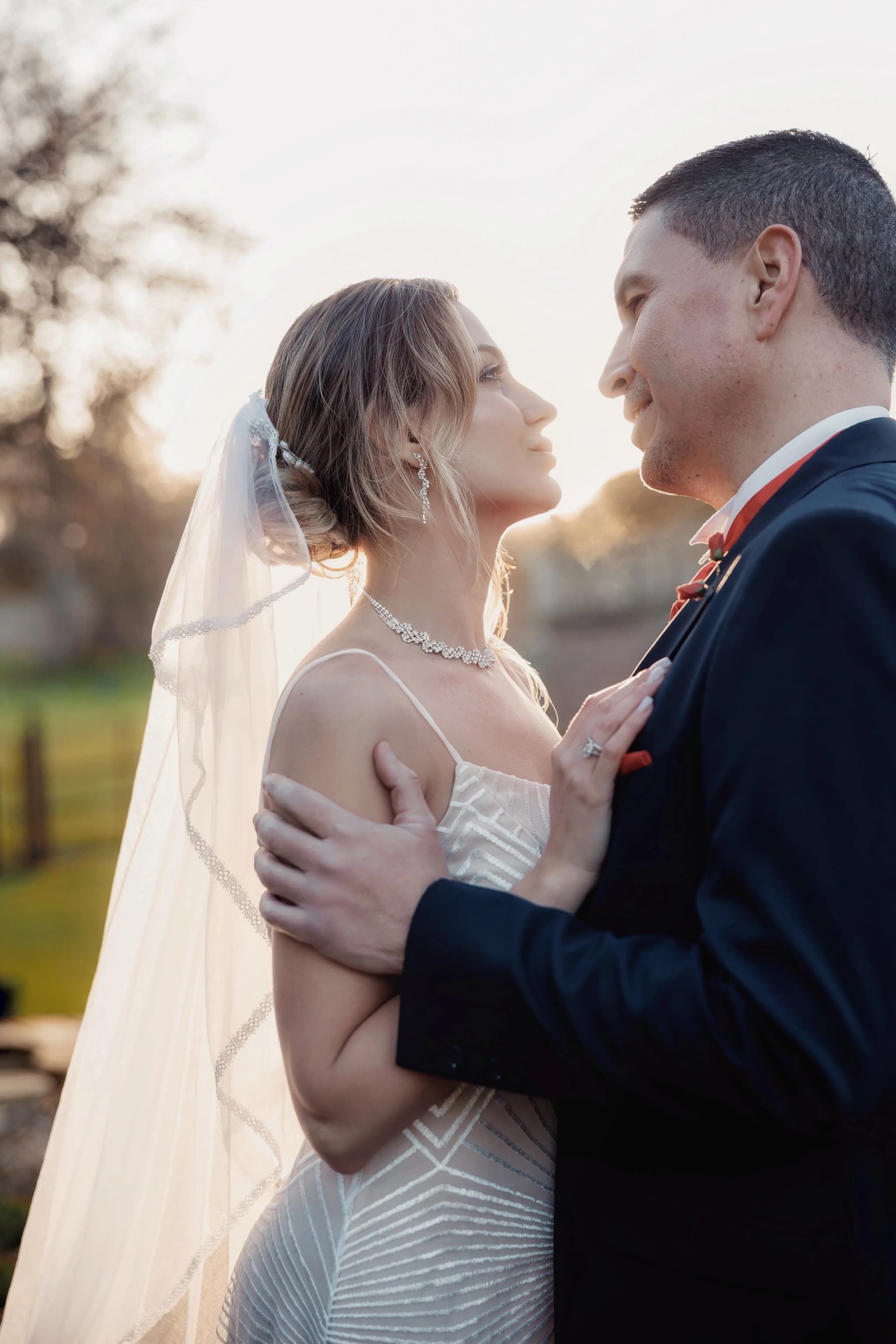
The particular quality of Bath's limestone is what makes this city so distinctive photographically. It is a warm, pale gold in flat daylight, but in the low sun of early morning or the last hour before sunset, it turns a genuinely different colour — a deep amber that no other English building material produces in quite the same way. I plan portrait timings around this specifically. A couple photographed against the Royal Crescent at midday looks lovely; the same couple photographed there an hour before sunset looks like they are standing inside a painting.
This means golden hour matters more in Bath than in most cities I work in. I always build a dedicated portrait slot into the timeline that falls in that last hour of light, ideally with enough flexibility that if cloud cover changes the plan, we can adapt without losing the slot altogether. Couples marrying in Bath in summer have an advantage here — long evenings mean golden hour on the Crescent can happen after the meal without disrupting the reception schedule.
The Royal Crescent and The Circus
The Royal Crescent, completed in 1774, is one of the most recognisable pieces of domestic architecture in England — thirty houses arranged in a sweeping arc of Ionic columns along the brow of the hill above the city. The lawn in front of it is publicly accessible, and it gives me one of the most striking wedding portrait settings anywhere in the country: the sweep of the crescent as a backdrop, open grass in the foreground, and enough space to work with genuine variety in composition rather than being boxed into a single angle.
A short walk down Brock Street brings you to The Circus, a perfect ring of Georgian townhouses built around a stand of mature plane trees. In summer the canopy filters the light into dappled patches across the pavement, which gives a completely different feel from the open exposure of the Crescent — softer, more intimate, less obviously grand. I often move couples between the two during a single portrait session because the contrast between them is so useful: one location for scale and drama, the other for something quieter and more textured.
Pulteney Bridge and the Weir
Pulteney Bridge is one of only a handful of bridges anywhere in the world with shops built across its full span, and the view from it down onto the crescent-shaped weir below is one of the most photographed scenes in the city for good reason. I use this spot carefully — it is popular with tourists, so timing matters. Early morning before the city wakes up properly, or that same late-golden-hour window, gives me the space to work without fighting for position on the bridge itself.
The bridge photographs well from both directions: looking along its shop-fronted span, and from the riverbank looking back at the honey-stone arches with the weir in the foreground. If your ceremony or reception venue is anywhere near the city centre, I will always try to build in ten or fifteen minutes here, because the combination of water, historic architecture, and that particular gold stone is genuinely hard to replicate anywhere else in England.
Planning a Bath wedding
I photograph weddings across Bath, Somerset, and Wiltshire and know the city's light, logistics, and best-kept corners well. Get in touch to talk through your venue and timeline.
Enquire about your Bath weddingVenues Beyond the City
Bath itself is a compact city, and many couples choose to marry just outside it, in the countryside of Somerset and Wiltshire that surrounds it. Priston Mill, a few miles south-west of the city in a wooded stream valley, gives a much softer, more rustic setting than anything in the city centre — useful for couples who want the option of a Bath backdrop for portraits but a countryside feel for the ceremony and reception itself. Country house venues in the hills above the city, and walled-garden settings further out towards the Mendips, offer another register again: formal planting, mature trees, and a sense of privacy that a city-centre wedding simply cannot provide.
What I like about working in this part of England is the contrast available within a very short drive. A couple can have an intimate countryside ceremony in a walled garden in the morning and be standing on the Royal Crescent for portraits an hour later, with the two settings reading as completely different worlds in the final gallery. I plan routes and timings around this deliberately when a couple wants both registers in their day.
Elopements and Intimate Ceremonies
Bath has a long history as a destination for smaller, more intimate weddings and elopements, and I understand why. A ceremony with a handful of witnesses on the Royal Crescent lawn, followed by an afternoon spent working through the city's best corners at a relaxed pace with no reception schedule to manage, produces some of the most genuinely beautiful, unhurried wedding photography I do all year. Without eighty guests to keep track of, we can chase the light properly — following shade in the middle of the day, or waiting the extra twenty minutes for the sun to drop into exactly the right position over the Crescent.
For couples considering this route, I would always recommend building at least half a day around the photography rather than treating it as an afterthought to the ceremony itself. Bath rewards unhurried exploration — the Abbey, the Georgian streets around Queen Square, the riverside walk towards Pulteney Bridge — and a relaxed pace produces noticeably better, more natural images than a rushed one.
Practical Notes on Timing and Weather
Bath is busiest with tourists from late morning through mid-afternoon, particularly around the Abbey, the Roman Baths, and Pulteney Bridge. If your ceremony allows any flexibility in when portraits happen, early morning or the golden hour before sunset will always give cleaner, calmer images with fewer people to work around. Weekday weddings in the city, particularly outside the main summer season, are noticeably quieter than Saturday weddings in July and August.
The city's stone architecture also photographs beautifully in overcast light, which is worth knowing if you are marrying outside the height of summer. Soft, even cloud cover flatters the pale gold of the stone in a different way from direct sun — less dramatic, but calmer and more consistent, and it means a grey January or November wedding day in Bath is far from a lost cause photographically.
I also plan carefully around Bath's topography. The city sits in a bowl surrounded by hills, and the light behaves differently depending on which part of the city you are in — the Royal Crescent, high on its ridge, catches the evening sun for longer than the streets down by the river, which fall into shadow earlier as the surrounding hills block the low sun. Knowing this in advance means I can sequence a portrait route so we finish in the best light rather than watching it disappear from the wrong location.
Getting Around the City on the Day
Bath's historic centre is compact and largely pedestrian-friendly, which is a genuine advantage on a wedding day — most of the locations in this guide sit within a fifteen-minute walk of each other, meaning a couple can move between two or three distinct settings for portraits without needing transport in between. That said, cobbled streets and hills are worth factoring into footwear choices, particularly for anyone in heels; I always mention this to couples during planning so nobody is caught out on the day itself.
For couples marrying at a venue outside the city and wanting Bath itself worked into the day, I generally recommend allowing at least forty-five minutes to an hour for the city-centre portion of the timeline, ideally scheduled to land during golden hour rather than squeezed in as an afterthought between the ceremony and the reception. Traffic and parking in the city centre can add unpredictability, so building in a buffer is always worthwhile.
If you would like to talk through how the season, venue, and timeline of your day will work together, get in touch and I can help you plan it properly.







Yana Skakun
Photographer · England
Professional wedding, family and portrait photographer based in England. Passionate about capturing authentic emotions and timeless moments.
About Yana →Bath wedding photographyRoyal Crescent wedding photosPulteney Bridge weddingBath wedding venuesSomerset wedding photographer
Venue Guides — Wedding Photography in Cambridge & England
Yana Skakun photographs weddings across England, with particular expertise in regional venues and the distinct lighting and architectural challenges each space presents. Coverage areas include Cambridgeshire, East England, London, and the Midlands. This guide — Bath wedding photography: A complete guide to the city's best settings — is part of the photography journal: practical, experience-based advice drawn from real sessions across England. Whether you arrived searching for bath wedding photography or royal crescent wedding photos, the same care and attention shapes every session Yana photographs.
Wedding Photography sessions are available year-round, with bookings open across Cambridge, Ely, Huntingdon, Peterborough, and further afield — East England, London, the Midlands, and beyond. If you have specific questions about pulteney bridge wedding, mention it in your enquiry. Get in touch through the contact form above to check availability and discuss your session. Enquiries are welcomed from anywhere in the UK.
Frequently Asked Questions
What are the best wedding venues in Cambridgeshire?+
Cambridgeshire has excellent options across every budget and style. King's College Chapel and Trinity Hall offer iconic Cambridge settings. Anstey Hall and Ely Cathedral provide classic country house and cathedral drama. Granchester Meadows and various farm venues suit couples wanting a relaxed outdoor feel. The region's historic colleges, riverside venues, and country estates make it one of England's finest wedding destinations.
How do I find a hidden gem wedding venue?+
Look beyond the first page of Google results. Talk to your photographer and caterer — suppliers who work at venues regularly know which ones are genuinely beautiful to work in versus just well-photographed. Visit venues in person rather than relying on Instagram. Historic house venues, working farms, and privately-owned estates sometimes offer exceptional beauty without the premium price of established commercial venues.
What is the average cost of a wedding venue in England?+
Venue hire in England typically ranges from £2,000 to £15,000+ depending on region, exclusivity, catering arrangements, and guest numbers. London and the Home Counties tend to be at the higher end. East Anglia and the Midlands offer excellent venues at more accessible price points. Some venues quote a total minimum spend including catering, so always understand what's included.
Can you get married outside in England?+
Since 2022, couples in England and Wales can legally marry in a wider variety of outdoor settings, though regulations are still evolving. Many licensed venues now offer outdoor civil ceremonies. Check with your local Register Office for current rules and licensing requirements if you want a legal outdoor ceremony.
What is a dry hire wedding venue?+
A dry hire venue provides the space only — you arrange all your own suppliers (caterers, bar, furniture, decorations, entertainment). It gives maximum flexibility and can be more cost-effective than all-inclusive venues, but requires more coordination. Make sure you understand what's included: some 'dry hire' venues include tables and chairs, others are literally just a shell space.

Get in Touch
Ready to Book Your Session?
Get in touch to discuss your vision — I'll reply within 24 hours.