Venue Guides
Country House Wedding Venues Guide
A guide to England's finest country house and estate wedding venues — Georgian mansions, Elizabethan manors, Palladian houses, and the formal gardens of the English country house tradition.
The English country house — the great landed estate with its mansion house, its landscaped park, its walled garden, its home farm, and its chain of ornamental lakes — is one of the most distinctive architectural and landscape achievements of English civilisation. Built over 500 years from the Tudor period through the Edwardian era, the English country house in its fullest form represents the accumulation of architectural ambition, landscape design, and decorative art of successive generations of the English landowning class. For wedding photography, these buildings and their grounds provide settings of historical depth and compositional richness that no modern event venue can replicate.
Madingley Hall, Cambridgeshire
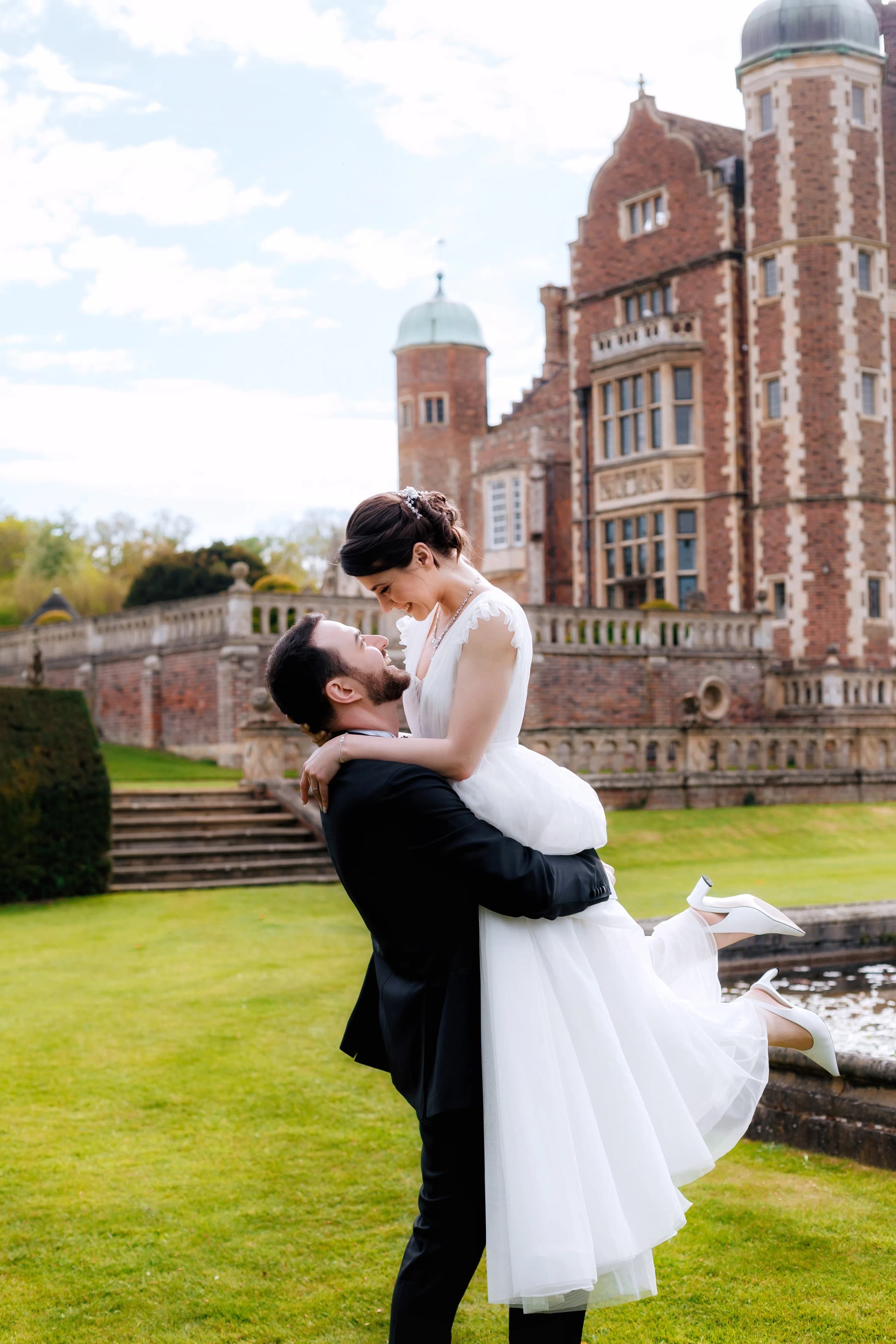
Madingley Hall — the mid-16th-century country house 4 miles west of Cambridge, set in grounds redesigned by Capability Brown, now operated by the University of Cambridge as a conference and events venue — is the finest country house wedding venue available within immediate reach of Cambridge. The Tudor hall block (with its original mullioned windows and gabled roofline), the Brown landscape (with its ha-ha, the walled garden, the ornamental lake, and the lime avenue leading to the parish church), and the walled garden behind the house provide wedding photography settings of mid-Cambridge country house character of exceptional quality. Prince Albert stayed at Madingley Hall in 1847 during a visit to Cambridge; the house's connections to Cambridge University give it an academic-historical character specific to its location.
Hengrave Hall, Suffolk
Hengrave Hall — the extraordinary early Tudor mansion house completed around 1538 for Sir Thomas Kytson, set in its own medieval park near Bury St Edmunds in Suffolk — is one of the most remarkable surviving Tudor domestic buildings in England. The south front (with its three-storey bay windows and carved heraldic panels in the flushwork of East Anglian tradition), the courtyard, the 15th-century church of St John Lateran immediately adjacent to the house, and the kitchen garden provide wedding photography of Tudor grandeur specific to this Suffolk estate. Hengrave is managed as a Roman Catholic retreat centre and wedding venue; its chapel, its gardens, and the hall's Tudor interiors provide one of the most historically immersive country house wedding environments in the east of England.
Great Fosters, Surrey
Great Fosters — the Grade I listed Elizabethan country house at Egham in Surrey, with its 17th-century formal garden (among the most significant surviving early formal gardens in England, with its knot garden, sunken rose garden, and amphitheatre), the Saxon moat, and the house's extraordinary Elizabethan heraldic brickwork — is one of the great country house wedding venues in southern England. The formal garden's topography — the Saxon moat forming the outer boundary, the parterre terraces stepping down from the house, the yew hedges of the inner garden — provides wedding photography settings of formal Elizabethan garden character of a quality and completeness found at very few accessible wedding venues in the south-east.
Syon Park, Middlesex
Syon Park — the Duke of Northumberland's seat on the Thames opposite Kew, with Robert Adam's State Rooms (considered among the finest of Adam's Neoclassical interiors in England), Capability Brown's parkland running to the Thames, and the Great Conservatory by Charles Fowler (a pioneering pre-Crystal Palace iron and glass structure) — is one of the most architecturally exceptional country house wedding venues in London's immediate vicinity. The Adam interiors (the Ante-Room with its gilded scagliola columns, the Red Drawing Room with its Spitalfields silk hangings) provide wedding photography settings of Neoclassical grandeur that rank among the finest of any accessible wedding venue in England.
Loseley Park, Surrey
Loseley Park — the Elizabethan manor house near Guildford, built in the 1560s from stone quarried from the ruins of Waverley Abbey, in continuous occupation by the More-Molyneux family since the 16th century — is one of Surrey's most privately authentic country house wedding venues. The Elizabethan great hall (with its carved chalk chimney-piece said to incorporate panels from Nonsuch Palace), the walled garden (subdivided into the Rose Garden, Herb Garden, Flower Garden, and Kitchen Garden), and the moat walk provide wedding photography settings of quiet Elizabethan country house character that the venue's continued private family occupation gives an authenticity impossible to manufacture in a purely commercial event venue.