Venue Guides
Lancashire Wedding Venues Guide
A guide to Lancashire's finest wedding venues — Browsholme Hall, Gawthorpe Hall, the Forest of Bowland, the Ribble Valley, Lancaster and Lytham St Annes.
Lancashire is one of England's great historic counties — the Red Rose county of medieval battles, Industrial Revolution cotton mills, royal forests, and coastal marshes. Its wedding venue landscape reflects this diversity: the Tudor manor of Browsholme (the oldest continuously occupied house in Lancashire), the Elizabethan manor of Gawthorpe (restored by the architect of the Houses of Parliament), the medieval-ecclesiastical setting of Lancaster Priory, and the Edwardian coastal elegance of Lytham provide a wedding photography suite that encompasses 600 years of English architectural history within a single county. The Forest of Bowland — one of England's least-known and most unspoilt AONBs — provides the landscape backdrop for a large part of the county's rural wedding photography.
Browsholme Hall
Browsholme Hall — the Tudor manor house near Clitheroe, built in 1507 and continuously occupied by the Parker family since then — is the most historically resonant wedding venue in Lancashire. The Parkers have been hereditary Bow-bearers (park keepers) of the Royal Forest of Bowland since the 14th century; their connection to the land around the hall is one of the deepest in Lancashire's documentary record. The 16th-century stone hall, the walled garden, the deer park, and the hall's setting on the edge of the Bowland fells combine to give Browsholme wedding photography a character of deep romantic English rural history. The view north from the hall toward the Bowland fells — with the limestone ridges of the Trough of Bowland above — provides wedding couple portrait settings of fell-landscape drama directly accessible from the venue.
Gawthorpe Hall
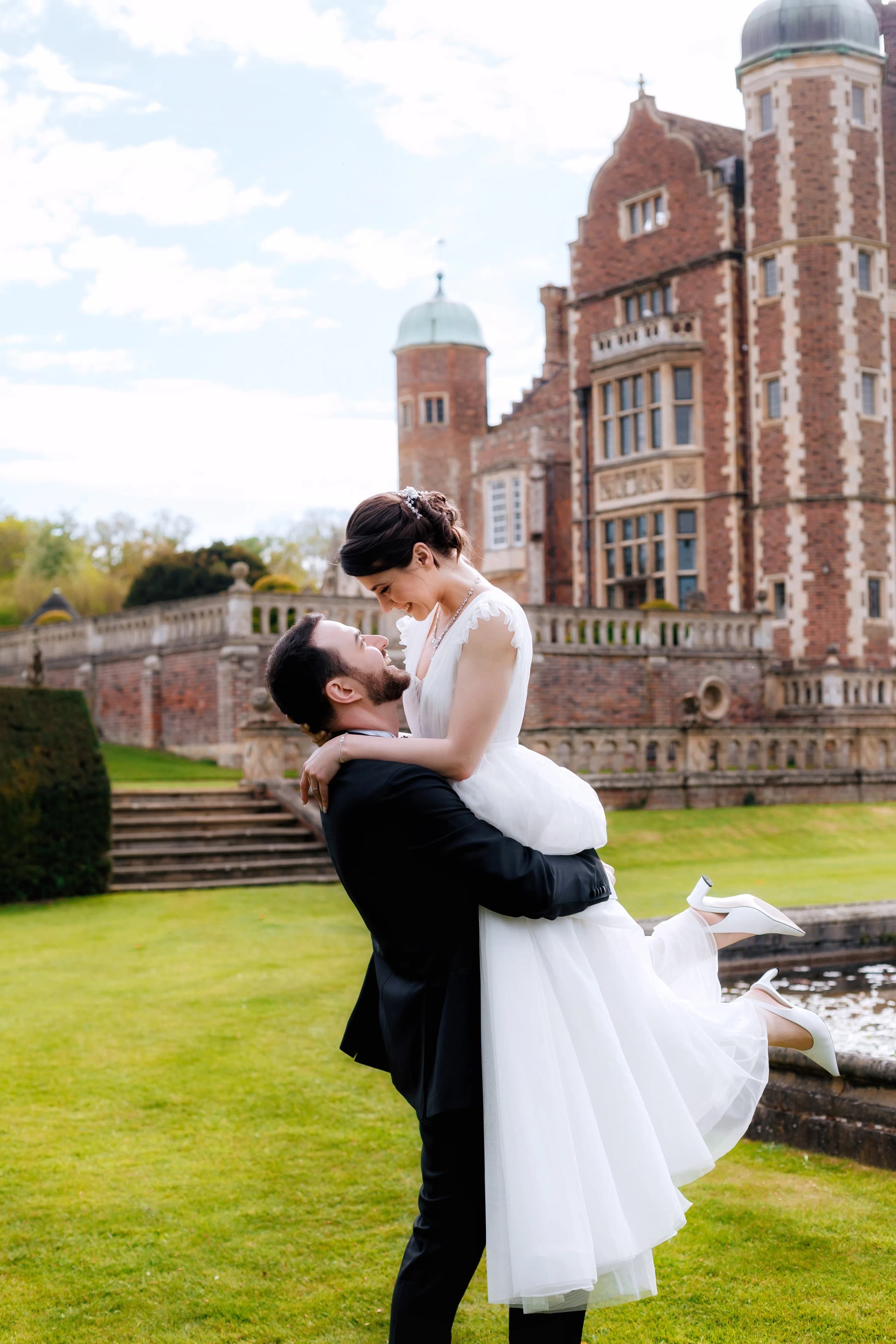
Gawthorpe Hall — the Elizabethan manor house at Padiham near Burnley, built for the Shuttleworth family between 1600 and 1605, and substantially remodelled by Sir Charles Barry in the 1850s — is one of Lancashire's finest National Trust properties and a significant wedding venue. Barry's Victorian restoration gave the hall its central tower (modelled on Elizabethan examples in Lancashire and Yorkshire), the elaborate plasterwork ceilings, and the formal garden layout. The tower is the most photographed architectural element of the hall; the formal terraced gardens, the ha-ha walk, and the parkland views toward the Pendle Hill outline provide wedding photography settings of Elizabethan-Victorian country house character specific to east Lancashire.
Forest of Bowland AONB
The Forest of Bowland AONB — the 300-square-mile upland plateau between the Lune and the Ribble, with its limestone fells, gritstone moorland, and river valleys — is one of England's most outstanding and least visited upland landscapes. The Trough of Bowland (the pass through the central fells, with its single-track road and moorland fell panorama), Pendle Hill (the isolated fell above the Ribble Valley associated with the 1612 Pendle Witch trials, with views from Blackpool Tower to the Yorkshire Dales from its summit), and the Hodder Valley woodlands provide wedding photography of moorland fell character specific to Lancashire. Dunald Mill Hole, the Brennand Valley, and the Upper Hodder Valley above Slaidburn are among the more remote but most photographically rewarding Bowland locations for extended wedding couple portrait sessions.
Lancaster
Lancaster — the ancient county town of Lancashire, with a Norman castle (built on a Roman fort site, still a functioning Crown Court and prison), the medieval Priory Church of St Mary (the pre-conquest minster church on Castle Hill), the 18th-century Custom House (designed by Richard Gillow of the Gillow furniture family), and the Georgian townscape of the city's commercial quarter — provides Lancaster wedding photography of county town historic character among the finest in northern England. The Castle Hill — the high ground above the Lune on which both the castle and priory stand — provides a city prospect with the Lakeland fells visible on the horizon north-west in clear weather.
Lytham St Annes
Lytham St Annes — the Edwardian seaside resort on the Ribble Estuary south of Blackpool, with the Royal Lytham and St Annes Golf Club (host of the Open Championship), the Lytham windmill on the green, and the tidal Ribble saltmarsh — provides Lancashire's most elegant coastal wedding photography setting. The Edwardian promenade, the mature plane-tree avenues of Annes-on-Sea, and the Ribble Estuary (where the tide comes in fast across the sand and saltmarsh to fill the estuary in the last two hours of flood) provide wedding photography of coastal Lancashire character quite unlike the Blackpool entertainment geography to the north. Dusk sessions on Lytham Green or at the Fairhaven Lake in the last hour of summer light provide the strongest coastal Lancashire wedding portrait conditions.