Yana Skakun
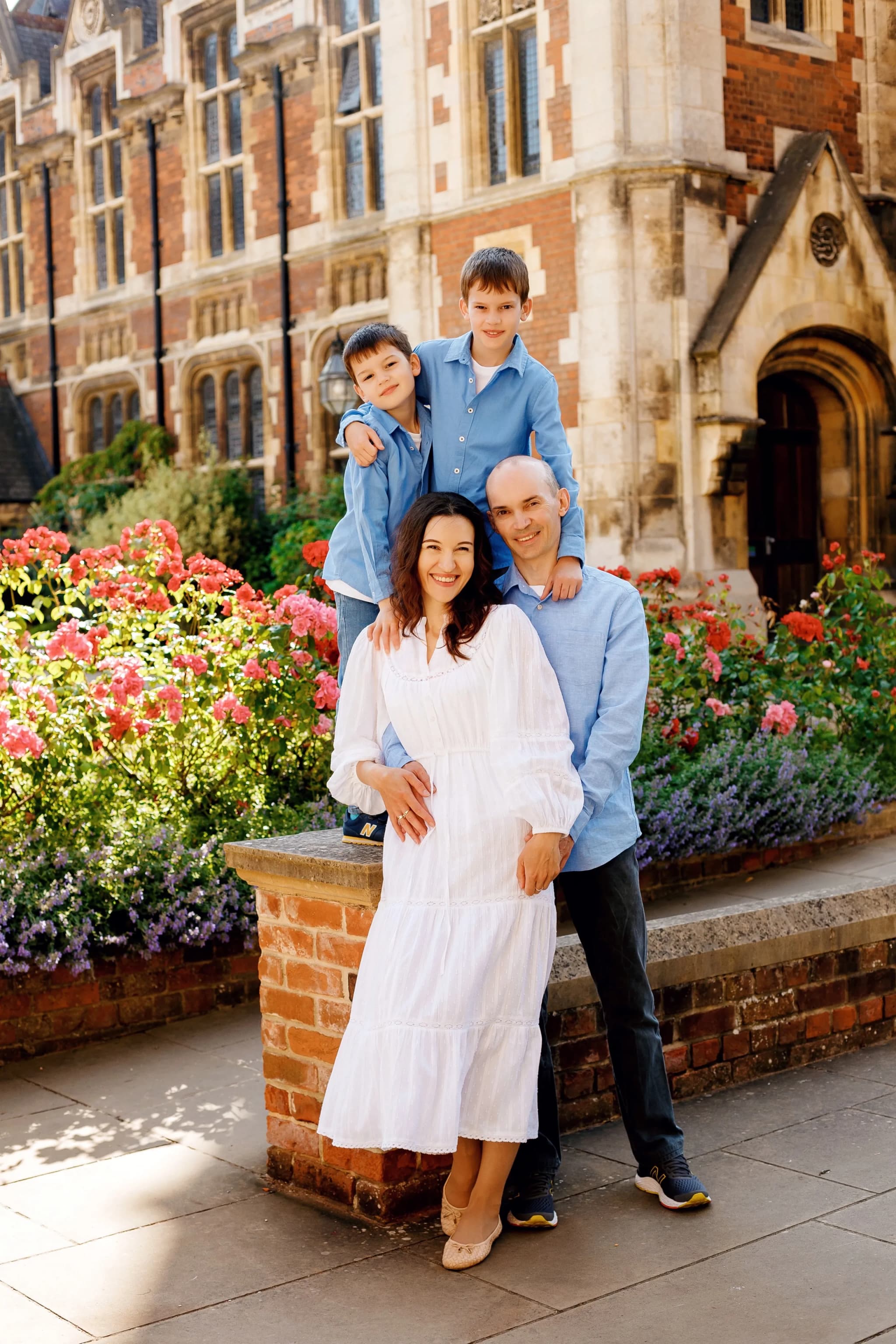
The best portrait photography locations in Bristol
By Yana Skakun·30 March 2027·6 min read
Bristol is an unusual city to photograph in, and I say that as someone who has now worked across most of it. Within about twenty minutes' cycle of the centre you can move between ancient woodland, open grassland with views to the Severn Estuary, a Georgian streetscape, and a working harbour lined with industrial heritage. Very few UK cities of comparable size offer that range without a long drive between locations. When people ask me where to have their portraits taken in Bristol, the honest answer is that it depends entirely on what the pictures are for and what kind of light and setting will feel most like them. Here is how I think about the city's best portrait locations, and what each one is actually like to shoot in.
Clifton Village and the Suspension Bridge
The Clifton Suspension Bridge is Bristol's most recognisable structure and, unsurprisingly, its most photographed backdrop. Brunel's bridge is suspended 75 metres above the Avon, connecting the Clifton plateau to the Leigh Woods side of the gorge, and it works for portraits in two quite different ways. From the viewpoints on the Clifton side, it sits as a background element behind the subject, with the gorge dropping away beneath it. Positioned closer, with the towers rising above you, it becomes a structural foreground with the wooded gorge and the Avon beyond. Golden hour light catches the Bath stone towers with a warm glow that photographs beautifully, and I try to time bridge sessions for the last hour or two before sunset whenever the forecast allows it.
The surrounding Clifton Village adds a completely different texture to a session. Its Georgian crescents, terraces and Victorian villas give architectural variety without ever feeling cluttered, so I often use it as a starting point before walking down toward the bridge itself. Parking in Clifton is limited and mostly metered, so I generally suggest arriving on foot or by bus if the session is timed around a weekend afternoon. For couples and portrait clients wanting a genuinely Bristol setting that still reads as elegant rather than purely touristy, this combination of village and bridge is usually my first suggestion.
Leigh Woods and the Gorge
Leigh Woods, on the western side of the gorge, is a National Nature Reserve and one of my favourite places in the city to work. It is ancient woodland dominated by small-leaved lime, sessile oak, ash and whitebeam, with pockets of ancient yew growing directly out of the limestone cliffs. The canopy filters light into a soft, green-tinted wash that is completely different from anything you get in open parkland, and it changes dramatically through the year. In spring the woodland floor is carpeted with wild garlic and then bluebells, which gives sessions a fleeting, almost storybook quality that clients often ask for specifically. In late autumn the beech and lime turn gold and the lower sun angle sends shafts of light straight through the trees along the cliff-top paths.
This is where I take portrait sessions that need to feel enclosed, natural and unhurried rather than urban or architectural — engagement sessions, family portraits, and anyone who wants images that feel more like a walk in the woods than a formal shoot. The cliff-top paths above the Avon also give dramatic gorge views back toward the bridge, so it is easy to combine a Leigh Woods session with bridge shots without much extra travel. Access is via the National Trust car park off Bridge Road, and because the paths are uneven in places, flat shoes are worth mentioning to clients in advance, particularly if children are involved.
Bristol Harbourside
The Harbourside gives a session an entirely different character again — water reflection, industrial heritage and a contemporary, lived-in streetscape all in one place. The floating harbour, created in the early nineteenth century by diverting the Avon around the city centre, reflects the sky and the surrounding buildings, and on a still evening that reflected light can genuinely double the impact of a photograph. The ss Great Britain sits in its dry dock as a strong graphic backdrop, and the colourful frontages of Spike Island and Redcliffe Wharf give a run of backgrounds that read as distinctly, recognisably Bristol.
Golden hour here is spectacular when the western sky lights the water, and I try to schedule Harbourside sessions to catch the last hour of light for exactly that reason. During the day the area is busy with pedestrians, cyclists and the harbour ferries, which is worth knowing if a client wants a quieter, more private feel — early morning before the crowds arrive is a much calmer option. For brand photography and professional headshots, the Harbourside is particularly useful because the setting is instantly identifiable as Bristol without needing any obvious landmark in frame, which keeps the images looking current rather than tied to a single well-known view.
A note on choosing a location
I always talk through the feel a client wants before suggesting a location, rather than defaulting to whichever spot is currently popular. A couple wanting something quiet and intimate will usually be happiest in Leigh Woods; a family wanting bright, open images with a real sense of the city often does best on Brandon Hill or the Harbourside; anyone wanting a single unmistakably Bristol backdrop for a headshot or brand shoot tends to gravitate to the bridge or the harbour. If you are not sure which suits you, that is a completely normal starting point for a conversation.
Get in touch about a Bristol sessionBrandon Hill and Cabot Tower
Brandon Hill is a small public park just west of the city centre, rising steeply above Hotwells, and it is one of the most underrated portrait locations in Bristol. The park has an informal, wildflower character — unmown grass banks, woodland edge, mature beech and oak trees — with the Victorian gothic Cabot Tower standing at its summit. The tower gives 360-degree views across the city, and the open ground immediately around it gives a real sense of Bristol's topography, with the gorge and the Downs visible in the distance on a clear day.
For portraits, the varied vegetation gives good natural framing throughout the park, and the tower works well as either a background element or something to be left out of frame entirely, depending on the mood a client wants. It suits families particularly well because there is space for children to run without any real hazards, and the steep paths up from Hotwells mean the park is rarely as busy as the Harbourside or Clifton on a weekend. I favour late afternoon here in spring and summer, when the light comes in low across the grass banks rather than straight down from overhead.
Timing a Session Across These Locations
Bristol's weather off the Severn Estuary is changeable enough that I always build some flexibility into a booking, particularly for anything planned around golden hour. The Downs, above Clifton, are worth a separate mention here — open grassland with long views toward the estuary on a clear day, and useful as a fallback or an addition to a Clifton session when the light is doing something dramatic over the water. Because the gorge, the woods and the harbour all sit at slightly different elevations and aspects, it is often possible to chase better light by moving between them within the same session, which is one of the genuine advantages of working in this city rather than somewhere with a single obvious backdrop.
Seasonally, spring is my preferred time for Leigh Woods because of the wild garlic and bluebells, while autumn suits both the woods and Brandon Hill as the beech and oak turn. Summer evenings extend the useful window at the Harbourside and the bridge considerably, since golden hour arrives much later and gives more room to work without rushing. Winter sessions are entirely possible too — the bare tree structure in Leigh Woods and the low winter sun on the Harbourside water both have a character that some clients specifically ask for, so I would not rule any of these locations out purely because of the time of year.
Every one of these places says something slightly different about Bristol, and part of my job is helping you work out which one says the right thing for the portraits you actually want. If you would like to talk through locations, timing, or what might suit your family, your work, or your relationship best, get in touch and I am happy to plan it with you.







Yana Skakun
Photographer · England
Professional wedding, family and portrait photographer based in England. Passionate about capturing authentic emotions and timeless moments.
About Yana →Bristol portrait locationsClifton photographyHarbourside portraits BristolLeigh Woods Bristolportrait photographer Bristol outdoor
Tips & Advice — Professional Photography in Cambridge & England
Yana Skakun is a professional photographer based in Cambridge, covering weddings, families, and portraits across England. Every session is personal — planned around your story, your people, and the moments that matter most. This guide — The best portrait photography locations in Bristol — is part of the photography journal: practical, experience-based advice drawn from real sessions across England. Whether you arrived searching for bristol portrait locations or clifton photography, the same care and attention shapes every session Yana photographs.
Professional Photography sessions are available year-round, with bookings open across Cambridge, Ely, Huntingdon, Peterborough, and further afield — East England, London, the Midlands, and beyond. If you have specific questions about harbourside portraits bristol, mention it in your enquiry. Get in touch through the contact form above to check availability and discuss your session. Enquiries are welcomed from anywhere in the UK.
Frequently Asked Questions
What camera settings should I use for outdoor portraits?+
For outdoor portraits, shoot in aperture priority mode. Use a wide aperture (f/1.8–f/2.8) to blur the background and isolate your subject. Keep ISO as low as possible in good light. In bright conditions, use a neutral density filter or switch to manual to avoid overexposure at wide apertures.
What is the golden hour in photography?+
Golden hour is the period roughly 30–60 minutes after sunrise and before sunset. The sun is low in the sky, producing warm, soft, directional light that flatters skin tones and creates beautiful long shadows. It's widely considered the best natural light for portrait and outdoor photography.
How do you get sharp photos in low light?+
In low light, increase your ISO (accepting some grain), use the widest aperture your lens allows, and slow your shutter speed to the slowest you can hand-hold without camera shake (roughly 1/focal length as a guide). Use image stabilisation if available, and consider a tripod for static subjects.
What is the rule of thirds in photography?+
The rule of thirds divides the frame into a 3×3 grid. Placing your subject on one of the four intersection points — rather than dead centre — creates a more dynamic, visually interesting composition. It's a guideline, not a rule: some of the most powerful images break it deliberately.
How do you edit photos to look professional?+
Professional editing starts with shooting in RAW format. In Lightroom or similar software, correct exposure, white balance, and contrast first. Recover shadow and highlight detail. Apply gentle colour grading for mood. Be conservative with skin retouching — the goal is natural enhancement, not transformation. Consistency across a set of images is what separates professional from amateur editing.

Get in Touch
Ready to Book Your Session?
Get in touch to discuss your vision — I'll reply within 24 hours.