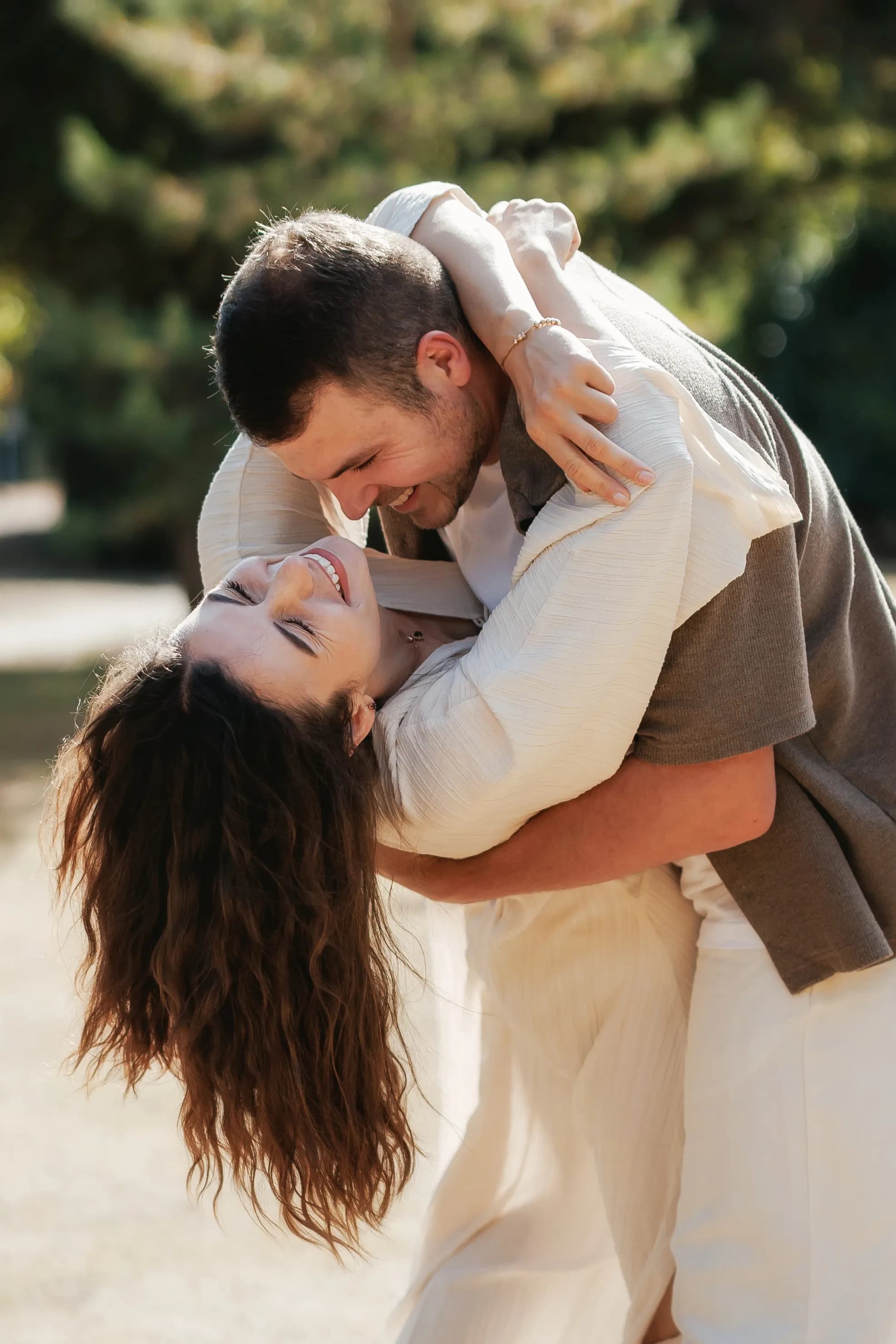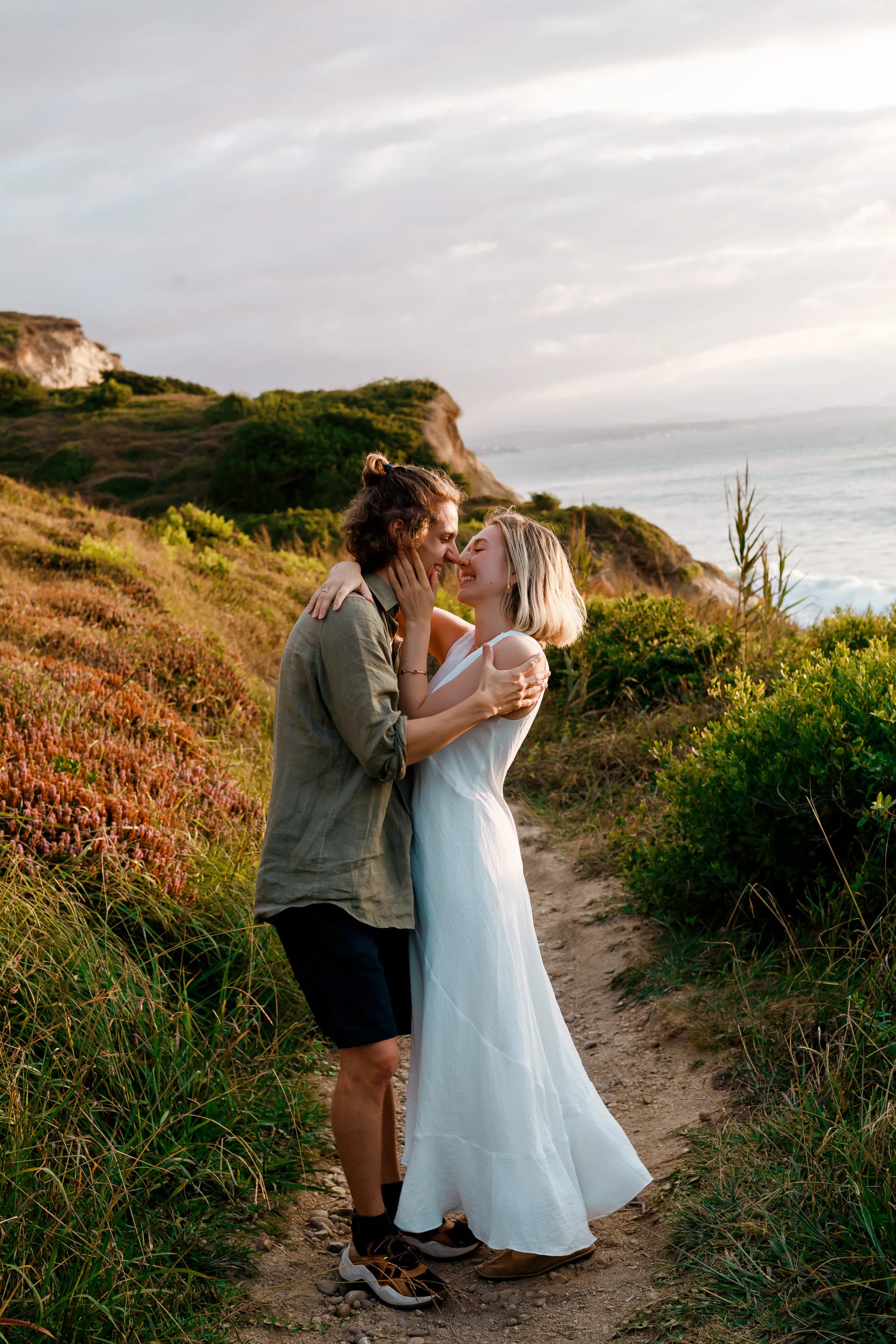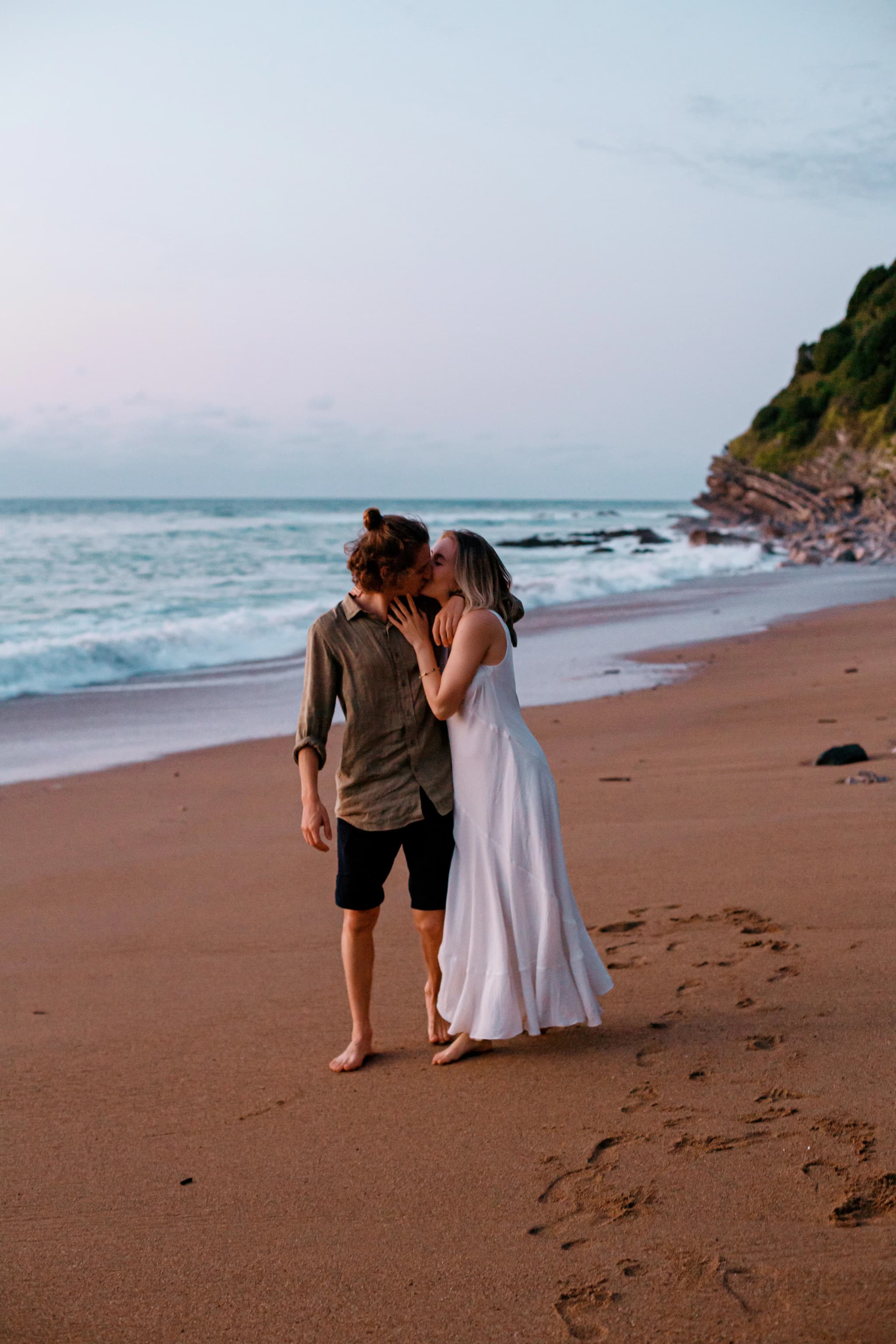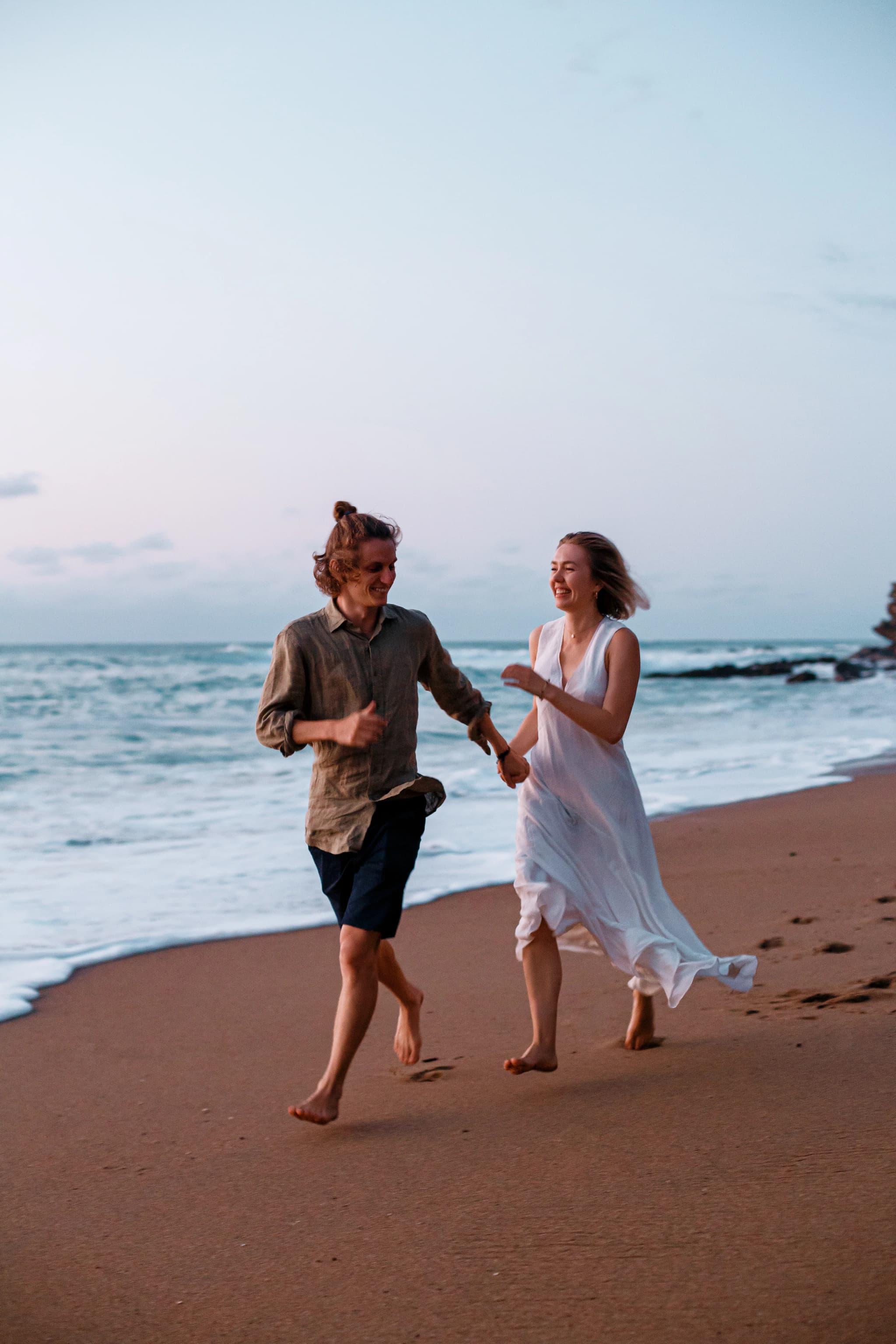
A beach engagement session is one of the most visually dynamic portrait settings available — the scale of the sea, the texture of sand and pebbles, the movement of wind and waves, and the extraordinary quality of coastal light all combine to create a backdrop that studio photography can never replicate. But the beach also introduces practical challenges unique to the setting: wind that lifts and tangles hair, wet sand that stains, and the colour contrast of a pale sky and bright water that demands specific clothing choices to photograph well. This guide covers all of it.
Working with Coastal Light
Coastal light has a quality that differs from inland locations: the water reflects additional light upward, creating a natural fill that illuminates faces from below as well as above and gives skin a luminous quality that landscape photographers prize. The downside is that very bright water or sky in the background can create exposure challenges if clothing tones are not chosen carefully.
Very pale or white clothing against a bright sea or cloud-reflected sky can become overexposed and lose detail. Very dark clothing against a bright background creates strong exposure contrast that the camera must manage. Mid-tones — warm creams rather than bright white, deep navy rather than black, warm terracotta, sage green, dusky blue — sit most comfortably within coastal light conditions and give a professional photographer the most to work with.
Colour Palettes for the Coast
Two colour palette directions work particularly well in beach engagement sessions. The first complements the natural palette of the coast: sandy neutrals, washed-out linen tones, soft cream and ivory, sea glass green, warm terracotta. These tones blend with the environment in a way that locates the couple within the setting rather than placing them in front of it.
The second creates deliberate contrast against the coastline: a bold cobalt blue against pale sand, a rich rust against a grey sea, deep navy against a morning sky. This approach gives the couple visual clarity within the frame rather than integration with the landscape. Both are effective; the choice depends on the visual character you want the images to have — romantic and immersive, or bold and graphic.
Fabric and Practical Choices for the Beach
Wind is the primary practical challenge of beach engagement sessions and the single most important thing to plan clothing around. Loose, flowing fabrics in a strong coastal breeze create beautiful natural movement when caught well and hair-covering chaos when they are not. Fabrics that flow — chiffon, light linen, soft cotton — are beautiful in beach sessions when secured with a light hand; they require active management during the session and a photographer who can work quickly.
Fitted or semi-fitted clothing that does not blow around gives the photographer more control and allows more consistently clean compositions. A well-fitted midi dress in a substantial fabric, linen trousers with a tucked-in shirt, or a lightweight knit over trousers all work well in coastal conditions without requiring constant wind management. For partners wearing looser clothing, having a structured jacket or coat available can anchor the look when the wind picks up.
Footwear for Beach Sessions
Bare feet on sand or pebbles — particularly clean, warm sand — is one of the most naturally beautiful choices for beach engagement photography. It removes the need for footwear management entirely and creates a physical immediacy and ease that shoes rarely match. Bring shoes for walking to the location, then remove them for the session itself.
If bare feet are not practical (pebble beaches, cold conditions, personal preference), simple sandals in neutral tones photograph cleanly. Trainers in white or bright colours tend to draw the eye in beach compositions; elegant flat sandals or simple heels (if the beach surface allows) are more photogenic choices.
Hair for Beach Engagement Sessions
Wind and hair in a beach session is one of the most discussed and least resolved topics in outdoor portrait photography. Attempting to keep hair in a formal upstyle during a beach session against coastal wind typically produces images of two people actively battling their hair rather than being present with each other. Loose, blow-dried or naturally styled hair that can move with the wind, or a practical updo that can survive wind without constant management, both produce better results than elaborate styles that the location will immediately challenge.
The most photographically beautiful beach engagement images often feature wind-moved hair as a compositional element rather than as a problem to be solved. Discuss this with your photographer in advance and decide together whether to work with or against coastal wind conditions.
Beach Engagement Photography on the English Coast
Yana Skakun Photography offers beach and coastal engagement sessions at locations across the East Anglian coast — including the Suffolk and Norfolk shoreline, Hunstanton, the Cromer and Sheringham coast, and saltmarsh locations unique to this part of England — as well as further afield for couples who want a specific coastal setting. Every coastal session is timed around tidal conditions and the best available light.