Yana Skakun

Norfolk Coast Engagement Photos: Windswept & Beautiful
By Yana Skakun·24 November 2033·7 min read
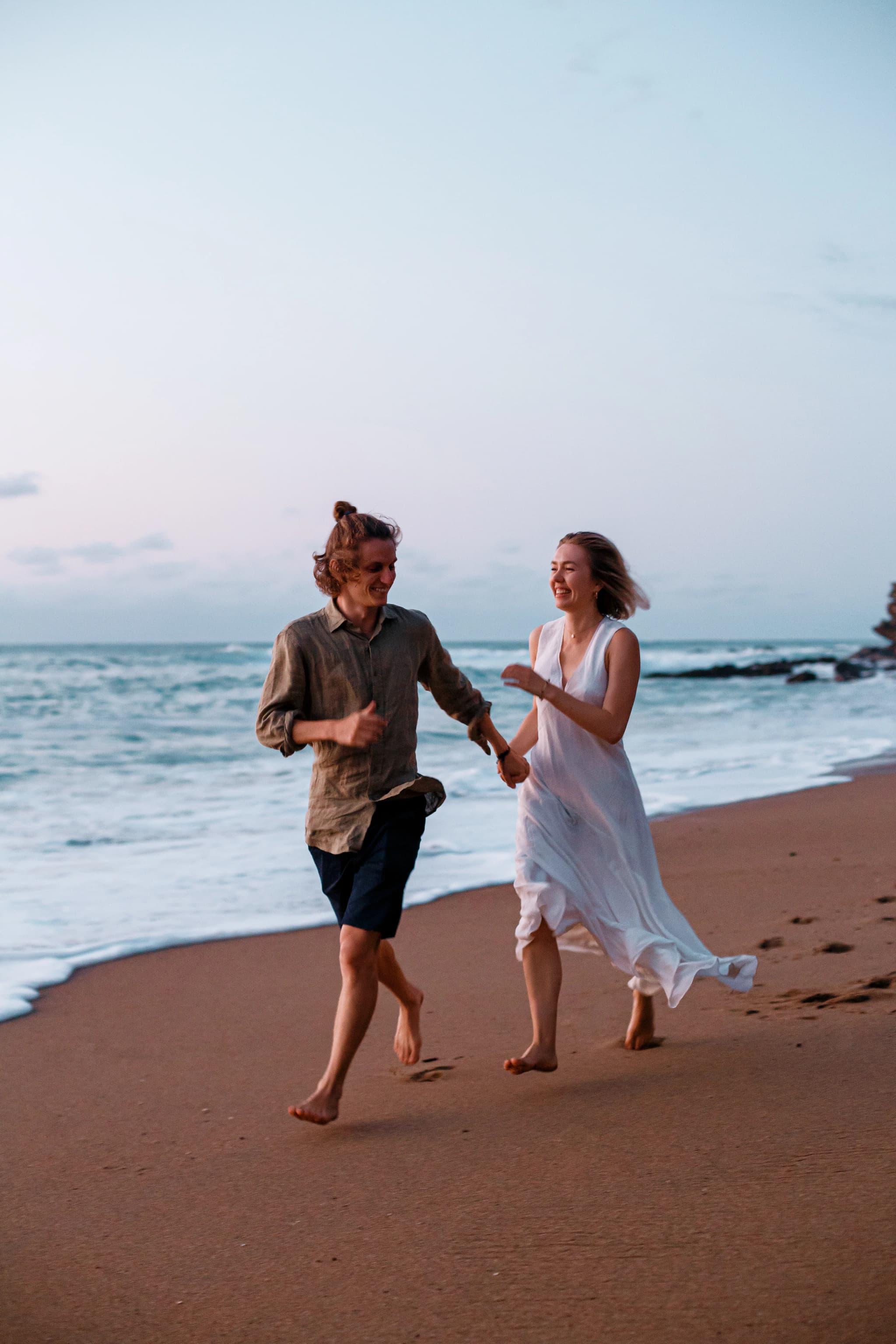
There is a particular kind of couple who comes to me and says they want their engagement photographs to feel big — not big in the sense of dramatic posing or elaborate styling, but big in the sense of sky and space and horizon. Cambridgeshire is a beautiful county for photography, but it is a gentle, enclosed landscape of colleges, water meadows, and hedgerows. The Norfolk coast is the opposite of that, and it is close enough to reach without a full day's travel. Within about ninety minutes of Cambridge you can be standing on a beach so wide that the people at the far end of it look like specks, under a sky that does things skies simply do not do inland. For couples who want their engagement session to feel like an adventure rather than a stroll around a familiar park, the Norfolk coast is where I send them, and it is where I most enjoy working myself.
Why the Norfolk Coast Photographs So Differently
The Norfolk coastline is unlike anywhere else in the East of England. It runs from the chalk-white cliffs at Hunstanton in the west, along miles of dune-backed sand and pine forest around Holkham and Wells, through the tidal creeks and saltmarsh of Blakeney and Brancaster, and on towards the flint villages of the north Norfolk coast road. What all of it shares is scale. The land is flat, the sky is enormous, and the sea is often visible as a distant silver line rather than a crashing presence, which gives the whole landscape a stillness that is very different from a rugged coastline like Cornwall's.
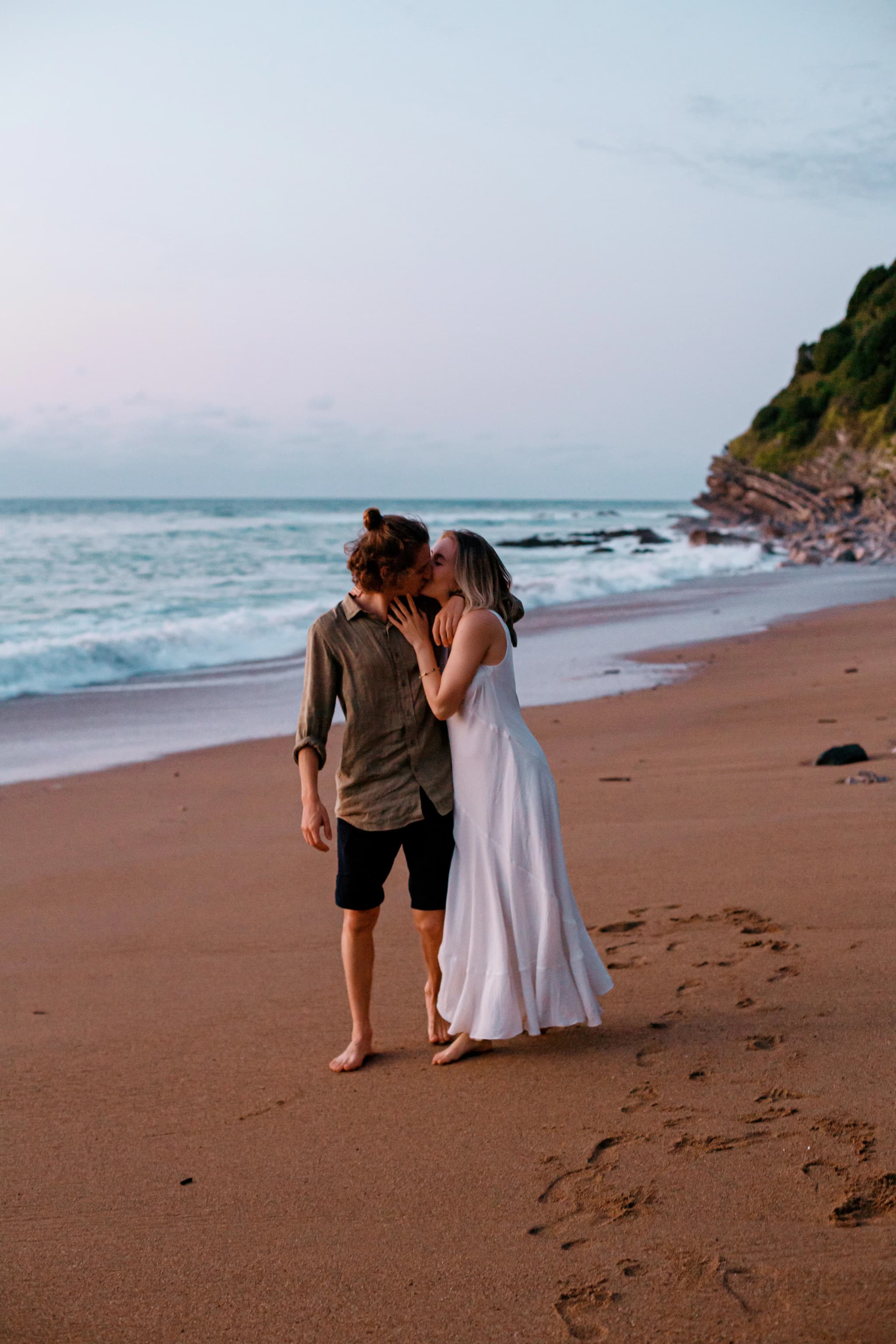
That stillness translates into light. With almost nothing on the horizon to block or filter it, the light on the Norfolk coast at either end of the day has a purity and a colour range that is difficult to find inland. Sunset over the marshes at Blakeney or Brancaster can hold pink, gold, and lavender simultaneously across a huge stretch of sky, and because there is so much reflective wet sand and still water at low tide, that colour doubles — you get the sky and its mirror image beneath your feet. It is one of the few places within reach of Cambridge where I can genuinely promise a couple that the sky itself will be a leading character in their photographs, not just a backdrop.
Best Norfolk Coast Locations for Engagement Sessions
Holkham Beach is the location most couples ask for by name, and for good reason. It is one of England's most spectacular beaches — a vast expanse of pale sand backed by a dense belt of Corsican pine forest and rolling dunes. The walk from the car park through the pines to the beach is itself a lovely piece of the session, with dappled woodland light giving way suddenly to open sky as you crest the dunes. At low tide the sand extends for several hundred metres, giving enormous freedom to work in any direction and to find pockets of the beach with nobody else in frame, even though Holkham is popular and can be busy near the main access points.
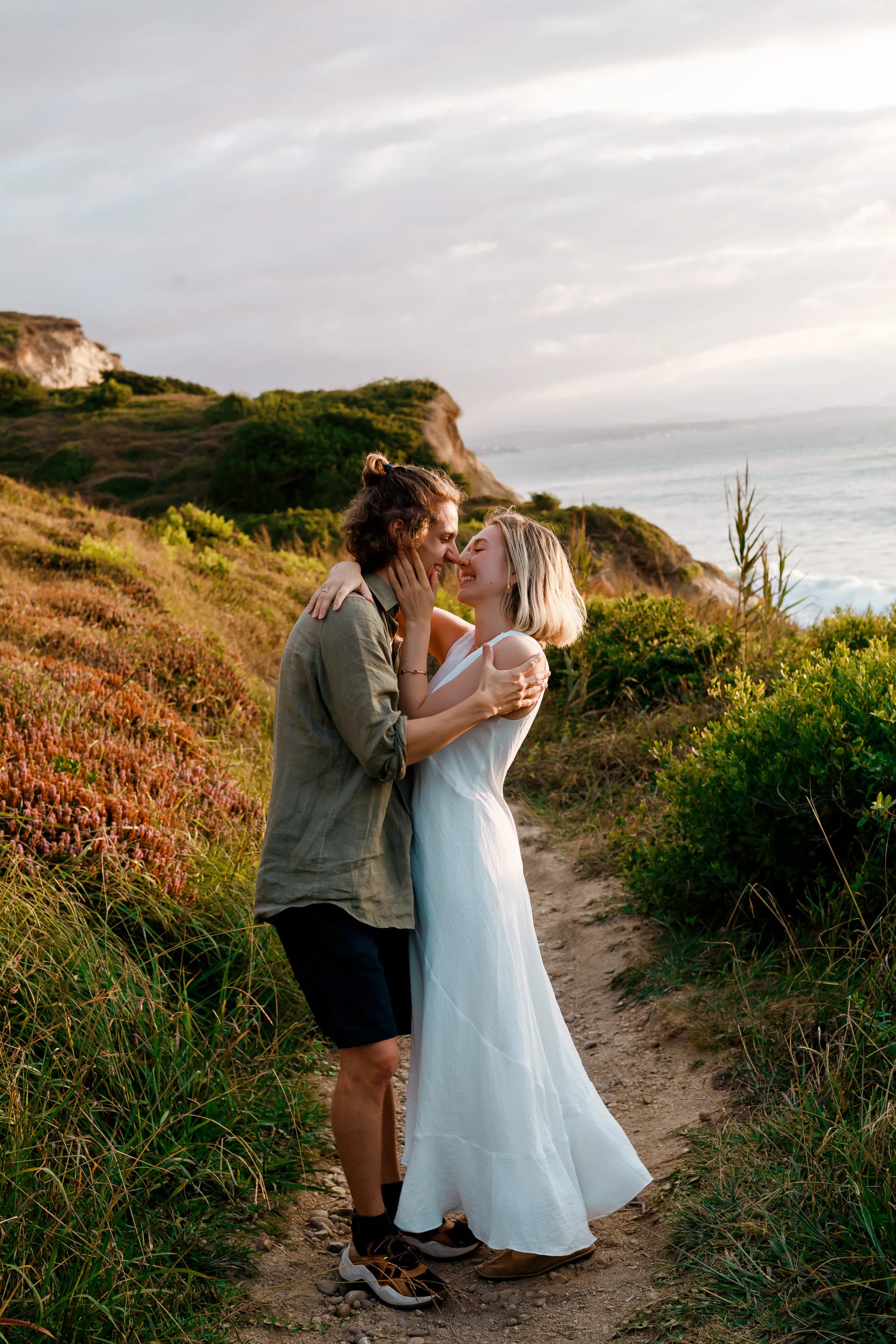
Hunstanton Cliffs offer something genuinely unique on this stretch of coast: the famous red-and-white striped chalk and carrstone cliffs looking out over the Wash. Where most of the Norfolk coast is flat and horizontal, Hunstanton gives vertical structure and a striking, instantly recognisable backdrop. Couples who want a look with a bit more drama and geological texture than open sand often gravitate here, and the clifftop path also gives a wide sea view that works beautifully for wider, landscape-style engagement portraits.
Brancaster Beach is quieter than Holkham and has a wilder, more elemental character. At low tide it opens into huge stretches of exposed sand with distant views out towards Scolt Head Island, and the shallow tidal pools left behind create natural reflective foregrounds and interesting textures underfoot. Wading birds are often working the pools, which adds a sense of life and place to the images without any need for staging. For couples who want the Norfolk coast feeling without the crowds that gather at the more famous beaches, Brancaster is usually my first suggestion.
Burnham Overy Staithe is the most adventurous of the locations I regularly use. A coastal path leads out from the staithe through saltmarsh, past moored boats and grazing marshland, to a genuinely remote beach roughly half an hour's walk each way. It is not a location for anyone who wants convenience, but the isolation is precisely the point — couples willing to make the walk are rewarded with a stretch of coast where it is entirely possible to have the whole beach to yourselves, and the saltmarsh sections along the way provide a completely different visual texture from sand and dunes.
Blakeney and Wells-next-the-Sea round out the locations I most often recommend. Blakeney's harbour and saltmarsh are particularly striking at golden hour when the tidal channels catch the colour of the sky, and Wells has a working harbour front alongside its own stretch of beach backed by beach huts in soft pastel colours, which some couples love for the character and colour it adds without needing a second location.
Timing the Tides and the Light
Norfolk's beaches are properly tidal, and the difference between high and low tide is not subtle. At Holkham and Brancaster in particular, low tide can expose so much sand that the sea is barely visible from the dunes, giving that famous open, expansive look with huge reflective flats when there is standing water left behind. High tide pulls the sea in much closer to the dunes and marram grass, which creates a more intimate, contained feeling with less walking required but a smaller working area. Neither is better — they are simply different moods, and which one suits a couple depends on whether they want vast and dramatic or close and cosy.
Because of this, I always check the tide tables before confirming a Norfolk coast session date and will talk through the options with you in advance. Sunset sessions timed against a mid-to-low tide tend to be the most requested combination, since they give both the colour of golden hour and the reflective wet sand that makes for the most striking images, but a sunrise session on a still morning with the tide out has its own quiet magic and considerably fewer people about. Whichever you choose, I build enough flexibility into the planning that we are not fighting the tide on the day.
What to Wear on the Coast
Coastal light and coastal wind both affect what works well in front of the camera. Because the palette on the Norfolk coast is naturally soft — pale sand, silvery sea, muted sky, dune grass in greens and golds — clothing in warm neutrals, soft blues, sage green, terracotta, and cream tends to sit beautifully within the scene. Strong, saturated colours like bright red or neon shades can pull the eye away from the landscape rather than letting the two work together, though a single considered pop of colour can work well as an accent if it is something you both love.
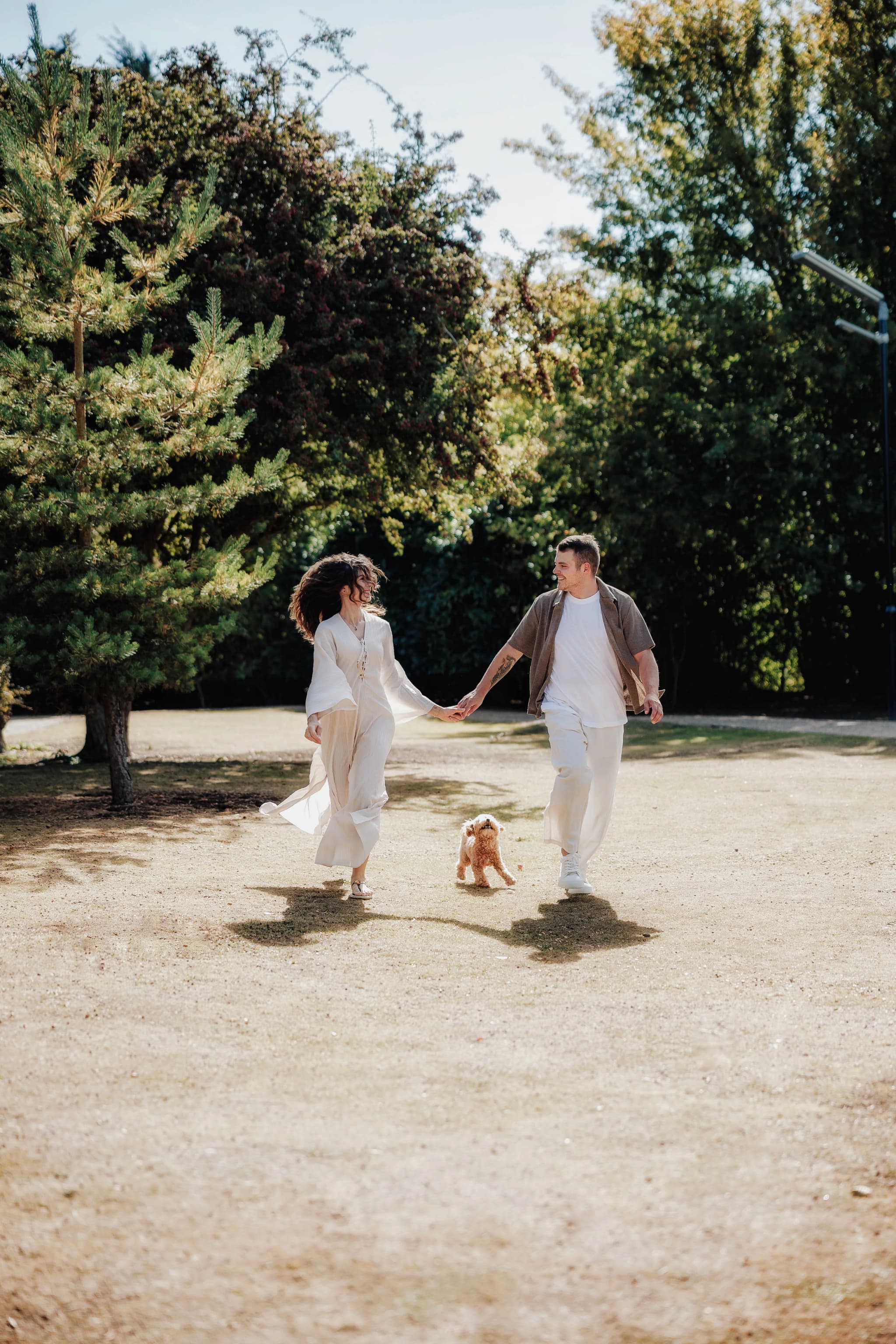
Wind is worth planning for honestly rather than fighting. Norfolk's open coast is rarely still, and flowing fabrics — a midi dress, a loose shirt, a longer coat — tend to photograph beautifully in motion rather than looking dishevelled the way very fitted or structured clothing can when caught by a gust. Bring a warm layer even in summer, since the coast is reliably several degrees cooler and breezier than inland Cambridgeshire, and pack shoes you do not mind getting sandy or damp. Bare feet in the sand photograph well for part of a session, but good boots make the walk out to locations like Burnham Overy Staithe far more comfortable.
Planning a Norfolk coast session
Every Norfolk coast engagement session is planned around your preferred location, the tide, and the light, so no two sessions look quite the same. I am based in Cambridge and travel across East Anglia for coastal shoots as a matter of course.
Enquire about a Norfolk coast sessionHow a Norfolk Coast Session Runs
A coastal engagement session typically runs longer than a Cambridge city or countryside session, simply because there is more ground to cover and more than one type of scenery within a single location — woodland, dunes, open beach, and often a harbour or village street nearby. I generally suggest allowing an hour and a half to two hours on location, plus travel time from Cambridge, which makes it a proper half-day out rather than a quick appointment. Many couples turn it into an occasion in its own right, stopping afterwards for fish and chips at Wells or a drink somewhere along the coast road.
Because the locations are more exposed to weather than a sheltered woodland or college garden, I keep a close eye on forecasts in the days before a coastal session and will discuss moving the date if conditions look genuinely unworkable — heavy rain or very poor visibility rather than ordinary British wind, which the coast handles better than most places, and which often adds movement and energy to the images rather than detracting from them. Overcast skies on the coast are rarely a problem either; flat, even light on an open beach still produces soft, flattering photographs, just with a different mood from a golden sunset.
Making the Most of the Journey from Cambridge
The drive from Cambridge to the north Norfolk coast takes you through some genuinely pretty countryside — the Fens giving way gradually to the gentle hills around Fakenham and then the flatter coastal strip itself. Most of the locations I use are within a fairly tight cluster along the coast road between Hunstanton and Blakeney, which means it is entirely possible to combine two locations in a single session if a couple wants variety, for instance starting among the pines at Holkham and finishing on the open sand as the light turns golden, or beginning on the cliffs at Hunstanton and moving along the coast as the tide changes.
For couples getting married elsewhere in Cambridgeshire but with a personal connection to Norfolk — childhood holidays, a favourite crabbing spot, a family caravan near the coast — a Norfolk engagement session is often a meaningful way of bringing a place that matters to you into your wedding story, long before the big day itself. It also gives us a proper opportunity to work together and get comfortable in front of the camera somewhere unhurried and beautiful, which tends to make people noticeably more relaxed by the time the wedding day arrives.
The Norfolk coast rewards a bit of planning — watching the tide, choosing the right stretch of beach, dressing for wind rather than against it — but the results are unlike anything achievable closer to Cambridge, and that is exactly why so many couples choose to make the trip. If you would like to talk through locations, timing, and what a Norfolk coast session might look like for the two of you, get in touch and we can start planning a date around the tides and the light.

Yana Skakun
Photographer · England
Professional wedding, family and portrait photographer based in England. Passionate about capturing authentic emotions and timeless moments.
About Yana →Norfolk coast engagement photosbeach engagement photography NorfolkHolkham engagement photographyNorfolk engagement photographer
Engagement — Engagement & Love Story Photography in Cambridge & England
Engagement and pre-wedding sessions with Yana Skakun offer a natural way to get comfortable in front of the camera before your wedding day. Sessions take place at meaningful personal locations — Cambridge, the Cambridgeshire countryside, coast, woodland, or wherever your story began. This guide — Norfolk Coast Engagement Photos: Windswept & Beautiful — is part of the photography journal: practical, experience-based advice drawn from real sessions across England. Whether you arrived searching for norfolk coast engagement photos or beach engagement photography norfolk, the same care and attention shapes every session Yana photographs.
Engagement & Love Story Photography sessions are available year-round, with bookings open across Cambridge, Ely, Huntingdon, Peterborough, and further afield — East England, London, the Midlands, and beyond. If you have specific questions about holkham engagement photography, mention it in your enquiry. Get in touch through the contact form above to check availability and discuss your session. Enquiries are welcomed from anywhere in the UK.
Frequently Asked Questions
What is the point of an engagement shoot?+
An engagement shoot lets you and your partner get comfortable in front of the camera before your wedding day. You'll learn how to move, where to look, and how to interact naturally — so wedding portraits feel relaxed rather than awkward. It also gives you and your photographer a chance to work together before the big day.
How long does an engagement photo session take?+
Most engagement sessions last 60–90 minutes. This gives enough time to warm up, explore two or three locations, try a few different looks, and capture a variety of shots without feeling rushed.
What should you wear for an engagement photoshoot?+
Wear outfits that feel like you — not something you'd only wear once. Complementary colours work well (you don't have to match exactly). Avoid bold logos and very small patterns. Bring a second outfit if you'd like variety. Think about where the shoot is happening and dress for the setting.
When should you do an engagement shoot?+
Ideally 6–12 months before your wedding — early enough that you can use the images for save-the-dates, but close enough to your wedding that the images feel current. Early morning or the hour before sunset gives the best natural light.
Where are good locations for engagement photos in England?+
Cambridge's Backs and botanic garden, London's parks and riverside, the Cotswolds countryside, coastal spots in Cornwall and Dorset, and historic estate gardens all make beautiful backdrops. Your photographer can suggest locations that suit your style and will photograph well in the season you're shooting.
Continue Reading
Related Articles
Engagement
Cotswolds Engagement Photography: Honey-Stone Villages & Rolling Hills
7 min read · Read Article
Engagement
Suffolk Countryside Engagement Shoot: Lavender Fields & Country Lanes
6 min read · Read Article
Engagement
Romantic Golden Hour Couples Shoot: Why Sunset Sessions Are Magic
6 min read · Read Article
Get in Touch
Ready to Book Your Session?
Get in touch to discuss your vision — I'll reply within 24 hours.