Yana Skakun
London Wedding Photography
Cinematic Wedding Photographer London
Film-style wedding photography across London's most spectacular architecture — widescreen compositions, storytelling sequences and the city itself as the lead character.
London as Cinematic Location
London has been a film location for more than a century — and it is easy to see why. No other city in the world layers Georgian terraces against Victorian industrial, Baroque civic grandeur against modernist riverside, with a river running through the centre that catches light differently at every hour. This is the city that has provided the backdrop for countless films precisely because it is extraordinarily photogenic.
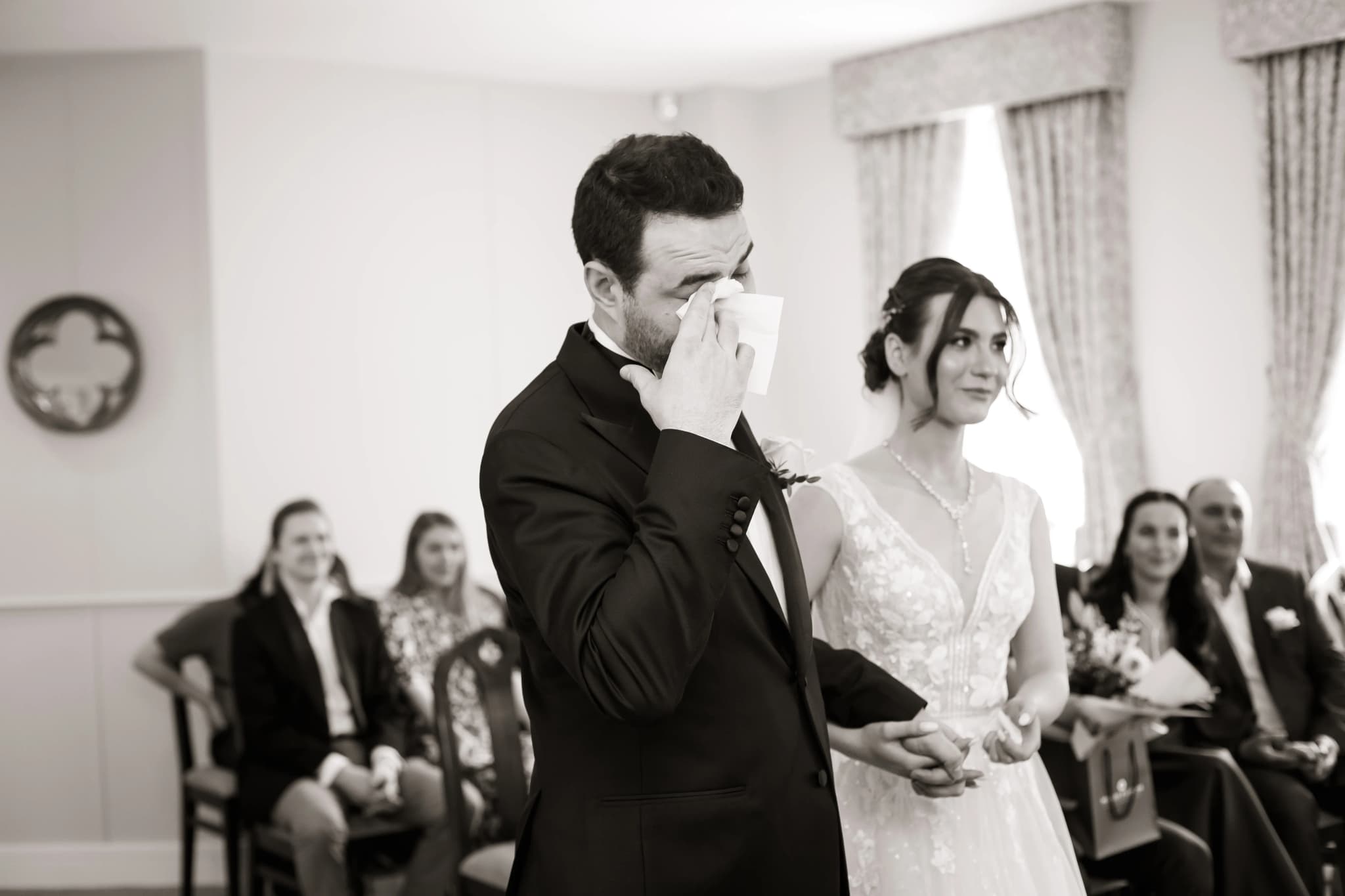
Cinematic wedding photography applies the visual language of cinema to the wedding day: environmental framing that places the couple within the architecture of London rather than isolating them from it; colour grading that creates tonal atmosphere rather than simple exposure correction; sequential storytelling that gives the gallery the rhythm of a well-edited film.
The result is a wedding gallery that feels like watching a beautiful short film of your day — with London playing itself: brilliant, layered, unmistakable.
London's Most Cinematic Wedding Settings
Architecture and location that bring genuine cinematic power to every frame.
The Ned
Poultry, City of London
Edwin Lutyens' former Midland Bank — nine restaurants and a members' club within soaring marble columns and coffered banking-hall ceilings. The scale, the light and the geometric grandeur are innately cinematic. Wide-angle compositions here rival any film set.
Tate Modern
Bankside, South Bank
The Turbine Hall's cathedral scale and industrial brutalism create compositions unlike any other venue in London. The ramp, the shadows, the sheer volume of air — these are cinematic in the truest sense. Opposite St Paul's across the Millennium Bridge.
Battersea Power Station
Nine Elms, South West London
Art Deco industrial on a monumental scale — the brickwork, the chimneys, the boiler house interiors and the riverside approach have all been used by the British film industry for decades. Now a spectacular wedding venue with unmatched architectural power.
Tobacco Dock
Wapping, East London
Grade I listed Victorian warehouse with exposed iron columns, brick vaulting and skylights that flood the space with directional industrial light. The cinematic potential of this architecture — original 1812 dock infrastructure — is exceptional for couples and group shots.
River Thames & South Bank
Southwark Bridge to Tower Bridge
The Thames at golden hour or blue hour with Tower Bridge in the frame is as cinematic as London gets. The South Bank's combination of bridges, skyline, the sweep of the river and the changing sky produces endless widescreen portrait opportunities.
Mayfair & Belgravia Streets
Grosvenor Square, Belgrave Square & Eaton Sq
London's Georgian garden squares — their perfectly composed terraces, iron railings, plane trees and the quality of light in early morning or at dusk — provide a movie-still backdrop that evokes 100 years of British cinema. Brief travel within London.
London Wedding Packages
No travel charge within Greater London. Clear, transparent pricing.
Essential
£1,395
- 6 hours coverage
- 300+ edited images
- Online gallery
- Personal licence
Most Popular
Full Day
£2,395
- 10 hours coverage
- 500+ edited images
- Online gallery
- Engagement session
Premium
£3,495
- 12 hours coverage
- 700+ edited images
- Fine art album
- Venue recce included
Why Choose Cinematic Photography for Your London Wedding
Widescreen Compositional Thinking
Cinematic photography is above all compositional. Subjects are placed within their environment rather than isolated from it — using architectural lines, the geometry of space and the relationship between people and place to build a frame with depth and intention.
Storytelling Through Sequence
A cinematic gallery reads as a film does — establishing wide shots, intimate close-ups, transitional moments, emotional peaks. The sequence of images tells the complete story of the day with the rhythm and pacing of a well-edited cut.
London Architecture as a Lead Character
In the best cinema, location is character. London's architecture — Georgian, Victorian, Baroque, Modern — is a participant in every frame, not a backdrop. The Ned's columns, Tower Bridge's towers, Battersea's chimneys: all are cast in the story.
Colour Grading With Tonal Depth
Cinematic colour grading references specific film stocks and cinematography conventions — lifted blacks, warm highlights, teal shadow bias or warm shadow bias depending on the palette of the venue and the season. Not a preset: a deliberate tonal decision.
Low-Third Couple Compositions
Placing the couple in the lower third of the frame with architecture or landscape filling the upper two-thirds is one of the most powerful tools in cinematic portraiture. It establishes scale, creates atmosphere and makes images that feel epic rather than merely posed.
London-Wide Coverage, No Travel Cost
Based in London with comprehensive knowledge of every borough's cinematic potential. No travel charge within the M25. Pre-wedding recces of venues are offered as standard on Premium packages — understanding the light at a space before the day is essential.
Frequently Asked Questions
What makes wedding photography 'cinematic'?
Cinematic wedding photography applies the visual language of filmmaking to still images: wide, environmental framing that puts people in their world; deliberate colour grading that creates atmosphere; sequential storytelling that gives the gallery the rhythm of a film; and a compositional vocabulary borrowed from cinematographers rather than portrait photographers. The result is images that feel like frames from a beautiful film rather than photographs taken at a wedding.
Which London venues work best for cinematic wedding photography?
The venues with strong architectural character and interesting light are the standouts: The Ned (Lutyens banking hall), Tate Modern (Turbine Hall), Battersea Power Station (Art Deco industrial), Tobacco Dock (Victorian Grade I), and any riverside venue along the South Bank. Outside dedicated venues, London's Georgian and Victorian streets — Belgravia, Mayfair, Notting Hill — provide outstanding cinematic portrait locations that can be visited in the natural gaps of any London wedding day.
Can cinematic photography work at a traditional church wedding?
Exceptionally well. The interior architecture of a historic church — vaulted nave, stained glass, stone columns — is already cinematic in scale and character. A processional shot down the nave with the couple sharp in the foreground and the congregation blurred into the depth of the church behind them is one of the most powerful frames in wedding photography. The cinematic philosophy applies as naturally to a 12th-century church as to Lutyens' Midland Bank.
Is cinematic photography very heavily processed or filtered?
No. The colour grading is controlled and subtle — cinematic tones are achieved through careful exposure, selective contrast work and specific colour decisions rather than heavy LUT application. The goal is tonal richness, not obvious filtration. The images feel filmic because of how they are composed and lit, not because of a processing treatment applied after the fact.
What are the travel costs for London weddings?
There is no travel charge for weddings within Greater London. Central London, East London, South London, North and West London are all covered without additional cost. Venues at the outer edge of the M25 may attract a small supplement — confirmed at enquiry. Parking costs at Central London venues are covered within the package price.
Bring a Cinematic Eye to Your London Wedding
Whether you are getting married at The Ned, Tate Modern or a Chelsea townhouse — get in touch to discuss how London's architecture and light can shape your wedding gallery.
Get in Touch
Let's Create Together
Tell me about your vision and I'll be in touch within 24 hours.