Yana Skakun
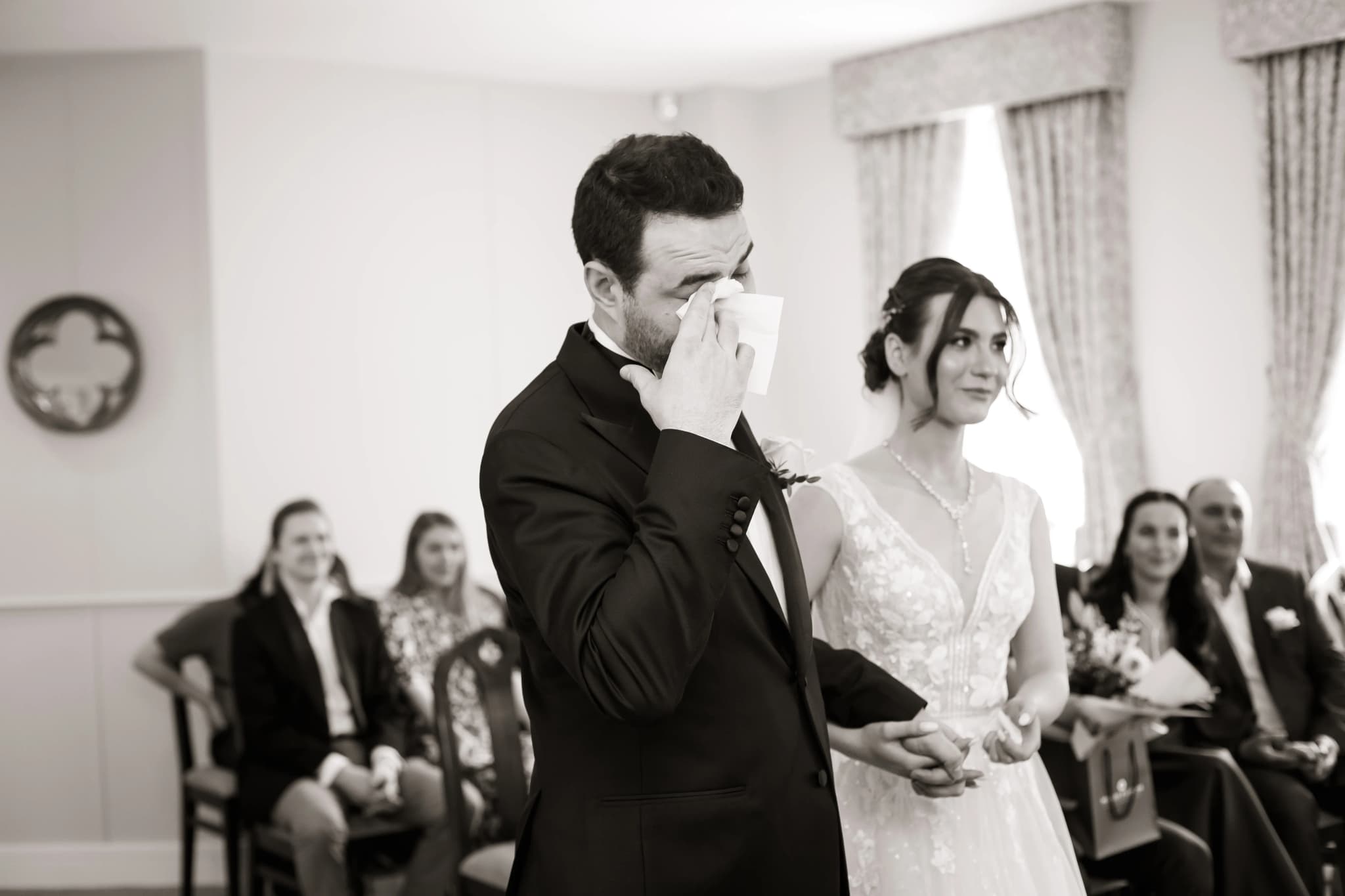
Wedding Photography — Peak District
Peak District Wedding Photographer
Gritstone moorland to limestone dales, Chatsworth Estate to Hope Valley — the Peak District at its most photographic.
Wedding Photography in the Peak District
England's first National Park is also one of its most distinctive: the geological divide between the Dark Peak gritstone in the north and the White Peak limestone in the south creates two completely different landscapes within a single park — the austere millstone grit moorland of the northern edges, and the intimate limestone dales and flower-rich valleys of the south.
Wedding photography in the Peak District works at the intersection of these two geological worlds — the drama of the gritstone edges and the intimacy of the limestone dales — and adds the architectural richness of Chatsworth, the Georgian spa of Buxton, and the Norman churches at the heart of every stone village.
Full coverage across the Peak District National Park — from Stanage to Dovedale.
Peak District Wedding Locations
Six areas of the Peak — each a different version of the landscape.
The Dark Peak
Millstone grit moorland — wild and brooding
The Dark Peak is the northern and eastern section of the National Park, defined by the millstone grit rock that determines its character: black and grey rock edges (Stanage, Burbage, Derwent), dark moorland covered in heather and cotton grass, peat bogs and reservoir valleys. Stanage Edge — the most famous of the Dark Peak edges — is a photographic destination of extraordinary power: the long gritstone escarpment running north-south across the moorland, the Sheffield suburbs visible to the east, the wild moor to the west. Dark Peak weddings have a specific mood: austere, honest, connected to a landscape that has not changed in essential character since the Bronze Age.
The White Peak
Limestone dales, clear rivers, meadow villages
The White Peak is the central and southern section of the National Park, defined by limestone: the white rock of the dale faces, the clear fast rivers (Dove, Manifold, Bradford), the meadow fields and stile-punctuated walls. The limestone dales of the White Peak — Dovedale, Lathkill Dale, Bradford Dale, Wolfscote Dale — are among the most beautiful valley landscapes in England: intimately scaled, botanically rich, geologically dramatic in the exposure of the rock faces and cave entrances. White Peak wedding photography has a different, gentler quality than the Dark Peak.
Chatsworth Estate
The greatest house in England — its park and gardens
Chatsworth House — the seat of the Dukes of Devonshire, set in its 1,000-acre park by the River Derwent at Edensor — is the most architecturally magnificent wedding venue in the Peak District and one of the finest in England. The park, designed by Capability Brown, provides an entirely different environment from the wild Peak — the manicured landscape of formal gardens, cascade waterfall, Emperor Fountain, and park viewpoints that make Chatsworth the gold standard of English country house settings.
Buxton & the Spa Town
Crescent, opera house, Georgian architecture
Buxton sits at 1,000 feet above sea level — one of the highest market towns in England — surrounded by the Peak on all sides. The town itself is architecturally extraordinary for this altitude: the Crescent (the Buxton equivalent of the Bath Royal Crescent), the Opera House, the Devonshire Dome (the former Great Stables of the Duke of Devonshire, now part of the University of Derby). Buxton weddings combine the dramatic hilltop position with the architectural refinement of an 18th-century spa town.
Hope Valley & Castleton
Mam Tor, Cave Dale, Peveril Castle
Hope Valley is the principal valley of the Peak District: the Vale of Hope between the gritstone moors to the north and the limestone country to the south. Castleton, at its head, is one of the Peak's most distinctive villages: the ruins of Peveril Castle on the hill above, the four showcaves below, the Blue John mineral unique to this valley. Cave Dale — the dry limestone valley directly behind Castleton rising to the castle — is one of the most dramatically contained portrait locations in the Peak.
Bakewell, Tideswell & Village Venues
Stone market towns, Norman churches, Derbyshire villages
The Peak District villages and small towns — Bakewell (the tart, the river, the medieval bridge), Tideswell (the Cathedral of the Peak, its Norman church the most impressive in the National Park), Eyam (the plague village), Youlgreave, Hartington — are architecturally and photographically rich in a quiet, specific way. Stone buildings, churchyard approaches, village greens and market crosses: the details of a rural English market town that has changed little in its built fabric since the Georgian period.
Peak District Wedding Photography Packages
Complete coverage for Peak District weddings — from moorland elopements to Chatsworth celebrations.
Essential
£1,395
- 6 hours coverage
- 300+ edited images
- Ceremony + Peak landscape portraits
- Online gallery
Most Popular
Full Day
£2,395
- 10 hours coverage
- 500+ edited images
- Gritstone edge golden hour portraits
- Online gallery
Premium
£3,495
- 12 hours coverage
- 700+ edited images
- Peak District engagement session
- Fine art album
Why the Peak District Makes for Exceptional Wedding Photography
Two Landscapes in One National Park
The geographic split between Dark Peak and White Peak gives the Peak District an unusual richness: two completely different photographic environments within a single National Park. Dark Peak for drama and wildness; White Peak for intimacy and botanical richness. A wedding venue in the Hope Valley sits between both, with the dark moor edges to one side and the white limestone dales to the other.
The Gritstone Edges
The gritstone edges of the Dark Peak — Stanage Edge (4km long), Burbage Edge, Millstone Edge, Curbar Edge — are the single most distinctive landscape feature of the Peak District for photography. The long escarpment line against the moorland sky, the texture of the millstone grit, the climbers on the rock face, the view east and west across the landscape: the edges are an architectural element of the landscape that no other English upland has in the same form.
Dovedale and the Limestone Dales
The White Peak limestone dales, particularly Dovedale with its famous stepping stones and Reynard's Cave, provide a landscape of intimate natural beauty that is entirely different from the open moorland of the Dark Peak. The enclosed dale with its clear river, the reflection of the dale walls in the water, the wildflowers on the limestone grassland: portrait settings of extraordinary natural quality.
Accessibility from Three Cities
The Peak District is uniquely accessible: it is the only National Park that sits between two major cities (Sheffield and Manchester) and within 30 miles of a third (Derby). This accessibility makes it the most visited National Park in England and also the most accessible destination wedding option for couples in the Midlands and North of England.
Year-Round Photographic Excellence
Peak District seasons are photographically productive all year: summer heather on the Dark Peak (late July–September), wildflower hay meadows in the White Peak (June), bracken gold in autumn, snow cover on the moorland in winter. The Peak performs well in variable weather — in fact the low cloud and dramatic sky common in the upland climate is often more photographically interesting than clear sunshine.
Stone Village Architecture
The stone buildings of the Peak District villages — built from local gritstone or limestone depending on location — have an architectural consistency and photographic quality that makes even the most modest farmyard or village street an excellent portrait setting. The grey stone, the low walls, the church in the centre of the village: the built fabric of a Peak village is as photogenic as the landscape it sits in.
Frequently Asked Questions
Can we use Stanage Edge for wedding portraits?
Yes — Stanage Edge is one of the most photogenic portrait locations in northern England, and portrait sessions there are a specific Peak District offering. The logistics require a 10–15 minute walk from the nearest parking, and the weather on the edge is more exposed than in the valley. Timing is planned for the best light angle (generally afternoon, with the sun to the south-west illuminating the face of the gritstone). The portraits from Stanage Edge — the long grey escarpment, the moorland sky, the view east to Sheffield — are completely unlike anything possible at any other English wedding venue.
What Peak District venues do you know well?
Chatsworth (the house, park, and Cavendish Pavilion), Losehill House Hotel, The Maynard at Grindleford, Hassop Hall Hotel, Thornbridge Hall (the Gothic country house near Bakewell), Ridgeway Farm, and many of the White Peak and Dark Peak farm venues. Venue-specific knowledge covers where the light falls, what the outdoor portrait options are, and how the specific landscape of each venue can be best used.
Is the Peak District good for winter weddings?
The Peak District in winter can be exceptional: snow on the Dark Peak moorland changes the landscape completely, the bare gritstone edges in winter light have a pared-back drama, and the stone villages in frost or light snow are immediately and powerfully atmospheric. Winter brings no heather and no wildflowers, but the structural qualities of the landscape — the geology, the walls, the buildings — are more clearly visible without summer vegetation.
Can you cover both Dark Peak and White Peak settings on the same day?
Yes — many Peak District weddings are positioned to use both landscapes. A ceremony in a Hope Valley village sits exactly between Dark and White Peak, and portrait sessions can move between the moorland edge and the limestone dale within a short drive. This dual access is one of the specific advantages of a Hope Valley venue.
Is there parking near the main scenic locations?
Most Peak District portrait locations — Stanage Edge, Curbar Edge, the Dovedale Stepping Stones, the Chatsworth park — have car parking within reasonable walking distance, though the car parks at popular locations can be full on summer weekends. Planning the portrait session with transport logistics in mind is part of the pre-wedding preparation, and the timing recommendations factor in the realistic access conditions.
Planning a Peak District Wedding?
Let's make the most of the landscape — tell me about your Peak District venue.
Get in Touch
Let's Create Together
Tell me about your vision and I'll be in touch within 24 hours.