Yana Skakun
Photojournalistic Wedding Photography — United Kingdom
Documentary Wedding Photographer UK
No posing. No direction. No performance. Your wedding day exactly as it happened — from morning preparations to the last dance.
Pure Photojournalism — Your Day as It Was
Documentary wedding photography is the most demanding and the most honest approach to wedding coverage. It requires the photographer to observe continuously, anticipate rather than direct, and resist every temptation to arrange or manage what is being photographed. The discipline is significant; the result is a gallery with an authenticity that no other photographic approach can produce.
Every image in a documentary wedding gallery is real: a genuine moment, at a genuine time, with genuine emotion. Nothing was reconstructed, nothing was prompted for the camera, nothing was staged to look candid. The photographs are what they appear to be, because the photographer was present and watching rather than directing and arranging.
Documentary wedding photography across the UK — from the Scottish Highlands to Cornwall, from rural Cotswolds to central London.
Documentary Coverage Through the Day
How the documentary approach applies to each part of your wedding day.
The Morning — Unobserved Observation
Preparations as they actually happen
Documentary morning coverage begins the moment the photographer arrives and does not stop until the ceremony. There is no direction, no arrangement, no request to redo anything for the camera. The photographer moves through the space — the hotel suite, the family home, the bridal party gathered around the mirror — and documents what is happening. The resulting images of the morning have the texture of photographs taken by someone who happened to be present, not by a photographer running a session.
The Ceremony — Photojournalistic Precision
The vow exchange, undisturbed
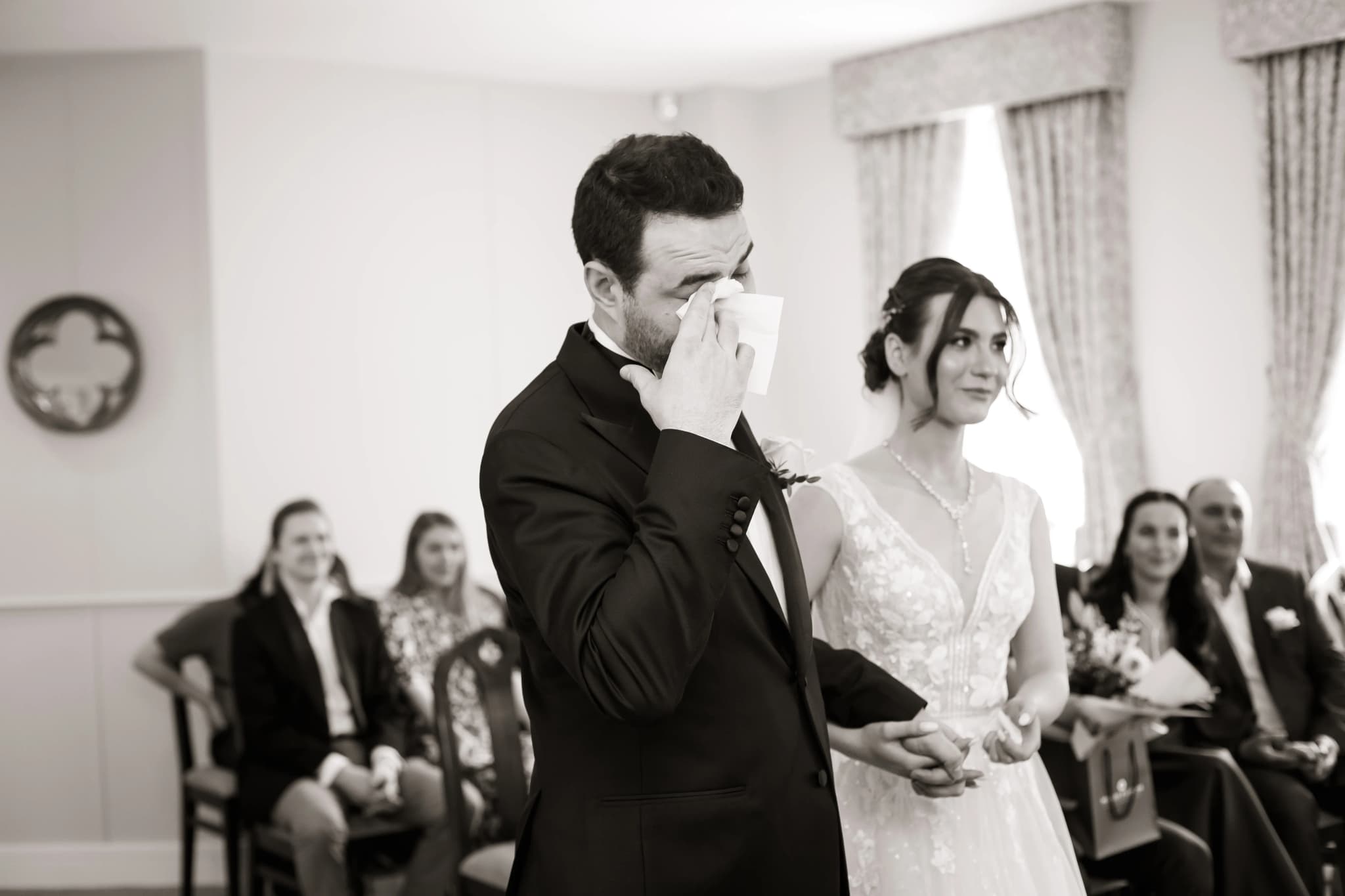
A documentary ceremony approach means positioning before the ceremony begins, identifying the best observational positions within whatever rules the venue or officiant imposes, and then not moving unless the coverage requires it. The ceremony is not managed or directed. The couple is never asked to look at the camera. The guests are photographed as documentary subjects — reacting, listening, watching — not as participants in a formal group shot. The gallery covers every significant moment without any moment being staged.
Drinks and Reception — The Social Documentary
The gathering as a living event
Documentary reception coverage is the closest wedding photography comes to pure street photography: a large, complex social event with multiple simultaneous narratives, photographed by someone who has disappeared into the crowd. The photographer works unannounced through the guests, capturing the conversations, the laughter, the reunions, the table moments, the quiet corners away from the main gathering. No one is asked to group up. No direction is given. The social energy of the event is documented as it actually exists.
Couple Portraits — Minimal Direction
Natural movement, not static arrangement
Pure documentary couple portraits use only the most minimal direction — a suggestion of movement, a general context — rather than posed arrangement. The couple is asked to walk, to hold each other, to move through a landscape; the photographer documents the result of that movement rather than arranging the couple into a fixed composition and shooting it. The images produced are indistinguishable from genuinely candid moments because the direction has shaped behaviour rather than produced a performance.
The Speeches — Emotional Peak Documentation
The most emotionally rich part of the day
Speeches are the documentary wedding photographer's most productive environment: genuine emotion, unrepeatable moments, simultaneous reaction from every face in the room. The documentary approach to speeches means working the room — not staying fixed at a single position — and covering both the speaker and the audience reactions simultaneously, moving between the two in the moments between peaks of emotion. The gallery from a well-covered speech sequence tells the story of every person in the room.
The Evening — From First Dance to Last
Low-light, high-energy, genuine
Evening documentary coverage — the first dance, the dancing that follows, the late-night conversations at the edge of the room — requires a different technical approach from the daytime coverage: the low light of a reception room demands a camera technique that preserves the ambient quality and emotional warmth of the evening light rather than crushing it with flash. The documentary approach to the evening produces images that look like the evening actually felt — warm, energetic, genuinely alive.
Documentary Wedding Photography Packages
Genuine documentary coverage from morning to midnight — anywhere in the UK.
Essential
£1,395
- 6 hours coverage
- 300+ edited images
- Online gallery
- Personal licence
Most Popular
Full Day
£2,395
- 10 hours coverage
- 500+ edited images
- Complete day narrative
- Online gallery
Premium
£3,495
- 12 hours coverage
- 700+ edited images
- Fine art album
- Second shooter option
Why Documentary Coverage Produces the Most Authentic Galleries
No Posing, No Performance
The fundamental promise of documentary wedding photography is the absence of the manufactured quality — the stiff poses, the arranged groups, the requested expressions — that characterises traditional wedding portraiture. Documentary images look like photographs of real things happening because they are. No one was asked to stand in a certain way, look in a particular direction, or produce an expression for the camera. The images are genuine because the approach was genuine throughout the day.
Every Moment Is Real
A documentary wedding gallery contains no reconstructions, no re-dos, no staged moments photographed as if they were candid. The first look is the actual first look. The reaction during the vow exchange is the genuine reaction at the moment of the vow exchange. The laughter at the table happened at that table at that moment. This authenticity — which cannot be faked in post-production and can only be achieved through a consistently documentary approach — is the defining quality of a great documentary wedding gallery.
Emotionally Truthful
Because documentary coverage documents emotion as it occurs rather than prompting emotion for the camera, the emotional content of a documentary gallery is consistently more truthful than that of a traditionally photographed wedding. The tears are actual tears. The laughter is spontaneous. The quiet moment between the couple during drinks is documented because the photographer was watching without being seen, not because the couple was asked to have a quiet moment for the camera. Emotional truth requires observational discipline.
Your Guests Look Natural
One of the most consistent feedback points from documentary wedding clients is that their guests look completely natural in the gallery — like real people at a real event rather than participants in a photography session. The documentary approach means guests are never organised, never directed, never aware that a photograph of them specifically is being made. The social coverage is built from genuine moments: a conversation captured mid-sentence, a reaction photographed from the right position at the right distance.
Works Everywhere
Documentary wedding photography is venue-agnostic in a way that more structured wedding photography is not. It does not depend on specific locations for formal portrait sessions, does not require particular backdrops or settings for key images, and does not need a timed schedule that reserves time for organised photography. The documentary approach turns the entire venue — every room, every corner, every outdoor space — into a photographic environment, because genuine things happen everywhere throughout the day.
A Gallery That Tells the Whole Story
A documentary wedding gallery tells the complete story of the day from first image to last — not a curated selection of highlight moments extracted from a managed event, but a flowing narrative of genuine life that begins with the morning and ends with the last dance. Every photograph contributes to the story. Every image is connected to the ones before and after it. The gallery functions as a documentary record of a specific day, not a collection of images that could have been taken at any wedding.
Frequently Asked Questions
What is the difference between documentary and traditional wedding photography?
Traditional wedding photography is organised: the photographer directs the couple and guests into positions, prompts expressions, and manages the photography session. Documentary wedding photography observes: the photographer works around what is happening without directing or arranging, and the images result from genuine events rather than managed ones. A traditional gallery may have more technically perfect compositions; a documentary gallery will have more genuine emotional content. Most couples who choose documentary over traditional do so because they value authenticity over technical arrangement.
Will we get formal group photographs at a documentary wedding?
Yes — documentary wedding photographers typically set aside 15–20 minutes for a small number of formal family group photographs, because many couples want a complete record of the family groups present at the wedding. These formal groups are the one departure from pure documentary coverage; everything else — all couple photography, all social coverage, all event coverage — is documentary. The group photographs are brief and organised; the rest of the day is unmanaged.
Is documentary wedding photography less staged than lifestyle photography?
Yes — pure documentary photography involves no direction at all, while lifestyle wedding photography uses minimal directional guidance (asking the couple to move or walk rather than arranging a static pose). Documentary is the most observational of the wedding photography approaches; lifestyle is the middle position between documentary observation and traditional posed portraiture. Documentary coverage can occasionally miss a specific moment; lifestyle coverage provides more consistency in the couple portrait quality.
Can documentary wedding photography work at a very formal or traditional wedding?
Yes — documentary coverage works particularly well at formal weddings precisely because the structure and ritual of a formal event provides continuously rich photographic content. The ceremony processional, the formality of a black-tie dinner, the choreography of the first dance — these structured events are photographed documentarily as they happen, and the formality of the event context typically enhances rather than diminishes the documentary quality. Formal events have genuine emotion as well as structure.
How many images will I receive from documentary wedding coverage?
Documentary coverage typically produces a similar or slightly higher image count than structured coverage of the same duration — because the photographer is continuously observing rather than spending time on session management. A 10-hour Full Day package delivers 500+ edited images. The images are curated from the full documentary take — typically 3,000–4,000 raw frames for a full day — in the post-processing stage, with each delivered image representing a genuine documentary moment.
Looking for Pure Documentary Coverage?
Honest, unposed, photojournalistic wedding photography across the UK.
Get in Touch
Let's Create Together
Tell me about your vision and I'll be in touch within 24 hours.