Yana Skakun
Wedding Photojournalism — United Kingdom
Reportage Wedding Photographer UK
The decisive moment. The human story. News photography discipline applied to the most significant day of your life.
Photojournalism Applied to Your Wedding
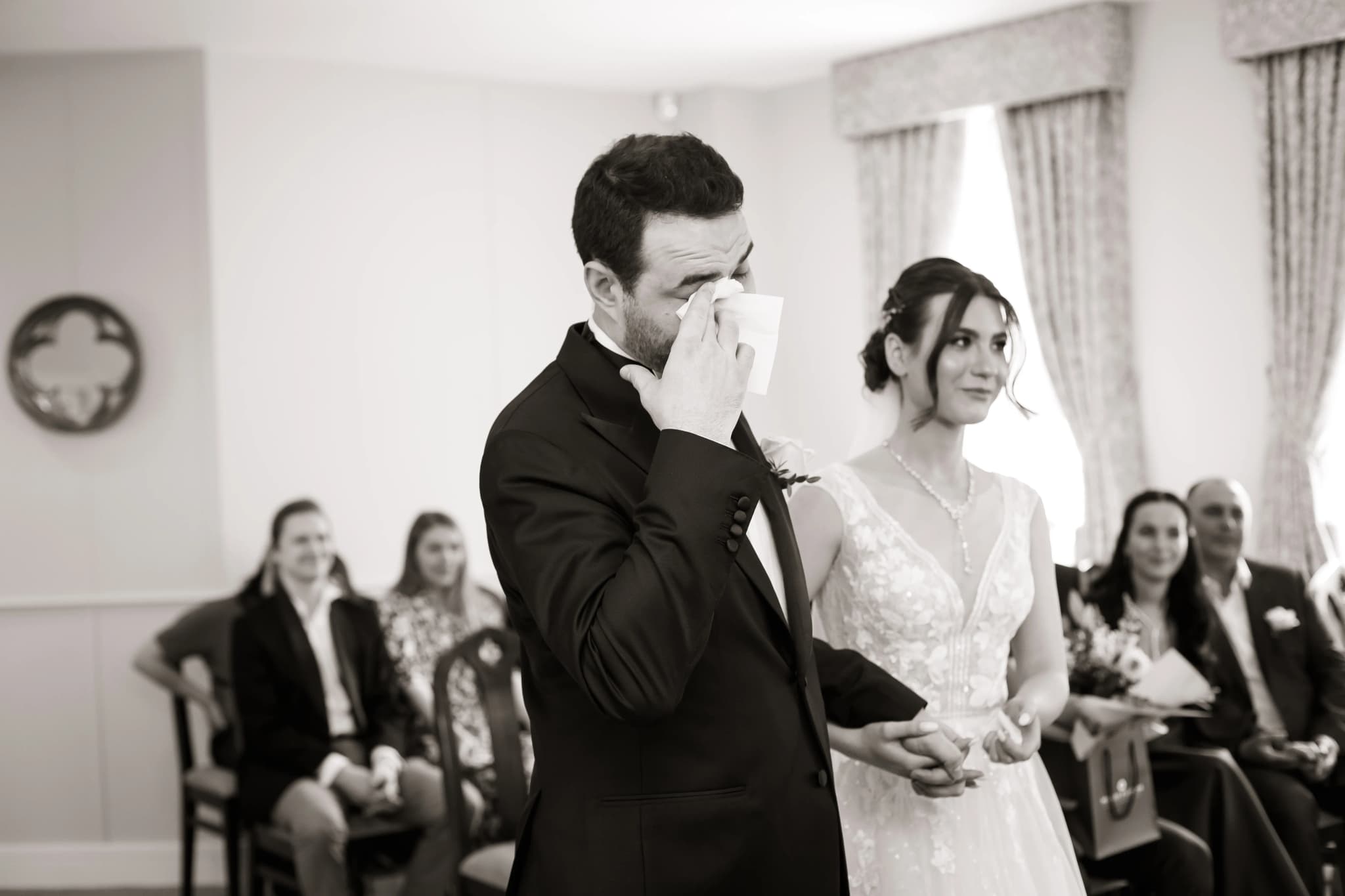
Reportage photography comes from news and documentary journalism: the discipline of photographing real events as they happen, without direction or management, with the technical and observational skills to capture the decisive moment at the highest visual standard. Applied to a wedding, it produces coverage with the honesty and emotional depth of the best photojournalism.
The reportage approach does not organise wedding photography around a predetermined schedule of set pieces. It places a skilled observer into the event and allows the event to produce the images. The discipline is in knowing where to stand, when to press the shutter, and which among the hundreds of potential moments in a wedding day are the genuinely significant ones.
Reportage wedding photography across the UK — the complete photographic record of your day, exactly as it happened.
The Reportage Discipline
The techniques and principles of photojournalism that make reportage wedding coverage different.
The Decisive Moment
Cartier-Bresson's principle applied to weddings
Henri Cartier-Bresson's concept of the decisive moment — the fraction of a second at which the elements of a scene align to create an image that could not exist a moment before or a moment after — is the operating principle of reportage wedding photography. The vow exchange, the reaction during the speech, the first look, the spontaneous embrace: each has a precise moment at which the image is made, and the reportage discipline is the training to be in position and ready to make it at the exact right time rather than approximating it before or after.
Working the Room
Continuous observational presence
Reportage wedding photographers work the event continuously rather than setting up and waiting: moving through the space, identifying potential images before they form, positioning and repositioning to be in the right relationship to the light and the action. This continuous movement is invisible to the guests — the reportage discipline includes the social skill of moving through a complex event without drawing attention — and produces coverage of the whole event rather than coverage from a fixed observational position.
Simultaneous Narratives
Multiple stories happening at once
A wedding is multiple simultaneous stories: the couple's story, the family stories, the friend group stories, the first meetings between people who do not yet know each other. Reportage coverage tracks these narratives simultaneously, making decisions about which story is most important at each moment and moving between them. The gallery from a well-executed reportage wedding tells all of these stories with the depth and visual precision of news photography applied to genuinely significant human material.
Environmental Context
People within their setting
Reportage photography places people within their environment rather than extracting them from it: the couple in the landscape of their venue rather than in front of a selected backdrop, the guests in the social space of the reception rather than arranged against the wall. Environmental context tells a richer story than isolated close-up; reportage coverage works with wide and medium focal work that places subjects in their genuine spatial context as well as the telephoto work that captures expressions at distance.
The Building Sequence
Images that work together as a story
Reportage coverage produces images that function not just individually but as a sequential narrative — a series of images that tell the story of an event in the way that a photographic essay does. The morning sequence, the ceremony sequence, the drinks sequence, the speeches sequence: each can be read as a coherent visual story with a beginning, middle, and end. The gallery from a reportage wedding is designed to be read as well as looked at.
Technical Self-Sufficiency
No light adjustment, no setup, no delay
Reportage photography requires complete technical self-sufficiency: the ability to work in any light condition without modification, at any distance without staging, in any environment without setup. This means knowing precisely how to expose for mixed indoor and window light, how to focus accurately at the moment of speech delivery, how to use available light at the edge of its usable range without flash. The technical capability to work without setup is as important as the observational capability to identify the right moment.
Reportage Wedding Photography Packages
Photojournalistic coverage from morning to midnight — across the UK.
Essential
£1,395
- 6 hours coverage
- 300+ edited images
- Online gallery
- Personal licence
Most Popular
Full Day
£2,395
- 10 hours coverage
- 500+ edited images
- Full narrative sequence
- Online gallery
Premium
£3,495
- 12 hours coverage
- 700+ edited images
- Fine art book/album
- Second photographer
Why Reportage Produces Extraordinary Wedding Galleries
News Photography Standards
Reportage wedding photography applies the visual and ethical standards of news photography to wedding coverage: no images are staged, no moments are recreated, no expressions are prompted. The same discipline that produces great photojournalism — the commitment to truthful documentation at the highest visual standard — produces wedding photography that is both genuinely authentic and genuinely beautiful. The two qualities reinforce rather than override each other in properly executed reportage.
The Decisive Moment, Captured
The training to identify and capture the decisive moment — the fraction of a second at which a situation achieves its maximum expressive intensity — is the core of the reportage discipline. Applied to wedding photography, this means the vow exchange is captured at the exact moment of greatest emotional intensity, not before and not after. The gallery contains the right moments because the photographer was trained to recognise and capture them, not because the moments were staged to be capturable.
Multi-Narrative Depth
A reportage wedding gallery tells multiple stories simultaneously — the couple's story, the family stories, the social stories — with the narrative depth that photojournalism gives to complex events. The gallery is not a single-perspective account of the day but a multi-perspective record that gives equal weight to the significant moments of every key relationship present. Parents, siblings, the long friendship group, the new family connections: all documented with the same journalistic attention as the couple.
Works in Any Conditions
The reportage discipline produces photographers who can work effectively in any photographic condition — dark churches, bright outdoor ceremonies, the low mixed light of a candlelit reception, the high-contrast confusion of a busy dance floor. The technical self-sufficiency of reportage photography means no lighting setup, no delay, no technical management; the photographer arrives and works immediately and continuously, in whatever conditions the venue and the day provide.
A Documentary Record, Not a Portfolio
Reportage wedding photography produces a documentary record of your specific day rather than a portfolio of beautiful wedding images that could have been taken at any wedding. The images are specific: specific expressions, specific relationships, specific combinations of light and situation that only existed at this wedding at this time. This specificity is both the hallmark and the purpose of reportage: to document a specific event so thoroughly and honestly that it can be re-experienced from the images.
No Interruptions to the Day
Reportage photography requires no preparation time, no organised portrait sessions, no gathering of guests for group photographs beyond the formal family groups. The photographer works around the day rather than interrupting it. The ceremony is covered without the couple being aware of where the photographer is. The reception is covered without guests being organised for coverage. The result is a wedding day that flows on its own terms and a gallery that reflects that uninterrupted flow.
Frequently Asked Questions
What is reportage wedding photography?
Reportage wedding photography applies the visual language and ethical standards of photojournalism — the practice of news and documentary photography — to wedding day coverage. Like news photography, reportage wedding photography is committed to genuine truth: no staging, no direction, no manufactured moments. The photographer works as a photojournalist works: moving through the event, identifying the significant moments before they occur, positioning to capture them at the decisive moment, and producing images that are both visually compelling and genuinely accurate records of what happened.
Is reportage different from documentary wedding photography?
The terms are largely synonymous and are often used interchangeably; if there is a distinction, it is one of emphasis. Documentary photography emphasises the comprehensive record — the complete narrative account of the day. Reportage photography emphasises the decisive moment — the specific high-intensity images of the most significant events within the day. In practice, both approaches produce similar results: genuine, unmanaged coverage of the wedding day, with no posed or manufactured elements.
Will there be any organised or posed photographs?
The one departure from pure reportage is the formal family group photographs, which almost all couples want as a record of the family groups assembled at the wedding. These typically take 20–30 minutes immediately after the ceremony. Everything else — all couple coverage, all social coverage, all ceremony and reception coverage — is reportage. The couple portraits are guided rather than posed: the couple is given a context and direction to move in rather than a static arrangement to hold.
Can I see examples of reportage wedding work?
The portfolio galleries on this site include reportage-style documentary coverage from weddings across the UK — country houses, city venues, outdoor ceremonies, register offices. The images illustrate the specific visual language of reportage coverage: environmental context, decisive moment capture, simultaneous narrative coverage of both the couple and the wider gathering. A pre-booking consultation includes a more detailed discussion of the approach and a look at complete galleries from similar weddings.
How quickly will I receive my reportage gallery?
Complete edited galleries are delivered within 6–8 weeks of the wedding day. The post-processing of reportage wedding photography is careful and specific: each delivered image is individually processed to the highest tonal standard rather than batch-processed. The curation is also specific to the reportage approach — images are selected for their decisive moment quality and their narrative contribution to the complete day story, not simply for their technical correctness.
Want Reportage Wedding Coverage?
Photojournalism standards, wedding day subject — genuine and unmanaged, across the UK.
Get in Touch
Let's Create Together
Tell me about your vision and I'll be in touch within 24 hours.