Yana Skakun
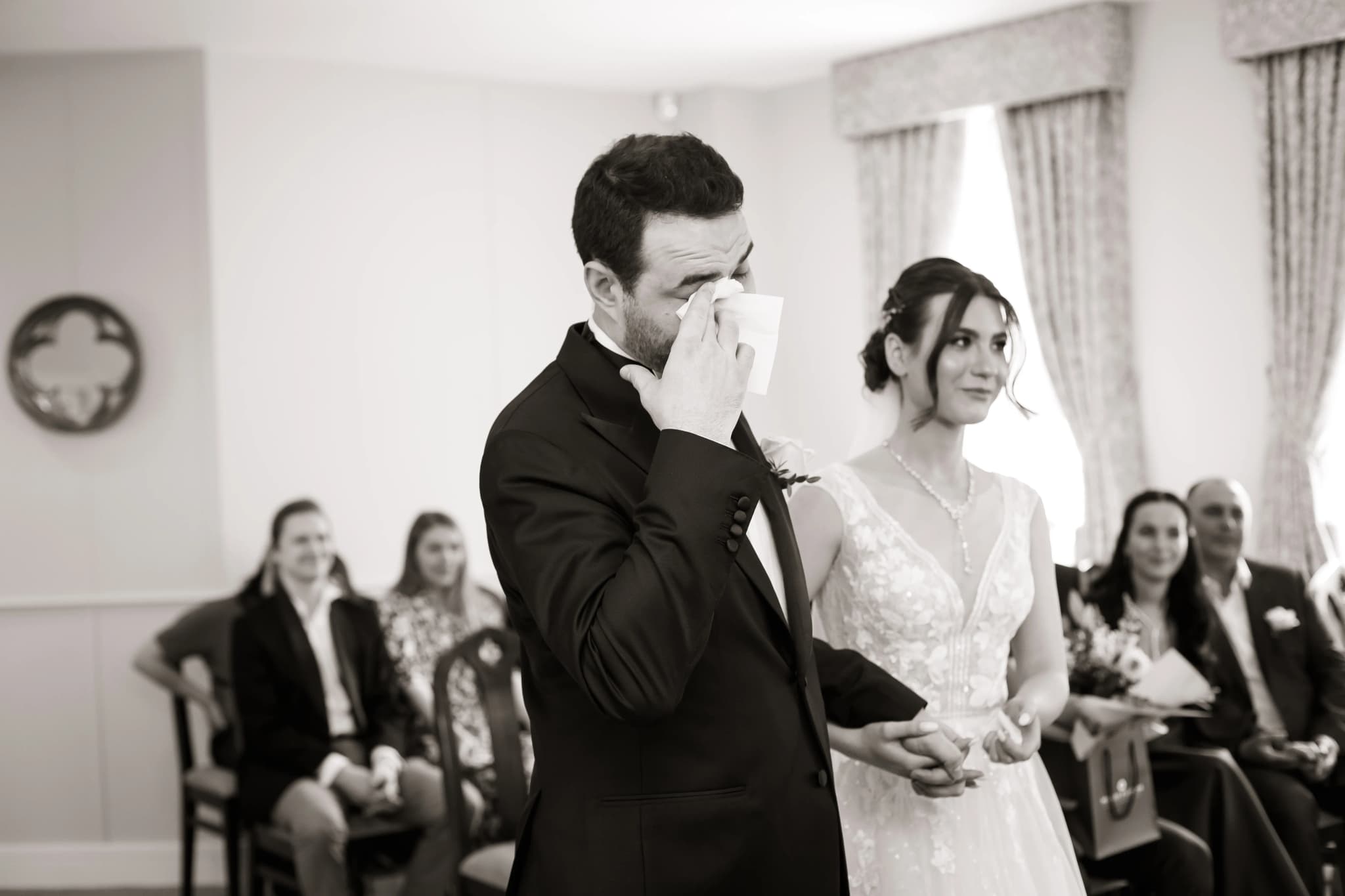
Candid Documentary Wedding Photography
Paparazzi Style Wedding Photographer
Unposed, unstaged, genuinely candid — long-lens wedding photography that captures real emotional moments without interrupting the day.
Real Moments, Never Staged
Paparazzi-style wedding photography takes the approach of celebrity event photography — long telephoto lens, shooting from distance, subjects unaware — and applies it to wedding coverage. The result is a set of images that look genuinely captured rather than constructed: real expressions, real interactions, real emotional moments caught in a way that only happens when nobody knows they are being photographed.
There is no staging. There is no direction. There is no interruption of the day to set up a shot. The photographer works from the periphery, from behind guests, from elevated positions — always far enough away to be invisible but close enough with the telephoto to produce intimate, emotionally rich images.
The ceremony, the drinks reception, the dinner, the dancing — the entire day is photographed in this mode. What you receive are images of your wedding as it actually happened, with people looking exactly as they looked when they were just living the day.
The Paparazzi Approach Across the Day
How the technique works at every stage of a wedding day.
The Long Lens Technique
Telephoto compression at distance
The defining technical element of paparazzi-style wedding photography is the 70–200mm or 135mm telephoto lens shot from a distance of 10–20 metres — far enough that subjects are completely unaware of being photographed, close enough to fill the frame with genuinely intimate content. The lens compression changes the visual character of the image: backgrounds are drawn forward, people in the background are brought into the visual relationship with the subject, and faces are captured in genuine repose rather than the slight tension of someone who knows they are close to a camera.
Ceremony Coverage From the Margins
Positioned at the edge, never the centre
During the ceremony, the paparazzi approach positions from the side aisles, the rear of the venue, or if outdoors — from the tree-line, the perimeter wall or a raised position. The goal is complete coverage of the ceremony without being visible from the central eyeline of any participant. Guests don't turn to look at a camera. The couple don't register the presence of a photographer at key emotional moments. The resulting coverage reads as if the ceremony was photographed by an observer who was somehow invisible.
Unposed Couple Portraits
Directed naturally, not posed explicitly
Even couple portrait sessions in paparazzi-style photography avoid explicit posing — instead of 'stand here and look at the camera', the approach is 'walk along this path together' or 'stand overlooking this view and tell each other something'. The photographer is then 15 metres back with a telephoto, photographing the natural movement and interaction rather than a constructed pose. The images read as genuine moments even though they occur within a loosely structured portrait context.
Reception Invisibility
Crowd integration and ambient movement
The reception provides the richest territory for paparazzi-style photography — the gathering of guests during drinks reception, the tables during dinner, the dance floor during first dance and the party that follows. The approach is to move through these spaces like a guest rather than a visible professional — camera at belly height, moving between conversations, photographing from behind guests' shoulders into the faces of the people talking to them, capturing the genuine private expressions of people at ease.
The Laugh and the Tear
Genuine emotional peaks captured unprompted
The highest-value images from any wedding are the genuine emotional peaks: the moment of first seeing a partner at the ceremony, the father-of-the-bride reading a speech, the grandmother watching the first dance. These moments occur spontaneously and are destroyed by a visible photographer moving in for the shot. The paparazzi approach anticipates these moments, positions early and captures from distance — the resulting images have genuine emotional integrity precisely because they weren't interrupted to be obtained.
Printed and Shared Natural
Images that read as real, not photographed
Paparazzi-style wedding images share on social media with an authenticity that explicitly posed wedding photography doesn't have — they look like leaked celebrity photographs rather than product-shot wedding content, and in the current visual culture of social media, that authenticity reads as aspirational rather than amateurish. The edit style reinforces this: less colour-grading correction toward an artificial aesthetic, more honest capture of the actual light and colour of the day.
Paparazzi Wedding Photography Packages
Pure documentary, pure candid — weddings across the UK.
Essential
£1,395
- 6 hours coverage
- 300+ edited images
- Online gallery
- Personal licence
Most Popular
Full Day
£2,395
- 10 hours coverage
- 500+ edited images
- Online gallery
- Pre-wedding consult
Premium
£3,495
- 12 hours coverage
- 700+ edited images
- Fine art album
- Second photographer
Why Paparazzi-Style Coverage Works
Nothing Staged, Nothing Missed
The fundamental tension in traditional wedding photography is that staging moments for photographs means missing the unstaged ones — you cannot simultaneously direct a couple into a pose and photograph the mother of the bride reacting to how they look. Paparazzi-style photography resolves this by never staging, which means the photographer is always in observation mode and genuine moments are never sacrificed to obtain constructed ones.
Guests Stay In Their Moment
Guests behave naturally when they don't see a camera — they lean into conversations, touch each other unselfconsciously, laugh without the slight performance quality that comes with knowing a camera is nearby. The photographs that result show your guests as you actually know them rather than posed versions of themselves. For many couples, their wedding photographs are also the only comprehensive visual record of the people they love most in one place — and they want those people to look real.
The Day Flows Uninterrupted
Wedding days that include sustained periods of posed photography interruption are a different experience from those that don't — couples who receive paparazzi-style coverage consistently report that the day felt more like their own, more present, less managed. The absence of 'the photographer needs everyone for a moment' is registered by guests as well: the gathering energy of a reception drinks hour isn't broken by formal photo sessions pulling key people away.
Second-Shooter Synergy
Paparazzi-style coverage benefits significantly from a second photographer — one working the standard documentary angles while the other works with a telephoto from the periphery. This produces two parallel visual narratives of the same event: the close, connected view and the distant, observed view. Together they tell a more complete story than either approach alone, and the paparazzi telephoto images provide the emotional depth that standard proximity documentary photography can miss.
Works in Every Venue
The paparazzi approach works in any venue that provides enough physical space for a 10–20 metre distance — which is to say, almost all venues. A large country house ceremony works perfectly; a small register office works less well (close-quarters venues constrain the telephotograph distance). Outdoor ceremonies in gardens, parks or landscape settings are ideal. The one requirement is a venue in which the photographer can be genuinely out of the eyeline of the participants.
Edit Style Matches Approach
The image edit for paparazzi-style coverage keeps colour rendering close to the original scene light rather than pushing toward a heavily processed aesthetic — the goal is that images look 'caught' rather than 'made'. Light colour with natural skin tones and close-to-original colours, with attention to the specific light quality of uncontrolled ambient conditions rather than correction toward a fixed aesthetic. The result pairs with the content: real moments, real colour.
Frequently Asked Questions
Do I get any posed photographs at all?
The approach can be calibrated to your preferences — a small number of natural groupings with family (perhaps 3–4) and a couple portrait session that uses loose direction rather than explicit posing can be included without compromising the paparazzi style of the wider coverage. The family groupings take 5–10 minutes rather than 45–60 minutes. The couple portrait session uses movement and environment rather than static poses. If you want zero posed images at all, that is completely achievable — but most couples find a small number of natural family images has value alongside the documentary coverage.
Will guests know there is a photographer at all?
At the beginning of the day, yes — the photographer is visible during preparations and early parts of the ceremony. As the day progresses and the photographer's style becomes clear (no interruptions, no direction, no staging), guests tend to stop registering the camera's presence. By the reception drinks and dinner, paparazzi-style photography becomes genuinely invisible. The shift from 'I can see there is a photographer at this wedding' to 'I forgot someone was photographing' usually happens within the first 2 hours.
What equipment is used for paparazzi-style coverage?
A combination of a long telephoto lens (70–200mm f/2.8 or 135mm f/1.8) for the distance shooting that defines the paparazzi approach, and a standard 35mm or 50mm prime for close-proximity coverage. For low-light conditions — evening reception, dark candlelit ceremony — a fast prime (85mm f/1.4) allows the telephoto approach to continue without flash. Flash is generally avoided in paparazzi-style coverage as it immediately breaks the invisibility; available light is used throughout.
Is paparazzi-style photography the same as documentary or reportage?
Paparazzi-style specifically refers to the long-lens, distance-shooting, subject-unaware approach borrowed from celebrity photography. Documentary or reportage wedding photography is a broader category that includes close-proximity storytelling with a 35mm lens — the photojournalism tradition. The best wedding documentary coverage combines both: the intimacy of proximity documentary for moments where the photographer can be close, and the paparazzi telephoto approach for moments where distance is required to preserve emotional authenticity. Paparazzi style is a subset and specific technique within documentary wedding photography.
How far in advance do I need to book?
Popular summer weekend dates book 12–18 months in advance. For a 2025 date, early autumn is a good time to enquire. For 2026 and beyond, enquiries from 18 months out are normal. A booking is secured with a deposit and a signed agreement; the balance is due 6 weeks before the wedding. A pre-wedding conversation to discuss the paparazzi approach and how it will work at your specific venue is included — this usually takes place 4–6 weeks before the date.
Want Genuinely Candid Coverage?
No posing, no interruptions, no staging — just your wedding day exactly as it happened.
Get in Touch
Let's Create Together
Tell me about your vision and I'll be in touch within 24 hours.