Yana Skakun

Airbnb Photography Tips: How Professional Photos Increase Bookings
By Yana Skakun·10 April 2026·6 min read
Property photography is a different discipline from portrait or wedding work, but I get asked about it often enough — usually by clients who own a holiday let, a spare room on Airbnb, or a small guesthouse — that it is worth setting out properly. The core idea is simple: guests are booking based entirely on photographs before they have ever set foot in the property, and the gap between a listing photographed well and one photographed on a phone in poor light is the difference between a booking and a scroll past.
Why Professional Photography Changes How a Listing Performs
Guests browsing Airbnb or a similar platform make extremely fast judgements from thumbnails, often within a second or two per listing. A photograph that is dim, cluttered, or oddly angled reads as a signal about the property itself, even when the property is genuinely lovely in person. Good photography does not invent quality that is not there, but it does remove the friction between what a space actually offers and what a potential guest perceives from a small screen. I think of it as accurate representation done well — showing the space at its best without misleading anyone about what they will find on arrival.
This matters particularly for smaller or less conventional properties — a converted barn, a garden annexe, a period cottage with low ceilings and characterful quirks. These spaces often photograph poorly if shot casually, because their charm depends on details a phone camera in auto mode tends to miss: the warmth of the light, the texture of exposed beams, the sense of scale in a compact but well-designed room.
What a Property Session Actually Covers
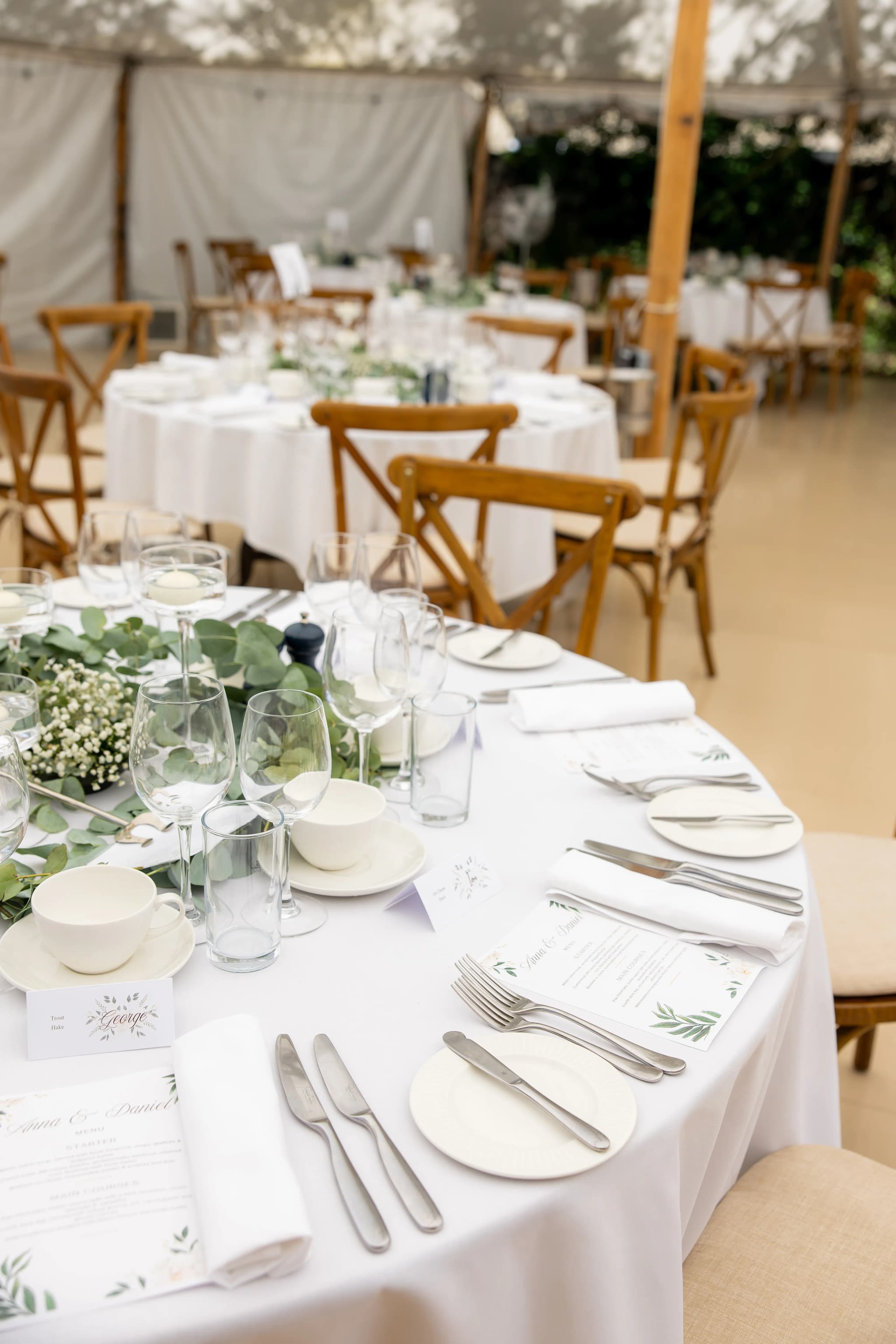
A typical session covers every room a guest would expect to see before booking: kitchen, living space, each bedroom, bathroom, plus any outdoor space — a garden, terrace, or parking area. I also look for a handful of detail and lifestyle shots that help a listing feel less like a floor plan and more like somewhere a guest can imagine themselves staying: the view from a particular window, a nicely set breakfast table, a reading corner. These images tend to do real work in a listing gallery, breaking up the sequence of straightforward room shots.
Timing depends on the size of the property. A one or two-bedroom flat or cottage typically takes two to three hours including setup between rooms; a larger property with multiple bedrooms, outdoor space, and separate living areas can take four to six hours for full coverage. I always ask hosts in advance roughly how many images they expect the listing to need, since platforms like Airbnb have fairly specific expectations around gallery size and variety.
Preparing the Property Before I Arrive
Preparation makes a bigger difference to the final images than almost anything I do with a camera. Every surface should be clear and clean, beds made properly rather than just tidied, and personal or clutter items — post, chargers, toiletries, laundry — put away out of frame. Small imperfections that are invisible to the eye in person, like a scuff mark on a skirting board or a slightly crooked picture frame, become very obvious at camera resolution, so it is worth walking each room slowly before the shoot and looking at it as if seeing it for the first time.
Fresh flowers, neatly folded towels, and a few carefully placed personal touches — a book, a coffee cup, a throw over a sofa arm — add warmth without looking staged, provided they are not overdone. I generally suggest treating the shoot morning like preparing for guests to arrive that same afternoon: it tends to produce exactly the right level of readiness without tipping into an artificially bare, showroom feel that can make a property look less inviting than it actually is to stay in.
Property and Airbnb photography around Cambridge
I photograph holiday lets, guest rooms, and short-let properties across Cambridge and the surrounding area, with a session tailored to the size of your listing.
Enquire about property photographyLight and Timing
The best time of day for a property shoot depends heavily on which direction the main rooms face. East-facing rooms tend to photograph best in the morning, when direct light is coming through the windows at a gentle angle; west-facing rooms usually work better in the afternoon. Rooms with south-facing skylights or large glazing can be genuinely difficult around midday, when harsh overhead light creates strong shadows and blown-out highlights that are hard to correct convincingly afterwards.
Overcast days, counterintuitively, are often ideal for interior work. Soft, even daylight through the windows renders colours accurately and avoids the strong shadows that direct sun creates indoors, especially in smaller rooms where there is less room to work around a bright patch of light on the floor. I generally avoid booking property shoots on the very brightest days of summer for this reason — a bright but slightly overcast morning is usually more useful than a cloudless sky.
Beyond the Room Shots
For hosts who want to invest a little further, a short section of exterior and neighbourhood photography can help set expectations honestly and attractively — the front of the property, a nearby landmark or view, the walk from parking to the front door. Guests researching a stay often want a sense of the wider setting, not just the four walls they will sleep in, and a couple of well-chosen wider shots can answer questions before they are ever asked in a booking enquiry.
Wide-Angle Technique Without the Distortion Problem
A wide-angle lens is more or less essential for property photography — it's the only practical way to show a full room in a single frame, particularly in the smaller bedrooms and bathrooms typical of a lot of Cambridge housing stock, from period terraces to newer apartment conversions. But a wide-angle lens used carelessly produces a very recognisable, unflattering distortion: straight lines that bow outward, rooms that look oddly stretched, furniture near the edge of frame that appears warped. Getting this right is as much about camera position and height as it is about the lens itself.
I generally shoot from roughly chest height in most rooms, positioned so that verticals — door frames, the edges of walls, windows — stay genuinely vertical in the frame rather than converging towards the top or bottom. Careful correction in editing afterwards straightens out any residual distortion, but the goal is always to do as much of that work as possible in camera, because a heavily corrected image can still look slightly artificial around the edges of frame. For a listing, accuracy matters more than drama: a photograph that makes a room look larger than it actually is might earn a click, but it also sets a guest up for disappointment on arrival, which tends to show up in reviews far more damagingly than a photograph that simply presents the space honestly and well.
Turnaround, Seasonal Refreshes, and Multiple Properties
I know that for most hosts, especially anyone managing bookings actively, a fast turnaround matters — a vacant week between guests is often the only realistic window for a shoot, and getting new images live before the next booking cycle can be a genuine priority. I aim to deliver a fully edited set within a few working days, sized appropriately for listing platforms as well as full-resolution versions for a host's own website or marketing material where relevant.
Seasonal timing is worth thinking about too, particularly for cottages or lets that rely on outdoor space as part of their appeal. A garden that comes into its own in late spring can look like an entirely different property in February, and it is worth having images that reflect what a guest might actually see depending on when they are likely to book, rather than a single set of photographs taken once and used indefinitely regardless of season.
For hosts managing more than one property, I'll often batch sessions across a single day or a couple of consecutive days if the listings are reasonably close together, which keeps things efficient and gives a whole portfolio a consistent visual style — useful if guests are comparing your different listings side by side, or if you are building a recognisable brand across several properties. I also suggest treating property photography as something to revisit every few years rather than a single task ticked off when a listing first goes live: furniture changes, gardens mature, and a set of images that felt current a few years ago can start to look tired next to newer competition on the same street.

Yana Skakun
Photographer · England
Professional wedding, family and portrait photographer based in England. Passionate about capturing authentic emotions and timeless moments.
About Yana →airbnb photography tips professionalproperty photographer airbnb ukhow to photograph airbnbairbnb photos booking rate increase
Photography Tips — Professional Photography in Cambridge & England
Yana Skakun is a professional photographer based in Cambridge, specialising in wedding, family, and portrait photography across England. Every session is personal — planned around your story, your people, and the moments that matter most. This guide — Airbnb Photography Tips: How Professional Photos Increase Bookings — is part of the photography journal: practical, experience-based advice drawn from real sessions across England. Whether you arrived searching for airbnb photography tips professional or property photographer airbnb uk, the same care and attention shapes every session Yana photographs.
Professional Photography sessions are available year-round, with bookings open across Cambridge, Ely, Huntingdon, Peterborough, and further afield — East England, London, the Midlands, and beyond. If you have specific questions about how to photograph airbnb, mention it in your enquiry. Get in touch through the contact form above to check availability and discuss your session. Enquiries are welcomed from anywhere in the UK.
Frequently Asked Questions
What camera settings should I use for outdoor portraits?+
For outdoor portraits, shoot in aperture priority mode. Use a wide aperture (f/1.8–f/2.8) to blur the background and isolate your subject. Keep ISO as low as possible in good light. In bright conditions, use a neutral density filter or switch to manual to avoid overexposure at wide apertures.
What is the golden hour in photography?+
Golden hour is the period roughly 30–60 minutes after sunrise and before sunset. The sun is low in the sky, producing warm, soft, directional light that flatters skin tones and creates beautiful long shadows. It's widely considered the best natural light for portrait and outdoor photography.
How do you get sharp photos in low light?+
In low light, increase your ISO (accepting some grain), use the widest aperture your lens allows, and slow your shutter speed to the slowest you can hand-hold without camera shake (roughly 1/focal length as a guide). Use image stabilisation if available, and consider a tripod for static subjects.
What is the rule of thirds in photography?+
The rule of thirds divides the frame into a 3×3 grid. Placing your subject on one of the four intersection points — rather than dead centre — creates a more dynamic, visually interesting composition. It's a guideline, not a rule: some of the most powerful images break it deliberately.
How do you edit photos to look professional?+
Professional editing starts with shooting in RAW format. In Lightroom or similar software, correct exposure, white balance, and contrast first. Recover shadow and highlight detail. Apply gentle colour grading for mood. Be conservative with skin retouching — the goal is natural enhancement, not transformation. Consistency across a set of images is what separates professional from amateur editing.
Continue Reading
Related Articles
Photography Tips
Photography Gift Vouchers: The Most Personal Present You Can Give
5 min read · Read Article
Photography Tips
Photo Books vs Photo Albums: What Is the Difference and Which Is Better?
5 min read · Read Article
Photography Tips
Photo Gift Ideas: Turning Professional Images into Meaningful Presents
5 min read · Read Article
Get in Touch
Ready to Book Your Session?
Get in touch to discuss your vision — I'll reply within 24 hours.