Yana Skakun
Cherry Blossom Season in Cambridge: Best Spots for Stunning Spring Photos
By Yana Skakun·4 April 2026·8 min read
There is a fortnight each spring — sometimes shorter, depending on how the year has gone — when Cambridge turns almost impossibly pretty. Pale pink and white blossom breaks out along the avenues, over the Cam, and through the college gardens, and the whole city seems to soften. Cherry blossom season is one of the most photographed natural events in Cambridge, and for good reason: the combination of blossom against honey-coloured stone, over the river, and along the paths through The Backs creates portrait conditions of a delicacy and colour that simply does not exist for the rest of the year.
The Backs: Cambridge's Best Blossom
The Backs — the riverside meadows and gardens running behind the colleges — are the premier blossom location in Cambridge, and the ornamental cherries along the path between King's and Clare are the most photographed trees in the city during bloom. What makes this stretch so special is the layering: blossom overhead, the Cam moving below, punts drifting past, and college architecture rising beyond it all. Very few cities offer that combination in one frame, and it is the reason couples travel to Cambridge specifically for spring portraits.
Peak bloom along The Backs typically lasts seven to ten days, which sounds generous until you are trying to plan a session around it. I visit regularly through March to track how the buds are developing, because the difference between a tree at ten percent bloom and a tree at full bloom is enormous in a photograph, even though it might only be a few days apart in real time. Early morning sessions here, before the punts are out and the paths fill with visitors, give the calmest and most usable light — soft, even, and without the crowds that build through the middle of the day once the weather turns fine.
The light through this stretch changes character depending on which side of the river you are working from and what time of day it is. Morning light coming low across the water tends to backlight the blossom beautifully, giving it a translucent, glowing quality that is very hard to achieve later in the day. I plan sessions here around that light wherever a couple's schedule allows, because it makes a genuine difference to the final images.
King's College and the Avenue of Blossom
The avenue leading from Silver Street towards King's College Chapel, flanked on both sides by mature ornamental cherry trees, produces one of the most recognisably Cambridge images of the entire year. When the canopy is at its fullest, walking beneath it feels like walking through a tunnel of pale pink, with the chapel's fan-vaulted silhouette visible through gaps in the branches ahead. Under-blossom portraits — looking straight up into the canopy with the chapel rising beyond — are consistently among the most requested images I make in Cambridge each spring.
Timing here is unforgiving. The gap between the first blossom opening and the first heavy petal fall is narrow, often no more than a week or so, and a late frost or a run of windy days can shorten it further. I keep a close eye on this specific avenue every spring because it is one of the locations couples ask for by name, and I would rather move a session by a few days than photograph it past its best.
There is also something worth saying about the sound and movement of this avenue at its peak, because it affects the images as much as the visual colour does. A light breeze through a fully blossomed canopy sends petals drifting down in a way that a still photograph can only partly capture, but a sequence of frames taken through that movement often produces the single image that ends up meaning the most to a couple — petals mid-fall, caught in hair or on a shoulder, entirely unplanned and entirely real.
Christ's Pieces and Quieter Parkland
Christ's Pieces, the open parkland close to the city centre, has mature ornamental cherry trees that give blossom portraits well away from the college corridor, and it is consistently the location I recommend to couples who want something a little calmer than The Backs. The character is different too — Victorian and Edwardian buildings on the perimeter rather than medieval college walls, open lawns rather than riverside paths, and a general sense of a city park rather than a tourist route.
Congestion is the real advantage here. The Backs during peak bloom on a sunny weekend can be genuinely busy, with visitors, punting groups, and other photographers all working the same short stretch of path. Christ's Pieces rarely has that problem, which makes it far easier to get a clean background and an unhurried session. Early morning here, before the city properly wakes, is particularly beautiful — low sun through the branches, empty paths, and none of the movement that builds through a spring weekend.
I also use Christ's Pieces as a practical fallback when The Backs is unexpectedly crowded or when a couple wants a second location within the same session without a long walk between the two. The blossom itself is just as lovely; it simply comes without the crowd.
A note on booking around blossom
Cherry blossom in Cambridge can shift by up to three weeks from year to year depending on winter and early spring temperatures, so a fixed calendar date booked months in advance is rarely the best approach. I track blossom progression across the city every year and advise clients on the best window once the season is genuinely underway, which usually means sessions are confirmed with only a week or two of lead time once bloom is close.
Get in touch about spring sessionsWhat to Wear for a Blossom Session
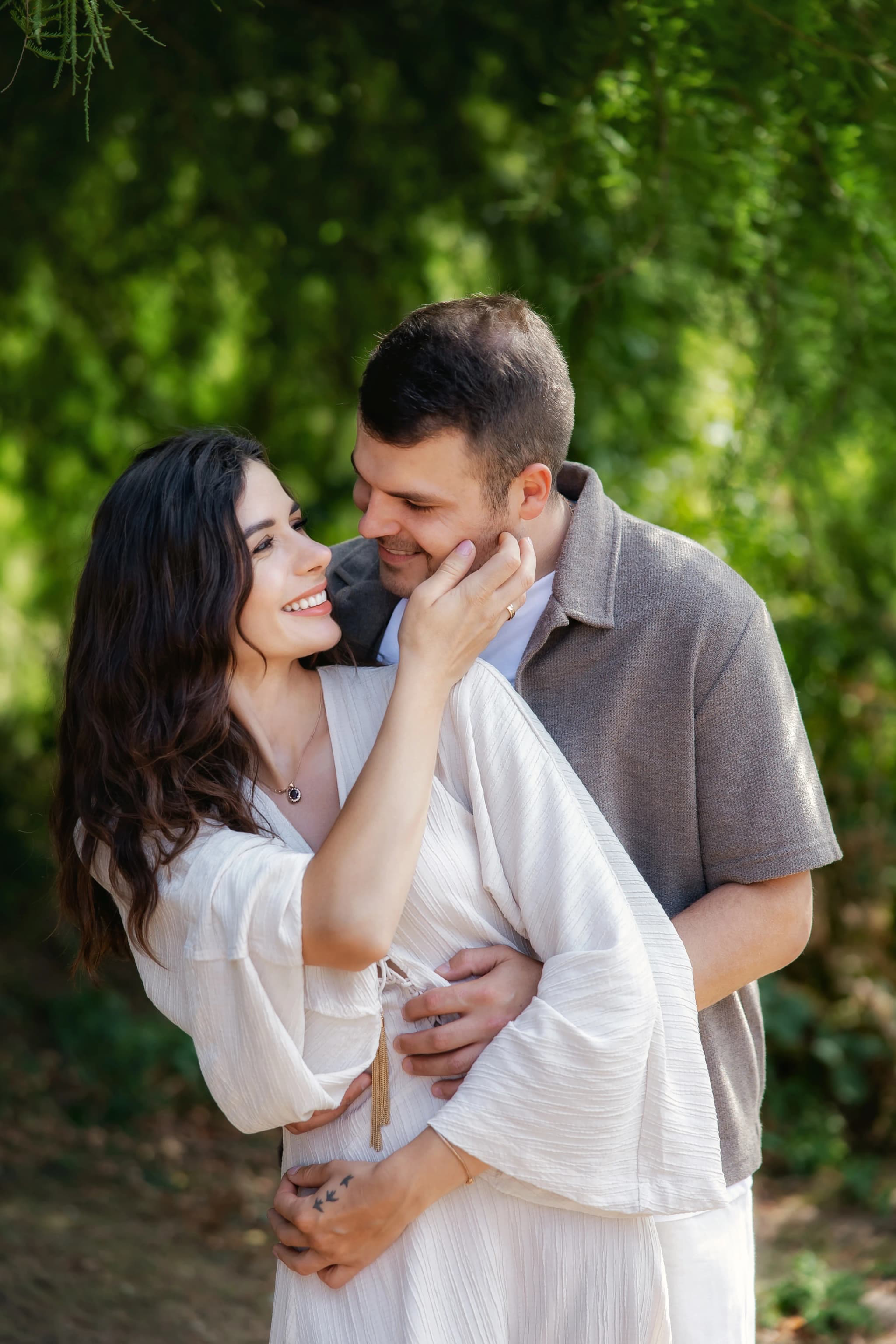
Blossom photography works best with clothing that sits comfortably alongside the palette already in the frame — soft pinks, whites, and the honey tones of Cambridge stone. Pale neutrals, dusty pastels, cream, and soft greys all complement blossom without competing with it, and they tend to age well in photographs in a way that trend-led colours or patterns do not. I generally steer couples away from very saturated colours for blossom sessions specifically, since a bold block of colour can pull the eye away from the blossom itself rather than sitting within the scene.
Practically, spring mornings in Cambridge can be cold even on a day that turns warm by lunchtime, so a coat or layer that can come off partway through a session is worth having on hand. Flat shoes are sensible for The Backs in particular, where paths can be uneven or slightly damp after an overnight shower, and comfort matters more than it seems like it should once you are twenty minutes into a session and still need to look relaxed in front of the camera.
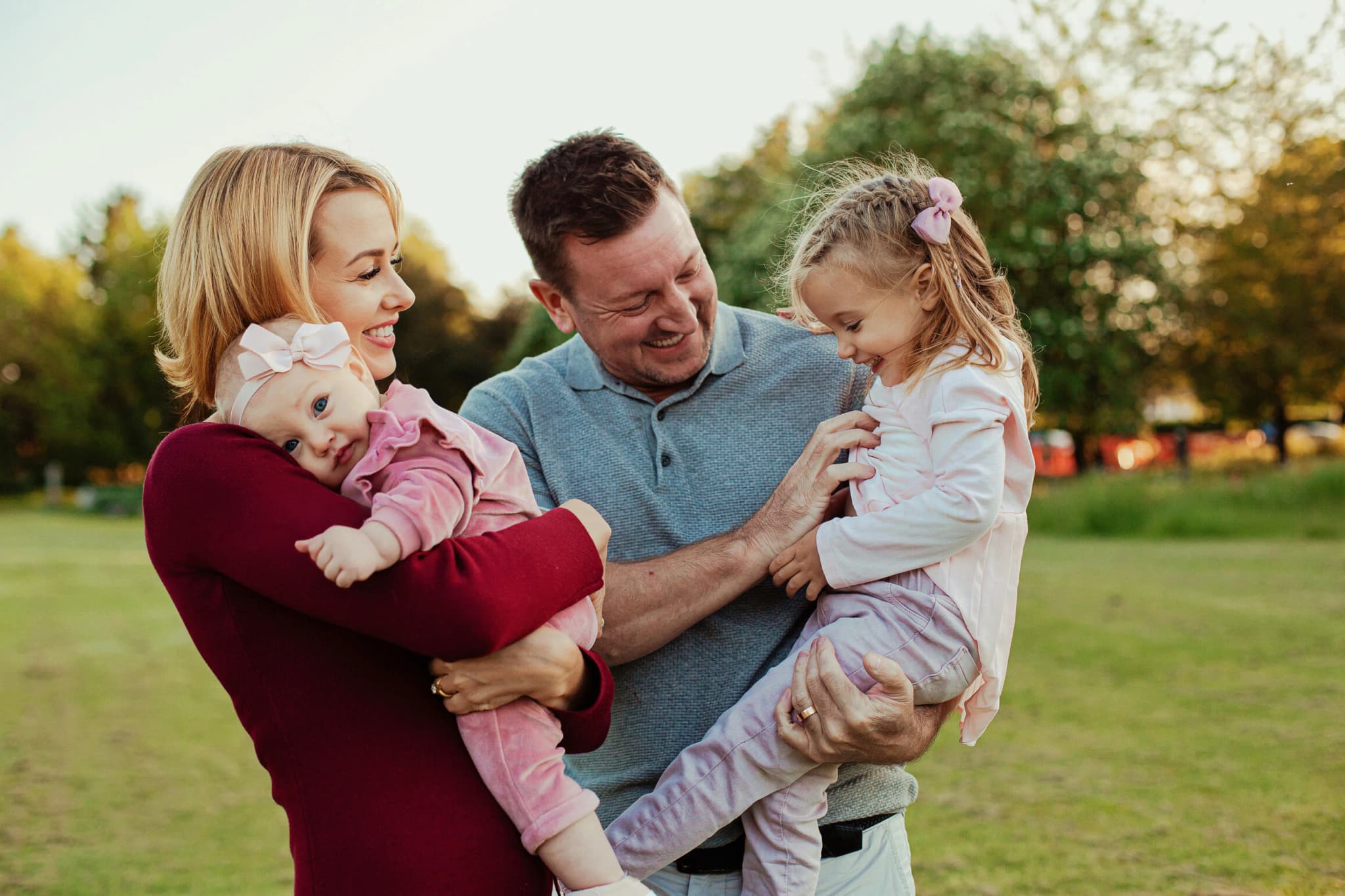
For families bringing children to a blossom session, the same principle applies but with a little more flexibility built in. Soft, muted colours still photograph best against pink and white blossom, but I would rather a child was comfortable and able to move freely than perfectly co-ordinated. A jumper that can be removed if the afternoon warms up, and shoes that can cope with grass and the odd puddle, matter more than any specific colour choice.
Planning Your Session Around a Short Window
Because the blossom window is so narrow, I plan spring bookings differently from the rest of the year. Couples who want a session during blossom season get in touch as early as January or February to register interest, and then I confirm the actual date much closer to the time once the trees are showing real progress. This two-stage approach means nobody is locked into a date that might land after petal fall, and it means I can offer a handful of near-consecutive days once bloom peaks, giving flexibility if the weather on any single day turns out poor.
The sessions themselves run much like any other portrait or engagement session in terms of structure — a chosen route through one or two locations, time for both posed and candid images, and a relaxed pace that does not feel like a checklist. What changes is the backdrop, and for a couple of weeks each spring, that backdrop is genuinely one of the most beautiful things Cambridge has to offer.
I would also gently encourage couples not to over-plan the walking route. Some of the best images from a blossom session come from pausing somewhere unplanned — a bench under a particularly full tree, a gap in the crowd along the river, a moment where the light does something unexpected. Having a loose plan and staying alert to what the location is actually offering on the day produces far better results than trying to force a rigid shot list onto a living, changing landscape.
If you are hoping to catch cherry blossom season for an engagement, couple, or family session this year, the earlier you register interest the better, since the exact dates only firm up once the season is close. Get in touch and I will let you know as soon as the blossom is worth planning around.

Yana Skakun
Photographer · England
Professional wedding, family and portrait photographer based in England. Passionate about capturing authentic emotions and timeless moments.
About Yana →cherry blossom Cambridgeblossom season Cambridge photographyspring engagement photos Cambridgecherry blossom photo spots CambridgeCambridge spring blossom guide
Photography Tips — Professional Photography in Cambridge & England
Yana Skakun is a professional photographer based in Cambridge, specialising in wedding, family, and portrait photography across England. Every session is personal — planned around your story, your people, and the moments that matter most. This guide — Cherry Blossom Season in Cambridge: Best Spots for Stunning Spring Photos — is part of the photography journal: practical, experience-based advice drawn from real sessions across England. Whether you arrived searching for cherry blossom cambridge or blossom season cambridge photography, the same care and attention shapes every session Yana photographs.
Professional Photography sessions are available year-round, with bookings open across Cambridge, Ely, Huntingdon, Peterborough, and further afield — East England, London, the Midlands, and beyond. If you have specific questions about spring engagement photos cambridge, mention it in your enquiry. Get in touch through the contact form above to check availability and discuss your session. Enquiries are welcomed from anywhere in the UK.
Frequently Asked Questions
What camera settings should I use for outdoor portraits?+
For outdoor portraits, shoot in aperture priority mode. Use a wide aperture (f/1.8–f/2.8) to blur the background and isolate your subject. Keep ISO as low as possible in good light. In bright conditions, use a neutral density filter or switch to manual to avoid overexposure at wide apertures.
What is the golden hour in photography?+
Golden hour is the period roughly 30–60 minutes after sunrise and before sunset. The sun is low in the sky, producing warm, soft, directional light that flatters skin tones and creates beautiful long shadows. It's widely considered the best natural light for portrait and outdoor photography.
How do you get sharp photos in low light?+
In low light, increase your ISO (accepting some grain), use the widest aperture your lens allows, and slow your shutter speed to the slowest you can hand-hold without camera shake (roughly 1/focal length as a guide). Use image stabilisation if available, and consider a tripod for static subjects.
What is the rule of thirds in photography?+
The rule of thirds divides the frame into a 3×3 grid. Placing your subject on one of the four intersection points — rather than dead centre — creates a more dynamic, visually interesting composition. It's a guideline, not a rule: some of the most powerful images break it deliberately.
How do you edit photos to look professional?+
Professional editing starts with shooting in RAW format. In Lightroom or similar software, correct exposure, white balance, and contrast first. Recover shadow and highlight detail. Apply gentle colour grading for mood. Be conservative with skin retouching — the goal is natural enhancement, not transformation. Consistency across a set of images is what separates professional from amateur editing.
Continue Reading
Related Articles

Photography Tips
Photography Gift Vouchers: The Most Personal Present You Can Give
5 min read · Read Article
Photography Tips
Photo Books vs Photo Albums: What Is the Difference and Which Is Better?
5 min read · Read Article
Photography Tips
Photo Gift Ideas: Turning Professional Images into Meaningful Presents
5 min read · Read Article
Get in Touch
Ready to Book Your Session?
Get in touch to discuss your vision — I'll reply within 24 hours.