Yana Skakun
Children's Birthday Photoshoot: A Parent's Planning Guide
By Yana Skakun·3 April 2026·6 min read
A children's birthday photoshoot is different from a cake smash. It is a more considered portrait of a child at a specific age, often booked to mark a significant birthday, five, seven, ten, or a teenager's milestone year, rather than to document a first birthday's messy moment. Parents who book these sessions are usually after something they can put on a wall or give as a gift, images that capture exactly who this child is right now, in a way that a phone photo snapped mid-party never quite manages. Here is how I plan a birthday photoshoot that produces images worth keeping for life.
Birthday Photoshoot vs Party Photography
These are two completely different briefs, and it is worth being clear about the distinction before booking either. Party photography documents an event: the games, the friends, the cake cutting, the chaos of twenty children in one room. It requires a journalistic approach and wide coverage, moving constantly to catch moments as they happen rather than creating them. A birthday photoshoot, by contrast, is a portrait session. It is about photographing who this child is at this precise age, with time and attention given to a smaller number of images rather than broad coverage of an entire event.
Both have real value, but they require different approaches and, honestly, different mindsets from both photographer and child. Families sometimes try to do both in a single booking, fitting a portrait session in around a party, and end up with neither done particularly well, because a child who has just spent two hours at a party has neither the patience nor the energy left for considered portraits. If you want genuine portraits that do justice to this specific birthday, I always recommend booking a separate session away from any party entirely.
The two also tend to suit different locations. A party is usually photographed wherever the celebration is happening, a hall, a garden, a soft play centre, and the photographer works within those constraints. A birthday portrait session can be planned around wherever the light and setting will be best, which opens up far more options and usually produces images with a calmer, more polished feel.
When to Schedule the Session
Timing around a child's energy levels makes an enormous difference to the results, and it is one of the first things I talk through with parents when booking. Morning sessions work well for most children under about eight, since they are refreshed, cooperative, and generally at their most natural before the day's tiredness sets in. I generally avoid scheduling sessions immediately before or after major events like the birthday party itself, since children in that window are either over-excited in anticipation or exhausted from the celebration, and neither state photographs well.
Golden hour, roughly an hour before sunset, produces beautiful outdoor light and works particularly well for older children who can sit with a brief and hold a location for slightly longer without losing interest. If booking a studio session, mid-morning on a weekday is often best for younger children, since there is no weekend excitement to compete with and the studio itself is quieter and calmer without other families waiting.
For very young children, I also pay attention to nap schedules and typical mealtimes, and I would always rather move a session by half an hour to avoid overlapping with either than push through a session with a child who is hungry or overtired. A short, well-timed session produces far better images than a longer one scheduled at the wrong moment in a child's day.
Birthday Photoshoots for Older Children
Children from around seven or eight upwards generally respond much better to photography when they have had some input into how the session goes. I ask them what they want to wear, whether they prefer outdoor or indoor, and whether there is a particular place or activity that feels meaningful to them at this specific age, whether that is a favourite park, a den in the garden, or simply somewhere they feel comfortable and at ease.
A child who has chosen their own outfit and confirmed the location is a collaborator, not a subject being photographed against their will, and the resulting expressions are entirely different. There is a particular quality of genuine, unforced confidence that comes through in images of a child who feels some ownership over the session, and it is very difficult to manufacture that same quality when a child has simply been told where to stand and how to smile.
A note on letting the session breathe
The best birthday portraits rarely come from a rigid shot list. I build in time to let a child settle, wander, and get comfortable in front of the camera before asking for anything more considered, and some of the images parents love most come from those in-between moments rather than the posed ones. If you are thinking about a birthday photoshoot for your child, I would love to talk through what would suit them best.
Get in touch about a birthday sessionProps and Personalisation
Meaningful props, related to a hobby, interest, or passion that defines this particular phase of childhood, add real depth to birthday portraits. A child who loves horses photographed with their animal, a football-obsessed child with the ball at their feet, a young dancer in costume: these images are biographical as well as beautiful, and they tend to mean far more in ten years' time than a generic studio portrait ever will, because they capture not just what a child looked like but who they were.
Generic birthday props, balloon numbers, sparklers, birthday banners, can add fun to a session but they date the images quickly, and a photograph filled with a specific number balloon is unmistakably tied to one single day rather than feeling timeless. I generally encourage parents to think carefully about whether the age decoration is more meaningful than the genuine characteristics of who this child actually is at the moment of the photograph, and to weight the session towards the latter wherever the two are in tension.
Choosing Between Studio and Outdoor Locations
A studio session offers control that an outdoor location simply cannot match: consistent light regardless of weather, a clean, uncluttered background, and no risk of a session being rained off at the last minute. This makes a studio a sensible choice for younger children in particular, where a session might need to be kept short and predictable, or for parents wanting a more classic, timeless portrait without any seasonal or location-specific detail dating the image.
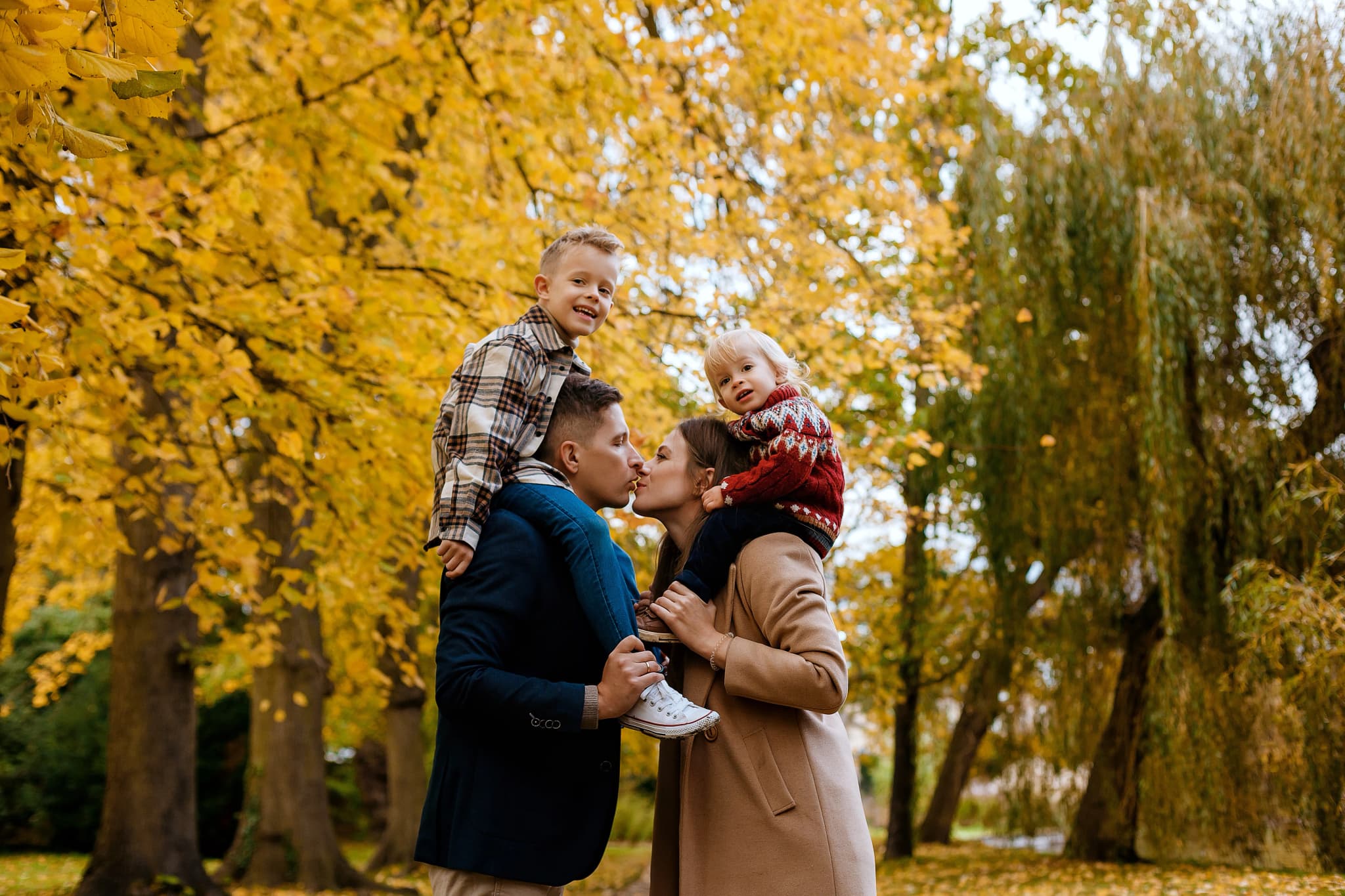
An outdoor location, by contrast, brings a sense of place and season into the images that a studio cannot offer, whether that is autumn leaves underfoot, a favourite local park, or simply the natural, varied light of an early evening outdoors. For older children especially, who can hold a session for longer and engage with a changing environment, an outdoor location often produces a wider range of expressions and moments than the more contained setting of a studio. Neither option is inherently better, and I am always happy to talk through which would suit a particular child's age, temperament, and the occasion being marked.
Creating Gifts from Birthday Portraits
Birthday portrait sessions produce images that grandparents, aunts and uncles, and other family members treasure as gifts long after the birthday itself has passed. A framed portrait of a grandchild on their birthday, printed to a high quality, is often more valued than any purchased present, particularly for grandparents who may not see a child as often as they would like and who want something tangible to keep close.
I always encourage parents thinking about a birthday session to consider print and framing options alongside the digital gallery, since a set of beautiful digital files that never leave a phone or a laptop rarely gets the attention that a printed portrait on a wall receives. A well-chosen print, given at the right moment, tends to become one of those objects a family keeps for decades.
It is worth planning gifting timelines in advance too, particularly if a print is intended as a surprise for a grandparent or relative who was not present at the session. I keep this in mind when delivering galleries, and I am always happy to prioritise a small selection of images quickly if there is a birthday, anniversary, or other occasion coming up soon after the session that a print needs to be ready for.
Sessions are available for all ages, from toddlers to teenagers, indoor and outdoor, and I am always happy to talk through what would work best for your child's particular age and personality. Get in touch to discuss what you have in mind and find a date.

Yana Skakun
Photographer · England
Professional wedding, family and portrait photographer based in England. Passionate about capturing authentic emotions and timeless moments.
About Yana →children birthday photoshoot UKbirthday portrait session childbirthday photography guidemilestone birthday portraits children
Photography Tips — Professional Photography in Cambridge & England
Yana Skakun is a professional photographer based in Cambridge, specialising in wedding, family, and portrait photography across England. Every session is personal — planned around your story, your people, and the moments that matter most. This guide — Children's Birthday Photoshoot: A Parent's Planning Guide — is part of the photography journal: practical, experience-based advice drawn from real sessions across England. Whether you arrived searching for children birthday photoshoot uk or birthday portrait session child, the same care and attention shapes every session Yana photographs.
Professional Photography sessions are available year-round, with bookings open across Cambridge, Ely, Huntingdon, Peterborough, and further afield — East England, London, the Midlands, and beyond. If you have specific questions about birthday photography guide, mention it in your enquiry. Get in touch through the contact form above to check availability and discuss your session. Enquiries are welcomed from anywhere in the UK.
Frequently Asked Questions
What camera settings should I use for outdoor portraits?+
For outdoor portraits, shoot in aperture priority mode. Use a wide aperture (f/1.8–f/2.8) to blur the background and isolate your subject. Keep ISO as low as possible in good light. In bright conditions, use a neutral density filter or switch to manual to avoid overexposure at wide apertures.
What is the golden hour in photography?+
Golden hour is the period roughly 30–60 minutes after sunrise and before sunset. The sun is low in the sky, producing warm, soft, directional light that flatters skin tones and creates beautiful long shadows. It's widely considered the best natural light for portrait and outdoor photography.
How do you get sharp photos in low light?+
In low light, increase your ISO (accepting some grain), use the widest aperture your lens allows, and slow your shutter speed to the slowest you can hand-hold without camera shake (roughly 1/focal length as a guide). Use image stabilisation if available, and consider a tripod for static subjects.
What is the rule of thirds in photography?+
The rule of thirds divides the frame into a 3×3 grid. Placing your subject on one of the four intersection points — rather than dead centre — creates a more dynamic, visually interesting composition. It's a guideline, not a rule: some of the most powerful images break it deliberately.
How do you edit photos to look professional?+
Professional editing starts with shooting in RAW format. In Lightroom or similar software, correct exposure, white balance, and contrast first. Recover shadow and highlight detail. Apply gentle colour grading for mood. Be conservative with skin retouching — the goal is natural enhancement, not transformation. Consistency across a set of images is what separates professional from amateur editing.
Continue Reading
Related Articles

Photography Tips
Photography Gift Vouchers: The Most Personal Present You Can Give
5 min read · Read Article
Photography Tips
Photo Books vs Photo Albums: What Is the Difference and Which Is Better?
5 min read · Read Article
Photography Tips
Photo Gift Ideas: Turning Professional Images into Meaningful Presents
5 min read · Read Article
Get in Touch
Ready to Book Your Session?
Get in touch to discuss your vision — I'll reply within 24 hours.