Yana Skakun
Creating an Editorial Look for an English Countryside Wedding
By Yana Skakun·13 March 2026·5 min read
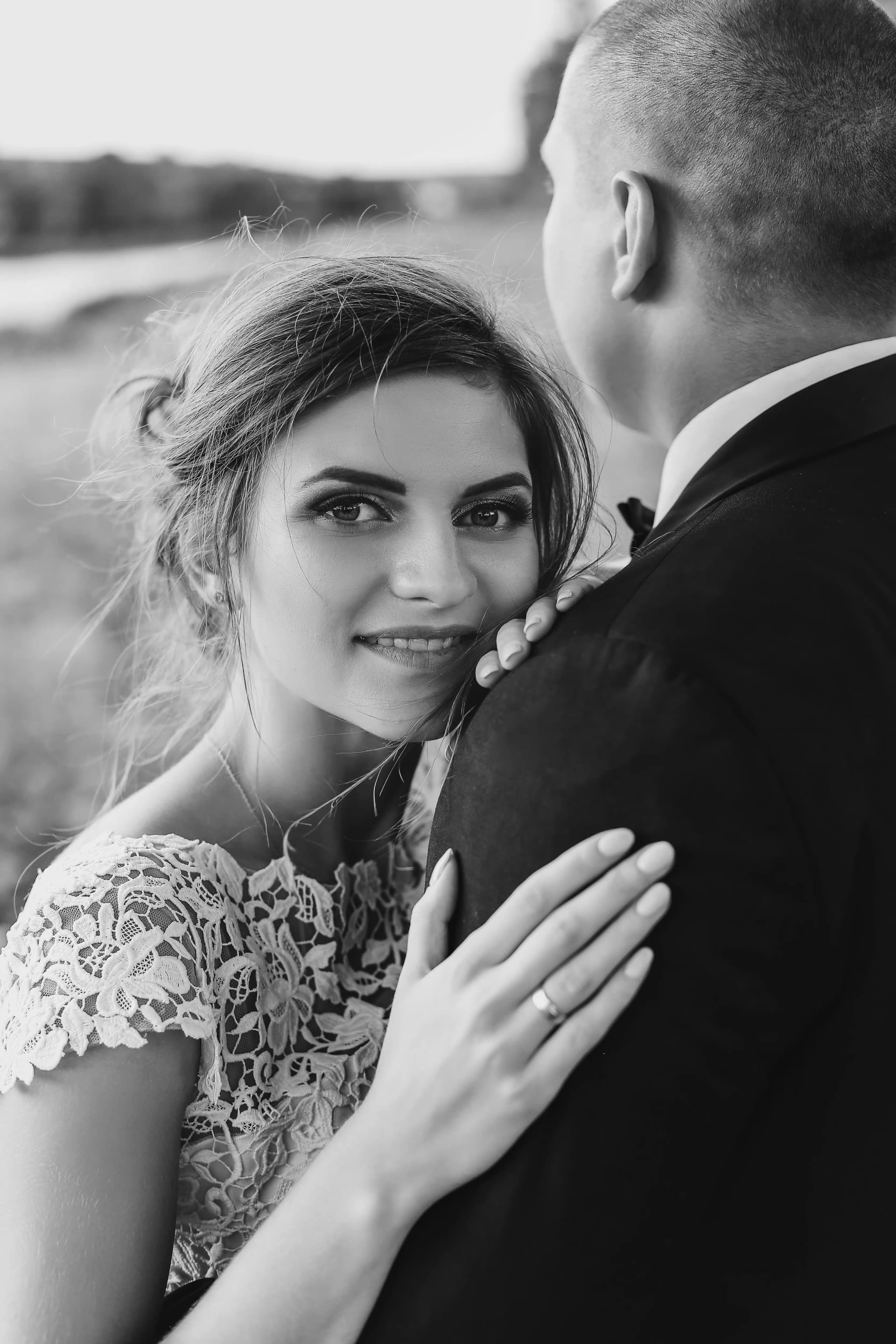
An English countryside wedding has a distinct set of visual assets: old stone and brick, wide agricultural landscapes, kitchen gardens, mature parkland trees, and a quality of light that shifts dramatically by season. An editorial approach to photographing these elements means treating the environment as a designed backdrop — choosing angles, light, and composition deliberately, so the images have the visual authority of a considered shoot rather than reading as snapshots taken at a pretty location. This is the approach I bring to countryside weddings across Cambridgeshire, Suffolk, and the wider East Anglian region.
Working With the Countryside Environment
Countryside venues across this part of England share certain characteristics, and understanding them properly is the first step toward producing genuinely editorial work rather than generic outdoor portraits. Wide skies are unavoidable — the flat East Anglian landscape means sky occupies a large proportion of most outdoor frames, which creates expansive, architectural compositions when there is cloud interest or blue sky to work with, but needs managing carefully on a featureless grey day, whether through a lower camera angle, using trees or buildings to frame out excess sky, or embracing it deliberately with a wider lens.
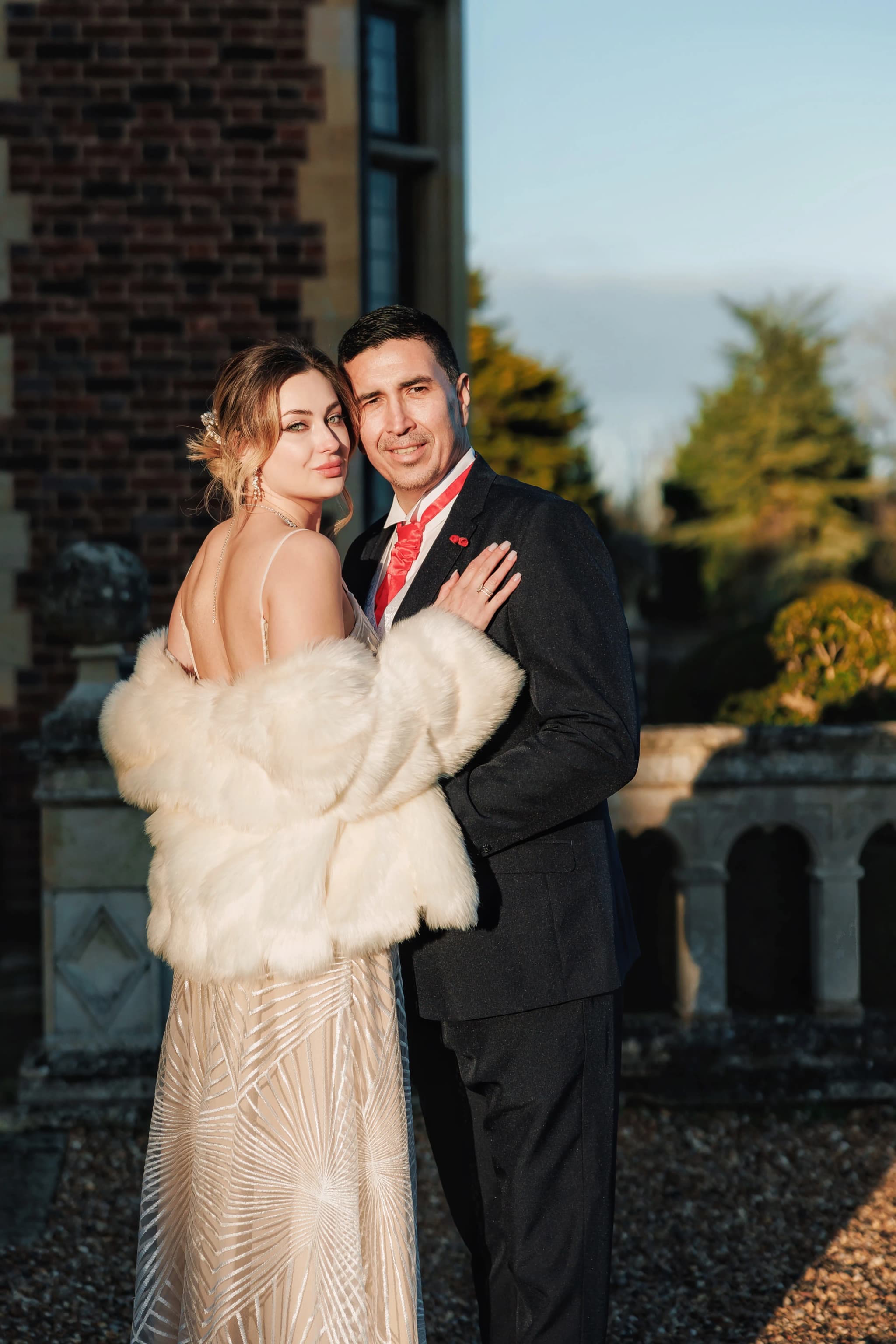
Stone and brick surfaces — converted barns, country house facades — respond beautifully to raking side light. Golden hour light arriving from a low angle transforms a plain stone wall into a rich, warm backdrop; flat overcast light does the opposite, reducing the same wall to a dull grey surface. Kitchen gardens and structured parkland — allées, walled gardens, orchards — give me strong geometric lines that provide real compositional scaffolding for editorial portraits. A couple placed at the centre of a long pergola, or at the end of a formal path, immediately reads as considered rather than accidental.
Open fields and tree lines, used correctly, give a natural separation of subject from background — place a couple against a distant tree line or hedgerow and they stand out clearly, with the background reading almost as a single colour block behind them. Used incorrectly, the same setting swallows them entirely into undifferentiated green or brown, which is one of the more common mistakes I see in countryside wedding photography generally.
What an Editorial Portrait Session Actually Includes
For a countryside venue, I like to build an editorial couple session around several distinct location changes rather than staying fixed at a single spot for the whole slot. That usually means a structured garden or formal exterior element — geometric paths, archways, doorways — which gives the photograph a clear sense of place and real depth through framing, followed by an open landscape shot: wide angle, low camera position, the couple kept relatively small within the frame. This only really works with interesting sky or good golden light behind it, so I keep a close eye on conditions before committing time to it.
I also like to include a close architectural detail — an arched stone doorway, a weathered wooden gate, a stone window frame — as a backdrop for tighter, more intimate portraits, and I always try to end the session with a golden hour or blue hour shot. The light thirty to forty-five minutes before sunset transforms almost any countryside location, and I plan the whole portrait timeline so the session finishes right in that window rather than treating it as optional.
Editorial countryside wedding photography
I photograph countryside weddings across Cambridgeshire, Suffolk, and East Anglia with a considered, editorial approach to light and location.
Enquire about your countryside weddingColour and Styling
For the editorial look to hold together properly, every visual element of the photograph needs to work in the same direction — the couple's clothing, the backdrop, and the editing palette all need to cohere rather than pull against one another. In a countryside context, ivory, champagne, dusty pink, and stone-grey wedding attire all complement the warm tones of brick and harvest field particularly well, while groomswear in warm navy, charcoal, or earthy green sits naturally within the landscape rather than standing out awkwardly against it.
Florals matter here too. Muted, garden-picked colour palettes generally work better for editorial countryside photography than bold, saturated, structural florals — the softer palette lets the landscape and the light do more of the visual work, which is really the whole point of the editorial approach.
Seasonal Variation in the Countryside Look
The editorial approach changes noticeably with the seasons, and I think that variation is part of what makes countryside wedding photography genuinely interesting rather than formulaic. Late spring and early summer bring soft, saturated greens and long evening light, ideal for the open landscape shots I mentioned earlier. High summer can be harsher at midday, which pushes me toward shaded structured gardens and architectural detail until the light softens again later in the day.
Autumn is, in my view, the most naturally editorial season of all — the colour palette of turning leaves does a great deal of the styling work on its own, and golden hour arrives earlier in the afternoon, making it easier to build a full session around without a late finish. Winter countryside weddings, while less common, can produce genuinely striking editorial images too, particularly where bare trees and stonework are treated as the primary subject rather than a backdrop for foliage that simply is not there.
Planning It Into Your Day
If you want this kind of editorial coverage from your countryside wedding, the biggest factor is simply timeline — building in enough time for a proper couple session that moves through two or three locations, rather than squeezing portraits into a rushed fifteen minutes between the ceremony and the wedding breakfast. I always work through the timeline with couples in advance so the golden hour slot is protected rather than left to chance on the day itself.

Yana Skakun
Photographer · England
Professional wedding, family and portrait photographer based in England. Passionate about capturing authentic emotions and timeless moments.
About Yana →editorial countryside weddingenglish countryside wedding editorialcountryside wedding photography style
Photography Tips — Professional Photography in Cambridge & England
Yana Skakun is a professional photographer based in Cambridge, specialising in wedding, family, and portrait photography across England. Every session is personal — planned around your story, your people, and the moments that matter most. This guide — Creating an Editorial Look for an English Countryside Wedding — is part of the photography journal: practical, experience-based advice drawn from real sessions across England. Whether you arrived searching for editorial countryside wedding or english countryside wedding editorial, the same care and attention shapes every session Yana photographs.
Professional Photography sessions are available year-round, with bookings open across Cambridge, Ely, Huntingdon, Peterborough, and further afield — East England, London, the Midlands, and beyond. If you have specific questions about countryside wedding photography style, mention it in your enquiry. Get in touch through the contact form above to check availability and discuss your session. Enquiries are welcomed from anywhere in the UK.
Frequently Asked Questions
What camera settings should I use for outdoor portraits?+
For outdoor portraits, shoot in aperture priority mode. Use a wide aperture (f/1.8–f/2.8) to blur the background and isolate your subject. Keep ISO as low as possible in good light. In bright conditions, use a neutral density filter or switch to manual to avoid overexposure at wide apertures.
What is the golden hour in photography?+
Golden hour is the period roughly 30–60 minutes after sunrise and before sunset. The sun is low in the sky, producing warm, soft, directional light that flatters skin tones and creates beautiful long shadows. It's widely considered the best natural light for portrait and outdoor photography.
How do you get sharp photos in low light?+
In low light, increase your ISO (accepting some grain), use the widest aperture your lens allows, and slow your shutter speed to the slowest you can hand-hold without camera shake (roughly 1/focal length as a guide). Use image stabilisation if available, and consider a tripod for static subjects.
What is the rule of thirds in photography?+
The rule of thirds divides the frame into a 3×3 grid. Placing your subject on one of the four intersection points — rather than dead centre — creates a more dynamic, visually interesting composition. It's a guideline, not a rule: some of the most powerful images break it deliberately.
How do you edit photos to look professional?+
Professional editing starts with shooting in RAW format. In Lightroom or similar software, correct exposure, white balance, and contrast first. Recover shadow and highlight detail. Apply gentle colour grading for mood. Be conservative with skin retouching — the goal is natural enhancement, not transformation. Consistency across a set of images is what separates professional from amateur editing.
Continue Reading
Related Articles

Photography Tips
Photography Gift Vouchers: The Most Personal Present You Can Give
5 min read · Read Article
Photography Tips
Photo Books vs Photo Albums: What Is the Difference and Which Is Better?
5 min read · Read Article
Photography Tips
Photo Gift Ideas: Turning Professional Images into Meaningful Presents
5 min read · Read Article
Get in Touch
Ready to Book Your Session?
Get in touch to discuss your vision — I'll reply within 24 hours.