Yana Skakun
Golden Hour Photography in Spring: A Timing Guide for England
By Yana Skakun·10 April 2026·6 min read
There is a particular week in late April, most years, when everything lines up at once: the evenings have stretched long enough that golden hour lands at a civilised time, the blossom is still on the trees, and the grass has that impossibly fresh green it only holds for a few short weeks before summer flattens it into something more ordinary. Spring golden hour is one of my favourite conditions to photograph in, and it is different in character from the golden hour you get in any other season — worth understanding if you are planning a family session, a couples shoot, or simply want better photographs of your own children this spring.
When Golden Hour Actually Falls in Spring
Golden hour is the period of low, warm, directional sunlight in roughly the last hour before sunset (and the equivalent window after sunrise, though I use the evening version far more often for family sessions). Sunset times shift dramatically across the spring months in England. At the equinox in late March, sunset sits around half past six, meaning golden hour begins around five. By the end of April it has pushed back to somewhere around half past seven or eight, with golden hour starting around half past six. By late May and into June, sunset stretches out to around nine, and the last usable light does not fade until well after half past nine.
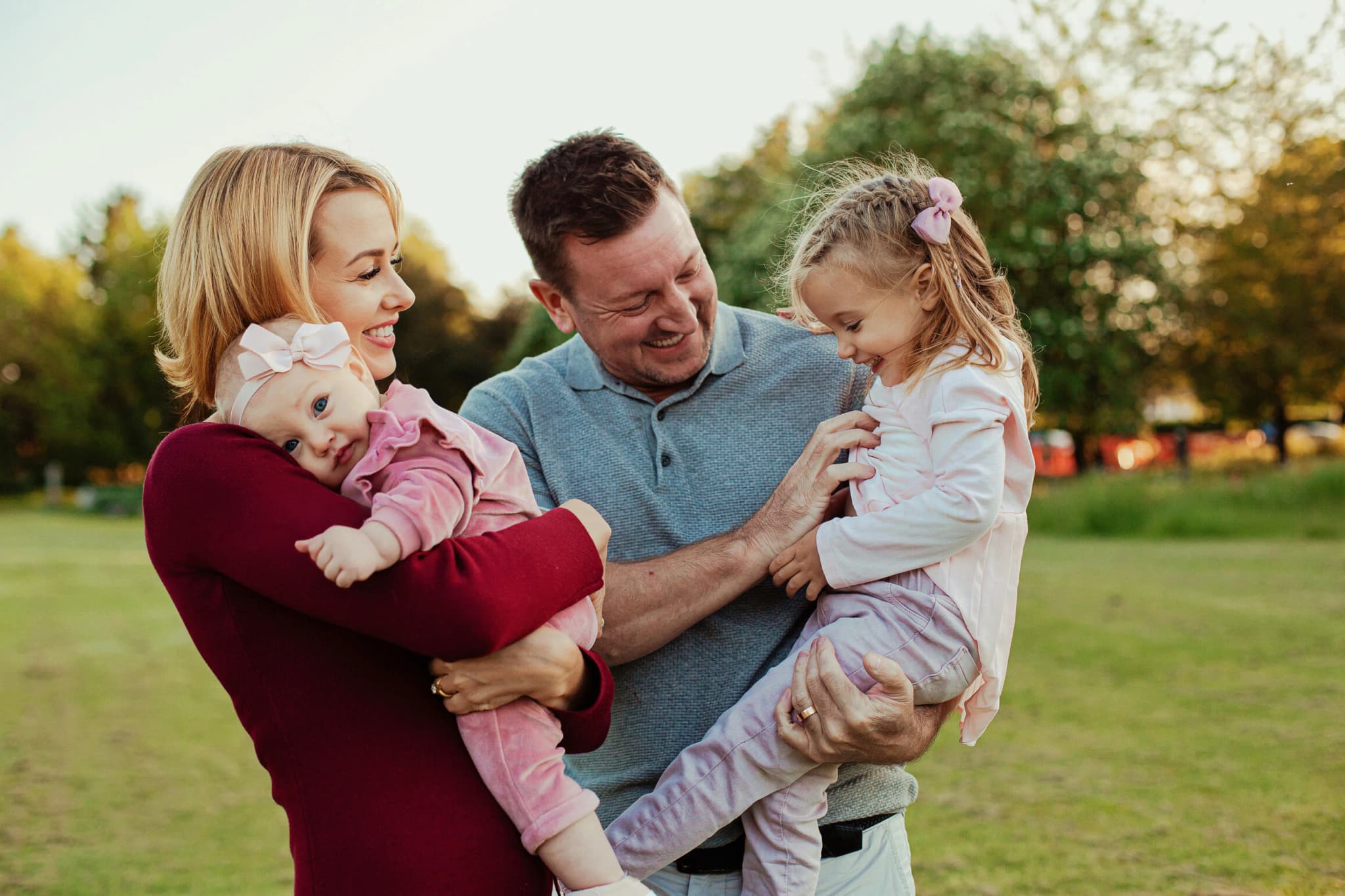
This creates a genuinely useful window for family sessions. Early in spring, golden hour falls at an awkward time for young children — five o'clock is close to dinner and bath time for many families, and energy is already flagging. By late April and into May, golden hour shifts to a time when children have had their dinner, are not yet exhausted, and the light is doing something beautiful. This is why late April through May is consistently my busiest window for evening family sessions — the light and the practicalities of family life align.
What Makes Spring Light Different From Summer or Autumn
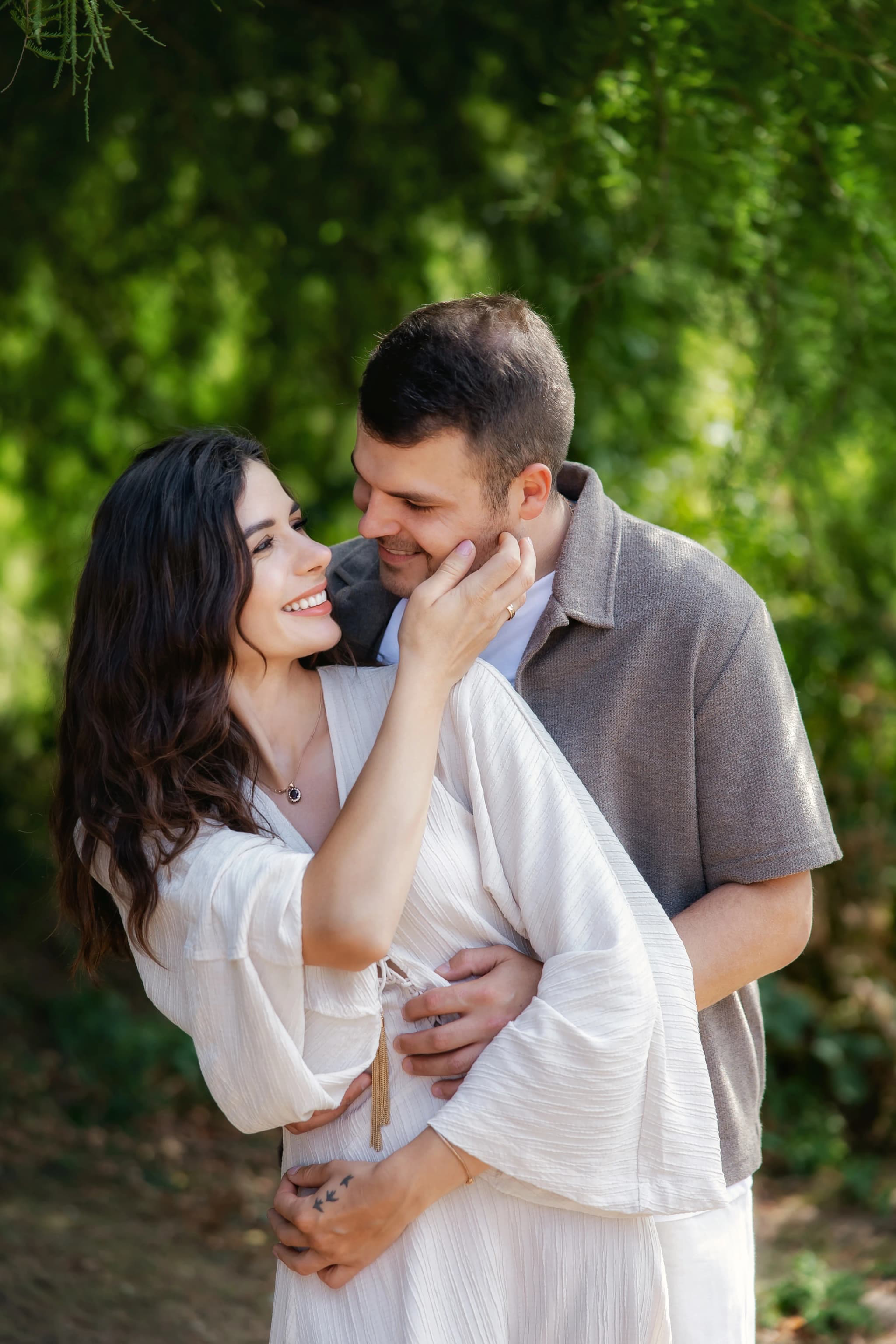
Photographers talk about golden hour as though it is one consistent thing, but the character of that light changes with the season, and spring golden hour has a quality that is genuinely distinct. The background in spring is fresh, saturated green — new leaf growth, new grass, none of the dust and fade that summer heat brings by August. When warm evening light hits that cool green backdrop, the contrast between the two creates a vividness that autumn's golden-on-golden palette simply cannot produce.
Spring evenings also tend to carry more moisture in the air after a day of showers or dew, and that moisture does something lovely to the light — it softens and diffuses it very slightly, adding a gentle haze that gives images depth without making them look overcast. Blossom, where it survives into late April, becomes almost translucent when backlit by low spring sun, glowing at the edges in a way that is very hard to describe and very easy to recognise once you have seen it in a photograph.
There is also simply more going on at ground level in spring than in the other golden hour seasons. Cow parsley along verges, bluebells in the right woodland, the first cow slips and buttercups in meadows — all of these catch side light beautifully and give a session foreground interest that a bare winter field or a static summer lawn does not offer in the same way.
Planning a Spring Golden Hour Family Session
The single most useful thing you can do when booking a spring session is to check the actual sunset time for your date rather than relying on a rough memory of when it "usually" gets dark. Sunset shifts by several minutes every week through spring, and a session planned around an April sunset time will be badly out of step with reality if it is actually booked for late May. I always confirm the specific sunset time for the session date when we are scheduling, and build the plan around it rather than a general assumption.
Location matters more in spring than people expect, because the western sky needs to be genuinely open for the light to reach you. A location boxed in by trees or buildings to the west will lose twenty to forty minutes of usable golden light compared with an open field or riverside spot, even at exactly the same time of day. I scout locations with this in mind specifically for spring sessions — somewhere with open sky to the west, ideally with some blossom, fresh meadow grass, or a hedge line that catches the light well.
I also build in a little slack either side of the "ideal" golden hour window. We often start twenty minutes before the light turns properly golden, using that time for the more standard, cleaner shots, before moving into the warmer light as the sun drops further. This gives a session two distinct qualities of image rather than betting everything on a narrow thirty-minute window that could be affected by a stray cloud on the horizon.
Book a spring evening session
Late April through June is the sweet spot for family golden hour sessions — warm light at a sensible time of evening. Get in touch and I'll help you find a date and location that makes the most of it.
Enquire about a spring sessionWorking the Light: Backlight, Side Light, and Timing
Once we are in the golden window itself, I move fairly quickly between a few different approaches to the light rather than sticking to one. Side lighting, with the sun at roughly forty-five to ninety degrees to the subject, is the most flattering and reliable option — it wraps warmth around faces without creating the deep shadows that direct front lighting can produce. This is where most of the more classic portrait images from a session come from.
Backlighting — positioning the sun behind the subject — is where the more distinctive "golden hour" images come from: a soft halo of light around hair, a warm rim on shoulders, a background that dissolves into soft, glowing bokeh. It is a slightly trickier technique to get right technically, particularly with several moving children in frame, but when it works it produces the images families tend to print largest and hang on the wall.
The usable window of genuinely golden light rarely lasts more than thirty to forty-five minutes before it shifts into the cooler, softer blue hour that follows sunset — also beautiful, but a different mood entirely. I keep half an eye on the clock throughout a spring session so we make deliberate use of both phases rather than losing the golden window to indecision.
Where to Find Good Spring Golden Hour Locations Around Cambridge
Cambridgeshire is fairly generous with the kind of open, west-facing settings that spring golden hour needs. The water meadows along the Cam, particularly around Grantchester, combine open sky with fresh riverside grass and, in a good year, blossom still lingering on the trees along the banks into late April. Wandlebury and the wider Gog Magog Hills offer higher, more open ground where the light stays usable for longer into the evening, since there is less to block the horizon as the sun drops.
Closer to the city, some of the larger college gardens and the Backs can work beautifully in spring evening light, though they come with more restrictions around access and timing than an open field or riverside meadow, and are usually better suited to couples' sessions than to families with young children who need room to move and be genuinely relaxed rather than mindful of a formal setting. For families specifically, I tend to favour the more open, unstructured locations, simply because children photograph more naturally when they have space to run rather than a manicured lawn they are being asked to stay off.
Wherever we end up, I always visit or revisit a location beforehand if it is new to me, specifically checking the sightline to the west and noting anything — a stand of mature trees, a building, a hedge line — that might cut the usable golden hour short on the day. It is a small piece of preparation that makes a real difference to how much of the window we actually get to use.
What to Wear for a Spring Golden Hour Session
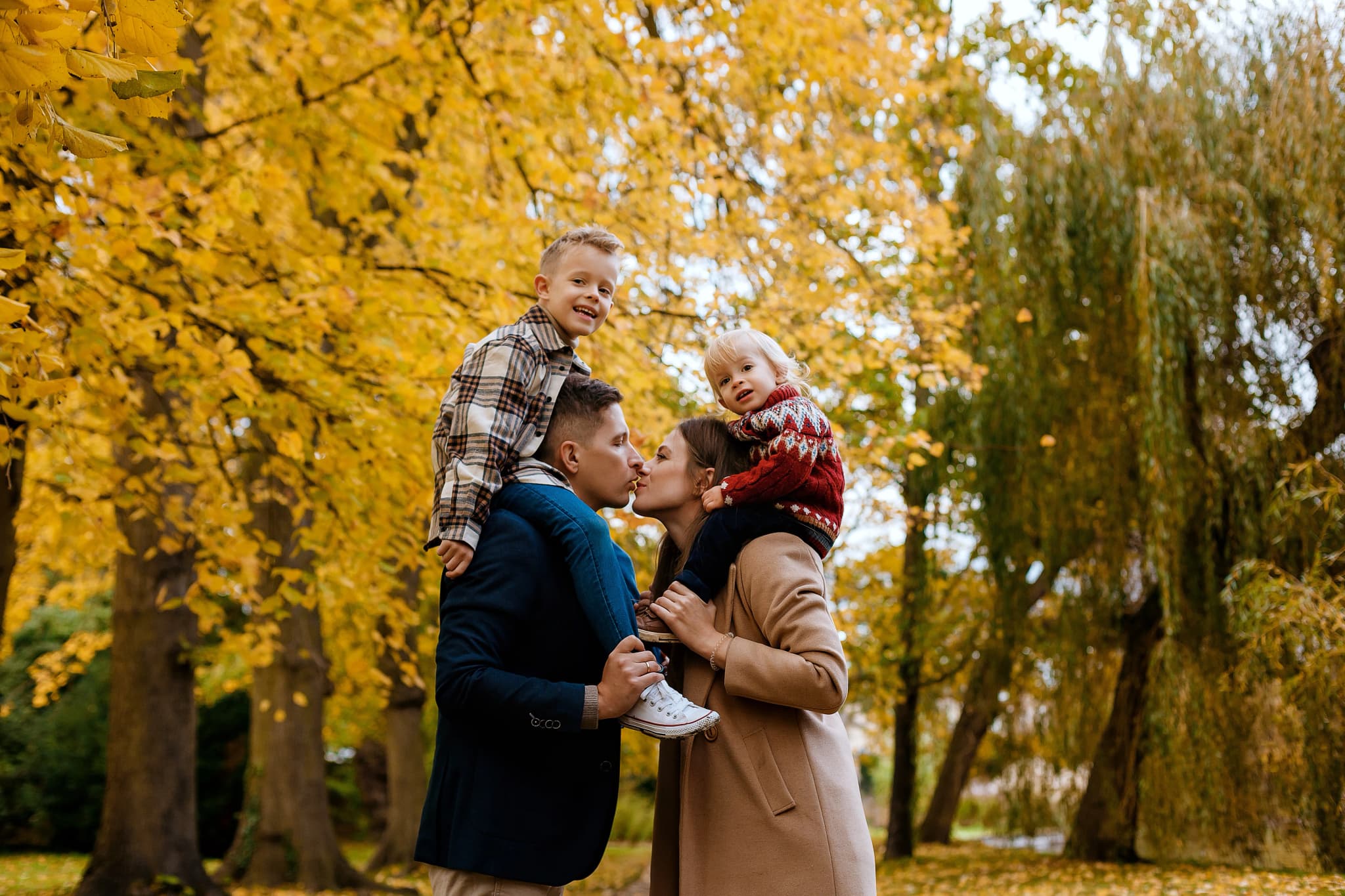
Warm evening light is generous to most colours, but a few choices consistently photograph best against a fresh green spring backdrop. Soft neutrals, dusty blues, warm creams, and muted florals all sit well against new-season grass and blossom without competing with it. I would generally steer away from very bright neon shades, which can look slightly jarring against the softness of spring light, and away from busy patterns, which tend to distract from faces once the light gets low and contrast increases.
Because spring evenings can still carry a chill even on a beautiful day, particularly once the sun starts to dip, it is worth having a layer on hand — a light cardigan or jacket that can come off for the actual photographs but keeps everyone comfortable while we are setting up or waiting between shots. Comfortable footwear matters too, especially if the location involves any meadow or riverside walking to reach the best spot for the light. If you would like help thinking through what to wear for your specific session and location, it is something I am always happy to talk through in advance.

Yana Skakun
Photographer · England
Professional wedding, family and portrait photographer based in England. Passionate about capturing authentic emotions and timeless moments.
About Yana →golden hour spring photography Englandspring golden hour family photosbest time outdoor portraits spring UKgolden hour photography timing UK
Photography Tips — Professional Photography in Cambridge & England
Yana Skakun is a professional photographer based in Cambridge, specialising in wedding, family, and portrait photography across England. Every session is personal — planned around your story, your people, and the moments that matter most. This guide — Golden Hour Photography in Spring: A Timing Guide for England — is part of the photography journal: practical, experience-based advice drawn from real sessions across England. Whether you arrived searching for golden hour spring photography england or spring golden hour family photos, the same care and attention shapes every session Yana photographs.
Professional Photography sessions are available year-round, with bookings open across Cambridge, Ely, Huntingdon, Peterborough, and further afield — East England, London, the Midlands, and beyond. If you have specific questions about best time outdoor portraits spring uk, mention it in your enquiry. Get in touch through the contact form above to check availability and discuss your session. Enquiries are welcomed from anywhere in the UK.
Frequently Asked Questions
What camera settings should I use for outdoor portraits?+
For outdoor portraits, shoot in aperture priority mode. Use a wide aperture (f/1.8–f/2.8) to blur the background and isolate your subject. Keep ISO as low as possible in good light. In bright conditions, use a neutral density filter or switch to manual to avoid overexposure at wide apertures.
What is the golden hour in photography?+
Golden hour is the period roughly 30–60 minutes after sunrise and before sunset. The sun is low in the sky, producing warm, soft, directional light that flatters skin tones and creates beautiful long shadows. It's widely considered the best natural light for portrait and outdoor photography.
How do you get sharp photos in low light?+
In low light, increase your ISO (accepting some grain), use the widest aperture your lens allows, and slow your shutter speed to the slowest you can hand-hold without camera shake (roughly 1/focal length as a guide). Use image stabilisation if available, and consider a tripod for static subjects.
What is the rule of thirds in photography?+
The rule of thirds divides the frame into a 3×3 grid. Placing your subject on one of the four intersection points — rather than dead centre — creates a more dynamic, visually interesting composition. It's a guideline, not a rule: some of the most powerful images break it deliberately.
How do you edit photos to look professional?+
Professional editing starts with shooting in RAW format. In Lightroom or similar software, correct exposure, white balance, and contrast first. Recover shadow and highlight detail. Apply gentle colour grading for mood. Be conservative with skin retouching — the goal is natural enhancement, not transformation. Consistency across a set of images is what separates professional from amateur editing.
Continue Reading
Related Articles

Photography Tips
Photography Gift Vouchers: The Most Personal Present You Can Give
5 min read · Read Article
Photography Tips
Photo Books vs Photo Albums: What Is the Difference and Which Is Better?
5 min read · Read Article
Photography Tips
Photo Gift Ideas: Turning Professional Images into Meaningful Presents
5 min read · Read Article
Get in Touch
Ready to Book Your Session?
Get in touch to discuss your vision — I'll reply within 24 hours.