Yana Skakun
How to relax and feel natural during a photo session
By Yana Skakun·10 June 2026·5 min read
Feeling nervous before a photo session is one of the most common things my clients mention when they first get in touch. Whether it is a wedding, an engagement shoot in the Cambridge Botanic Garden, or a family portrait session on the Backs, almost everyone arrives with some version of the same worry: "I never look good in photos." The truth is that looking good in photographs has very little to do with your appearance and almost everything to do with how relaxed you feel in the moment. Once you understand that, everything changes.
Why Nervousness Shows Up in Photographs
The camera is an honest instrument. It captures micro-expressions, tension in the jaw, stiffness in the shoulders, and the slightly vacant quality of a smile that is being held rather than felt. When you are anxious, your body tightens, your breath becomes shallow, and your face defaults to a kind of performance mode. You are no longer yourself; you are a person trying to look like yourself, which is a fundamentally different and far less photogenic thing.
This is not a flaw in you. It is a completely normal response to being observed and recorded. Even experienced models go through a warm-up period at the start of a shoot. Knowing that the first ten minutes of any session are rarely where the best images come from is genuinely liberating. I always build that warm-up time into my sessions precisely for this reason, so there is no pressure to arrive camera-ready the moment we start.
Understanding that nervousness is the cause, not some inherent unphotogenicity, gives you something practical to work with. You cannot will yourself to be more attractive, but you can learn to be more comfortable, and comfort is the real secret behind almost every photograph that makes someone say, "That actually looks like me."
Preparation Begins the Night Before
Most people think preparation means laying out an outfit and going to bed early. Both of those things do help, but real preparation is about managing your mental state in the hours leading up to the session. The evening before, avoid scrolling through other people's portraits and comparing yourself unfavourably to them. Instead, look back at a few photographs of yourself that you have genuinely liked, however old they might be, and try to remember what the circumstances were. Chances are you were laughing, distracted, or simply not thinking about the camera at all.
On the morning of the session, eat a proper meal. Low blood sugar is an underrated enemy of good portraits; it creates irritability, low energy, and a flatness in the eyes that no amount of editing can fully correct. Stay hydrated, leave enough time to travel without rushing, and if you are the type who needs quiet to feel centred, give yourself half an hour of it before you arrive. Arriving frantic almost always means it takes twice as long to settle into the shoot.
Wear something you genuinely feel good in rather than something new you have never tested. A new dress or suit introduces an unknown variable: you may spend half the session pulling at it or worrying about how it sits. Clothes you have worn before and felt confident in free your attention for everything else. For outdoor shoots around Cambridge in variable British weather, layering is also worth thinking about, so you can adapt without having your whole look fall apart.
What to Do With Your Body When You Do Not Know What to Do
One of the most common physical symptoms of camera anxiety is rigidity. People stand very still, arms at their sides or clasped in front of them, in a pose that resembles a school photograph from 1987. Movement is the antidote. When I work with couples or individuals, I almost never ask anyone to simply stand and look at the camera. Instead, I give them something to do: walk slowly together, adjust a collar, look out across the meadows at Grantchester, lean in to say something quietly. Action creates natural posture and natural expression simultaneously.
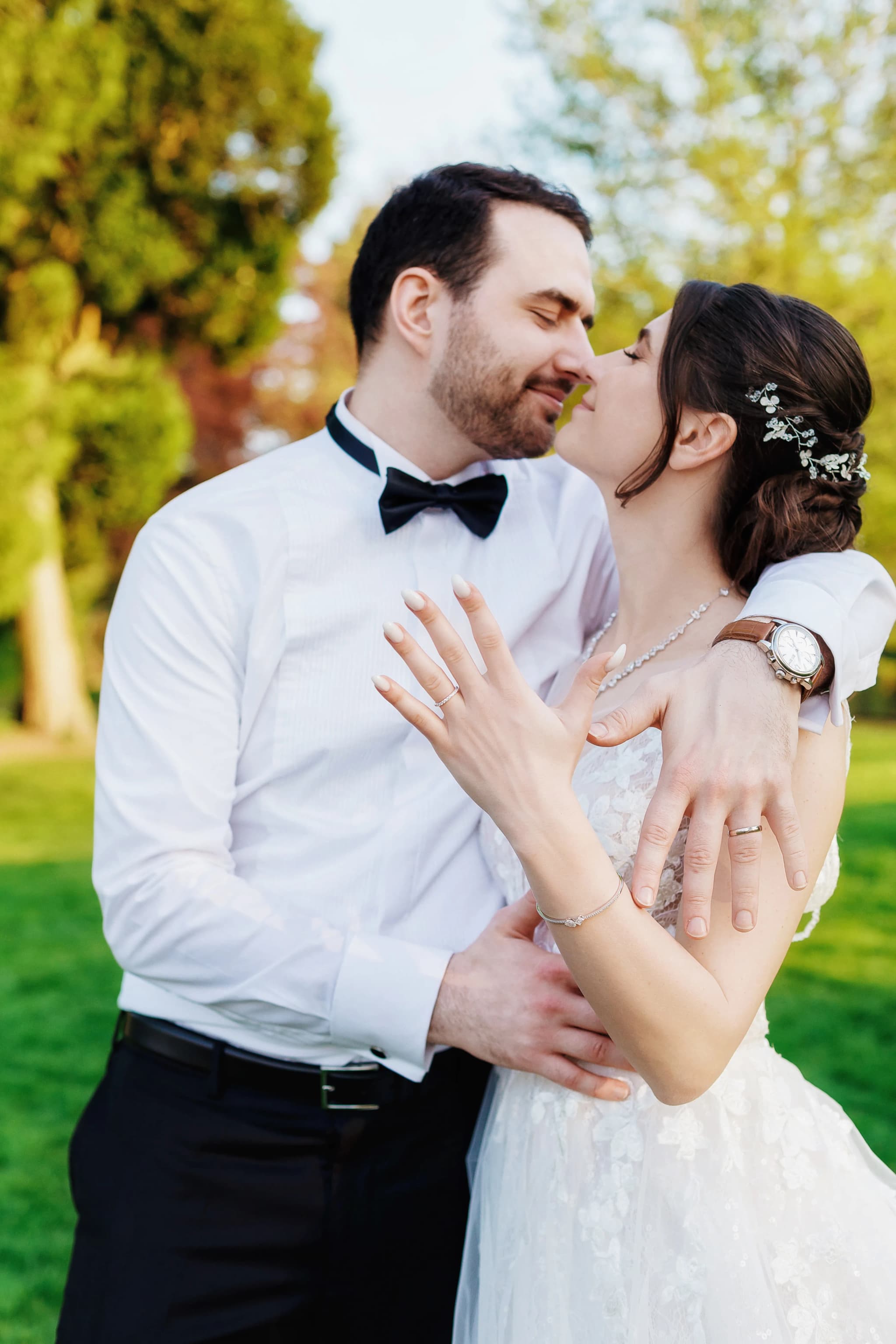
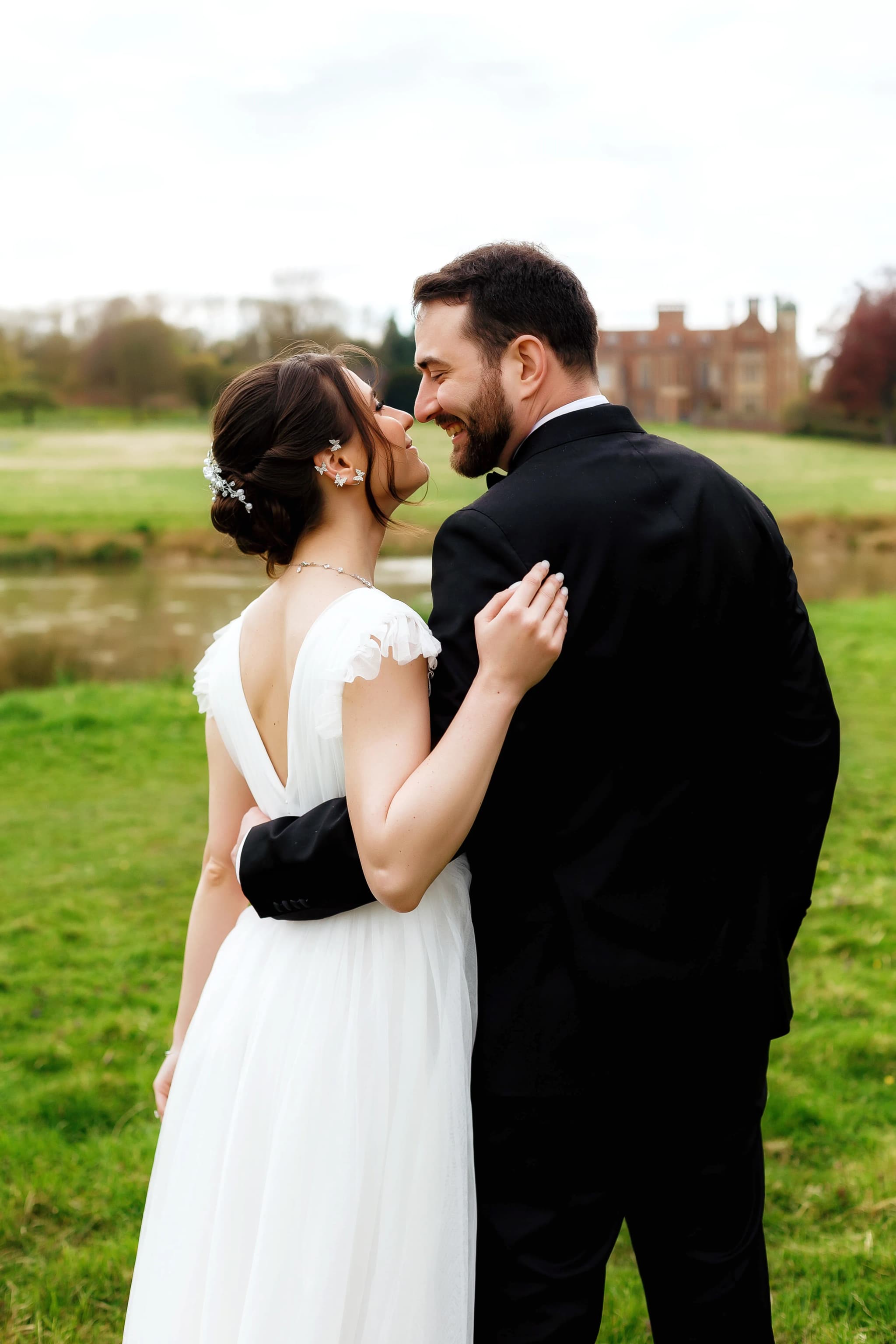
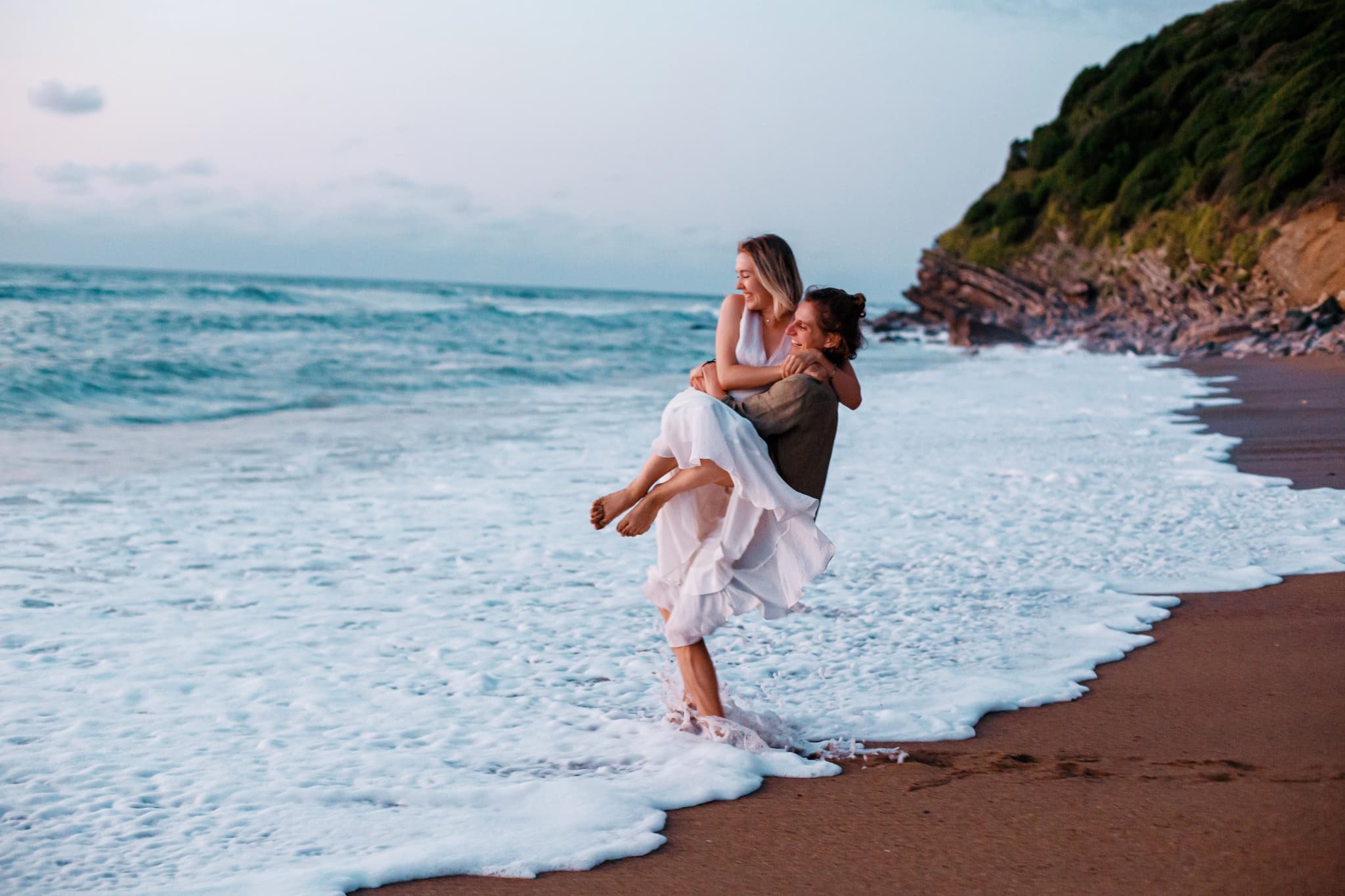
For couples, touch is enormously useful. Holding hands, one partner resting their head on the other's shoulder, a hand at the small of a back: these small gestures of physical connection produce an ease and warmth that no amount of directed posing can replicate. The same principle applies to families with children. Rather than asking everyone to line up, I will suggest a gentle tug-of-war, a walk where the child is swung between parents, or simply following the child's lead and photographing what naturally unfolds. Children in particular are excellent at breaking the formality of a photo session, and that informality tends to infect the adults around them in the best possible way.
If you find yourself freezing, try this: take a slow breath in, let your shoulders drop on the exhale, and shift your weight very slightly from one foot to the other. That tiny movement is usually enough to break the stillness and bring you back into your body. It sounds small, but the difference in the resulting photographs is consistently remarkable.
A note from experience
The single most relaxing thing I can tell any client is this: I will not take a photograph I do not love. You will never look at a gallery from our session and wince. Part of what I do throughout every shoot is quietly edit in real time, directing you away from angles that do not flatter and toward the ones that do. You do not need to know which is which. That is my job. Yours is simply to be present. If you would like to discuss what a relaxed, unhurried session looks like, get in touch here.
The Role of Conversation During a Session
The best portraits are almost always taken when the subject is mid-sentence or mid-laugh. Genuine expression is extraordinarily difficult to fake and extraordinarily easy to capture when it is actually happening. This is why I talk throughout every session, not in a distracting way, but in a way that keeps your brain occupied with something other than the fact that a camera is pointing at you. I will ask about your plans, your favourite places, how you met if it is a couple session. I am genuinely interested, which helps, but I am also doing this deliberately to keep you out of performance mode.
If you find a particular topic that makes you animated, tell me at the start of the session. If you are passionate about wild swimming in the Cam, or obsessive about a particular television series, or have strong opinions about the best pub in Cambridge, those are exactly the subjects I want to bring up when I am ready to take photographs. Your genuine enthusiasm for something you love is one of the most photogenic things in the world, and it has the added benefit of making you completely forget the camera exists.
It is also entirely fine to tell me when you need a moment. Some people reach a point in a session where they feel photographed-out and need two minutes to walk around, look at something in the distance, or simply not be directed. This is normal, and I always welcome it. A short break almost always produces a second wind, and the photographs taken in that second wind are frequently the strongest of the day.
Managing Expectations Around Smiling
There is a particular tyranny of the big smile in portrait and wedding photography, and I want to address it directly. Not everyone's natural resting expression is joyful, and that is completely fine. Some of the most beautiful portraits I have taken are of people with their eyes closed, or looking slightly away, or caught in a quiet moment of thought. A forced smile is almost always visible as a forced smile, and trying to maintain one for an extended period makes everyone look exhausted.
What I look for instead is genuine warmth, which is a different and far more attainable thing. Warmth shows up in the softening around the eyes, a slight relaxation of the mouth, the quality of attention between two people who care about each other. It does not require teeth, and it does not require an instruction. It requires comfort, which brings us back to the starting point: the entire work of a photo session, from a technical standpoint, is creating the conditions in which that comfort can emerge.
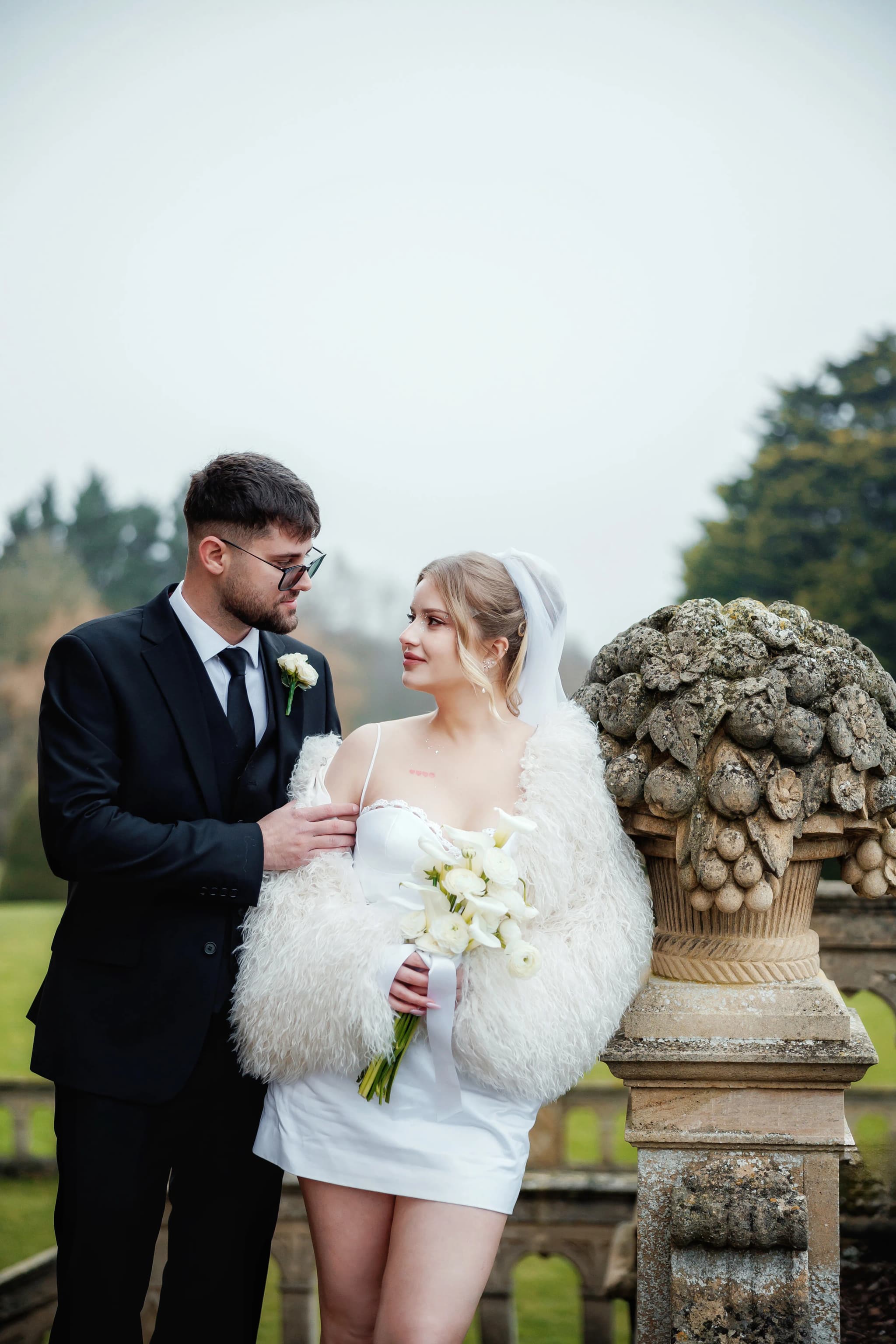
For wedding couples in particular, I find that the ceremony itself is one of the most reliably beautiful parts of the day to photograph, precisely because everyone stops thinking about how they look. Vows, the moment of the first kiss, a parent's expression from the front pew at an Ely Cathedral wedding: these images are unguarded and therefore irreplaceable. The portrait session later in the day can sometimes be more self-conscious, but it also benefits from the fact that by that point the couple has usually relaxed considerably. Adrenaline has passed, joy has settled in, and the genuine ease between two people who have just married each other is visible in every frame.
After the Session: Giving Yourself Permission to Be Surprised
Many clients arrive at a session convinced they will dislike the results. I understand that feeling. Years of unflattering phone photographs or memories of difficult school portraits can create a deeply entrenched belief that you simply do not photograph well. I ask every client to hold that belief lightly and try to stay open to the possibility of being surprised.
When the gallery comes through, I recommend looking at it first on a larger screen rather than a phone, in good light, without rushing. Give yourself time to adjust to seeing yourself. The first reaction to your own portrait is often not your most accurate one; many clients who send a nervous message an hour after receiving their gallery write again two days later to say they have changed their mind entirely and now love the images.
The photographs we take together are not a test you can pass or fail. They are a record of a real moment, and real moments, when captured well, have an authenticity and a life to them that no amount of self-consciousness can destroy. The work I do before, during, and after a session is all in service of that: helping you arrive at images that actually feel like you, that you will want to frame, share, and return to for years to come.
Relaxing in front of a camera is a skill, and like all skills it improves with practice and with the right environment. My role is to create that environment, to give you the time and the space to settle, and to keep working until the images reflect the person I can see standing in front of me rather than the person who was anxious about being photographed. That is the entire point. If you are ready to find out what that feels like, I would love to hear from you.

Yana Skakun
Photographer · England
Professional wedding, family and portrait photographer based in England. Passionate about capturing authentic emotions and timeless moments.
About Yana →how to relax photo session UKfeel natural in photos Englandcamera confidence tipsphotography session tips UK
Photography Tips — Professional Photography in Cambridge & England
Yana Skakun is a professional photographer based in Cambridge, specialising in wedding, family, and portrait photography across England. Every session is personal — planned around your story, your people, and the moments that matter most. This guide — How to relax and feel natural during a photo session — is part of the photography journal: practical, experience-based advice drawn from real sessions across England. Whether you arrived searching for how to relax photo session uk or feel natural in photos england, the same care and attention shapes every session Yana photographs.
Professional Photography sessions are available year-round, with bookings open across Cambridge, Ely, Huntingdon, Peterborough, and further afield — East England, London, the Midlands, and beyond. If you have specific questions about camera confidence tips, mention it in your enquiry. Get in touch through the contact form above to check availability and discuss your session. Enquiries are welcomed from anywhere in the UK.
Frequently Asked Questions
What camera settings should I use for outdoor portraits?+
For outdoor portraits, shoot in aperture priority mode. Use a wide aperture (f/1.8–f/2.8) to blur the background and isolate your subject. Keep ISO as low as possible in good light. In bright conditions, use a neutral density filter or switch to manual to avoid overexposure at wide apertures.
What is the golden hour in photography?+
Golden hour is the period roughly 30–60 minutes after sunrise and before sunset. The sun is low in the sky, producing warm, soft, directional light that flatters skin tones and creates beautiful long shadows. It's widely considered the best natural light for portrait and outdoor photography.
How do you get sharp photos in low light?+
In low light, increase your ISO (accepting some grain), use the widest aperture your lens allows, and slow your shutter speed to the slowest you can hand-hold without camera shake (roughly 1/focal length as a guide). Use image stabilisation if available, and consider a tripod for static subjects.
What is the rule of thirds in photography?+
The rule of thirds divides the frame into a 3×3 grid. Placing your subject on one of the four intersection points — rather than dead centre — creates a more dynamic, visually interesting composition. It's a guideline, not a rule: some of the most powerful images break it deliberately.
How do you edit photos to look professional?+
Professional editing starts with shooting in RAW format. In Lightroom or similar software, correct exposure, white balance, and contrast first. Recover shadow and highlight detail. Apply gentle colour grading for mood. Be conservative with skin retouching — the goal is natural enhancement, not transformation. Consistency across a set of images is what separates professional from amateur editing.
Continue Reading
Related Articles

Photography Tips
Photography Gift Vouchers: The Most Personal Present You Can Give
5 min read · Read Article
Photography Tips
Photo Books vs Photo Albums: What Is the Difference and Which Is Better?
5 min read · Read Article
Photography Tips
Photo Gift Ideas: Turning Professional Images into Meaningful Presents
5 min read · Read Article
Get in Touch
Ready to Book Your Session?
Get in touch to discuss your vision — I'll reply within 24 hours.