Yana Skakun
Maternity photoshoot guide: When, where & what to wear
By Yana Skakun·5 April 2026·7 min read
There is a particular window in pregnancy — usually somewhere in the early thirties of weeks — when the bump is fully formed, the shape is round and unmistakable, and you can still move comfortably enough to enjoy an hour outdoors or curled up on the bed at home. It does not last long. A few weeks either side and the experience changes: too early and the bump has not yet rounded into the shape most people picture when they think of a maternity portrait; too late and standing for any length of time becomes genuinely uncomfortable. Maternity photography exists to make the most of that narrow, fleeting stretch of pregnancy, and after photographing many expectant mothers and their families across Cambridgeshire, I have learned a great deal about how to make the session comfortable, unhurried, and genuinely reflective of what this particular chapter feels like. This guide covers everything I wish every client knew before we picked up the camera.
When to Book and When to Shoot
The sweet spot for most maternity sessions falls between roughly 28 and 34 weeks. By this stage the bump has taken on its full, round shape but you are not yet contending with the swelling, breathlessness, and general fatigue that can arrive in the final fortnight before your due date. Every pregnancy carries differently, though, and I always ask about how you are feeling rather than working strictly to a number on a calendar. Some mothers are still glowing and energetic at 36 weeks; others feel ready to be photographed by 26. The dates are a guide, not a rule.
The booking itself should happen much earlier than the session — ideally during the second trimester, once the twelve-week scan has passed and you feel ready to make plans public. This matters for two practical reasons. First, popular weekend slots in the later stages of pregnancy fill up quickly, particularly in spring and early summer when a large number of due dates seem to cluster. Second, booking early gives us room to be flexible: if you are feeling unwell, if the weather forecast for an outdoor session looks poor, or if your bump simply is not where you hoped it would be yet, we can shift the date without the stress of trying to find an entirely new slot at short notice.
I would also gently encourage you not to leave a maternity session as an afterthought squeezed in around hospital bags and nursery preparation. It deserves its own space in the calendar, treated as something worth planning for rather than something to fit in if there is time.
Outdoor Sessions vs Sessions at Home
Both settings work beautifully, and the right choice really comes down to what feels most like you. Outdoor sessions — in woodland, along open parkland, or in a garden with soft late-afternoon light — tend to produce expansive, airy images with room to move and walk together as a couple. There is something about open space and natural light that suits maternity photography particularly well: it gives the images a sense of calm and openness that mirrors the anticipation of this stage of life. Around Cambridge, I favour quiet woodland paths and open meadowland where the light in the late afternoon has a gentle, golden quality and there is enough space to walk, sit, and simply be together without feeling like we are performing for a camera.
Home sessions offer something different but equally valuable: intimacy. A sunlit bedroom with soft bedding, the first tiny baby clothes laid out, a nursery beginning to take shape, a partner's hand resting on the bump, an older sibling climbing onto the bed to feel a kick — these are the details that a home session captures in a way an outdoor location simply cannot. Home sessions also remove the unpredictability of British weather entirely, which is no small thing when you are booking in advance and cannot control what October decides to do on the day.
Some clients choose to combine the two within a single extended session, beginning at home with quieter, more intimate images before moving outdoors as the light turns golden in the early evening. If your home has a garden or is near a park you love, this hybrid approach often gives the richest, most varied set of final images.
What to Wear
Clothing has more influence on how a maternity photograph reads than almost any other decision you will make before the session, so it is worth thinking through properly rather than deciding the morning of.
Form-fitting fabric generally photographs best because it follows the shape of the bump rather than hanging away from it. This does not mean tight in an uncomfortable sense — a flowing maxi dress with a fitted bodice, or a simple jersey wrap dress, both skim the body in a way that reads clearly in photographs while remaining comfortable to wear and move in for an hour. Structured, stiff fabrics tend to hide the bump's shape rather than reveal it, so soft jersey, ribbed knits, and lightweight cottons with some stretch are usually the better choice over anything boxy or tailored.
On colour, neutral and deep tones tend to age the best and photograph the most flatteringly against both woodland and indoor settings. Cream, white, dusty blue, sage green, and warm terracotta all work well, as do deeper tones like navy or burgundy for a more dramatic feel. Busy prints, large logos, and very bright colours tend to pull the eye away from your face and bump, so I generally steer clients away from anything too visually loud.
It is worth bringing a second outfit if you can. Many clients bring one more formal option — a flowing dress, perhaps — alongside something relaxed, such as a soft cardigan over a simple vest top and leggings, or even bare bump with a partner's shirt draped open over it. Having two looks gives the final gallery some visual variety without needing a full costume change partway through, and it means you are not relying on a single outfit to carry the entire session.
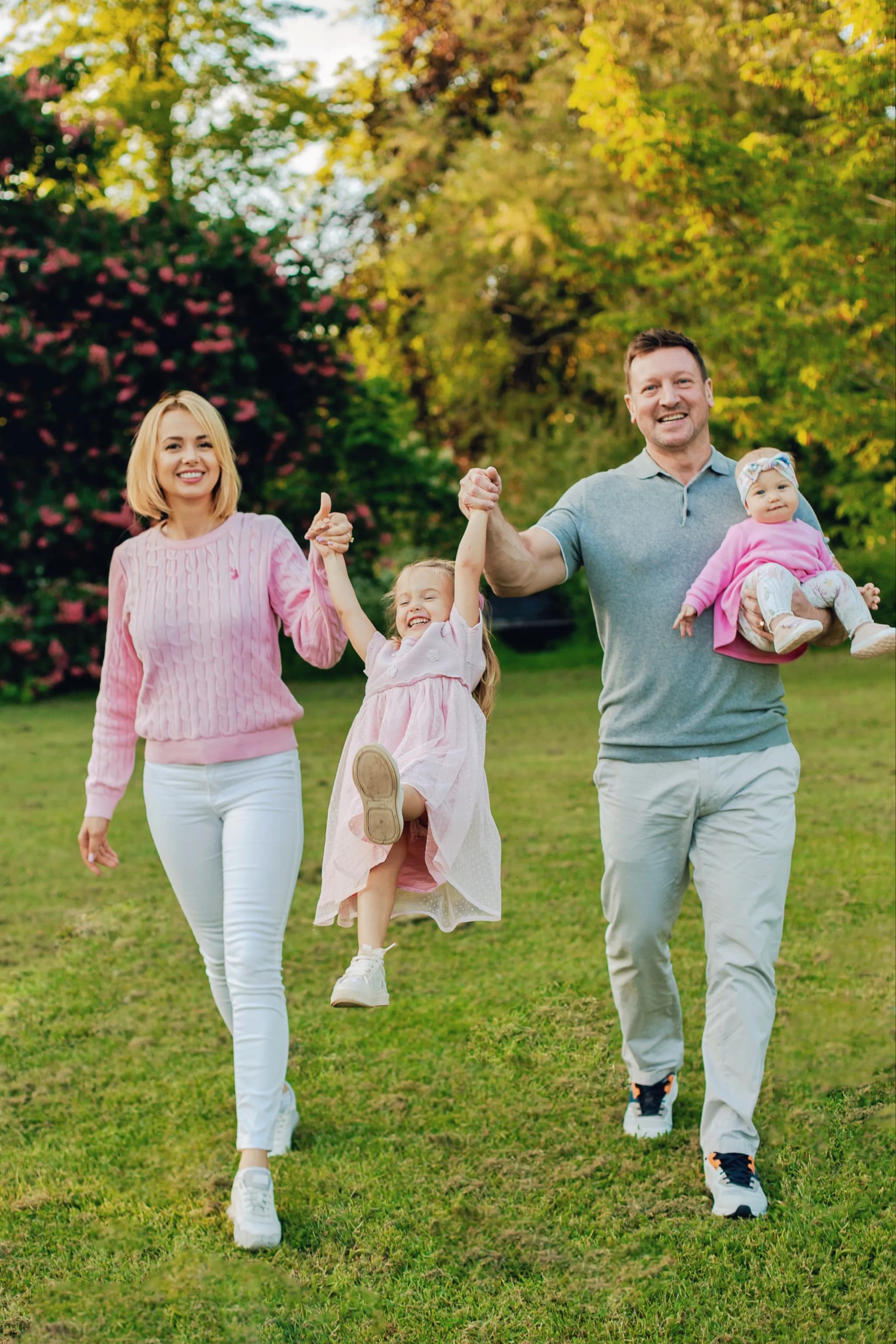
If your partner is joining you, coordinate loosely rather than matching outfits exactly — matching tends to look staged in photographs. If you are wearing white or cream, a partner in navy, grey, or a soft olive works well alongside it. If older children are part of the session, dressing them in tones that sit within the same general palette, without being identical, keeps the whole family looking cohesive in the final images without anyone looking like they are in uniform.
Including Your Partner and Other Children
A maternity session does not have to be about the expectant mother alone, and in my experience the images that end up meaning the most, years later, are often the ones that include the whole family. If you have a partner, we will spend part of the session working with the two of you together — walking, talking quietly, a hand resting on the bump, a forehead pressed together. These quieter, connected moments tend to feel far more natural on camera than posed, direct-to-camera portraits, and they capture something about the relationship at this particular point that is worth having.
If you already have children, involving them is one of the loveliest additions you can make to a maternity session. Toddlers kissing the bump, older children with a hand pressed against it feeling for a kick, a sibling reading a book against your side — these images tell the story of a family expanding, not simply a pregnancy in isolation. I do not try to force posed group shots with young children; instead I let them explore, interact, and behave as they naturally would, and photograph the genuine moments that come out of that.
How the Session Itself Works
A maternity session typically runs for around an hour, sometimes a little longer if we are moving between an indoor and outdoor setting or including a change of outfit. We usually begin with quieter, closer images — hands on the bump, gentle profile shots, close details — before opening out into more relaxed walking and movement as everyone settles into the rhythm of being photographed. I find that the first ten minutes are almost always the most self-conscious for clients, and the images noticeably relax and open up as the session goes on, which is why I never rush the beginning.
Comfort matters enormously at this stage of pregnancy, so we take breaks whenever needed, work at whatever pace feels right on the day, and I am always conscious of not asking anyone to stand for extended stretches or hold an awkward position for longer than necessary. If you need to sit, we sit. If you need five minutes, we take five minutes. This is not a session where speed is valued over how you actually feel.
Thinking about newborn photography too?
Many clients book their maternity and newborn sessions together, which secures your newborn date well ahead of the birth and takes one thing off your list before the baby arrives.
Ask about maternity & newborn packagesPreparing on the Day
A few small things make a genuine difference to how the session feels and how the images turn out. Staying well hydrated in the days beforehand helps with skin and general comfort, particularly for an outdoor session in warmer weather. If you are planning to have your hair and makeup done, scheduling it for the morning of the session rather than the night before means everything looks fresh rather than slightly worn by the time we begin.
For outdoor sessions, flat, comfortable shoes make a real difference on uneven woodland paths or grass, even if you plan to go barefoot for some of the images — something many clients choose to do for a softer, more natural feel. Bring a warm layer to put on between shots if the weather is cool, since standing still between frames can get chilly even on a mild day. If your partner or children are joining, having their outfits ready and checked over the day before avoids a rushed morning of last-minute changes.
Finally, try to arrive with realistic expectations rather than pressure. This is a portrait of where you are right now — tired in places, glowing in others, genuinely you. The images that tend to be most loved later are rarely the most perfectly posed ones; they are the ones where you can see it was actually you in that moment, at that stage of your pregnancy, feeling whatever you were genuinely feeling.
Delivery and What You Receive
Following the session, images are edited and delivered via an online gallery, generally within a couple of weeks. The gallery includes a curated selection of the finished images in both colour and, for a number of frames, black and white, alongside a download link for full-resolution files suitable for printing. Print, canvas, and album options can be added directly from the gallery for those who would like physical keepsakes rather than digital files alone.
Maternity images have a habit of becoming more meaningful with time rather than less — a bump that will only ever exist for those few months, a particular stage in your family's story that will never look quite the same again. If you would like to check availability for a maternity session, or to discuss combining it with a newborn booking for after the baby arrives, please get in touch and I would be glad to talk through dates, locations, and what would suit your family best.
See My Work
Newborn & Family Photography

Yana Skakun
Photographer · England
Professional wedding, family and portrait photographer based in England. Passionate about capturing authentic emotions and timeless moments.
About Yana →maternity photographer UKmaternity photoshoot guide Englandwhat to wear maternity photoswhen to book maternity shootpregnancy photography England
Newborn Tips — Newborn & Baby Photography in Cambridge & England
Newborn and baby sessions with Yana Skakun take place in the comfort of your own home — unhurried, led entirely by your baby's timings, and focused on the quiet intimacy of those first weeks. Sessions are available across Cambridge and the wider East of England. This guide — Maternity photoshoot guide: When, where & what to wear — is part of the photography journal: practical, experience-based advice drawn from real sessions across England. Whether you arrived searching for maternity photographer uk or maternity photoshoot guide england, the same care and attention shapes every session Yana photographs.
Newborn & Baby Photography sessions are available year-round, with bookings open across Cambridge, Ely, Huntingdon, Peterborough, and further afield — East England, London, the Midlands, and beyond. If you have specific questions about what to wear maternity photos, mention it in your enquiry. Get in touch through the contact form above to check availability and discuss your session. Enquiries are welcomed from anywhere in the UK.
Frequently Asked Questions
When is the best time to do newborn photos?+
The ideal window is 5–14 days after birth. At this stage, babies sleep deeply and curl naturally into gentle poses. After 3 weeks, they become more alert and less likely to sleep through a session. However, lifestyle newborn sessions (awake, at home) work beautifully at any age up to 3 months.
How do you keep a newborn safe during a photoshoot?+
A professional newborn photographer is trained in safe posing techniques. All composite poses (baby appearing to support their own weight) are achieved through careful post-processing — the baby is always fully supported. Sessions are kept warm (babies need to be comfortable), and only experienced photographers should attempt posed newborn work.
How long does a newborn photo session take?+
Newborn sessions typically take 2–4 hours. The pace is entirely led by the baby — time is built in for feeding, settling, and nappy changes. There's no rushing. Lifestyle sessions, which are more relaxed and home-based, usually take 1.5–2 hours.
What should parents wear for a newborn photoshoot?+
Soft, neutral tones work beautifully — cream, blush, grey, and muted earth tones keep the focus on the baby. Avoid bold patterns and logos. Comfort is important: parents should feel relaxed and natural in their outfits. Your photographer may send a styling guide in advance.
Can siblings be included in newborn photos?+
Yes — sibling images are among the most treasured photos families have. Plan for a sibling session at the beginning, when children are freshest and most cooperative. Keep their involvement short and positive, and have another adult present to manage them while the photographer focuses on the newborn.
Get in Touch
Ready to Book Your Session?
Get in touch to discuss your vision — I'll reply within 24 hours.