Yana Skakun

Moody Portrait Photography: Creating Drama in Natural Settings
By Yana Skakun·28 April 2033·7 min read
Most portrait requests I get are for bright, airy, flattering images — and I love making those. But every so often a client comes to me wanting something with more weight to it: a portrait that feels less like a record of how someone looks and more like a statement about who they are. That is the territory of moody portraiture, and it is some of the most rewarding work I do. It rewards patience with light, a willingness to let shadow do half the storytelling, and a client who is prepared to trust the process rather than asking for "more light on my face" every five minutes. If you have ever looked at a portrait and felt it had genuine atmosphere — a sense of depth, of restraint, of something held back rather than fully explained — you have been looking at moody portrait work, and this piece is about how it is actually made, where in and around Cambridge it works best, and what to expect if you book a session in this style.
What Makes a Photograph "Moody"
Moody portraiture is characterised by deliberate contrast: light and shadow held in tension, with the shadow allowed to dominate in ways that conventional portrait photography usually avoids. Where a standard portrait aims for even, flattering illumination across the whole face, a moody portrait uses selective light — often just one strong source, sometimes just a sliver of it — to create depth and a sense of psychological weight. The subject emerges from the shadow rather than being fully revealed by the light, and the resulting image tends to carry an emotional quality that brighter, more conventional portraits simply do not reach for.
This is not a new idea. It has deep roots in classical painting, particularly the Baroque tradition of chiaroscuro, where painters like Caravaggio and Rembrandt built entire compositions around a single light source and the drama of what it left in darkness. Contemporary moody portraiture borrows directly from that tradition, whether the client is after fine-art-leaning personal portraits, editorial-style images with real visual punch, or something more intimate — a portrait meant to sit on a wall and be looked at properly, not just glanced at on a phone screen.
The technical difference from a standard portrait session is mostly about restraint. I am deliberately not filling in every shadow. I am not asking for a wide, even smile in every frame. I am watching for the angle of a jaw against dark cloth, the way light catches one eye and leaves the other in shade, the stillness in an expression rather than the performance of one. It takes longer to get right than a straightforward bright-and-cheerful portrait, and it asks more of the person being photographed too — but the results tend to be the images people keep coming back to years later.
Natural Light: Why Grey Skies Are a Gift, Not a Problem
The single most common misconception clients arrive with is that moody portraits need sunshine, or need studio lighting, or need some kind of dramatic golden-hour glow. In practice, the opposite is usually true. An overcast day — the heavy, diffused light of a genuinely grey English sky — is often better for dramatic portraiture than full sun, because the light is directional without being harsh. Shadows fall softly rather than with the hard, sharp edges that midday sun produces, and that softness is what allows shadow to read as atmosphere rather than as a lighting mistake.
Woodland settings do something similar but more actively. Shafts of light breaking through a tree canopy, the dappled shadow at the edge of a dense wood, the sudden dimness under a stand of mature conifers — all of these shape and filter daylight in ways that would be genuinely difficult to reproduce with artificial lighting. I look for locations where the trees themselves are doing some of the lighting work: narrow gaps that create a single beam across a face, or dense canopy that drops the ambient light right down so that any brighter patch nearby becomes the dominant light source in the frame.
Early morning and late afternoon in autumn and winter are particularly good for this kind of work in Cambridgeshire. The sun sits low, the light is warm but weak, and long shadows stretch across paths and fields in a way that adds real depth to a composition. Winter especially tends to produce the moodiest natural light of the whole year — short days, low sun, bare trees, and skies that shift constantly between flat grey and sudden shafts of gold. Clients who want a moody outdoor session are often better served by a bleak January afternoon than by a bright June one, which can feel counterintuitive until you see the results side by side.
Cambridge's Architecture: A Genuinely Rare Resource
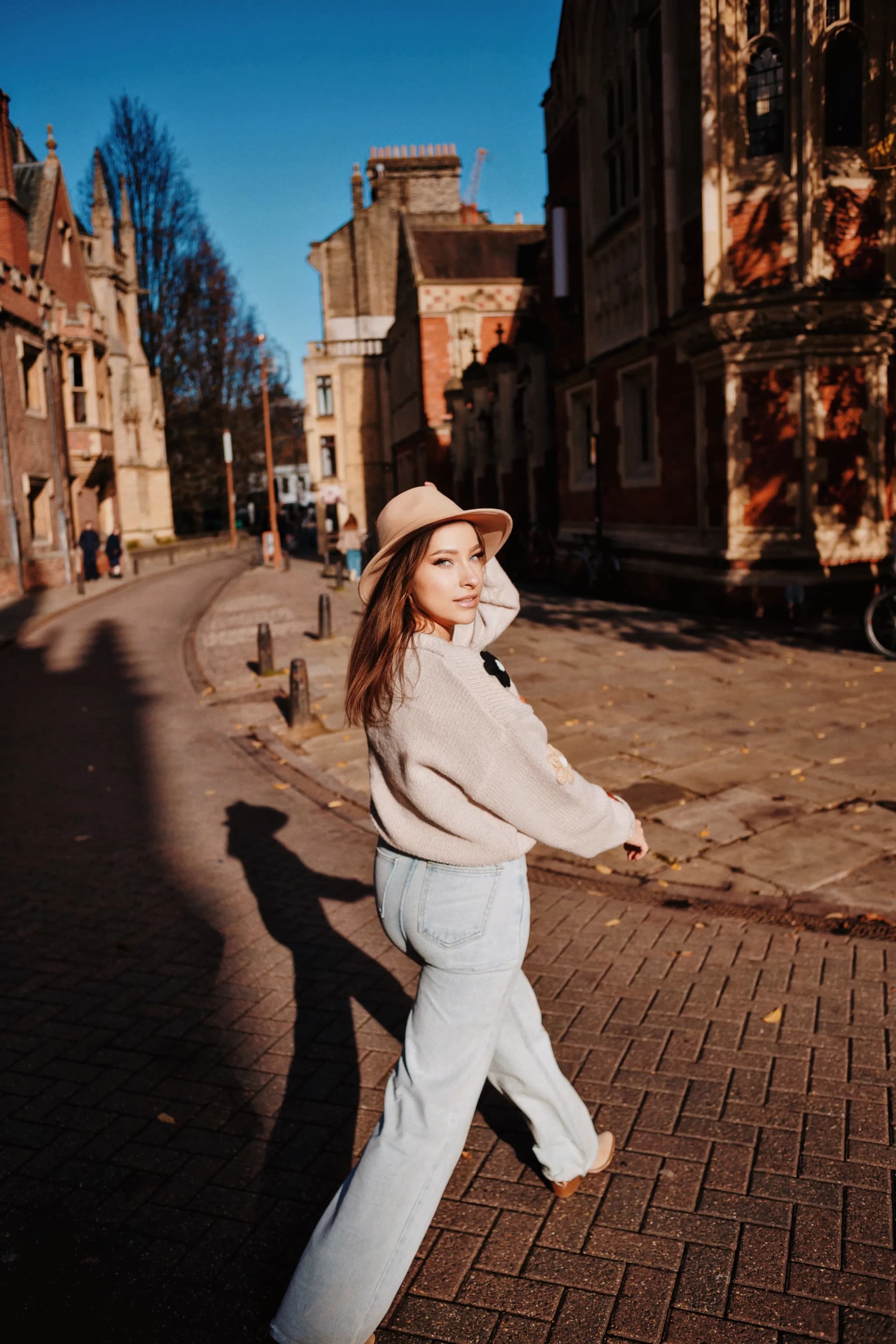
Cambridge offers some of the finest moody portrait settings available to any UK-based photographer, and it is one of the reasons I love working here specifically. The stone passages between college buildings, the vaulted ceilings of the older libraries, the cellars and low archways that run through the oldest parts of the city — all of these create an extreme, natural contrast between deep interior shadow and bright exterior daylight. Position a subject at an archway, a mullioned window, or the mouth of a stone stairwell, and the lighting drama is already built into the architecture. No artificial equipment is required; the building is doing the work a studio strobe would otherwise have to do.
Some of my favourite spots for this kind of session include the narrower passageways around the older colleges, where the light drops sharply as you move from an open court into a covered walkway, and the older libraries and chapels where high, narrow windows throw single shafts of light across stone floors. These are places that reward slow, careful work — watching how the light moves across a space over the course of twenty minutes, rather than shooting quickly and moving on. Public access to college interiors varies and often requires prior arrangement, which is something I factor into planning any session that leans on a specific interior location.
For a different, more contemporary flavour of drama, industrial and urban settings around the wider Cambridge area — warehouses, stairwells, exposed brick, concrete stairwells and underpasses — offer a harsher, more angular aesthetic than the soft stone-and-shadow look of the historic city centre. This suits a different kind of brief: portraits with a more current, editorial feel, often requested by clients wanting images for a creative CV, an album cover, or simply a personal portrait with real edge to it. Neither approach is better than the other; the right choice depends entirely on what the finished image is meant to say about the person in it.
Not sure which setting suits you
I always talk through location options before booking a moody portrait session — woodland, historic architecture, or something more urban — so the setting matches the feeling you actually want in the final images.
Enquire about a moody portrait sessionWardrobe, Expression, and Working With a Client
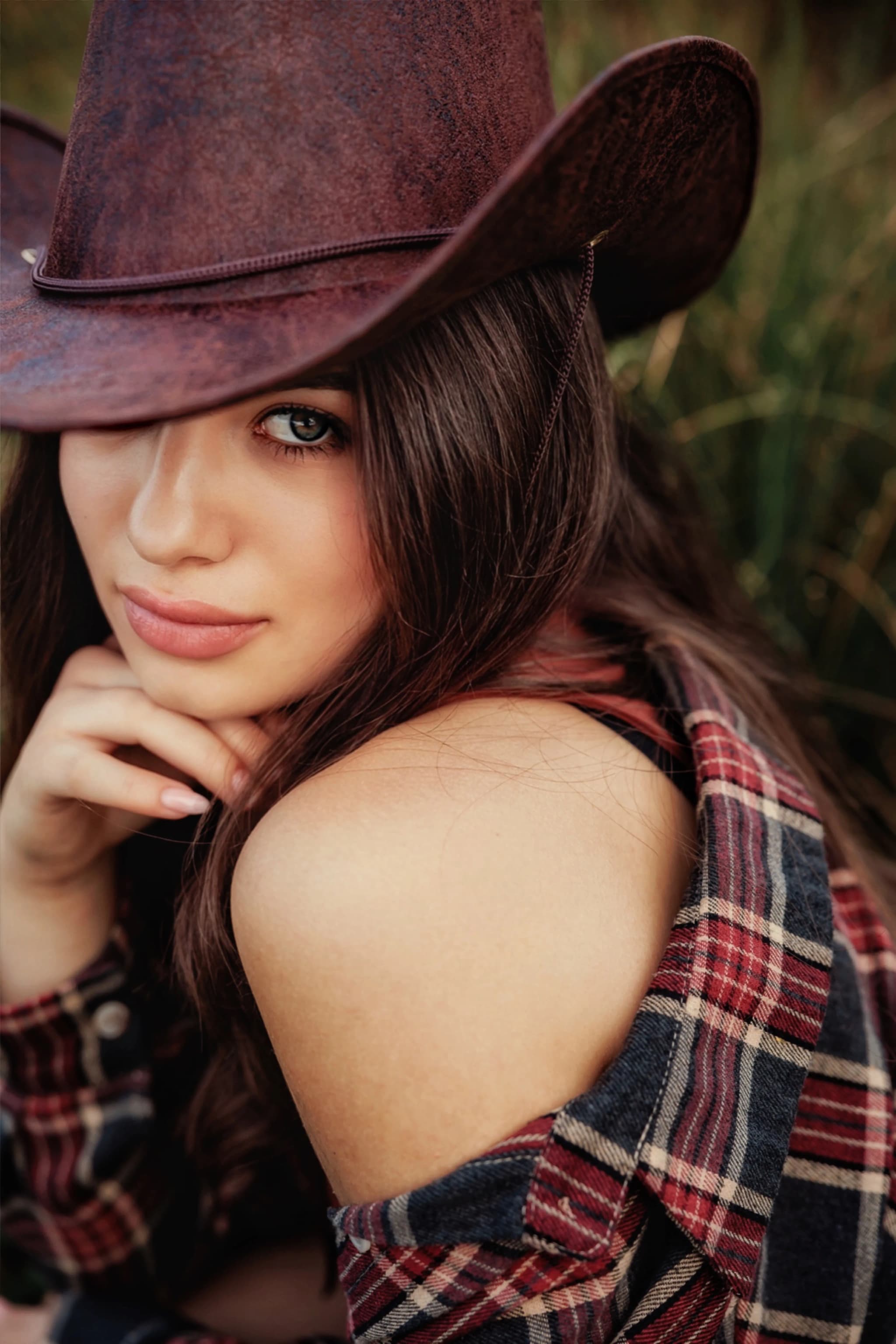
Clothing matters more in moody portraiture than in almost any other style of photography I do. Because the lighting is deliberately uneven, texture and tone in fabric become far more visible — a fine-knit jumper, a heavy wool coat, or a piece with visible weave will hold light and shadow in a way that flat, synthetic fabric simply does not. I generally steer clients towards darker, richer tones: deep green, charcoal, burgundy, navy, black. These sit into shadow rather than fighting it, and they let the face remain the brightest, most important part of the frame. Bright colours and busy patterns tend to work against the mood rather than with it, pulling the eye away from expression and into the clothing itself.
Expression is the other half of the equation, and it is where I spend the most time directing during a session. A moody portrait rarely benefits from a big open smile — that reads as warmth and approachability, which is a wonderful quality for a family photograph but works against the stillness a moody portrait is aiming for. Instead I am looking for something quieter: a direct, held gaze, a slight downward tilt of the head, stillness in the shoulders, a jaw held with a bit of tension rather than fully relaxed. None of this needs to feel unnatural or performed. Most people find their way into it quickly once they understand they are not being asked to look happy — they are being asked to simply be present and let the camera find something real.
I also spend time before a session talking through what the client actually wants the finished portraits to say. Some people want something that could hang in a gallery. Others want a personal portrait that reflects a specific period of their life — recovery, a career change, a milestone birthday — and want the images to carry that weight honestly rather than glossing over it with a conventional smiling portrait. Knowing that in advance changes how I direct the whole session, from location choice through to the specific expressions I am watching for.
Colour, Tone, and Post-Processing
Moody portraits typically benefit from editing that lifts the darkest tones very slightly — raising the blacks just enough to avoid the crushed, muddy effect that heavy shadow can create in digital photography — combined with a cooler or slightly desaturated colour grade. This is a different process from the warm, bright, high-contrast editing that suits most family and lifestyle portraiture, and it is worth understanding that moody portraits are not simply dark photographs. They are photographs with a specific tonal and colour character that takes as much intention in the edit as it does behind the camera.
I generally show clients a small set of reference images during consultation — some cooler and more desaturated, some warmer and richer in tone — so we can agree on a direction before the session rather than after. Editing style is a genuinely personal preference: some people want something close to black and white in feeling even when the images stay in colour, while others want rich, deep colour with the drama coming entirely from the light rather than from a stripped-back palette. Getting this agreed early means the finished gallery matches what the client actually pictured, rather than a version I assumed they wanted.
Who Books a Moody Portrait Session, and Why
Moody portrait sessions attract a genuinely varied set of clients, more varied than people often expect. Some are individuals wanting a striking personal portrait for entirely private reasons — nothing that will ever go on a website or a social profile, just an image that reflects how they see themselves at a particular point in life. Others are creative professionals — actors, musicians, writers — who need portraits with real presence for a portfolio or press use, where a standard bright headshot would undersell the work. Couples occasionally request a moody session as an alternative to a conventional engagement shoot, wanting something with more atmosphere and less obvious cheerfulness. And a smaller number of clients simply love the aesthetic and want a portrait that functions as a piece of art in its own right, framed and hung rather than shared and scrolled past.
What unites almost all of them is a willingness to sit with a slower, quieter kind of session. Moody portrait work is not fast. It depends on watching light shift, on giving a client time to settle into stillness rather than performance, and on being willing to walk away from a location if the light simply is not doing what the brief needs that day. I would rather reschedule than force a moody session into flat, uncooperative light, because the whole point of the style depends on light doing real work rather than being smoothed over afterwards.
If any of this sounds like the kind of portrait you have been picturing — something with genuine atmosphere, made with intention rather than defaulting to bright and cheerful because that is the safer choice — I would love to talk it through with you. Every moody session starts with a proper conversation about location, wardrobe, and the feeling you want the final images to carry, because getting that right before the camera comes out is most of what makes this style work. Get in touch and we can talk through whether woodland, Cambridge's historic architecture, or something more urban and contemporary is the right setting for the portrait you have in mind.


Yana Skakun
Photographer · England
Professional wedding, family and portrait photographer based in England. Passionate about capturing authentic emotions and timeless moments.
About Yana →moody portrait photographydramatic portrait natural lightmoody portrait ideasatmospheric portrait photography Cambridge
Portrait Tips — Portrait Photography in Cambridge & England
Portrait sessions with Yana Skakun are unhurried and personal — designed to produce images that feel genuinely like you, not a performance. Sessions are available in Cambridge, across East England, and at locations throughout the UK. This guide — Moody Portrait Photography: Creating Drama in Natural Settings — is part of the photography journal: practical, experience-based advice drawn from real sessions across England. Whether you arrived searching for moody portrait photography or dramatic portrait natural light, the same care and attention shapes every session Yana photographs.
Portrait Photography sessions are available year-round, with bookings open across Cambridge, Ely, Huntingdon, Peterborough, and further afield — East England, London, the Midlands, and beyond. If you have specific questions about moody portrait ideas, mention it in your enquiry. Get in touch through the contact form above to check availability and discuss your session. Enquiries are welcomed from anywhere in the UK.
Frequently Asked Questions
How do I look natural in portrait photos?+
The key is to keep moving — walking, talking, laughing. Still poses often look stiff. A good portrait photographer will direct you gently rather than just pointing and shooting. Take a breath, drop your shoulders, and try to focus on something that makes you happy rather than worrying about how you look.
What should I wear for a portrait session?+
Wear something you feel good in — not something borrowed or brand new that you haven't worn before. Solid colours photograph better than busy patterns. Bring a second outfit for variety. Think about the location: flowing fabrics work beautifully outdoors; tailored looks suit urban settings.
How long does a portrait session take?+
Standard portrait sessions last 60–75 minutes. This allows enough time to warm up, try different locations and poses, and explore a couple of looks without rushing. If you're very camera-shy, a longer session helps — the more relaxed you become, the better the final images.
What locations are best for outdoor portrait photography?+
Gardens, parks, riverside paths, woodland, and areas with interesting architecture all make great portrait backgrounds. The most important factor is light — a location with open shade or soft directional light will always photograph better than a technically beautiful spot in harsh midday sun.
What is the difference between a portrait session and a headshot session?+
Portrait sessions focus on you as a whole person — full-body, three-quarter, and close-up images in a relaxed, often outdoor setting. Headshot sessions focus specifically on professional or actor headshots: face and upper body, often in a controlled setting with consistent, professional lighting.
Continue Reading
Related Articles
Portrait Tips
Glasses and Glare in Photography: How to Get Great Results
6 min read · Read Article
Portrait Tips
Fake Tan Before a Photoshoot: Timing, Application, and What Can Go Wrong
6 min read · Read Article
Portrait Tips
Hair and Makeup for a Photoshoot: What Photographs Well
7 min read · Read Article
Get in Touch
Ready to Book Your Session?
Get in touch to discuss your vision — I'll reply within 24 hours.