Yana Skakun

Outdoor Newborn Photography: Natural Light and Your New Family
By Yana Skakun·17 July 2025·4 min read
Most people picture newborn photography as a studio affair — soft blankets, wicker baskets, a heated room, and a baby curled into impossibly neat poses. That style has its place and I photograph it often. But a growing number of the families I work with in Cambridge and across the wider UK ask for something different: real light, real air, and the actual landscape their new baby is going to grow up in. Outdoor newborn and early baby photography is not a replacement for the studio session so much as a different, complementary way of documenting this stage — one that trades controlled perfection for atmosphere, texture, and the specific quality of English daylight falling across a tiny, brand-new face.
Why Go Outdoors at All?
Studio newborn photography is built around control. The room is kept warm, the light is shaped and consistent, and every prop and blanket is chosen in advance. That control is genuinely valuable in the first fortnight of a baby's life, when temperature regulation and settled sleep matter enormously. But control also has a cost: the images can start to feel interchangeable, a baby posed the same way against the same white blanket that every other studio baby is posed against.
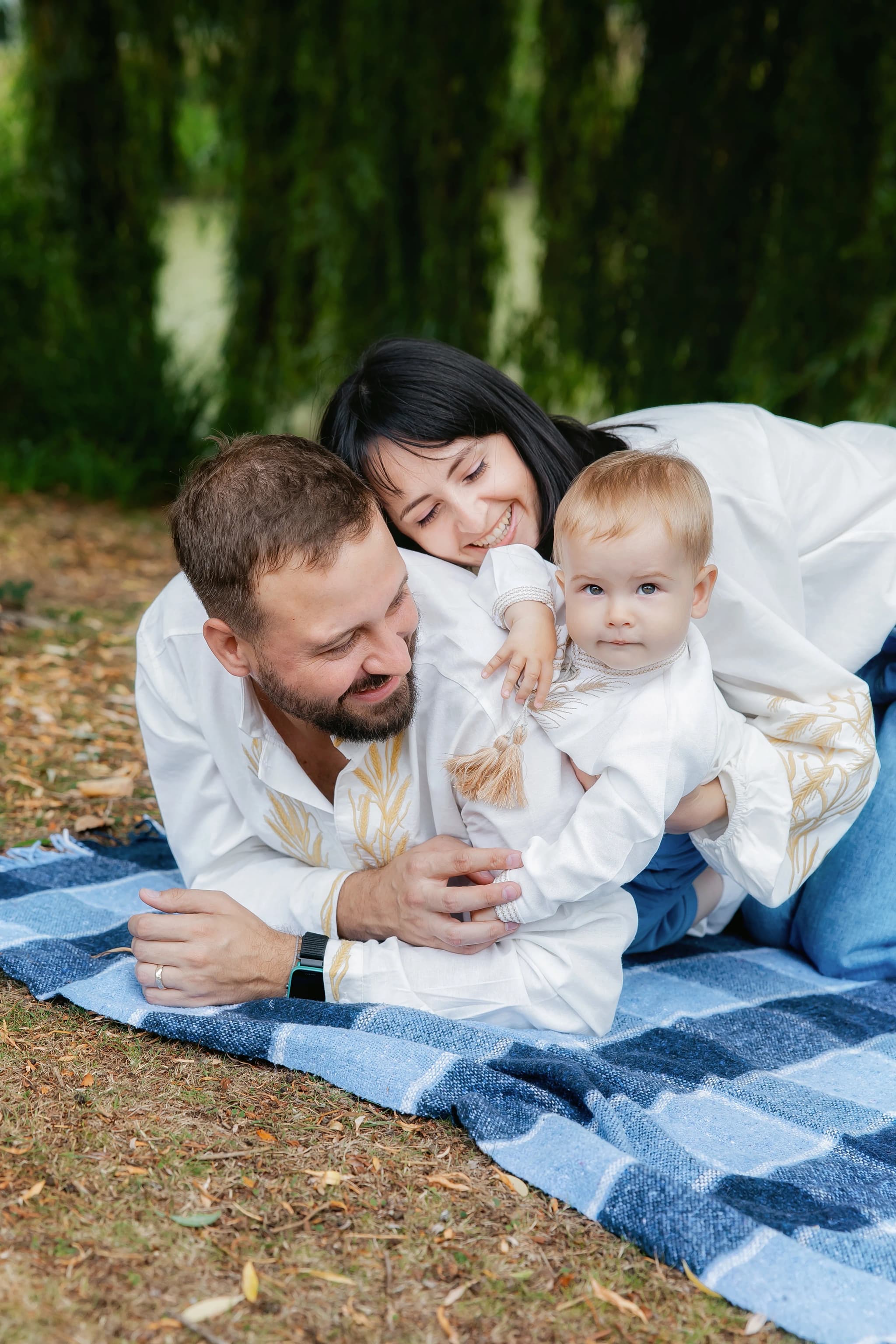
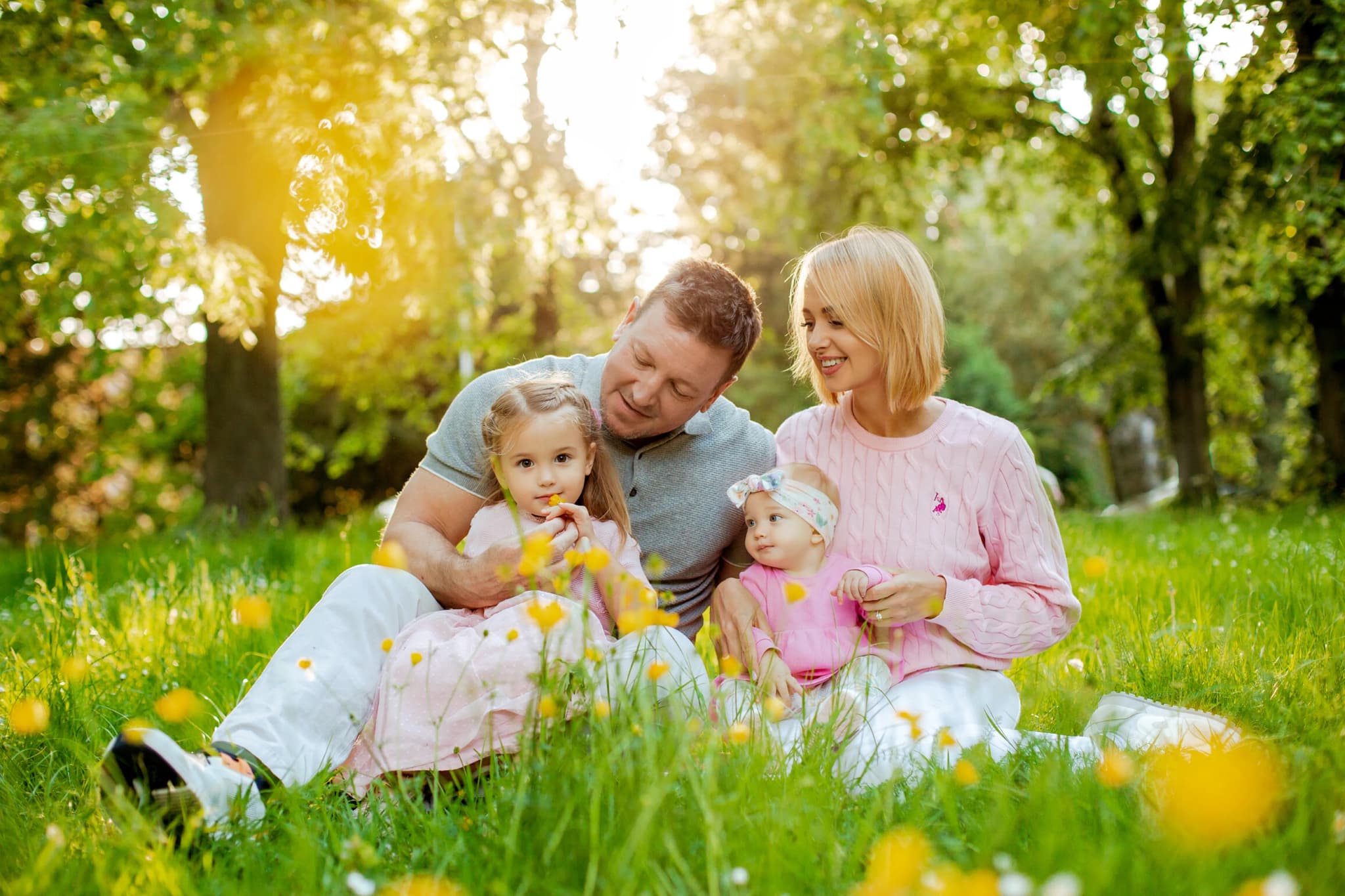
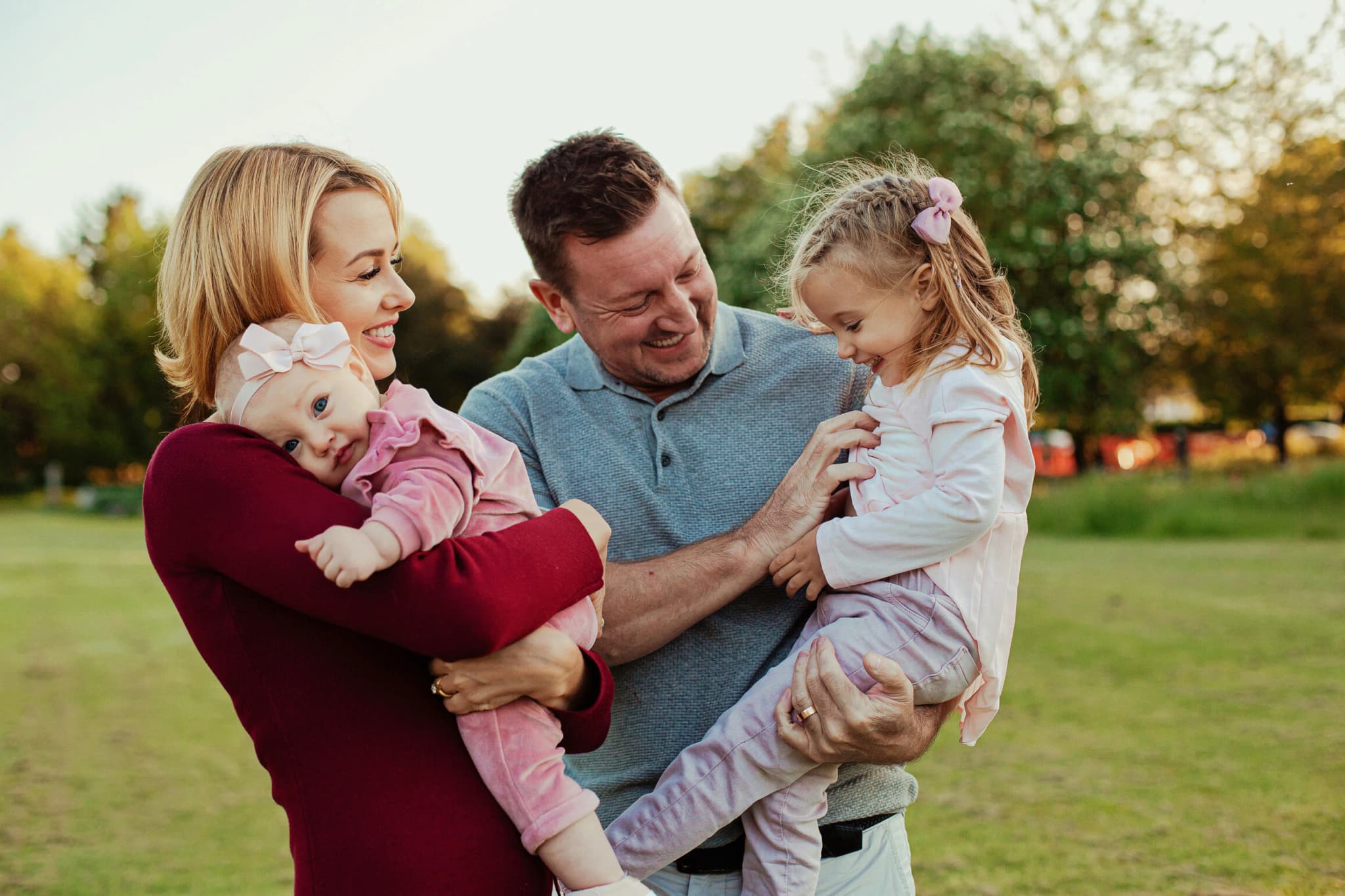
Outdoor sessions give up some of that control in exchange for specificity. A photograph taken with dappled June light falling through beech leaves onto a baby's face, with a parent's bare feet in the grass beside them, could only have happened in that place, at that time of year, with that family. Ten years from now those images will read as a record of a particular English summer, not as a generic newborn portrait. For families who already love spending time outside, or who want their baby's earliest photographs to sit alongside years of park visits and garden afternoons still to come, outdoor sessions simply fit the life they actually live.
When Can a Baby Go Outdoors for Photographs?
This is the question I am asked most often, and the honest answer depends on the baby, the season, and the weather far more than on a fixed rule. A true newborn session — the classic curled-up, days-old style with wrapping and posing — is almost always done indoors. Very young babies need a warm, stable environment, and asking a five-day-old to tolerate an hour outside, however mild the weather, is not something I would ever encourage. Indoor and studio sessions remain the right choice for that earliest window.
From around six weeks onwards, most healthy babies born at term can comfortably manage a gentle outdoor session on a mild, dry day, kept short and built entirely around feeding and settling needs. Between six weeks and roughly four months is, in my experience, the sweet spot for outdoor baby photography: babies at this age are more robust, they are starting to hold their head with more control, they make real eye contact, and their personality is beginning to show in their expressions — but they are still small enough to be nestled into a parent's arms, tucked against a chest, or laid on a soft blanket on the ground in the deeply relaxed way that makes early baby photographs so tender. Premature babies, or babies with any health complexities, should always follow their health visitor or GP's guidance on timing rather than a generic photography schedule, and I am always happy to plan around that guidance.
Season matters too. A baby born in December is unlikely to have an outdoor session at six weeks simply because a January afternoon in Cambridgeshire is rarely warm enough or bright enough to justify it comfortably. In those cases I often suggest an indoor or studio session in the early weeks, with an outdoor family session planned for spring once the baby is a little older and the weather has turned. There is no rush, and no correct age by which outdoor photographs must happen — some of my favourite outdoor sessions have been with babies of seven or eight months, sitting up and reaching for grass and leaves with obvious delight.
The Best Outdoor Settings Around Cambridge
Cambridge is unusually well suited to outdoor family and baby photography, and I have a shortlist of locations I return to depending on the season, the light, and the character a family is after.
A private garden is often the single best choice for the earliest outdoor sessions. There is no travel required at a moment when even a short car journey can be unsettling for a new baby, the temperature and privacy are easy to manage, and the setting is genuinely yours — the actual place your baby will spend their first summer. Grantchester Meadows offers a softer, more pastoral backdrop for families who want open sky and long grass without the crowds of the city centre, and the walk along the river towards the village is gentle enough for a short pram walk between shots. Parker's Piece and Christ's Pieces work well for families who want a more central, urban-green feel, with mature trees offering useful shade on warmer days. For woodland light — that dappled, filtered quality that flatters a small face better than almost anything else — I often suggest Wandlebury Country Park or one of the smaller pockets of ancient woodland just outside the city, particularly from late spring once the canopy has filled in.
For families outside Cambridge itself, the same principles apply wherever you are: a garden, a local park with some tree cover, or a quiet stretch of countryside all work. What matters more than the specific location is finding somewhere with a mix of open and shaded ground, reasonably easy access for a pram and changing bag, and somewhere you feel comfortable and unobserved, since a relaxed parent makes for a relaxed baby and much better photographs.
Planning an outdoor session around your baby's age
If you are not sure whether your baby is ready for an outdoor session, or which season would suit your due date best, I am happy to talk it through before you book anything.
Ask about outdoor newborn sessionsWhat an Outdoor Baby Session Actually Looks Like
There is no fixed structure to an outdoor baby session in the way there might be for a studio shoot, because the baby sets the pace, not the clock. I typically ask families to allow around ninety minutes to two hours for what will end up being perhaps forty-five minutes of actual photography, spread across that window with breaks for feeding, nappy changes, and simple settling time built in without any sense of pressure. If your baby needs a feed twenty minutes in, we feed. If they fall asleep against a parent's chest, some of the loveliest images come from exactly that unguarded moment, so we simply keep photographing quietly rather than waking them for a "better" shot.
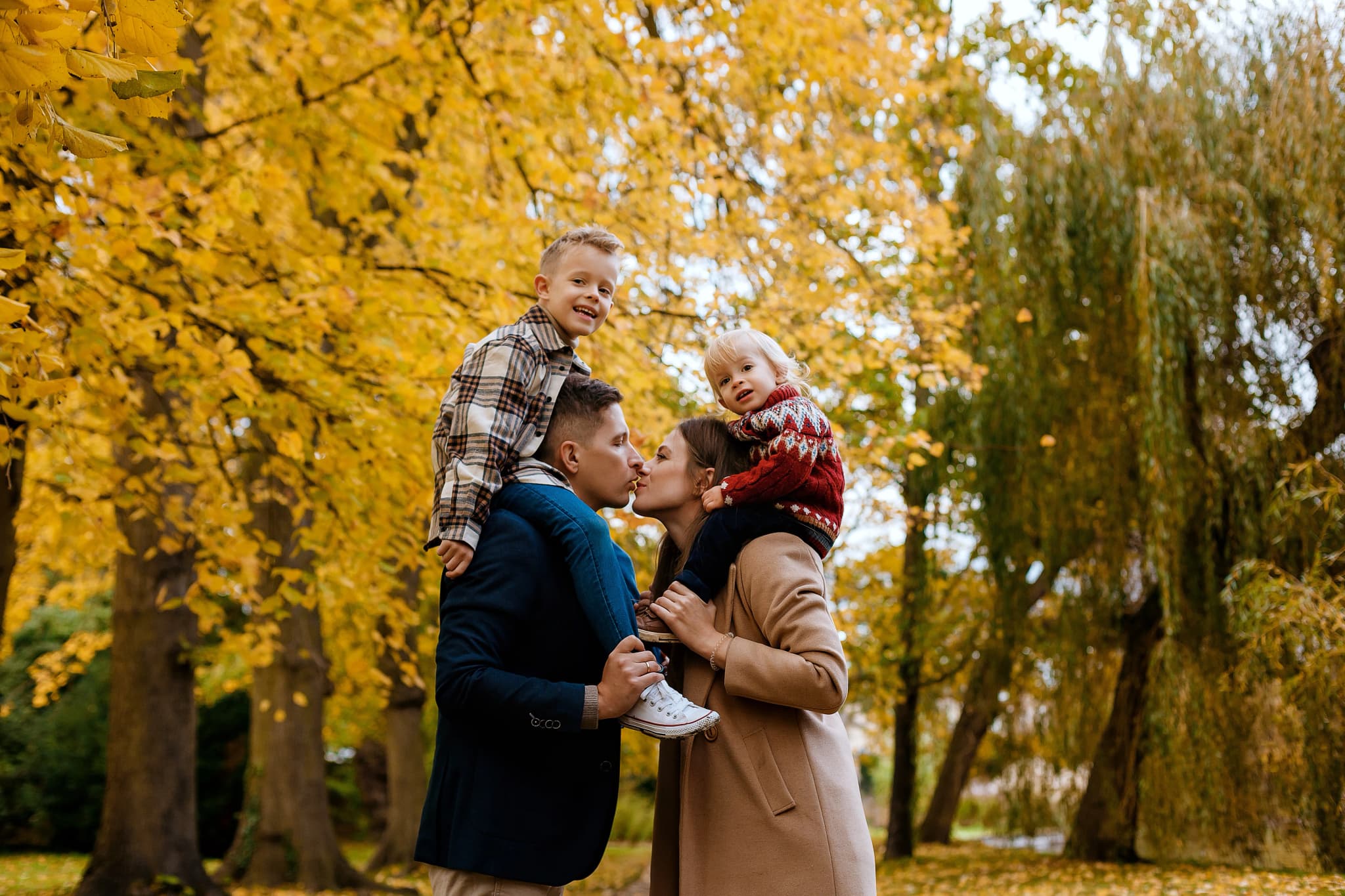
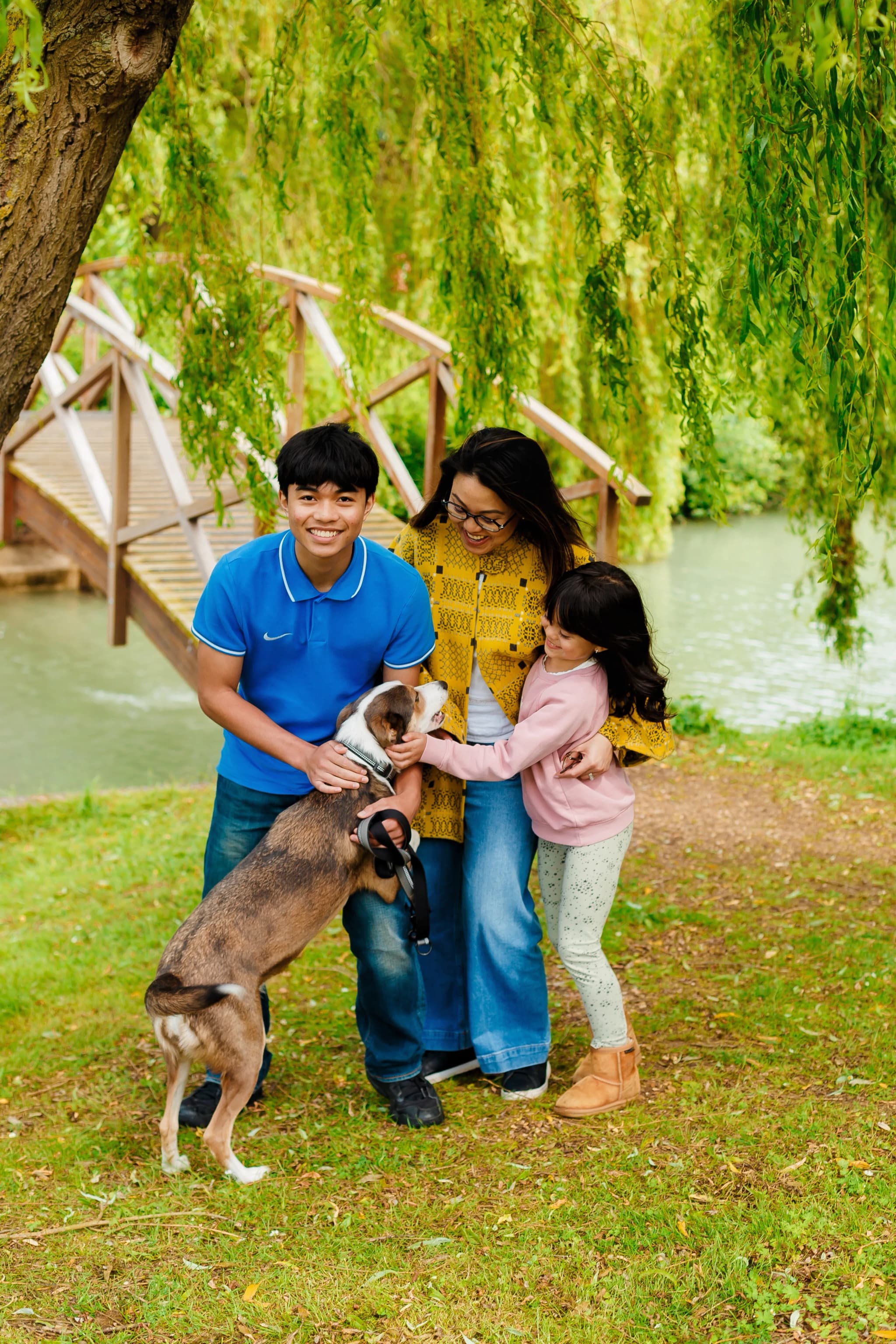
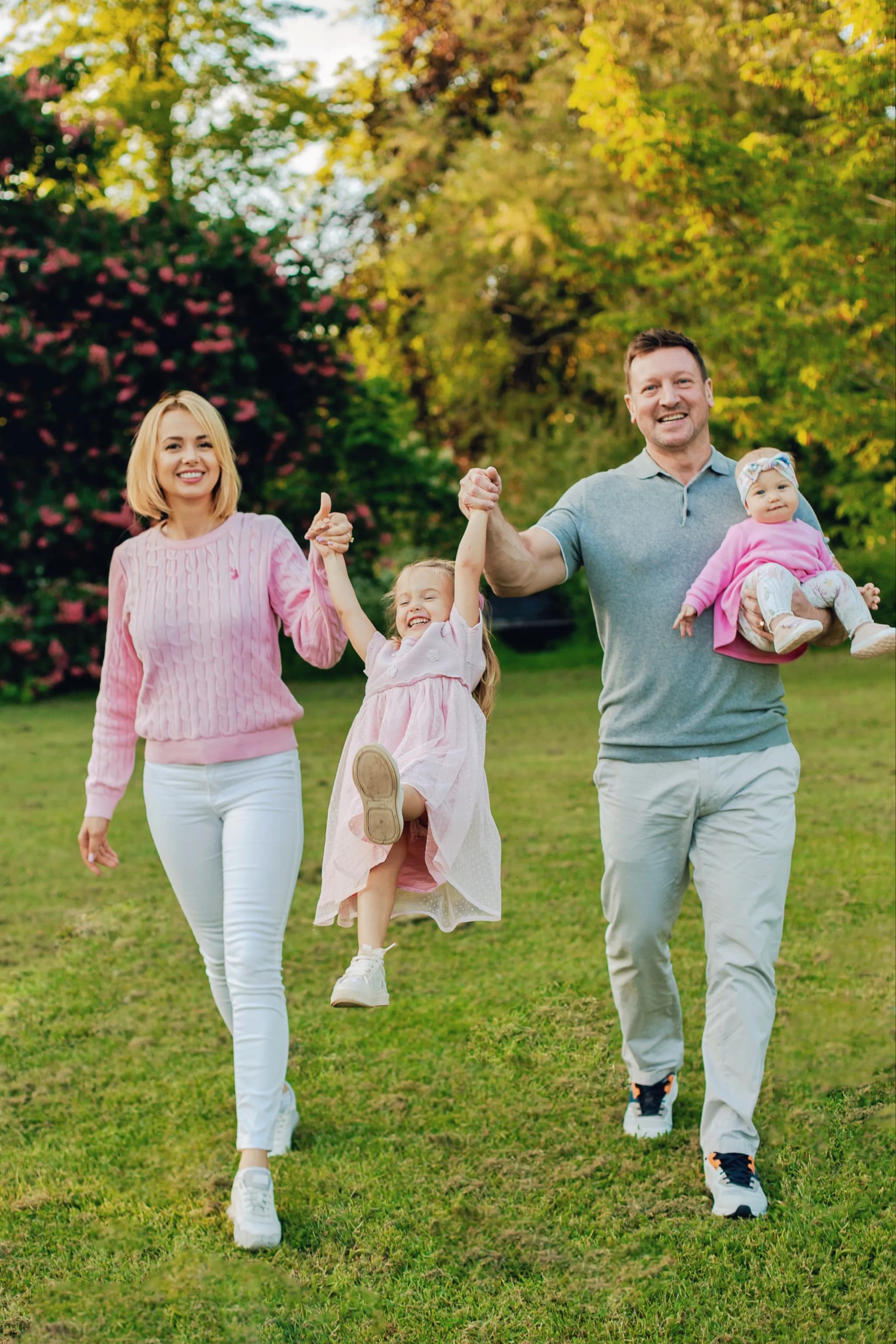
I generally start with images of the baby alone — on a soft blanket on the ground in gentle shade, in a parent's arms, or against a favourite outdoor spot — while everyone is fresh, and move on to wider family and sibling images as the session continues. Older siblings are often more cooperative outdoors than in a studio, since there is space to run, things to look at, and no unfamiliar white backdrop making them self-conscious. A parent walking a toddler along a path while carrying the baby, photographed from a little distance, frequently produces a more honest and more beautiful family image than any posed group shot could.
Weather is planned around rather than fought. British weather being what it is, I keep a close eye on the forecast in the days before a session and am always willing to move a date by a day or two for genuinely miserable conditions. A little cloud cover is often a blessing rather than a problem — it acts as a natural diffuser and gives soft, even light across the baby's face without harsh shadows, which is part of why overcast British afternoons are, counter-intuitively, some of the best conditions for outdoor baby photography.
Practical Preparation: What to Bring and What to Wear
Comfort for both baby and parents makes the single biggest difference to how a session goes, far more than any particular styling choice. I recommend soft, simple clothing in muted, natural tones — creams, soft greens, warm neutrals, denim — that will sit well against grass, trees, and open sky without competing with them. Avoid busy patterns or large logos, which date photographs quickly and pull the eye away from faces. Layers are genuinely useful for everyone, since British outdoor temperatures can shift noticeably across even a short session, and a spare layer for the baby means we are never rushing to finish because they have got cold.
Bring everything you would normally bring for an outing of that length: feeding supplies, a couple of spare outfits for the baby in case of any mishaps, a favourite muslin or comforter if that helps settle them, sun protection and a shaded spot to retreat to on bright days, and a blanket or mat if we are planning to photograph the baby on the ground. I always bring a simple neutral blanket of my own as a backup, but a blanket from home that already has meaning for your family is often a lovely addition to the images.
Try not to over-plan the baby's schedule around the session to the point of stress. A baby who has had a reasonable nap and a recent feed before we start is generally a settled, contented baby, and a settled baby makes for a far more relaxed hour than trying to force a tired or hungry one through a shot list. If a feed is due partway through, that is simply part of the session rather than an interruption to it.
Outdoor Sessions Alongside a Studio Newborn Shoot
Many families choose not to pick one or the other but to have both: a traditional studio newborn session in the first couple of weeks, capturing the classic curled, sleepy newborn images while the baby is at their tiniest, followed by an outdoor session once the baby is a little older and the weather allows. The two sit together beautifully in an album or a set of prints — the intimate, controlled newborn portraits alongside the looser, real-world images of a slightly older baby discovering grass, dappled light, and open sky for the first time. If you are planning ahead around a due date, it is worth thinking about both stages together, since the timing of an outdoor session will depend heavily on when in the year your baby is born.
Outdoor newborn and early baby photography will not suit every family or every season, and that is completely fine — a warm studio session captures its own kind of magic that outdoor light simply cannot replicate. But for families who want their baby's earliest photographs to feel like a genuine slice of their actual life together, taken in the parks, gardens, and quiet green corners of Cambridge and the surrounding countryside, an outdoor session offers something a white backdrop never quite can. If you are expecting, or already have a baby in that six-week-to-several-months window and would like to talk through timing, location, and what to expect, get in touch and we can plan a session that suits your baby, your family, and the season you find yourselves in.
See My Work
Newborn & Family Photography

Yana Skakun
Photographer · England
Professional wedding, family and portrait photographer based in England. Passionate about capturing authentic emotions and timeless moments.
About Yana →outdoor newborn photography UKbaby outdoor photography Cambridgenatural light newborn photos UKoutdoor baby session Cambridgeshiregarden newborn photography UKbaby photography outdoors Cambridge
Newborn Tips — Newborn & Baby Photography in Cambridge & England
Newborn and baby sessions with Yana Skakun take place in the comfort of your own home — unhurried, led entirely by your baby's timings, and focused on the quiet intimacy of those first weeks. Sessions are available across Cambridge and the wider East of England. This guide — Outdoor Newborn Photography: Natural Light and Your New Family — is part of the photography journal: practical, experience-based advice drawn from real sessions across England. Whether you arrived searching for outdoor newborn photography uk or baby outdoor photography cambridge, the same care and attention shapes every session Yana photographs.
Newborn & Baby Photography sessions are available year-round, with bookings open across Cambridge, Ely, Huntingdon, Peterborough, and further afield — East England, London, the Midlands, and beyond. If you have specific questions about natural light newborn photos uk, mention it in your enquiry. Get in touch through the contact form above to check availability and discuss your session. Enquiries are welcomed from anywhere in the UK.
Frequently Asked Questions
When is the best time to do newborn photos?+
The ideal window is 5–14 days after birth. At this stage, babies sleep deeply and curl naturally into gentle poses. After 3 weeks, they become more alert and less likely to sleep through a session. However, lifestyle newborn sessions (awake, at home) work beautifully at any age up to 3 months.
How do you keep a newborn safe during a photoshoot?+
A professional newborn photographer is trained in safe posing techniques. All composite poses (baby appearing to support their own weight) are achieved through careful post-processing — the baby is always fully supported. Sessions are kept warm (babies need to be comfortable), and only experienced photographers should attempt posed newborn work.
How long does a newborn photo session take?+
Newborn sessions typically take 2–4 hours. The pace is entirely led by the baby — time is built in for feeding, settling, and nappy changes. There's no rushing. Lifestyle sessions, which are more relaxed and home-based, usually take 1.5–2 hours.
What should parents wear for a newborn photoshoot?+
Soft, neutral tones work beautifully — cream, blush, grey, and muted earth tones keep the focus on the baby. Avoid bold patterns and logos. Comfort is important: parents should feel relaxed and natural in their outfits. Your photographer may send a styling guide in advance.
Can siblings be included in newborn photos?+
Yes — sibling images are among the most treasured photos families have. Plan for a sibling session at the beginning, when children are freshest and most cooperative. Keep their involvement short and positive, and have another adult present to manage them while the photographer focuses on the newborn.
Get in Touch
Ready to Book Your Session?
Get in touch to discuss your vision — I'll reply within 24 hours.