Yana Skakun
What to Wear for a Newborn Photoshoot: Outfit Ideas for the Whole Family
By Yana Skakun·12 March 2026·6 min read
What to wear for a newborn photoshoot is one of the most common questions I receive in the weeks before a session, and it matters rather more than most parents expect. Outfit choices are not an afterthought to be sorted out five minutes before I arrive — they are one of the few genuinely controllable variables in a newborn session, and getting them right means the finished images centre on your baby and the connection between your family, rather than on a bright pattern, a clashing colour, or an outfit that looked fine on the hanger but reads as busy on camera. Newborn sessions typically happen in the first fortnight of a baby's life, which is already a period of very little sleep and very high emotion for new parents, so I try to make outfit planning as simple and low-stress as possible. This guide covers everything I talk through with families before a session — palettes, coordination, what to avoid, comfort, and what to actually bring on the day.
Why Neutral Palettes Work Best
The most consistently successful newborn photoshoot outfits sit in neutral, muted tones: cream, ivory, soft grey, sage green, dusty rose, warm taupe, and soft white. These colours photograph beautifully in the soft, diffused light typically used for newborn sessions — usually large window light supplemented with gentle fill, deliberately kept low in contrast so it flatters delicate newborn skin and doesn't create harsh shadows. Neutral tones sit comfortably alongside the natural fabrics, muslin wraps, and simple knit layers used throughout a newborn session, rather than fighting them for attention.
Strong, saturated colours — bright red, royal blue, hot pink, busy prints — do the opposite. They pull the eye toward the clothing and away from the faces, hands, and tiny details that are usually the actual point of a newborn session: the baby's fingers curled around a parent's thumb, an older sibling's expression as they look at the new arrival, the exhausted but content look on a mother's face. A jumper in traffic-light orange might be a lovely jumper, but in six months' time, looking back at the images, it is the orange you will notice first rather than the baby. Muted tones age well in a way that trend-driven colours and prints simply do not.
Coordinate, Don't Match
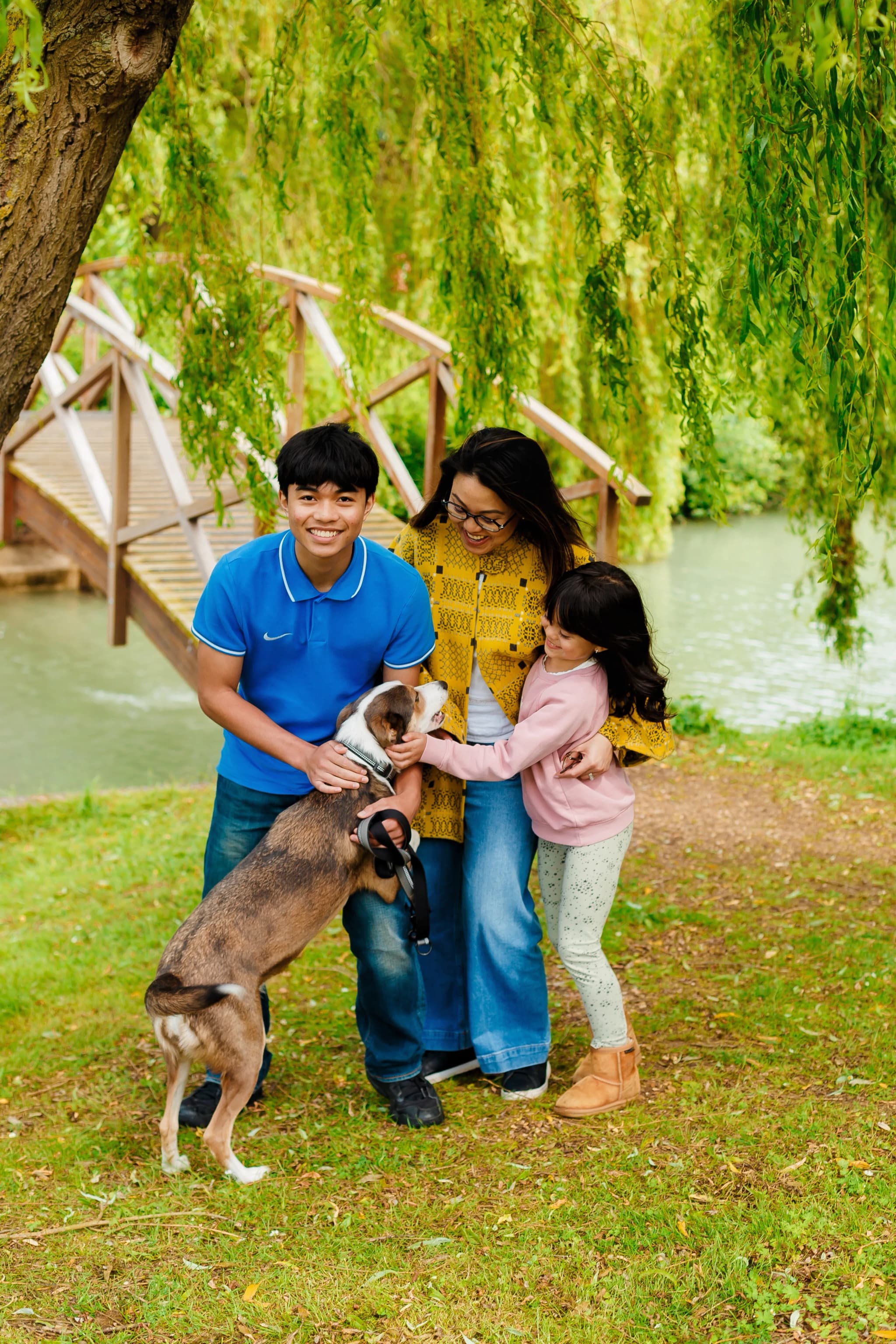
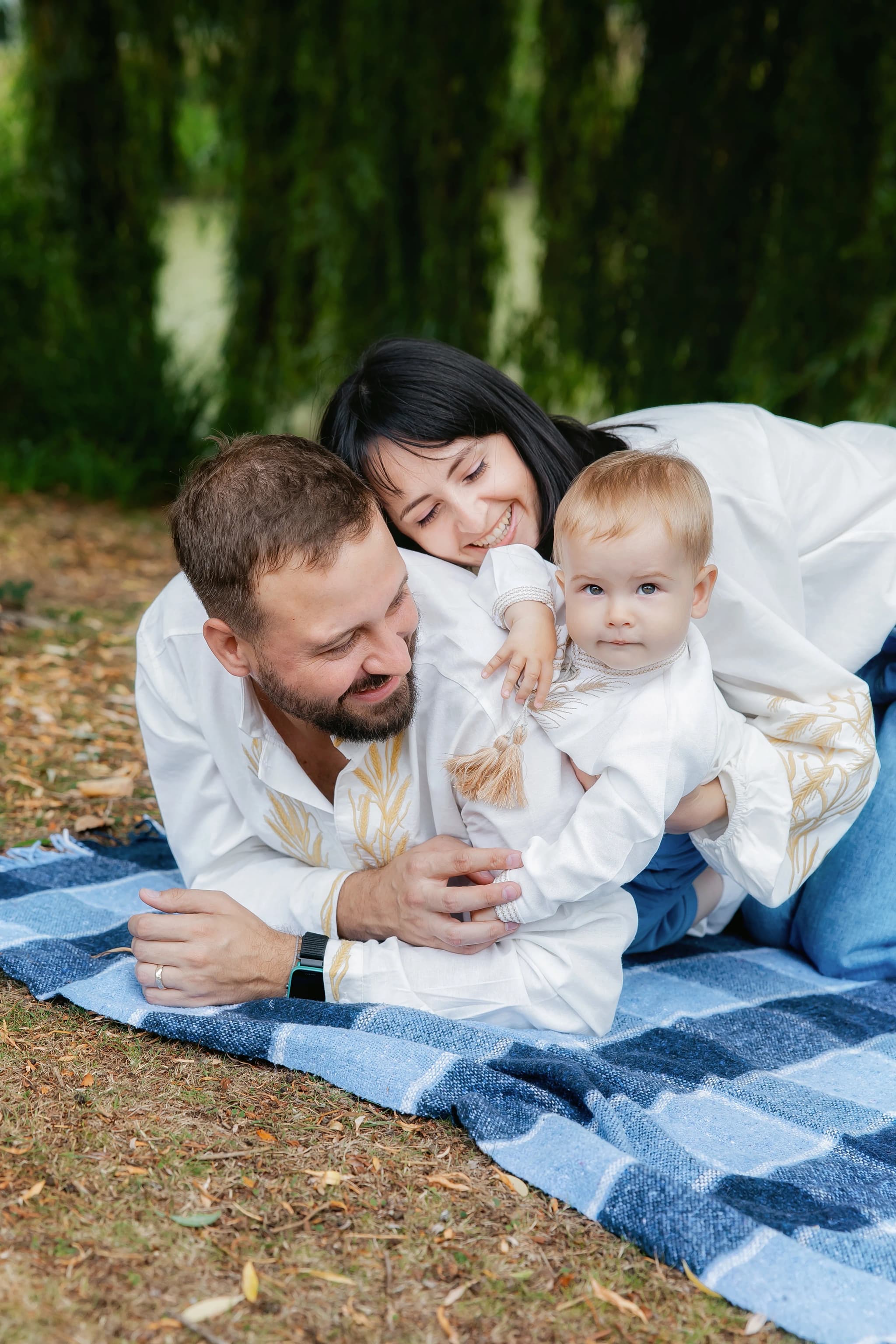
Families who dress in identical outfits — everyone in the same shade of grey, in matching stripes, in the same high-street coordinating set — often end up looking uniform in a way that reads as artificially staged rather than natural. It can flatten the individuality that actually makes a family photograph interesting. A better approach, and the one I recommend to almost every family, is to coordinate within a palette rather than match outfits exactly: choose two or three tones that sit well together — ivory, pale blush, and soft grey is a dependable combination — and let each person wear something different within that palette. No two people need to be in identical items, but the overall effect reads as considered and cohesive rather than thrown together.
The baby's wrap or sleepsuit is usually the anchor for the whole palette, since it is the smallest and most central element in most of the images. I generally suggest choosing family outfits to complement the tone of whatever the baby will be wrapped in, rather than trying to match it precisely. If I am using a soft oatmeal-coloured wrap, for instance, a mother in cream and a father in warm grey or soft khaki will sit comfortably alongside that without anyone looking like they are wearing a uniform.
For families with an older sibling being photographed alongside the new baby, the same logic applies but with a little more room to play. A child in a slightly warmer or slightly patterned piece — a small gingham check, a soft stripe — within the same overall palette can add gentle texture to a group image without disrupting the coordination. Children rarely need to match adults precisely, and forcing that often creates outfits that look uncomfortable on a toddler and photograph as stiff.
What to Avoid
A short, practical list of things that reliably cause problems in newborn and family session images. Avoid logos, slogans, and branded items of any kind — anything with writing or a recognisable symbol draws the eye immediately and dates a photograph the moment you look at it again in a few years. Avoid heavy patterns: bold stripes, large florals, tartan, and busy prints all compete visually with a newborn's tiny features and tend to dominate a frame that should be about the baby.
Avoid highly reflective or stiff fabrics — satin, sequins, shiny synthetic finishes — which create difficult, uneven reflections under studio or window lighting and rarely sit well against skin in close-up shots. Very structured or heavily tailored clothing (stiff-collared shirts, boned or fitted dresses) tends to photograph as formal and slightly cold next to a soft, sleepy newborn, and it is also, frankly, uncomfortable to sit and hold a baby in for an hour.
For fathers and partners, mid-wash blue jeans work well as a neutral base if there is no strong bleaching, ripping, or distressing, which reads as casual in a way that can clash with a more considered palette elsewhere in the frame. Very dark navy or charcoal trousers are a dependable alternative and contrast gently with soft baby tones without pulling focus. A plain knit jumper in oatmeal, sage, or soft grey over the top of either is one of the most consistently successful choices I see.
Comfort Matters More Than Style
New babies are held, paced, fed, changed, and resettled for a large proportion of a newborn session — sessions run longer than most people expect precisely because they move at the baby's pace, with breaks for feeding and soothing built in throughout. Whatever you wear needs to hold up to being sat in, crouched in, and moved around in for that length of time without becoming a distraction to you.
Mothers who have recently given birth are almost always more comfortable in wrap-style tops, loose knitwear, or stretchy nursing-friendly clothing than in anything structured or fitted. This is not simply a comfort preference — a mother in soft clothing that suits how her body actually feels in the first weeks postpartum sits differently, holds her baby differently, and looks noticeably more relaxed in the images than someone in a formal outfit that feels wrong on the day. I would always rather photograph an exhausted new parent in soft, comfortable clothing and genuinely present with their baby than someone visibly uncomfortable in borrowed formality. Comfort photographs as ease, and ease is what makes these images feel real rather than staged.
The same principle applies to footwear and any structured layers for the rest of the family, even though feet rarely appear in frame. Being tense or fidgety in an uncomfortable outfit shows on a face even when the discomfort itself is invisible in the photograph. Dress for the two or three hours you will actually spend sitting on a sofa or the floor, not for how the outfit looks standing in front of a mirror for thirty seconds.
Not sure where to start?
I talk through outfit choices with every family before their session, including specific suggestions based on the wraps and colours we will be using on the day. There is no need to guess.
Get in touch about your newborn sessionWhat to Bring for the Baby
For the baby, plain newborn sleepsuits in white, cream, or pale grey work well for the portions of the session photographed as a family, since they sit within almost any palette without effort. Beyond that, a significant part of most newborn sessions uses simple muslin wraps, nappy-only poses with soft fabric draping, or coordinated knit sets and headbands that I bring along specifically for this purpose — these are chosen in advance to work with the studio setup and lighting, and they tend to produce the classic, timeless newborn images most families are hoping for.
I generally suggest bringing along two or three of the baby's own sleepsuits, plus any particularly special outfit — something knitted by a grandparent, a hospital-gift outfit, anything with sentimental weight — if you would like it included. But it is worth setting the expectation early that much of the session will use wraps and studio fabrics rather than the baby's own wardrobe, simply because those materials are chosen specifically for how they behave under the lighting and how they drape for the classic newborn poses.
A note on temperature: newborn sessions are usually conducted in a warm room, partly for the baby's comfort while unclothed for portions of the session and partly because babies settle and sleep more easily when warm. Parents sometimes find the room warmer than expected, so layers that can come off comfortably — rather than a single heavy jumper — are worth considering, especially for anyone prone to overheating.
A Simple Way to Plan the Whole Family's Outfits
If choosing outfits for several people at once feels overwhelming in the middle of the newborn haze, a simple method that works reliably: pick one neutral colour as your base — cream, taupe, or soft grey are the most flexible — and then choose one soft accent tone that pairs naturally with it, such as sage, dusty rose, or warm rust. Put every family member in some combination of those two tones, varying the exact garment and shade slightly for each person. This produces a coordinated look without anyone needing to shop for a single matching outfit, and it tends to photograph well regardless of the specific wrap or backdrop colour used for the baby on the day.
It is also worth laying everything out together the evening before, rather than choosing outfits separately and hoping they work. Seeing the pieces side by side makes clashes obvious immediately, and it takes the decision-making off the morning of the session, when time and patience for a newborn family are both in short supply.
Outfit planning for a newborn session is, in the end, a small piece of preparation that makes a real difference to how the finished images feel — calm, coordinated, and centred on your baby rather than on clothing that competes for attention. It does not need to be complicated, and I am always happy to talk it through in detail before your session so you arrive with a clear plan rather than a pile of half-decided options. If you are expecting and thinking about booking a newborn session in Cambridgeshire or the surrounding counties, get in touch and I can talk you through timing, outfits, and what to expect on the day.
See My Work
Newborn & Family Photography

Yana Skakun
Photographer · England
Professional wedding, family and portrait photographer based in England. Passionate about capturing authentic emotions and timeless moments.
About Yana →newborn photoshoot outfitswhat to wear newborn photoshootnewborn session outfit ideasfamily outfits newborn photography
Newborn Tips — Newborn & Baby Photography in Cambridge & England
Newborn and baby sessions with Yana Skakun take place in the comfort of your own home — unhurried, led entirely by your baby's timings, and focused on the quiet intimacy of those first weeks. Sessions are available across Cambridge and the wider East of England. This guide — What to Wear for a Newborn Photoshoot: Outfit Ideas for the Whole Family — is part of the photography journal: practical, experience-based advice drawn from real sessions across England. Whether you arrived searching for newborn photoshoot outfits or what to wear newborn photoshoot, the same care and attention shapes every session Yana photographs.
Newborn & Baby Photography sessions are available year-round, with bookings open across Cambridge, Ely, Huntingdon, Peterborough, and further afield — East England, London, the Midlands, and beyond. If you have specific questions about newborn session outfit ideas, mention it in your enquiry. Get in touch through the contact form above to check availability and discuss your session. Enquiries are welcomed from anywhere in the UK.
Frequently Asked Questions
When is the best time to do newborn photos?+
The ideal window is 5–14 days after birth. At this stage, babies sleep deeply and curl naturally into gentle poses. After 3 weeks, they become more alert and less likely to sleep through a session. However, lifestyle newborn sessions (awake, at home) work beautifully at any age up to 3 months.
How do you keep a newborn safe during a photoshoot?+
A professional newborn photographer is trained in safe posing techniques. All composite poses (baby appearing to support their own weight) are achieved through careful post-processing — the baby is always fully supported. Sessions are kept warm (babies need to be comfortable), and only experienced photographers should attempt posed newborn work.
How long does a newborn photo session take?+
Newborn sessions typically take 2–4 hours. The pace is entirely led by the baby — time is built in for feeding, settling, and nappy changes. There's no rushing. Lifestyle sessions, which are more relaxed and home-based, usually take 1.5–2 hours.
What should parents wear for a newborn photoshoot?+
Soft, neutral tones work beautifully — cream, blush, grey, and muted earth tones keep the focus on the baby. Avoid bold patterns and logos. Comfort is important: parents should feel relaxed and natural in their outfits. Your photographer may send a styling guide in advance.
Can siblings be included in newborn photos?+
Yes — sibling images are among the most treasured photos families have. Plan for a sibling session at the beginning, when children are freshest and most cooperative. Keep their involvement short and positive, and have another adult present to manage them while the photographer focuses on the newborn.
Get in Touch
Ready to Book Your Session?
Get in touch to discuss your vision — I'll reply within 24 hours.