Yana Skakun
Rain Photography: Beautiful Portraits in Bad Weather
By Yana Skakun·31 March 2026·5 min read
Every year, without fail, I have the same conversation with a nervous couple or a slightly stressed parent a few days before their session: "The forecast says rain — should we reschedule?" My answer, more often than not, is no. In more than a decade of photographing weddings, families, and portraits across Cambridge and East Anglia, I have come to see rain not as an obstacle to work around but as one of the most reliable ways to get genuinely striking images. England's weather is what it is — changeable, damp more often than not, rarely the postcard-blue sky people imagine when they book a session — and the photographers who thrive here are the ones who learned to use that weather rather than fight it. This article is my honest, practical case for rain photography, and what to actually do if your session lands on a wet day.
Why Rain Makes Better Photographs Than People Expect
The single biggest misconception about rain is that it ruins light. In fact, the opposite is usually true. A thick layer of cloud acts as an enormous natural diffuser, scattering sunlight evenly across the entire sky rather than letting it come from one harsh point. The result is soft, shadowless, flattering light on faces — no squinting, no harsh nose shadows, no blown-out highlights on foreheads. Photographers spend a great deal of money on studio softboxes trying to recreate exactly the effect that an overcast, drizzly sky gives you for free.
Wet surfaces add a second gift: reflection. Puddles, wet pavement, rain-slicked cobbles in the older parts of Cambridge — all of these become mirrors. A couple walking hand in hand along a wet street, their reflections doubled beneath them, has a visual depth and cinematic quality that the same scene in dry conditions simply does not offer. I actively look for these reflective surfaces when scouting a rainy-day location, and I will often kneel or shoot from a low angle specifically to bring a puddle reflection into the frame. It is a deliberate compositional choice, not an accident of bad weather.
There is also something to be said for mood. Bright sunshine photographs read as cheerful, open, straightforward. Rain photographs read as something more layered — wistful, intimate, a little dramatic. For couples wanting engagement or anniversary portraits with genuine atmosphere, or for families who want images that feel like real life rather than a staged brochure, that mood is often exactly what they are after, even if they did not know to ask for it.
Finally, rain empties public spaces. Cambridge in particular is a city that fills with tourists, cyclists, and punters from mid-morning onwards, and finding a genuinely quiet corner of the historic centre in good weather can be a real challenge. On a wet weekday morning, the same streets and college frontages that are thronged in July sunshine are near-deserted. That solitude gives us room to work slowly, to use a whole street or a college gateway as a backdrop without twenty strangers wandering through the frame, and it makes locations feel private and personal in a way they rarely do in peak season.
What Rain Actually Does to a Session
It is worth being honest about what changes when the weather turns wet, because rain photography works best when everyone involved has realistic expectations rather than romantic ones. Hair will get damp, and for anyone with hair that reacts badly to moisture, this is worth planning for rather than being surprised by on the day. Shoes and hems get wet if you are walking through longer grass or standing near puddles for a reflection shot. Sessions tend to move a little faster than a dry-weather session, partly to make the most of any breaks in the rain and partly because standing still in drizzle is less pleasant than standing still in sunshine, so we keep things moving between locations rather than lingering in one spot for twenty minutes.
On the technical side, this is entirely my concern and not something clients need to worry about. Professional camera bodies and lenses are weather-sealed to handle exactly this kind of shooting, and I carry microfibre cloths, rain covers, and a genuine willingness to get a bit wet myself in the course of getting the shot. The idea that rain photography is risky for the equipment is largely a myth as far as light-to-moderate rain is concerned; it is a routine working condition, not an emergency.
Dressing and Preparing for a Wet-Weather Session
A little preparation makes an enormous difference to how comfortable — and how good — a rain session feels. I generally recommend bringing a full dry outfit change in the car, even if you plan to shoot in the rain for the bulk of the session, so there is always a warm, dry option available at the end. A large towel for drying hands, faces, or a wet umbrella handle is a small thing that makes a real practical difference partway through.
Umbrellas deserve some thought, because they do double duty as both shelter and prop. A plain black umbrella photographs classically and never dates; a bold colour — a deep red, mustard yellow, or forest green — gives a session a strong visual anchor and works particularly well in family or couple portraits where the umbrella becomes part of the composition rather than just a way of staying dry. Clear domed umbrellas are lovely for portraits because they do not obscure the face at all, letting light fall through onto the subject while still offering shelter.
For hair, there are really two sensible approaches: embrace the natural, slightly windswept, slightly damp look, which photographs with real texture and honesty, or tie hair back, or use a hat or hood, and treat that as a deliberate styling choice for the session rather than a concession to the weather. Both work well; what does not work well is spending the session anxious about hair that has already reacted to the damp air, so deciding in advance which approach suits you removes one source of stress on the day.
Footwear matters more in rain than almost any other single detail. Wellies are genuinely practical for anyone — children especially — who will be walking through wet grass, puddles, or muddy paths, and a change of dry shoes for the parts of the session on pavement or indoors keeps things comfortable. For a more polished look in an urban setting, waterproof boots that still look smart photograph perfectly well and mean nobody is wincing their way across a wet cobbled street in unsuitable shoes.
Not sure whether to keep or move your booking?
I check the forecast with every client in the days before their session and give honest advice on whether the conditions are workable or worth rearranging. Most rainy forecasts turn out to be entirely shootable.
Ask about your session dateWhere Rain Photography Works Best Around Cambridge
Some locations suit wet weather far better than others, and knowing which is part of planning a good rain session. The older parts of central Cambridge — the cobbled lanes around the colleges, the archways and gatehouses along King's Parade and Trinity Street — are excellent, because the architecture itself provides natural shelter for breaks in the rain, and the wet stone and cobbles reflect light beautifully. The Backs, with the Cam running alongside the college lawns, take on a completely different, moodier character under grey skies and light rain than they have on a bright summer afternoon, and they are far quieter with the punting crowds absent.
Covered spaces are useful to build into a route as well: college gateways, market square arcades, and the covered walkways around some of the older courts all offer a dry pause point without breaking the visual continuity of a session, so we are never simply waiting indoors for the rain to stop. For family sessions with younger children, I favour locations with a mix of covered and open space, so there is always somewhere dry to retreat to if a child (or a parent) has had enough of the drizzle for a few minutes.
And it is worth flagging one particular window that experienced photographers watch for closely: the thirty minutes or so immediately after rain stops. The pavements are still wet and reflective, the sky is often clearing with dramatic, layered cloud, and the light in that post-rain period is frequently the best of the entire day — soft but with a little more direction than during the rain itself. If a session includes a spell of rain followed by clearing, I will often deliberately hold back and use that post-rain window for the strongest images of the day.
When It Genuinely Is Worth Rescheduling
None of this is to say every wet forecast should be shot through regardless. There is a real and important difference between light or moderate rain, which is entirely workable and often beautiful, and heavy, driving rain with strong wind, which is neither pleasant nor safe to photograph in for any length of time. Umbrellas become useless in strong wind, cameras are at genuine risk in prolonged heavy downpour, and nobody — client or photographer — enjoys a session conducted in truly miserable conditions.
My rule of thumb, and one I am happy to share with anyone weighing up whether to keep their date, is simple: if you could comfortably stand outside under an umbrella for thirty seconds without needing to run for cover, the session is workable. If the rain is coming sideways, or if there are weather warnings in place, that is a sign to look at rescheduling rather than pushing through. I would always rather move a date by a week and get images everyone loves than shoot through genuinely unpleasant conditions for the sake of keeping to the original booking.
Rain Photography for Weddings Specifically
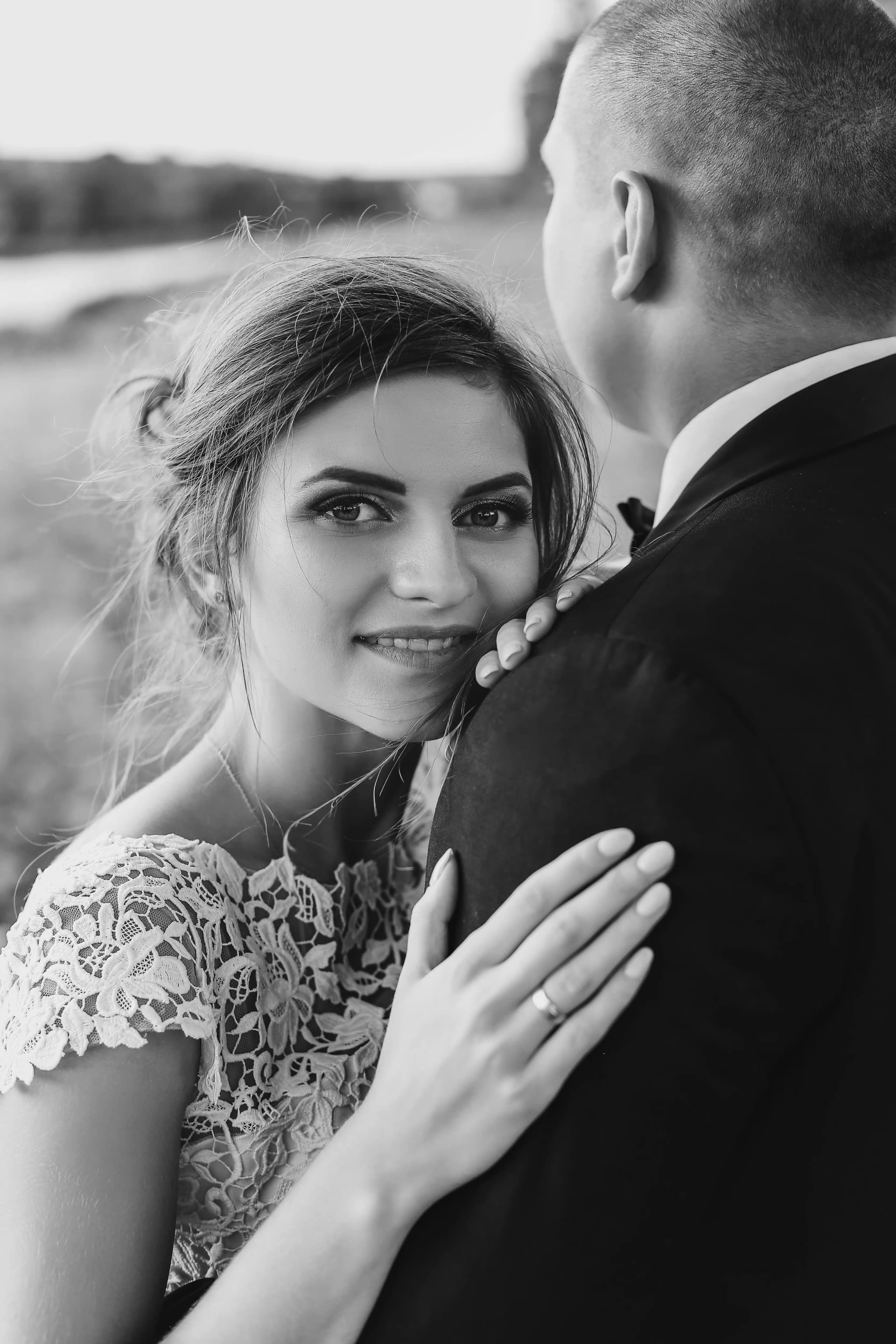
Wedding days cannot simply be moved if the forecast turns wet, which makes this conversation particularly important for couples in the run-up to their day. The good news is that some of the most memorable wedding images I have taken have come from days with rain in them — a couple sheltering under one umbrella outside a church, guests laughing as they dash between the ceremony and reception venue, a bride's veil catching raindrops in a way that reads as ethereal rather than unfortunate. Having a plan — a stock of umbrellas on hand, a shortlist of covered locations near the venue, and a couple who have been reassured in advance that rain is not a disaster — turns wet-weather wedding photography from a source of anxiety into simply another set of beautiful images from the day.
If there is one thing I would want anyone reading this to take away, it is that a rainy forecast is not a reason to panic or automatically reach for the reschedule button. With the right preparation, the right locations, and a photographer who is genuinely comfortable working in it, rain in Cambridge and across East Anglia produces images with a depth, mood, and quiet drama that dry, sunny days rarely match. If your upcoming session has a wet forecast attached to it, or you are simply curious about booking a deliberately atmospheric rain session, get in touch and we can talk through what would work best for your date and location.

Yana Skakun
Photographer · England
Professional wedding, family and portrait photographer based in England. Passionate about capturing authentic emotions and timeless moments.
About Yana →rain photography portraitswet weather portrait photographymoody rain portrait ukphotography in the rain tips
Photography Tips — Professional Photography in Cambridge & England
Yana Skakun is a professional photographer based in Cambridge, specialising in wedding, family, and portrait photography across England. Every session is personal — planned around your story, your people, and the moments that matter most. This guide — Rain Photography: Beautiful Portraits in Bad Weather — is part of the photography journal: practical, experience-based advice drawn from real sessions across England. Whether you arrived searching for rain photography portraits or wet weather portrait photography, the same care and attention shapes every session Yana photographs.
Professional Photography sessions are available year-round, with bookings open across Cambridge, Ely, Huntingdon, Peterborough, and further afield — East England, London, the Midlands, and beyond. If you have specific questions about moody rain portrait uk, mention it in your enquiry. Get in touch through the contact form above to check availability and discuss your session. Enquiries are welcomed from anywhere in the UK.
Frequently Asked Questions
What camera settings should I use for outdoor portraits?+
For outdoor portraits, shoot in aperture priority mode. Use a wide aperture (f/1.8–f/2.8) to blur the background and isolate your subject. Keep ISO as low as possible in good light. In bright conditions, use a neutral density filter or switch to manual to avoid overexposure at wide apertures.
What is the golden hour in photography?+
Golden hour is the period roughly 30–60 minutes after sunrise and before sunset. The sun is low in the sky, producing warm, soft, directional light that flatters skin tones and creates beautiful long shadows. It's widely considered the best natural light for portrait and outdoor photography.
How do you get sharp photos in low light?+
In low light, increase your ISO (accepting some grain), use the widest aperture your lens allows, and slow your shutter speed to the slowest you can hand-hold without camera shake (roughly 1/focal length as a guide). Use image stabilisation if available, and consider a tripod for static subjects.
What is the rule of thirds in photography?+
The rule of thirds divides the frame into a 3×3 grid. Placing your subject on one of the four intersection points — rather than dead centre — creates a more dynamic, visually interesting composition. It's a guideline, not a rule: some of the most powerful images break it deliberately.
How do you edit photos to look professional?+
Professional editing starts with shooting in RAW format. In Lightroom or similar software, correct exposure, white balance, and contrast first. Recover shadow and highlight detail. Apply gentle colour grading for mood. Be conservative with skin retouching — the goal is natural enhancement, not transformation. Consistency across a set of images is what separates professional from amateur editing.
Continue Reading
Related Articles

Photography Tips
Photography Gift Vouchers: The Most Personal Present You Can Give
5 min read · Read Article
Photography Tips
Photo Books vs Photo Albums: What Is the Difference and Which Is Better?
5 min read · Read Article
Photography Tips
Photo Gift Ideas: Turning Professional Images into Meaningful Presents
5 min read · Read Article
Get in Touch
Ready to Book Your Session?
Get in touch to discuss your vision — I'll reply within 24 hours.