Yana Skakun
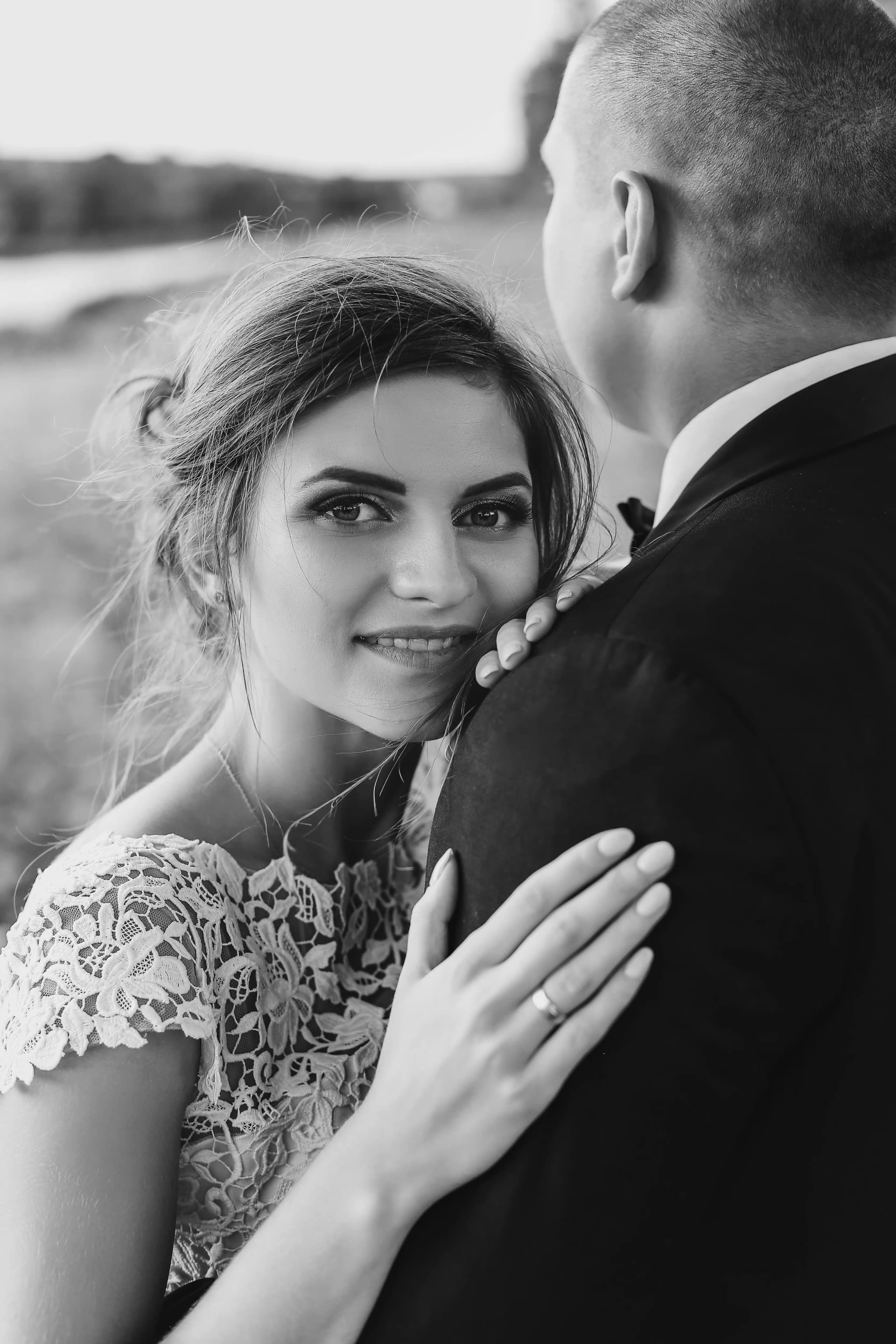
Spring Engagement Sessions: Why April and May Are the Best Time to Book
By Yana Skakun·10 April 2026·6 min read
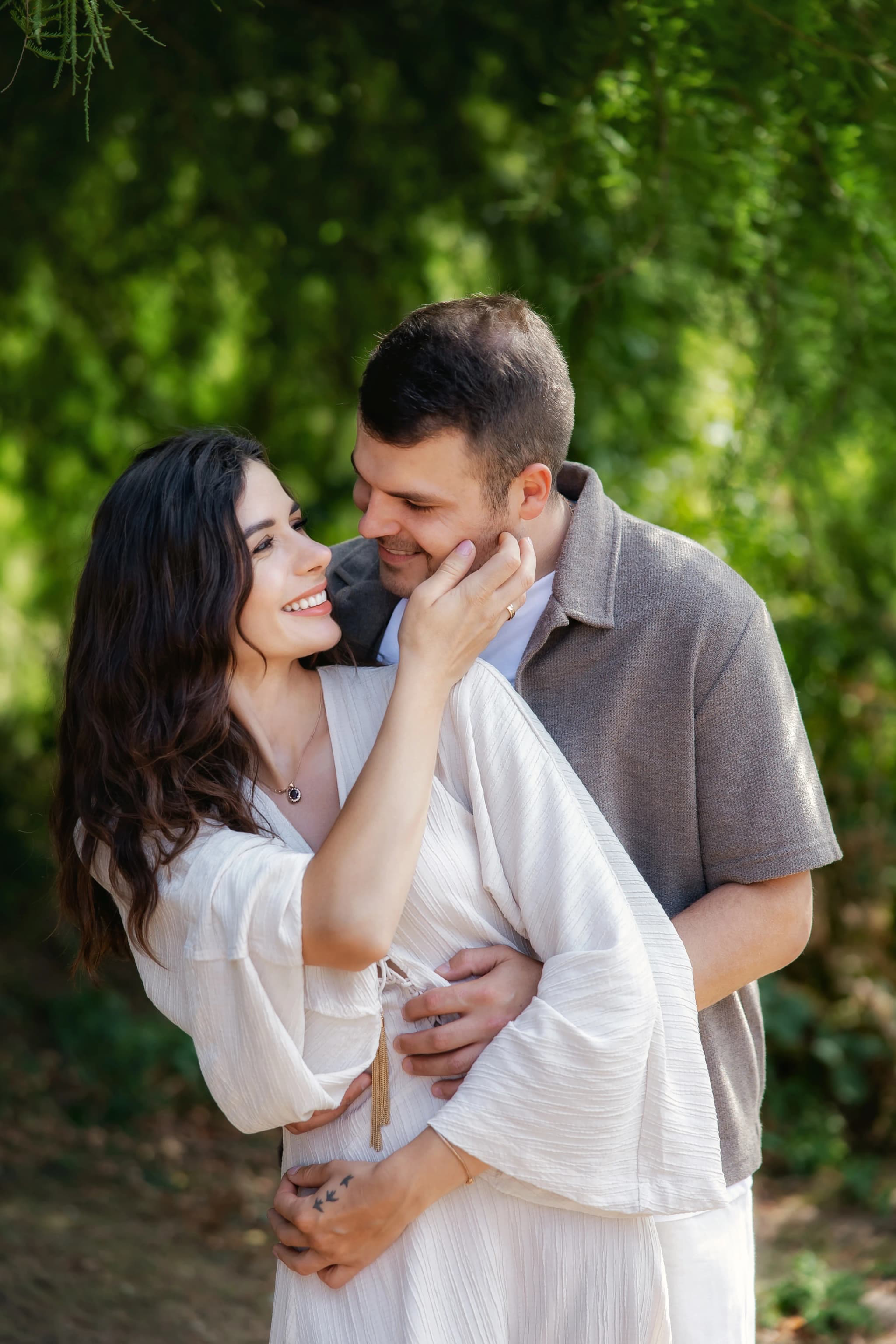
There is a particular fortnight in England — usually landing somewhere between the last week of April and the middle of May — when the light, the landscape, and the weather align in a way they simply do not for the rest of the year. The trees are in that fresh, almost luminous green they only hold for a few weeks before summer deepens them. Blossom is either just past or about to turn to leaf. The evenings have stretched out enough that golden hour falls at a sociable time rather than at dawn or in the depths of a winter afternoon. For engagement photography, spring in Cambridgeshire is, without much competition, the best season of the year, and it is worth understanding exactly why before you start thinking about where and when to book yours.
Why Spring Light Works So Well for Engagement Photography
The single biggest practical advantage of a spring engagement session is when golden hour falls. In December, the sun sets at half past three, meaning any session with soft evening light has to happen at an hour that is genuinely difficult to fit around work. In June and July, golden hour does not begin until close to nine in the evening, which sounds appealing until you are actually trying to keep two people looking relaxed and comfortable at the end of a long, warm day. Late April and May sit in the sweet spot between these extremes. Golden hour typically falls between half past seven and nine, early enough that couples are not exhausted, late enough that the light has softened from the flat, harsh quality of midday into something warmer and far more flattering.
There is also a quality to spring light itself that is distinct from other seasons. The air tends to be clearer than in high summer, when haze and humidity can soften contrast and mute colour. Spring skies after a shower have a washed clarity that makes greens read as genuinely vivid rather than dusty, and clouds — when they are present — tend to be the kind of scattered, structured formations that add interest to a sky rather than the flat grey blanket more common in autumn and winter. None of this is to say spring weather is reliably good; it is famously not. But the light on a clear spring evening has a freshness that photographs beautifully in a way distinct from any other time of year.
Beyond the practicalities of light, spring simply looks like renewal, and engagement sessions are fundamentally about a couple at the beginning of a new chapter. There is a reason so many couples instinctively gravitate towards spring for this kind of session even before they have thought through the technical light arguments — the season itself carries a meaning that suits the occasion.
Best Spring Locations Around Cambridge
The Backs — the stretch of riverside and college gardens running behind King's, Clare, Trinity, and St John's — is at its best in spring. The willows along the river are freshly leafed, punts are back on the water providing natural movement and colour in the background, and the lawns and gardens are green in a way they are not for the rest of the year. Early evening sessions here work well because the crowds of tourists and students thin out after about six, leaving quieter stretches of riverbank to work with while still keeping the unmistakable Cambridge backdrop.
Grantchester Meadows, a short walk or cycle from the city centre along the river, gives a completely different feel — open meadow, long grass, cattle grazing in the distance, and the spire of Grantchester church visible across the fields. It is quieter than the Backs, less architecturally grand, and better suited to couples who want a softer, more pastoral set of images than the collegiate stonework provides. Evening light across the meadow in May, with the grass catching the low sun, is genuinely one of the loveliest settings within easy reach of the city.
Wandlebury Country Park on the Gog Magog Hills offers ancient woodland, open meadow, and — in a good year — a stretch of bluebells along the woodland paths in the final week of April and first week of May. Bluebell season is brief and weather-dependent, so sessions built specifically around it need some flexibility on the exact date, but when the timing lands well the results are unlike anything achievable at any other time of year.
Further afield, Ely Cathedral and its surrounding waterfront meadows give a grander, more dramatic backdrop for couples who want architecture as well as landscape in their images. Wimpole Estate, under the care of the National Trust, offers parkland, avenues of mature trees, and period buildings for couples who want a sense of scale and history to their session. Cherry Hinton chalk pits, closer to the city, give an unusual, almost otherworldly landscape of exposed white chalk and wildflower-strewn grassland that photographs quite differently from anywhere else on this list — a good option for couples who want something a little less conventional.
What to Wear
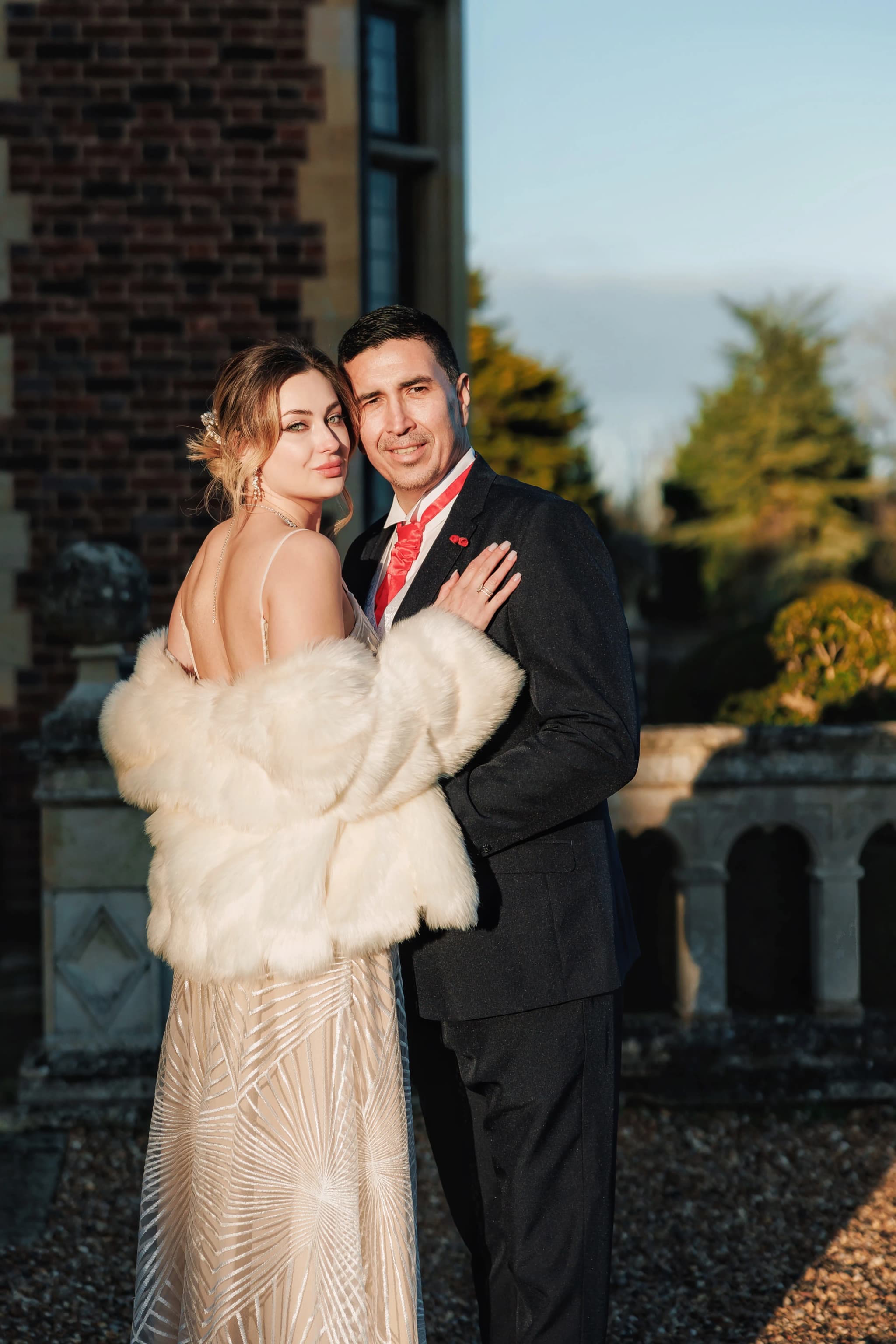
Spring landscapes carry a wide tonal range — fresh green grass, pale blossom, grey stone, blue sky — which means clothing has more flexibility than it does against the very warm, saturated palette of autumn. Soft neutrals and muted pastels tend to work best: ivory, sage, stone, dusty blue, and blush all sit comfortably within a spring scene without fighting it for attention. Strong, saturated colours can work too, particularly against the more muted backdrop of an overcast day, but it is worth avoiding anything that competes directly with the green of new leaves, which can pull focus away from faces.
For sessions at a bluebell wood or blossom-heavy location, white and very pale ivory are worth approaching carefully. Set against a carpet of white or near-white blossom or against pale bluebell haze, a white dress can lose definition rather than standing out, so a slightly deeper cream or a soft colour usually reads better in the final images. Flowy fabrics — dresses and skirts with movement, looser shirts for men — photograph well outdoors, especially with the light breeze that is common on spring evenings; movement in fabric adds a naturalness to images that stiffer, more structured clothing does not.
A change of outfit partway through a session is worth considering if you want variety in the final gallery — something relaxed and casual for the meadow or riverside portion, something a little smarter for a college courtyard or architectural backdrop. It is not essential, but it does give a noticeably wider range of moods across the finished set of images, particularly if the session spans more than one location.
Timing your session around bluebells and blossom
Both are weather-dependent and typically last only a couple of weeks each spring, so the exact date matters more than usual. I keep a close eye on how the season is progressing from early April and will suggest adjusting your date by a few days either way if it means catching either at its best.
Ask about spring availabilityTiming: Evening Golden Hour vs Early Morning
Evening golden hour in late April and May generally falls between roughly half past seven and nine, shifting slightly later as May progresses. Sessions scheduled to begin sixty to ninety minutes before sunset make the best use of the light, moving through a location as the sun drops and the colour deepens, finishing with the last, warmest ten or fifteen minutes when the light is at its most flattering. This is the option most couples choose, partly because it fits more easily around work and partly because the light itself is simply beautiful.
Early morning is the quieter, less obvious alternative, and it has its own distinct appeal. Between roughly six and eight in the morning, popular spots like the Backs or Grantchester Meadows are almost entirely empty — no punts, no tourists, no other couples doing exactly the same thing at exactly the same spot. Spring mornings can carry a mist over the river and meadows that adds real atmosphere to images, and the light, while cooler in tone than evening golden hour, has its own clean, gentle quality. Morning sessions suit couples who are early risers by nature or who specifically want a quieter, more private set of locations without needing to travel far from the city to find them.
Whichever time of day you choose, I always build a small amount of flexibility into spring bookings. English spring weather can turn on short notice, and a date moved by a day or two to dodge a downpour, or shifted slightly to catch bluebells at their peak rather than past their best, generally makes a noticeable difference to the final images. I would always rather move a date by a day than push ahead into weather or timing that will not do the location justice.
Why Engagement Sessions Matter Before the Wedding
Beyond the images themselves, an engagement session serves a genuinely practical purpose in the run-up to a wedding. For most couples, it is the first time being photographed together by their wedding photographer, and that first session does a lot of quiet work: it gets you used to being directed, used to how I work, used to moving naturally in front of a camera rather than freezing the moment a lens is pointed your way. Couples who have done an engagement session beforehand are almost always visibly more relaxed on the wedding day itself, because the mild self-consciousness that everyone feels the first time has already been worked through in a lower-pressure setting weeks or months earlier.
There is a practical timing benefit too. An engagement session completed in April or May, with edited images delivered a few weeks later, gives couples marrying later in the year images in good time for save-the-dates, invitations, or a wedding website, well ahead of the deadlines that tend to creep up faster than expected once the planning is properly underway.
Spring in Cambridgeshire does not last long — the bluebells fade, the blossom drops, and by high summer the light and the landscape have both moved into a different mood entirely. If you are engaged and thinking about a session to mark it, this window between late April and the middle of May is, in my experience, the one most worth planning around: the evenings are long enough to be relaxed about, the landscape is at its most alive, and the light does most of the work for you. If you would like to talk through locations, dates, or how a session like this could fit around your own wedding timeline, get in touch and we can find a date that works.

Yana Skakun
Photographer · England
Professional wedding, family and portrait photographer based in England. Passionate about capturing authentic emotions and timeless moments.
About Yana →spring engagement session UKspring engagement photographyengagement photos April May Englandbluebell engagement session
Photography Tips — Professional Photography in Cambridge & England
Yana Skakun is a professional photographer based in Cambridge, specialising in wedding, family, and portrait photography across England. Every session is personal — planned around your story, your people, and the moments that matter most. This guide — Spring Engagement Sessions: Why April and May Are the Best Time to Book — is part of the photography journal: practical, experience-based advice drawn from real sessions across England. Whether you arrived searching for spring engagement session uk or spring engagement photography, the same care and attention shapes every session Yana photographs.
Professional Photography sessions are available year-round, with bookings open across Cambridge, Ely, Huntingdon, Peterborough, and further afield — East England, London, the Midlands, and beyond. If you have specific questions about engagement photos april may england, mention it in your enquiry. Get in touch through the contact form above to check availability and discuss your session. Enquiries are welcomed from anywhere in the UK.
Frequently Asked Questions
What camera settings should I use for outdoor portraits?+
For outdoor portraits, shoot in aperture priority mode. Use a wide aperture (f/1.8–f/2.8) to blur the background and isolate your subject. Keep ISO as low as possible in good light. In bright conditions, use a neutral density filter or switch to manual to avoid overexposure at wide apertures.
What is the golden hour in photography?+
Golden hour is the period roughly 30–60 minutes after sunrise and before sunset. The sun is low in the sky, producing warm, soft, directional light that flatters skin tones and creates beautiful long shadows. It's widely considered the best natural light for portrait and outdoor photography.
How do you get sharp photos in low light?+
In low light, increase your ISO (accepting some grain), use the widest aperture your lens allows, and slow your shutter speed to the slowest you can hand-hold without camera shake (roughly 1/focal length as a guide). Use image stabilisation if available, and consider a tripod for static subjects.
What is the rule of thirds in photography?+
The rule of thirds divides the frame into a 3×3 grid. Placing your subject on one of the four intersection points — rather than dead centre — creates a more dynamic, visually interesting composition. It's a guideline, not a rule: some of the most powerful images break it deliberately.
How do you edit photos to look professional?+
Professional editing starts with shooting in RAW format. In Lightroom or similar software, correct exposure, white balance, and contrast first. Recover shadow and highlight detail. Apply gentle colour grading for mood. Be conservative with skin retouching — the goal is natural enhancement, not transformation. Consistency across a set of images is what separates professional from amateur editing.
Continue Reading
Related Articles

Photography Tips
Photography Gift Vouchers: The Most Personal Present You Can Give
5 min read · Read Article
Photography Tips
Photo Books vs Photo Albums: What Is the Difference and Which Is Better?
5 min read · Read Article
Photography Tips
Photo Gift Ideas: Turning Professional Images into Meaningful Presents
5 min read · Read Article
Get in Touch
Ready to Book Your Session?
Get in touch to discuss your vision — I'll reply within 24 hours.