Yana Skakun
Spring Mini Photography Sessions: What to Expect and How to Book
By Yana Skakun·10 April 2026·6 min read
Every spring, somewhere between the last frost and the first genuinely warm weekend, my inbox fills with the same question in a dozen different phrasings: “I have seen the phrase mini sessions now booking — what does that actually mean, and is it right for us?” It is a fair question, because mini sessions look deceptively simple from the outside — a short slot, a set location, a lower price — but there is a fair amount of planning behind them, and knowing what to expect makes a real difference to how much you enjoy the twenty minutes you are given. This is everything I tell families and couples before they book a spring mini session with me in Cambridge, from what actually happens on the day to how to prepare, what to wear, and why the good dates disappear so quickly.
What a Mini Session Actually Is
A mini session is a short, fixed-length portrait appointment — usually twenty to thirty minutes — held at a single pre-scouted location on a set day, with several families or couples booking consecutive slots rather than each having their own separately arranged session. I choose the location in advance, work out where the light will be best at each point in the afternoon, and turn up early to set everything up so that when your slot begins, we can start straight away rather than losing ten minutes finding a spot.
The trade-off for the shorter time and lower price is that a mini session covers one location and one general look, rather than moving between several settings or squeezing in multiple outfit changes. For most families this is not really a trade-off at all — it is simply a more focused version of what a full session offers, aimed at the specific goal of coming away with a handful of genuinely lovely, current images of your children or your family together, without the cost or time commitment of a full booking.
From a finished gallery, you can expect somewhere in the region of fifteen to thirty edited images, delivered as a private online gallery a week or two after the session. That is enough for a proper spread of images for the grandparents, a framed print or two for the home, and a run of updated photographs for sharing, without asking you to wade through hundreds of near-duplicate frames trying to pick favourites.
Why Spring, Specifically
Spring gives photographers something that no other season quite matches: fast-changing, genuinely dramatic natural backdrops that are only at their best for a very short window. Bluebell woodland is the obvious example — the carpet of blue under fresh green canopy in Cambridgeshire's ancient woodlands typically holds for two to three weeks in late April and early May, and outside that window it is simply gone for another year. Blossom is similar. Ornamental cherry and blackthorn tend to peak in the second half of April in this part of England, and a warm spell or a spring storm can shorten that window to a matter of days.
Beyond the specific spectacles of bluebells and blossom, spring light itself is worth chasing. After a grey British winter, the quality of light in March and April changes noticeably — the sun climbs higher than in December but has not yet reached the harsh, high overhead position it holds in July, so there is a soft, clean brightness to spring afternoons that is genuinely flattering and relatively forgiving to work with. Fresh green growth on trees and hedgerows also gives a much lighter, brighter backdrop than the bare branches of late winter, which changes the whole feel of the images.
Because these conditions are seasonal rather than permanent, spring mini sessions are scheduled in tight batches around the specific peak of whichever setting is being used that year, rather than being offered on a rolling basis through the whole season. I watch the woodland and parkland locations closely from early March onwards and set dates to land as close to peak colour and bloom as I can manage.
The Settings I Use Around Cambridge
Bluebell sessions are held in a handful of ancient woodlands within reach of Cambridge where the display is reliably strong — places with the mature tree cover and undisturbed woodland floor that produces a proper, dense carpet of blue rather than a scattering of flowers. These are always the first slots to fill, because the window is short and the effect really is as striking in person as it looks in photographs.
Blossom sessions are held in parkland and around mature ornamental trees, usually somewhere with open grass nearby so there is room to work and children have space to run between shots. The backdrop of pale pink or white blossom against a blue spring sky photographs beautifully and tends to suit every age, from tiny babies propped on a blanket to teenagers who would rather not be there but come round once they see how quickly it moves.
Open parkland sessions are the most flexible of the three, using fresh green lawns, avenues of trees coming into leaf, and softer background textures rather than a single specific bloom. These run from April through into June and are the easiest to reschedule if weather is genuinely poor on the day, since there is no single narrow flowering window to chase.
A note on timing
Bluebell and blossom dates are announced as soon as I have a reasonable sense of when peak will fall that year, usually late February or early March, and they are genuinely weather-dependent — a warm March can push everything forward by a week or more. Joining the mailing list or following along on social media is the most reliable way to hear the moment dates open, since the best slots are often gone within hours.
Join the spring mini session waitlistWhat to Wear
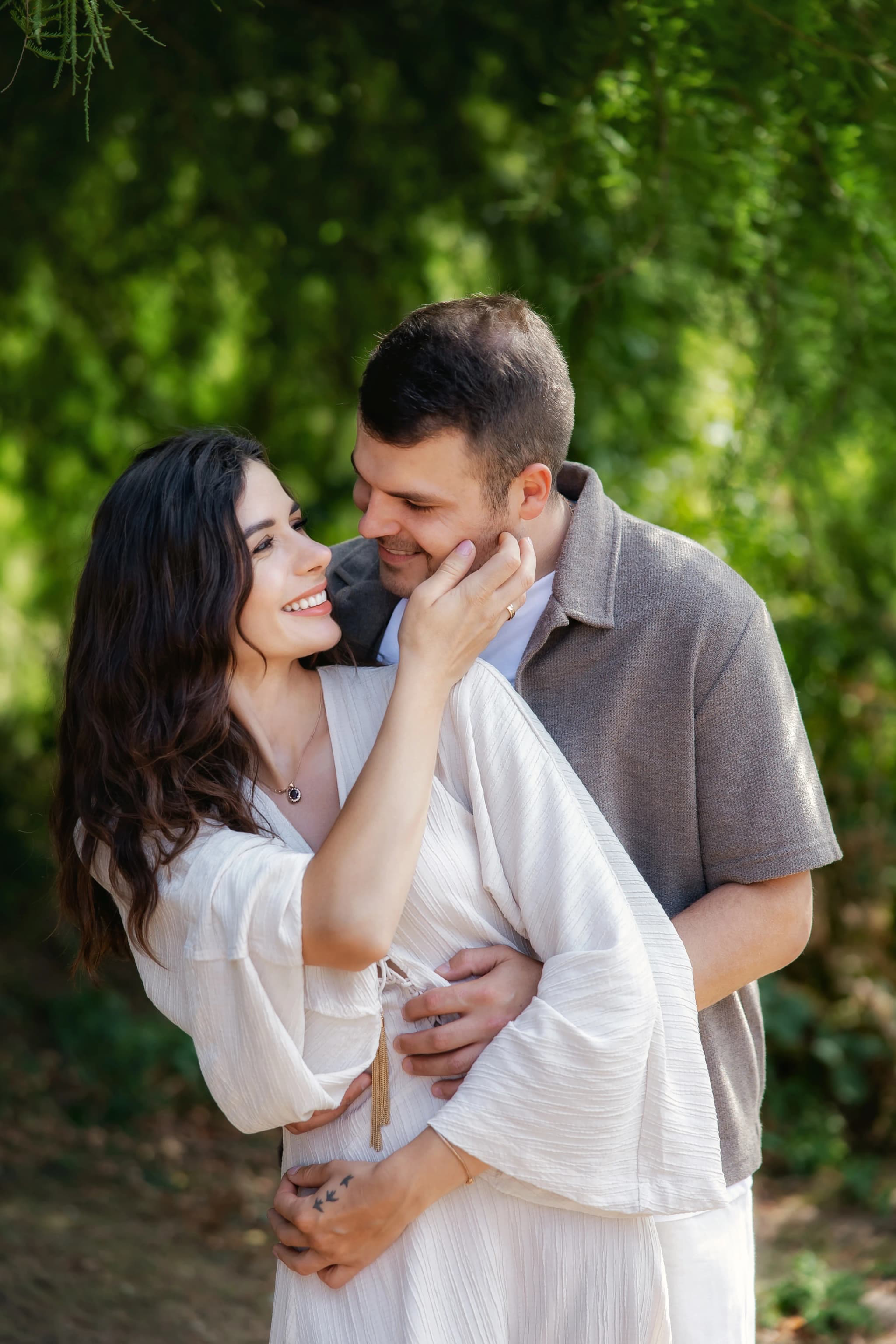
Spring settings tend to have soft, fresh colours — pale blue, tender green, blush pink — so clothing works best when it complements rather than competes with the backdrop. Soft neutrals, dusty blues, sage green, cream, and gentle blush tones all sit naturally alongside bluebells or blossom. I would generally steer away from very bright primary colours or busy patterns, which tend to pull the eye away from faces and can date an image more quickly than a simple, considered palette.
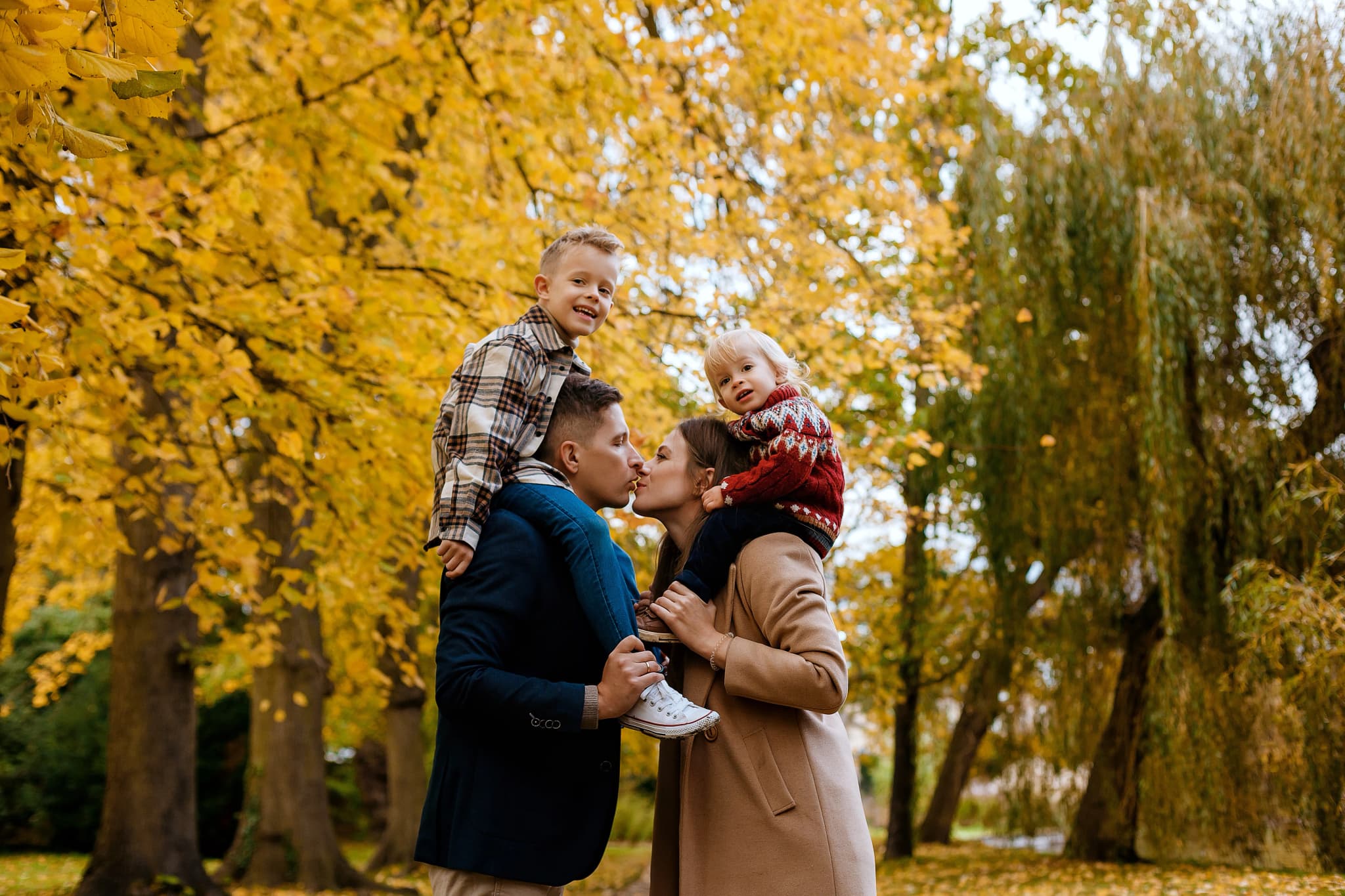
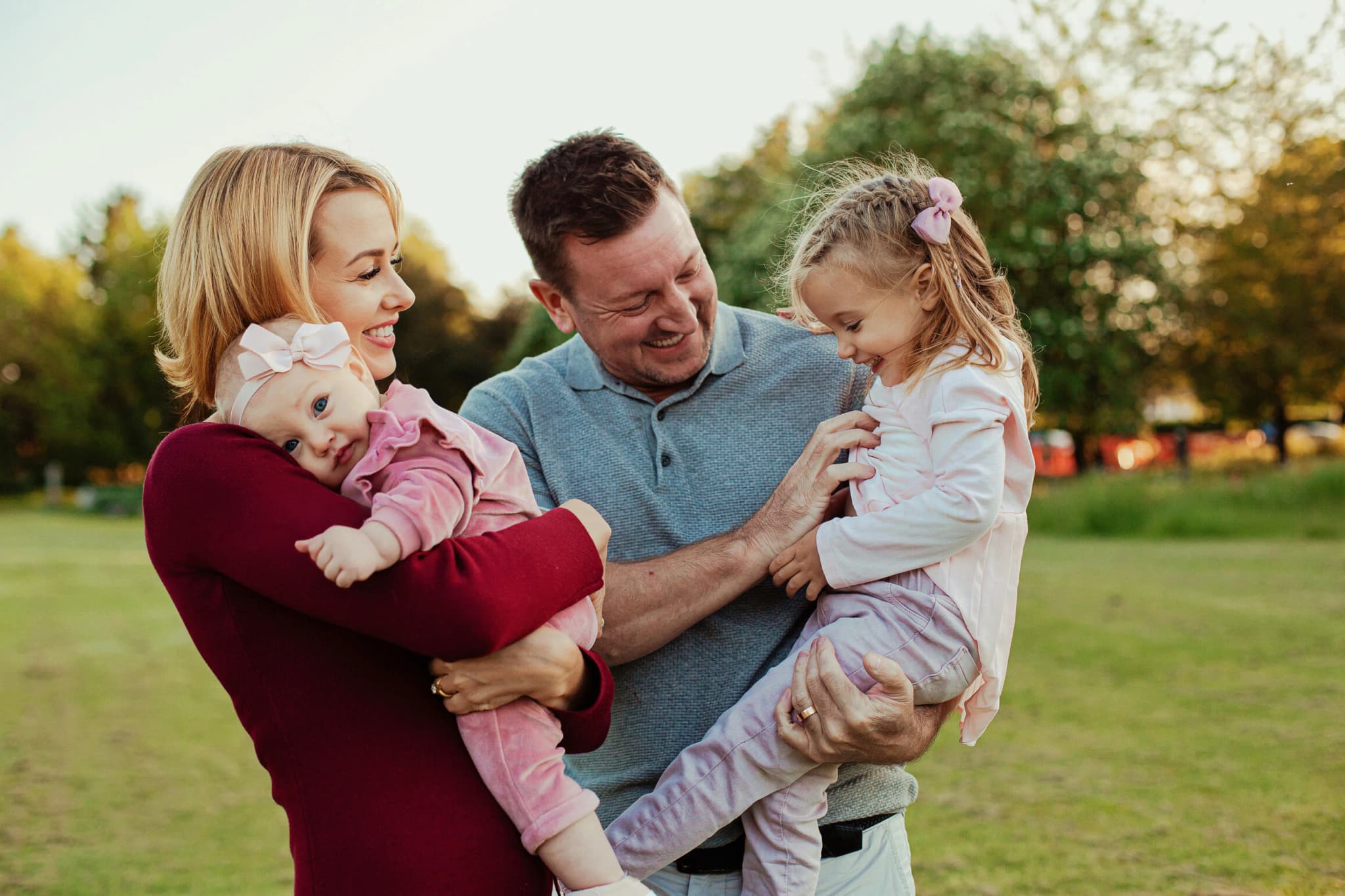
For families, coordinating rather than matching is the approach I always suggest: everyone in the same general tonal family — say, soft blues and creams — photographs far more naturally than everyone in identical outfits, which can look staged. Layering also helps, particularly for children, since spring weather in England is changeable and a light cardigan or jacket that can come on or off between shots gives some flexibility if the temperature shifts during the session.
Footwear is worth a thought too, especially for woodland sessions. Bluebell woods can be muddy underfoot even on a dry day, so wellies or sturdy shoes for children make a real difference to how freely they can move and enjoy themselves rather than being steered around puddles. For blossom and parkland sessions on drier ground, this matters less, but flat shoes are still generally easier to move naturally in than anything with a heel.
How to Prepare for the Day
Because a mini session is short and slots run back-to-back, a little preparation goes a long way towards making the most of your twenty minutes. Arriving five minutes before your slot rather than exactly on time means we are not eating into your session getting settled, and it means the family after you is not affected either — slots are sequential, and a late arrival compresses your own time rather than shifting everyone else's.
Decide on outfits in advance and commit to them, since there genuinely is not time on the day for a change of plan or a last-minute rethink in the car park. If you are bringing a baby, a carrier or pushchair to travel in right up until the session starts is worth its weight in gold — a baby who has been settled and content for the ten minutes beforehand photographs very differently to one who has just been passed between several pairs of arms. For toddlers and young children, a small snack and a favourite toy tucked in a bag can be the difference between a reluctant start and a session that gets going straight away, since having something familiar to focus on for the first minute or two helps enormously.
On the day itself, my approach is to work with whatever energy your family actually brings rather than trying to impose a rigid pose-and-smile structure. A toddler chasing bubbles, a child running ahead down a bluebell path, a baby being tickled by an older sibling — these produce far more genuine, keepable images than a family standing stiffly in a row, and they also tend to be far less stressful for everyone involved. If your children are old enough to understand what is happening, framing the session to them as a walk somewhere pretty rather than as a formal photoshoot generally gets a much better result than building it up as a big event.
When a Full Session Suits You Better
Mini sessions are not the right format for every need, and it is worth being honest about that. If you want a large gallery covering multiple locations and looks, plenty of time to relax into the session, or a slower, more involved format — such as newborn work, which needs a warm room, patience, and a very different pace — a full session will serve you far better than a mini session ever could. Mini sessions are deliberately concentrated: one setting, one mood, a defined and fairly brisk block of time. That focus is exactly what makes them work for a quick seasonal update, but it is a genuine limitation if what you actually want is a longer, more exploratory session.
A useful way to think about it: if the appeal is specifically the bluebells, the blossom, or a lovely spring afternoon captured quickly and affordably, a mini session is built for that. If the appeal is a proper, unhurried family session with room to breathe, several changes of scene, and no clock ticking in the background, it is worth booking a full session instead, and I am always happy to talk through which shape of session actually fits what you are after.
Spring in Cambridgeshire moves fast — the bluebells are gone almost as quickly as they arrive, and blossom rarely lasts more than a fortnight at its best — which is exactly why mini sessions exist in this shape: short, focused, and timed to land right in the middle of a season that will not wait around. If you would like to be first to hear when this year's spring dates open, or you would rather talk through whether a mini or a full session is the better fit for your family, get in touch and I will make sure you do not miss the window.

Yana Skakun
Photographer · England
Professional wedding, family and portrait photographer based in England. Passionate about capturing authentic emotions and timeless moments.
About Yana →spring mini sessions UKspring photography mini sessionsmini session family photosbluebell mini sessions
Photography Tips — Professional Photography in Cambridge & England
Yana Skakun is a professional photographer based in Cambridge, specialising in wedding, family, and portrait photography across England. Every session is personal — planned around your story, your people, and the moments that matter most. This guide — Spring Mini Photography Sessions: What to Expect and How to Book — is part of the photography journal: practical, experience-based advice drawn from real sessions across England. Whether you arrived searching for spring mini sessions uk or spring photography mini sessions, the same care and attention shapes every session Yana photographs.
Professional Photography sessions are available year-round, with bookings open across Cambridge, Ely, Huntingdon, Peterborough, and further afield — East England, London, the Midlands, and beyond. If you have specific questions about mini session family photos, mention it in your enquiry. Get in touch through the contact form above to check availability and discuss your session. Enquiries are welcomed from anywhere in the UK.
Frequently Asked Questions
What camera settings should I use for outdoor portraits?+
For outdoor portraits, shoot in aperture priority mode. Use a wide aperture (f/1.8–f/2.8) to blur the background and isolate your subject. Keep ISO as low as possible in good light. In bright conditions, use a neutral density filter or switch to manual to avoid overexposure at wide apertures.
What is the golden hour in photography?+
Golden hour is the period roughly 30–60 minutes after sunrise and before sunset. The sun is low in the sky, producing warm, soft, directional light that flatters skin tones and creates beautiful long shadows. It's widely considered the best natural light for portrait and outdoor photography.
How do you get sharp photos in low light?+
In low light, increase your ISO (accepting some grain), use the widest aperture your lens allows, and slow your shutter speed to the slowest you can hand-hold without camera shake (roughly 1/focal length as a guide). Use image stabilisation if available, and consider a tripod for static subjects.
What is the rule of thirds in photography?+
The rule of thirds divides the frame into a 3×3 grid. Placing your subject on one of the four intersection points — rather than dead centre — creates a more dynamic, visually interesting composition. It's a guideline, not a rule: some of the most powerful images break it deliberately.
How do you edit photos to look professional?+
Professional editing starts with shooting in RAW format. In Lightroom or similar software, correct exposure, white balance, and contrast first. Recover shadow and highlight detail. Apply gentle colour grading for mood. Be conservative with skin retouching — the goal is natural enhancement, not transformation. Consistency across a set of images is what separates professional from amateur editing.
Continue Reading
Related Articles

Photography Tips
Photography Gift Vouchers: The Most Personal Present You Can Give
5 min read · Read Article
Photography Tips
Photo Books vs Photo Albums: What Is the Difference and Which Is Better?
5 min read · Read Article
Photography Tips
Photo Gift Ideas: Turning Professional Images into Meaningful Presents
5 min read · Read Article
Get in Touch
Ready to Book Your Session?
Get in touch to discuss your vision — I'll reply within 24 hours.