Yana Skakun

Summer Newborn Photography: Long Days and the Warmest Light of the Year
By Yana Skakun·19 August 2025·4 min read
There is a particular kind of light that only exists in an English summer — long, soft, and generous with the hours it gives you. For newborn photography, that light changes everything. Where a January session might mean working with perhaps six usable hours of daylight and a window that never quite gets bright enough before eleven, a June or July session gives you strong, warm light from six in the morning until well past eight in the evening. For parents trying to schedule around feeds, naps, and the general unpredictability of a two-week-old, that flexibility matters more than it might seem to on paper. Summer newborn photography in and around Cambridge takes full advantage of this: warmer rooms, softer light, more relaxed parents, and images that carry the particular feeling of a baby arriving into the brightest, easiest season of the year.
Why Summer Is a Genuinely Different Season for Newborn Sessions
Newborn photography depends on light more than almost any other genre I photograph. Babies in the first weeks of life are photographed indoors, often in a single room, using window light as the primary source rather than flash, which would be jarring for eyes only days old. In winter this means working hard for the light — angling close to a window, waiting for a brief midday window of brightness, sometimes rescheduling around a run of grey days. In summer, that constraint largely disappears. Morning light through an east-facing window at seven a.m. in July is already soft, warm, and abundant, and it stays workable for hours rather than minutes.
There is a practical, physical benefit too. Newborns regulate their body temperature poorly, and a large part of classic newborn posing — the curled, swaddled, deeply asleep poses most parents picture when they imagine newborn photography — depends on the baby being warm enough to settle into a deep sleep without a blanket or wrap covering them entirely. In winter, achieving that means running a room at an uncomfortably warm temperature for the adults in it, with a heater positioned carefully out of frame. In summer, a naturally warm room does much of that work for you, and babies tend to settle faster and stay settled longer, which in turn means a calmer, less rushed session for everyone.
Parents are often in a different frame of mind in summer as well. The last weeks of pregnancy through a British winter can be genuinely gruelling — short days, cold, the general heaviness of the season layered onto the physical heaviness of late pregnancy. Babies born into June, July, and August arrive into gardens in bloom, long evenings, and visiting family who can comfortably sit outside. That lighter mood tends to show up in the photographs, in a way that is hard to manufacture artificially in a different season.
When to Book, and When the Session Actually Happens
Newborn sessions are best photographed in the first two to three weeks of life, and ideally no later than the first month. During this window babies are still curling naturally into the tucked, foetal-like positions that make the classic newborn poses possible, they sleep more deeply and more frequently than they will just a few weeks later, and they have not yet developed the startle reflexes and increased alertness that make posing significantly harder from around six weeks onwards. This narrow window is exactly why booking during pregnancy, rather than waiting until after the birth, matters so much.
I recommend enquiring from around twenty to twenty-five weeks of pregnancy if you know your due date falls in the summer months. Summer is consistently one of the busiest periods for newborn photography — partly because of demand, and partly because summer due dates cluster around a similar few months, which means several families are often trying to book the same narrow window of good weather and warm rooms at once. Booking early does not commit you to an exact date; it secures a flexible window around your due date, which I then confirm properly once the baby has actually arrived, since babies famously do not respect calendars.
Once your baby is born, I ask parents to get in touch within the first few days so we can find a date within that narrow first-fortnight window. I try to build enough flexibility into my summer calendar that a session can usually be arranged within a matter of days of that message, precisely because the newborn stage moves so fast.
Studio-Style Sessions at Home, and What Summer Changes About Them
Most of my newborn sessions are what is generally called "studio-style", but photographed in your own home rather than a rented studio space. This means a controlled, calm environment — wraps, simple layered fabrics, a handful of carefully chosen props — but using a room in your own house that has decent natural light, usually a bedroom or living room with a reasonably large window. Working in your own home rather than a studio has real advantages: no travelling with a days-old baby, a familiar and comfortable environment for older siblings, and the ability to work around feeds and naps without a clock ticking on a rented studio slot.
In summer, this home-based approach becomes considerably easier logistically. Rooms that might be too dim for a studio-style session in December are bright enough by mid-morning in June or July, which opens up more rooms in a house as potential locations and removes a lot of the light-chasing that a winter session sometimes requires. It also means sessions can start earlier in the day, when newborns are often at their sleepiest and easiest to settle, rather than being pushed into the middle of the day purely to catch enough light.
A full newborn session typically runs somewhere between two and three hours. This is not because the photography itself takes that long — it is because a newborn session moves entirely at the baby's pace. There will be a feed partway through, likely more than one. There will be nappy changes, periods of settling and resettling, and pauses where nothing much happens except a baby being a baby. Building in that time, rather than trying to compress a session into forty-five rushed minutes, is what allows for calm, unhurried images rather than a baby who is visibly unsettled in every frame.
Booking a summer newborn session
Summer due dates fill quickly. If your baby is due between May and September, enquiring during pregnancy secures a flexible window and means the first-fortnight session can be arranged with only a few days' notice once your baby arrives.
Enquire about a newborn sessionOutdoor and Garden Sessions from Around Six Weeks
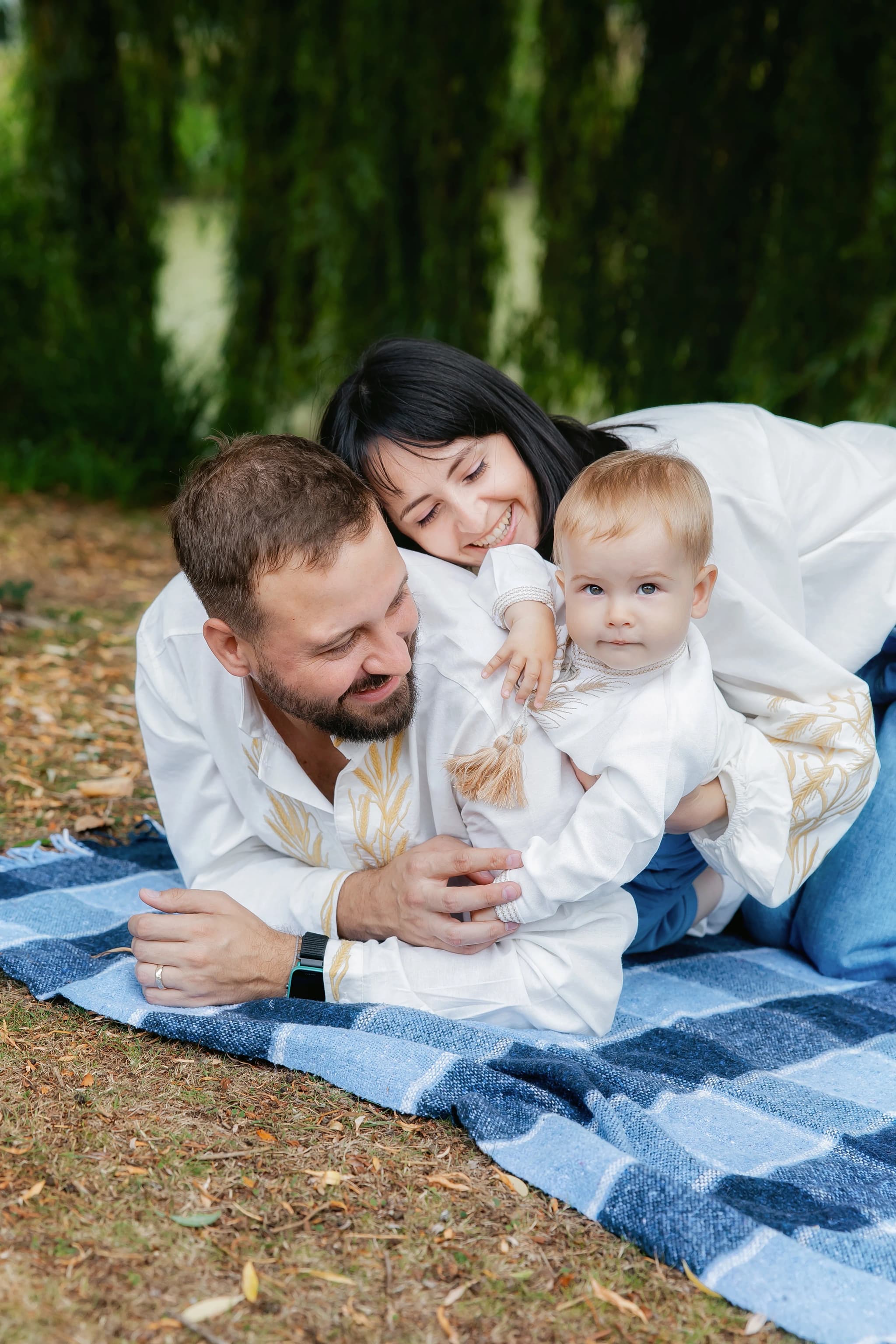
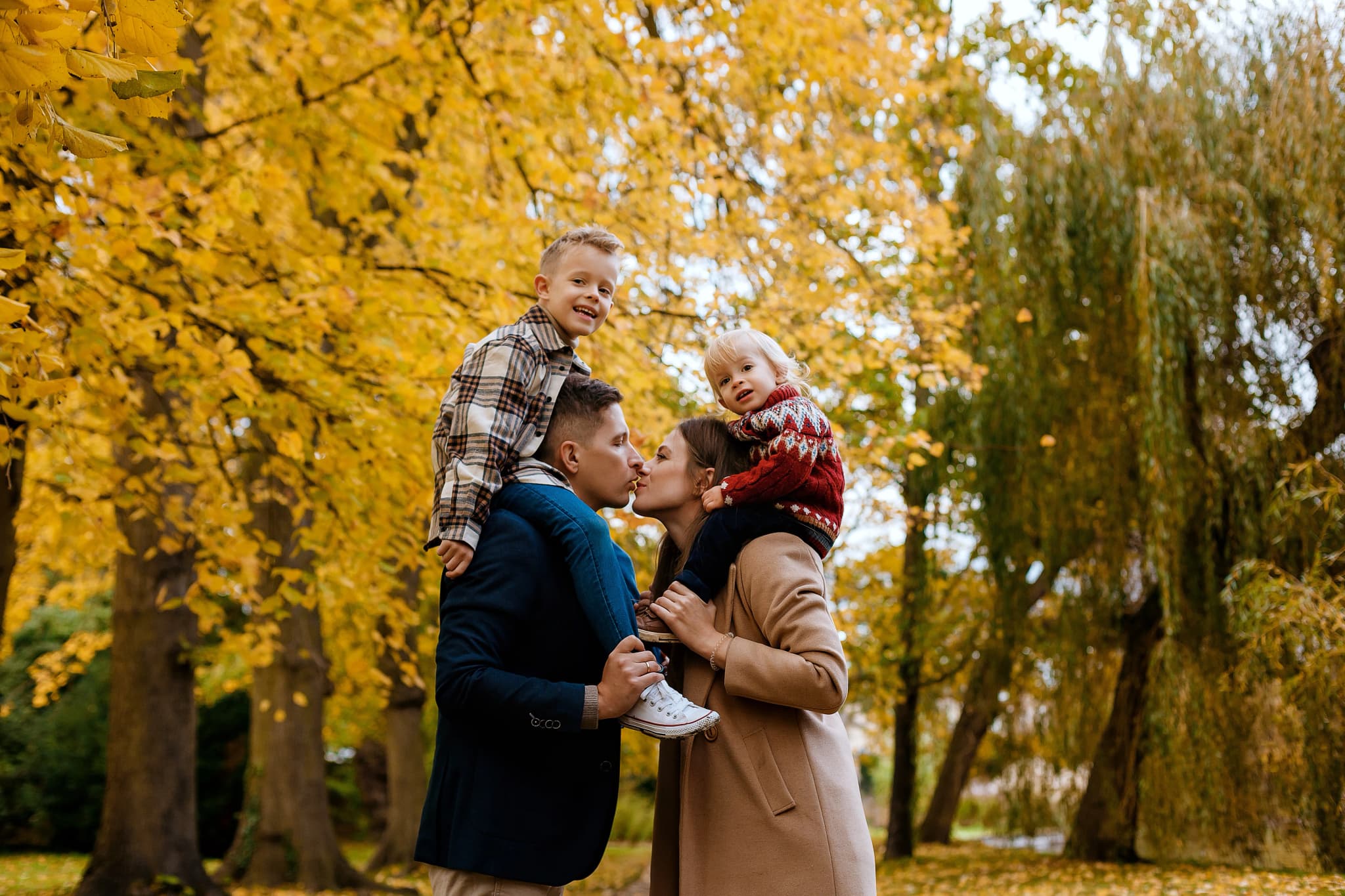
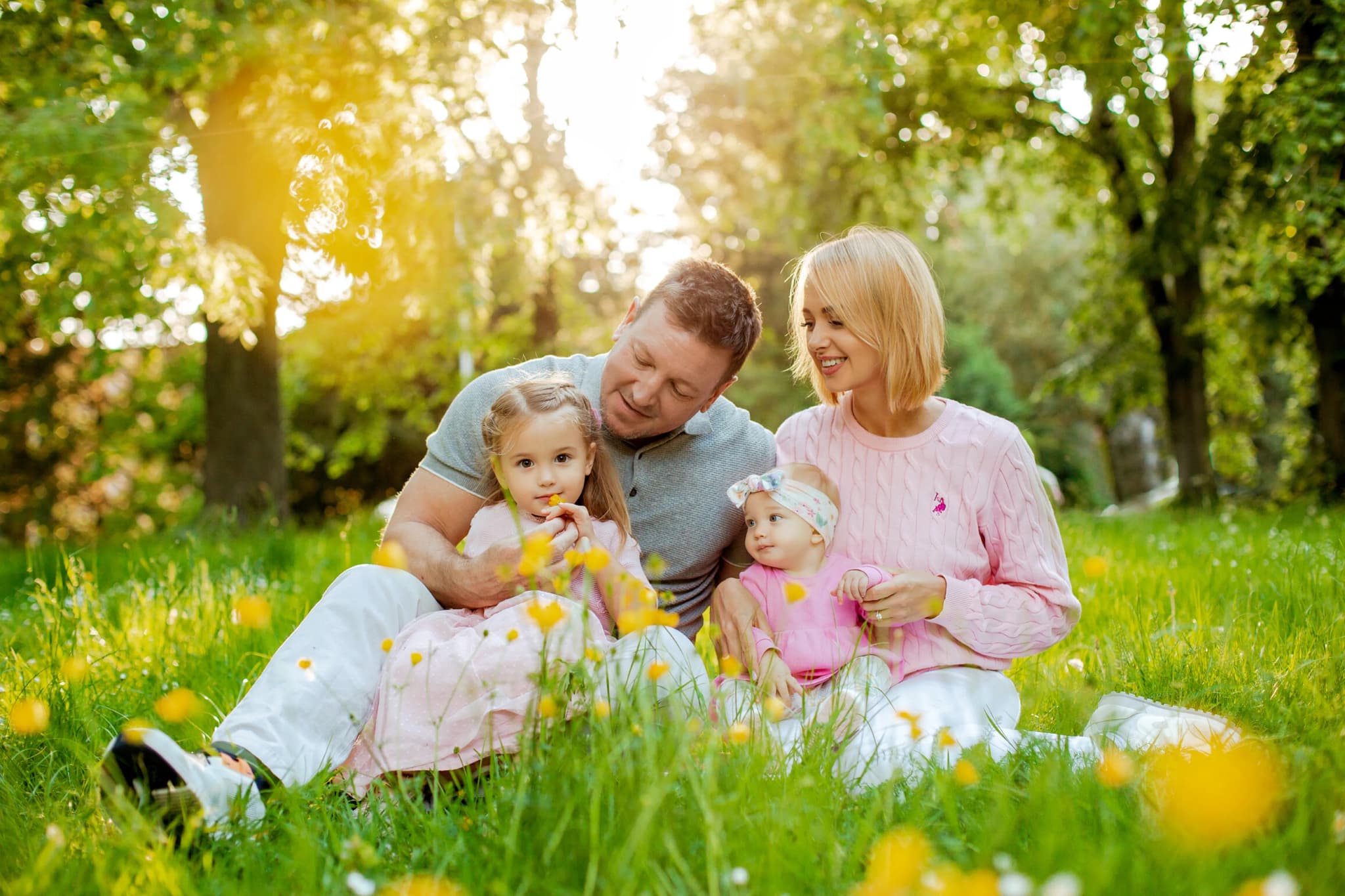
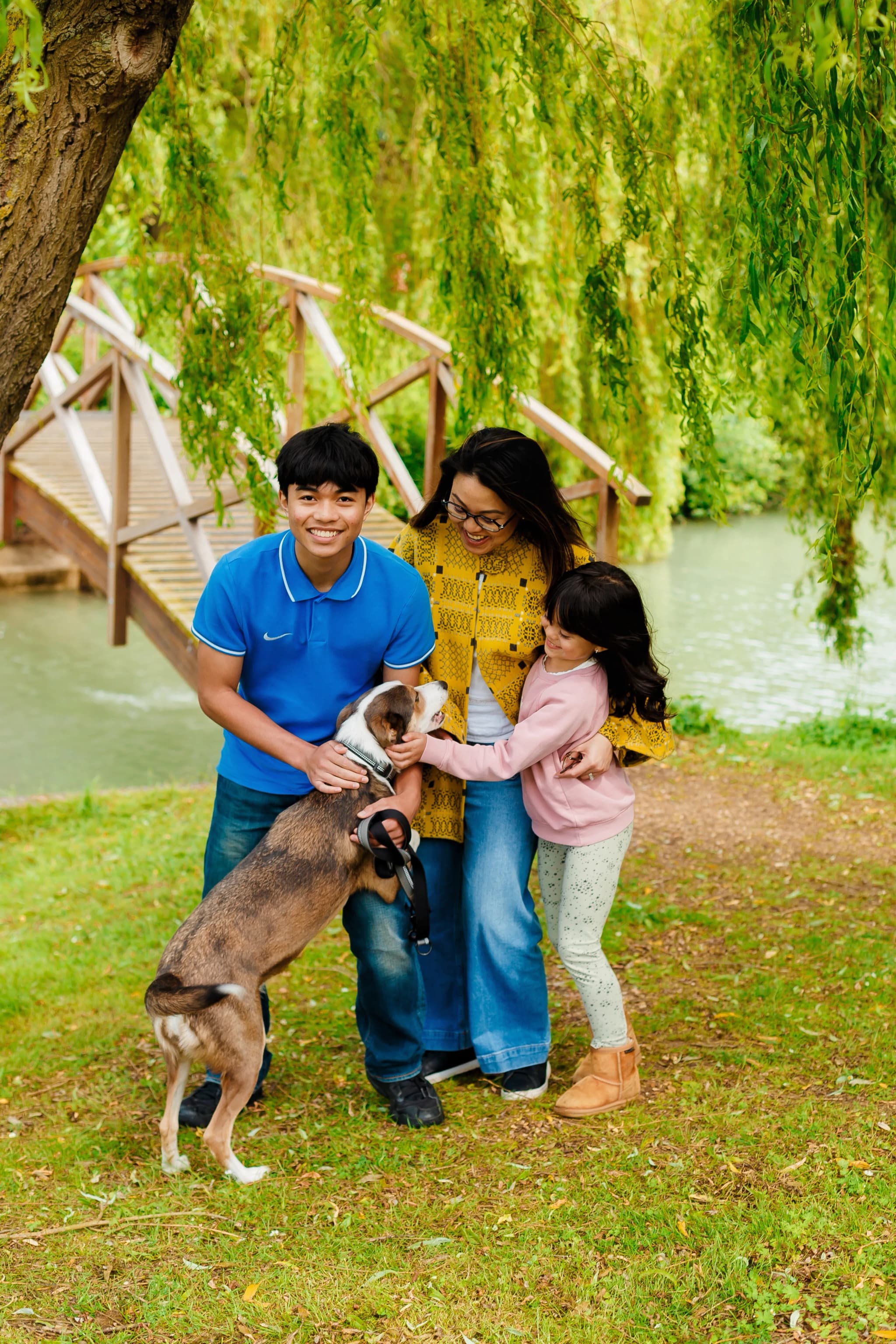
Once a baby is a little more robust — generally from around six weeks, though this varies and I always follow parents' comfort levels rather than a fixed rule — an outdoor lifestyle session becomes an option that simply is not practical in colder months. A late-June or July morning in a Cambridge garden, or in one of the parks and green spaces around the city, gives a completely different set of images to a studio-style session: parents walking with the baby, older siblings pointing things out, the texture of grass and dappled tree light rather than the calm neutrality of a wrapped, sleeping newborn on a fabric backdrop.
Many summer families choose to do both across the first two months: a traditional studio-style session in the first fortnight, followed by a relaxed outdoor family session at six to eight weeks once the baby is a little more alert and can be photographed with eyes open, interacting a little with parents and siblings. The contrast between the two sets of images — the impossibly small, deeply asleep newborn, and the slightly more awake, more present six-week-old outdoors in full summer light — ends up telling a fuller story of those first two months than either session would alone.
Outdoor sessions in summer are best scheduled for early morning, generally before nine, both because the light is softer and more flattering at that hour and because it tends to align with a newborn's natural rhythm before the day gets long and warm. A shaded spot under trees, or the soft light just after sunrise, avoids the harsh overhead sun that arrives by midday and is far too strong and contrasty for delicate newborn skin.
Colour Palette, Wardrobe, and Styling for a Summer Session
The styling choices for a summer newborn session tend to lean into the season rather than work against it. Creamy whites, warm oatmeal and stone tones, soft honey and golden fabrics, and gentle touches of sage or dusty terracotta all sit comfortably with the warm, bright light of a summer morning. Where a winter session might use richer, deeper tones — forest green, burgundy, charcoal — to suit the lower, cooler light of the season, summer sessions generally look most natural in lighter, warmer, more breathable palettes.
For the family and lifestyle portions of a session — parents holding the baby, older siblings meeting a new brother or sister — I generally advise keeping wardrobe simple and let the light do most of the work. Soft neutrals, muted pastels, and natural fabrics photograph beautifully in strong summer light without competing with it. Avoid busy patterns or anything with large logos, which date photographs quickly and pull attention away from faces. Bare feet, bare arms, and light layers all suit the warmth of the season and photograph naturally, without the bulky jumpers and cardigans that a winter session usually needs to work around.
If props are used — a woven basket, a simple wrap, a knitted bonnet — I keep these to a small, considered handful rather than a large collection. The aim with newborn photography is generally for the images to age well: a small, thoughtfully chosen set of neutral tones and simple textures will still feel timeless in fifteen years, in a way that trend-driven props and heavily saturated colours often do not.
Practical Preparation for Parents
A few things make a genuine difference to how a summer newborn session goes. Feeding the baby shortly before I arrive, or early in the session, gives the best chance of a settled, sleepy baby for the more classic posed images. Keeping the room the session is held in warm — even in summer, newborns can be surprisingly sensitive to a breeze from an open window or a fan — helps babies settle more deeply and stay settled for longer.
I also ask parents not to worry excessively about the house being tidy or "camera ready". Most of the session takes place in one room, working with a small, controlled set-up, and very little of the wider house ever appears in frame. What matters far more is that everyone in the house, including the baby, is as relaxed as possible — a calm, unhurried atmosphere comes through in the images in a way that a spotless kitchen never will.
Finally, it is worth building some flexibility into the day itself. Newborns do not run to a schedule, and a session that is allowed to breathe — pausing for a feed, waiting a little longer for a deep sleep to arrive, resettling after a nappy change — produces calmer, more natural images than one where everyone is watching the clock. Summer, with its long daylight hours, makes that flexibility much easier to accommodate than a short winter day ever could.
Summer newborn photography in Cambridge and the surrounding villages benefits from almost everything the season offers — longer light, warmer rooms, more relaxed parents, and the option of an outdoor session once the baby is a little older, all layered onto the same careful, unhurried approach I bring to every newborn session regardless of the time of year. If your due date falls anywhere between late spring and early autumn, the best first step is simply to get in touch during pregnancy so a flexible window can be held for you, ready to confirm properly the moment your baby arrives.
See My Work
Newborn & Family Photography

Yana Skakun
Photographer · England
Professional wedding, family and portrait photographer based in England. Passionate about capturing authentic emotions and timeless moments.
About Yana →summer newborn photography UKsummer baby photographer CambridgeJune July newborn session UKoutdoor summer newborn photography Cambridgeshirewarm light newborn photography Cambridgesummer maternity newborn photography UK
Newborn Tips — Newborn & Baby Photography in Cambridge & England
Newborn and baby sessions with Yana Skakun take place in the comfort of your own home — unhurried, led entirely by your baby's timings, and focused on the quiet intimacy of those first weeks. Sessions are available across Cambridge and the wider East of England. This guide — Summer Newborn Photography: Long Days and the Warmest Light of the Year — is part of the photography journal: practical, experience-based advice drawn from real sessions across England. Whether you arrived searching for summer newborn photography uk or summer baby photographer cambridge, the same care and attention shapes every session Yana photographs.
Newborn & Baby Photography sessions are available year-round, with bookings open across Cambridge, Ely, Huntingdon, Peterborough, and further afield — East England, London, the Midlands, and beyond. If you have specific questions about june july newborn session uk, mention it in your enquiry. Get in touch through the contact form above to check availability and discuss your session. Enquiries are welcomed from anywhere in the UK.
Frequently Asked Questions
When is the best time to do newborn photos?+
The ideal window is 5–14 days after birth. At this stage, babies sleep deeply and curl naturally into gentle poses. After 3 weeks, they become more alert and less likely to sleep through a session. However, lifestyle newborn sessions (awake, at home) work beautifully at any age up to 3 months.
How do you keep a newborn safe during a photoshoot?+
A professional newborn photographer is trained in safe posing techniques. All composite poses (baby appearing to support their own weight) are achieved through careful post-processing — the baby is always fully supported. Sessions are kept warm (babies need to be comfortable), and only experienced photographers should attempt posed newborn work.
How long does a newborn photo session take?+
Newborn sessions typically take 2–4 hours. The pace is entirely led by the baby — time is built in for feeding, settling, and nappy changes. There's no rushing. Lifestyle sessions, which are more relaxed and home-based, usually take 1.5–2 hours.
What should parents wear for a newborn photoshoot?+
Soft, neutral tones work beautifully — cream, blush, grey, and muted earth tones keep the focus on the baby. Avoid bold patterns and logos. Comfort is important: parents should feel relaxed and natural in their outfits. Your photographer may send a styling guide in advance.
Can siblings be included in newborn photos?+
Yes — sibling images are among the most treasured photos families have. Plan for a sibling session at the beginning, when children are freshest and most cooperative. Keep their involvement short and positive, and have another adult present to manage them while the photographer focuses on the newborn.
Get in Touch
Ready to Book Your Session?
Get in touch to discuss your vision — I'll reply within 24 hours.