Yana Skakun

Sustainable Wedding Confetti Alternatives That Look Great on Camera
By Yana Skakun·10 June 2026·6 min read
The confetti moment is one of my favourite frames to shoot — that burst of colour, the laughter, the way couples instinctively duck and grin as petals rain down. But after years of photographing weddings across Cambridgeshire and Suffolk, I've watched venues quietly ban the shiny foil stuff, and for good reason. The encouraging news is that sustainable wedding confetti doesn't just protect the lawns and rivers around your venue — it photographs far more beautifully than anything plastic ever did.
Why venues are saying no to plastic confetti
Most of the heritage venues I work with — think walled gardens, riverside barns, and listed country houses — have either banned or strongly discourage non-biodegradable confetti. Foil and paper-backed plastic doesn't break down; it sticks to wet grass, clogs gutters, and ends up in the Cam or the Stour. Grounds teams hate it, and frankly it ruins photos too: a stray metallic fleck on a cheek catches the light and pulls the eye straight off the couple.
Biodegradable alternatives sidestep all of that. They dissolve in rain, compost down within weeks, and won't earn you a cleaning charge on your final invoice. Before you order anything, ask your coordinator what they permit — some allow only dried petals, others are happy with any natural material, and a handful insist on a designated throwing spot.
Dried petals: the photographer's favourite
If you ask me what looks best through the lens, it's dried delphinium and rose petals every single time. They're feather-light, so they drift and hang in the air rather than dropping like a stone, which gives me precious extra fractions of a second to catch them mid-fall around your faces. The colours are soft and natural — dusky blues, blush pinks, deep burgundies — and they read beautifully against both bright summer skies and the grey, flat light we so often get in an English spring.
Larger petals photograph better than tiny shreds. A handful of generous delphinium petals creates clear, recognisable shapes in the frame, whereas finely chopped confetti can look like noise or dust. I usually ask couples to order more than they think they need — generosity per guest is what turns a polite sprinkle into the joyful storm you'll want framed on your wall.
Choosing colours that work on camera
Colour choice matters more than people expect. The trick is contrast against your backdrop. If you're tossing confetti in front of a pale stone facade or a cream marquee, deeper tones — burgundy, plum, navy delphinium — will actually show up. Against a dark hedge, avenue of trees, or a stormy Fenland sky, brighter whites, yellows and pale pinks pop far better. All-white petals look elegant in person but can vanish against an overcast day, which is something to weigh up given our reliably unpredictable weather.
Here are the natural options I most often recommend to couples, with a note on how each one behaves in front of the camera:
- ◆Dried delphinium: My top pick. Big, vivid petals in blues, pinks and purples that float slowly and hold their colour against almost any backdrop.
- ◆Dried rose petals: Romantic and slightly heavier, so they fall faster. Best thrown high and in generous handfuls for that cascading effect.
- ◆Hydrangea petals: Soft, papery and pale — gorgeous for muted, editorial palettes, though they need a darker background to register.
- ◆Wildflower mix: Charming for relaxed barn and garden weddings; the varied shapes and tones suit a Suffolk meadow setting perfectly.
- ◆Biodegradable paper confetti: A budget-friendly, allergy-safe option; dissolves in water but lacks the natural drift of real petals.
- ◆Lavender or wheat: Lovely scent and rustic texture for late-summer Cambridgeshire weddings, but throw it close so it stays in frame.
Timing and staging the moment
Even the most beautiful petals fall flat if the moment is rushed. I always recommend a confetti line or tunnel — guests form two rows, you and your partner walk through slowly, and everyone throws on cue. It concentrates the petals, keeps the throwing controlled, and means I can position myself at the end of the tunnel shooting back towards you with the light behind. A scattered free-for-all looks chaotic and gives me one usable frame if I'm lucky.
Backlight is everything. Late afternoon, with the sun low behind you, turns each petal into a glowing speck and wraps you in warm light — which is partly why I'll often suggest doing confetti a little later in the day rather than straight after the ceremony. And do it twice if you can. The first run is genuine surprise and laughter; the second lets me reposition and catch anything I missed.
Small choices, lasting images
Going sustainable with your confetti isn't a compromise — it's an upgrade on every front. You protect the grounds of a venue you've chosen precisely because it's beautiful, you spare yourself a cleaning fee, and you end up with photographs full of soft, natural colour and movement. Order from a UK petal supplier a few weeks ahead, store the boxes somewhere cool and dry, and hand them out in paper cones just before the moment.
Do those few simple things and your confetti shot becomes one of the standout images of the whole day — the kind of frame that genuinely looks great on camera because everything in it, right down to the petals, was chosen with care.
Planning a wedding in Cambridgeshire or Suffolk?
I'd love to help you plan the details that make the difference — from confetti timing to golden-hour light. Let's see if your date is free.
Check Your Date →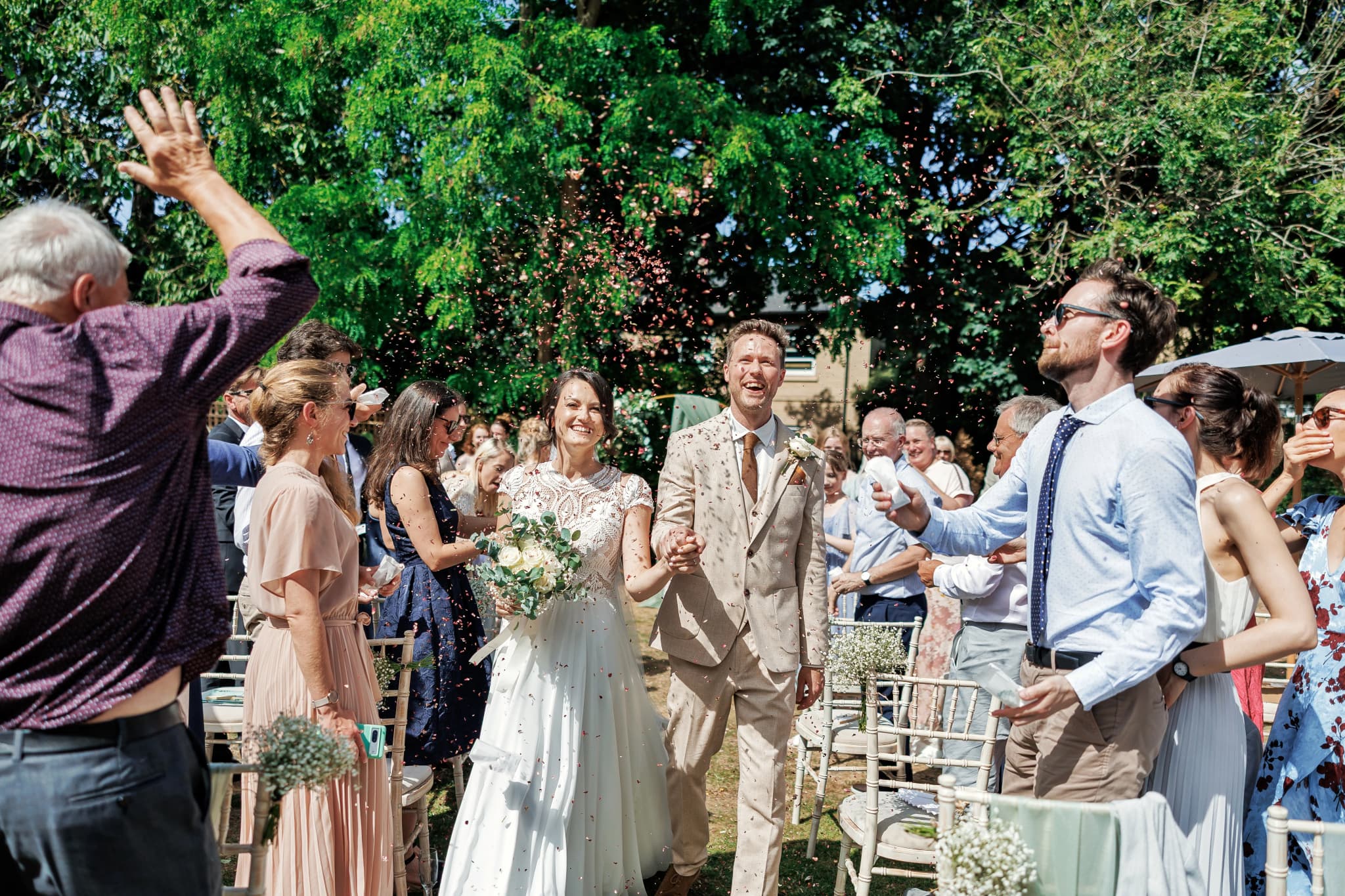


Yana Skakun
Photographer · England
Professional wedding, family and portrait photographer based in England. Passionate about capturing authentic emotions and timeless moments.
About Yana →sustainableweddingconfettialternatives
Wedding Inspiration — Professional Photography in Cambridge & England
Yana Skakun is a professional photographer based in Cambridge, covering weddings, families, and portraits across England. Every session is personal — planned around your story, your people, and the moments that matter most. This guide — Sustainable Wedding Confetti Alternatives That Look Great on Camera — is part of the photography journal: practical, experience-based advice drawn from real sessions across England. Whether you arrived searching for sustainable or wedding, the same care and attention shapes every session Yana photographs.
Professional Photography sessions are available year-round, with bookings open across Cambridge, Ely, Huntingdon, Peterborough, and further afield — East England, London, the Midlands, and beyond. If you have specific questions about confetti, mention it in your enquiry. Get in touch through the contact form above to check availability and discuss your session. Enquiries are welcomed from anywhere in the UK.
Frequently Asked Questions
What camera settings should I use for outdoor portraits?+
For outdoor portraits, shoot in aperture priority mode. Use a wide aperture (f/1.8–f/2.8) to blur the background and isolate your subject. Keep ISO as low as possible in good light. In bright conditions, use a neutral density filter or switch to manual to avoid overexposure at wide apertures.
What is the golden hour in photography?+
Golden hour is the period roughly 30–60 minutes after sunrise and before sunset. The sun is low in the sky, producing warm, soft, directional light that flatters skin tones and creates beautiful long shadows. It's widely considered the best natural light for portrait and outdoor photography.
How do you get sharp photos in low light?+
In low light, increase your ISO (accepting some grain), use the widest aperture your lens allows, and slow your shutter speed to the slowest you can hand-hold without camera shake (roughly 1/focal length as a guide). Use image stabilisation if available, and consider a tripod for static subjects.
What is the rule of thirds in photography?+
The rule of thirds divides the frame into a 3×3 grid. Placing your subject on one of the four intersection points — rather than dead centre — creates a more dynamic, visually interesting composition. It's a guideline, not a rule: some of the most powerful images break it deliberately.
How do you edit photos to look professional?+
Professional editing starts with shooting in RAW format. In Lightroom or similar software, correct exposure, white balance, and contrast first. Recover shadow and highlight detail. Apply gentle colour grading for mood. Be conservative with skin retouching — the goal is natural enhancement, not transformation. Consistency across a set of images is what separates professional from amateur editing.
Continue Reading
Related Articles

Wedding Inspiration
Black Wedding Dress Photography: Styling the Anti-Bride Gown
6 min read · Read Article

Wedding Inspiration
10 Traditions You Can Ditch at Your Anti-Bride Wedding
6 min read · Read Article

Wedding Inspiration
What is a Quiet Luxury Wedding? The Old Money Aesthetic Explained
6 min read · Read Article
Get in Touch
Ready to Book Your Session?
Get in touch to discuss your vision — I'll reply within 24 hours.