Yana Skakun
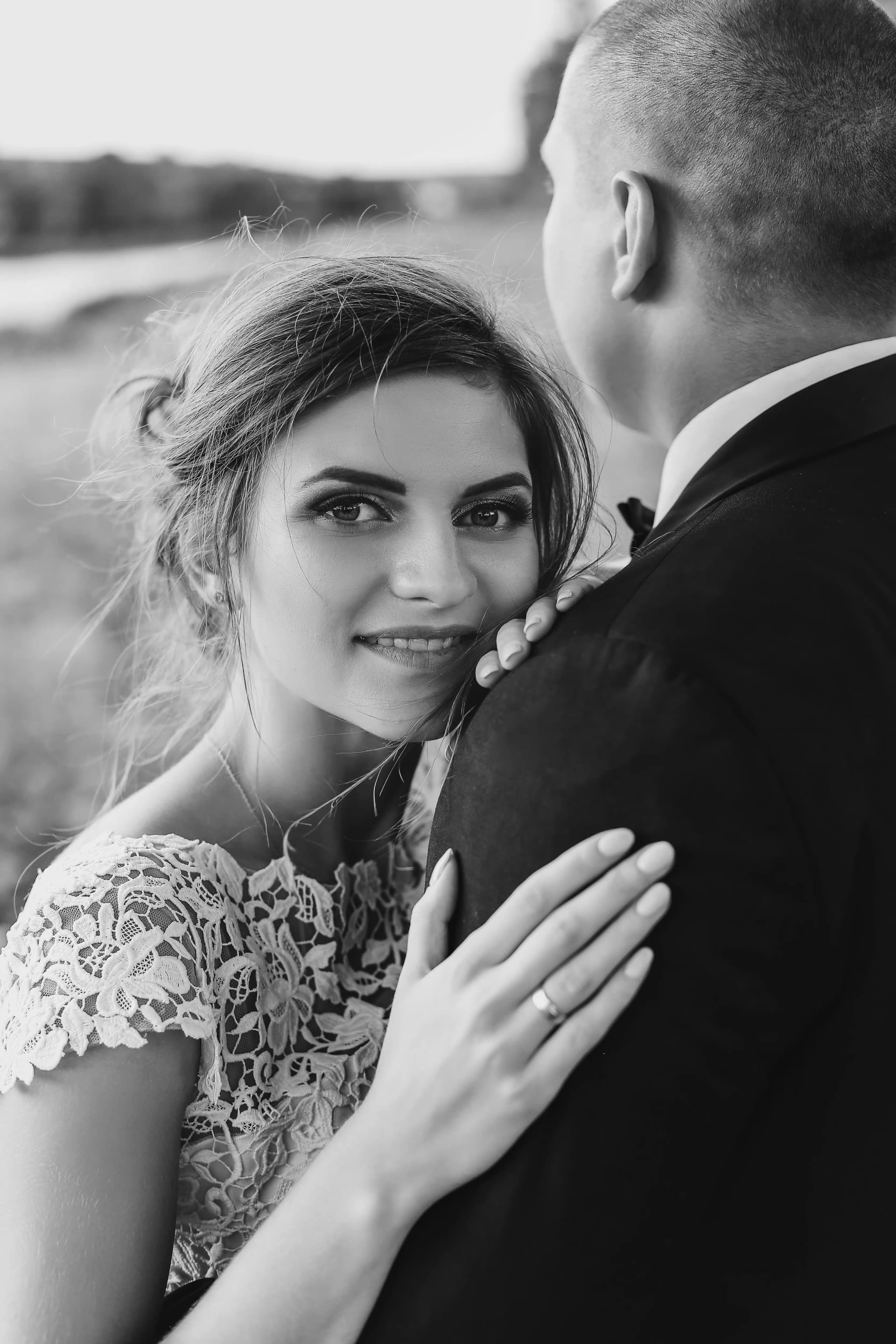
Wedding Gift Registry Ideas: Contributing to Wedding Photography
By Yana Skakun·1 April 2026·5 min read
Every couple I work with eventually has the same conversation with each other, usually somewhere between booking the venue and choosing the caterer: where is the money actually going to come from. Photography, more than almost any other wedding expense, tends to surprise people. It is not a line item most of us have budgeted for before we start planning a wedding, and yet it is very often one of the largest single costs on the day, sitting alongside the venue and the catering rather than trailing behind them. At the same time, more and more couples marrying in their late twenties and thirties have already been living together for years. They do not need a toaster. They do not need a fourth set of bath towels or a gravy boat that will live in a cupboard for a decade. What they often do need is help covering the costs that make the day itself possible, and increasingly, that means photography finding its way onto the gift registry — either as a dedicated fund guests can contribute to, or as a specific voucher a close friend or family member arranges directly. I get asked about this often enough, from both couples and from guests trying to work out what to give, that it is worth setting out clearly how it actually works.
Why photography deserves a place on the registry
The traditional wedding registry grew out of a very specific set of assumptions: that a newly married couple was also setting up a household for the first time, and needed the basic equipment of domestic life supplied all at once by friends and family. For a lot of couples getting married today, particularly those in their late twenties, thirties, and beyond, those assumptions simply do not hold. They already have a kettle. They already have crockery, and quite often it is nicer than anything they would receive as a wedding gift. What they are actually short of, in most cases, is cash — specifically, cash to cover the parts of the wedding that cost the most and that nobody particularly wants to be the one funding out of savings.
Photography sits in an unusual position among wedding costs because, unlike the flowers or the favours, it is the one purchase that outlasts the day itself by decades. The dress gets cleaned and boxed away or sold on. The cake is eaten. The flowers wilt within the week. The photographs are what a couple, and eventually their children and grandchildren, actually look at again and again for the rest of their lives. Framing a contribution to photography as a gift, rather than as an abstract cash sum toward "the wedding" in general, gives guests something concrete and meaningful to put their money toward — and gives the couple a socially comfortable way to ask for exactly the kind of help they actually need.
How a photography contribution registry actually works
The mechanics are simpler than most couples expect. The starting point is always the same: book your photographer first, and agree the total package cost with them, before you set anything up on a registry. You cannot ask guests to contribute toward a number you have not confirmed, and photographers — myself included — are generally very happy to talk this through with couples early, including breaking down what is included in a package so the registry description can be specific rather than vague.
Once the total is agreed, that figure becomes the target on whichever registry platform the couple is using. Most modern registry platforms built around cash funds rather than physical gift lists — Zola, Prezola, and Blueprint Registry are the names that come up most often among couples I work with in the UK — allow this kind of fund to sit alongside or instead of a traditional gift list. Guests can then contribute any amount they choose toward that target, often starting from as little as ten or twenty pounds, right up to whatever a close family member wants to put in. Some couples prefer to skip a platform altogether and simply set up a dedicated bank transfer note on their wedding website, which works just as well provided the couple is comfortable managing contributions manually.
What happens with the money afterwards depends on how contributions land. If guests contribute more than the base package cost, that surplus is not wasted — it typically goes toward the kind of add-ons that elevate a package rather than simply padding it out: an upgraded album, additional coverage hours, a second shooter, or an engagement session beforehand. If contributions fall short of the full package cost, which happens just as often, the couple simply covers the difference themselves. It is worth being clear-eyed about this from the outset: a photography registry is a contribution fund, not a guarantee that the whole bill gets covered, and treating it that way avoids any awkwardness later.
For guests: how to actually contribute
If you are a guest and the couple has listed photography on their registry, contributing is usually the easiest gift-giving decision you will make for the whole wedding. You choose an amount, you pay through whichever platform the couple has linked, and that is genuinely the end of it — no wrapping, no guessing at sizes or tastes, no risk of duplicating what three other guests have already bought. It is also, in a very direct sense, one of the more meaningful gifts available to you: your contribution is going toward images the couple will still be looking at when they are in their seventies, and that their children and grandchildren may one day see too.
Sometimes, though, a couple has not added photography to their registry at all — perhaps they feel awkward asking, or their registry platform does not support cash funds — but you happen to know, through conversation or through mutual friends, that the photography budget is a source of quiet stress for them. In that situation, a direct gift voucher arranged with their photographer is a genuinely elegant alternative. Most photographers, myself included, can issue a voucher for a specific value that the couple can apply directly to their photography balance. It requires a little more initiative on your part — a conversation with the couple or a direct enquiry to the photographer — but it lands as a thoughtful, specific gift rather than a generic cheque, and it takes real financial pressure off the couple at exactly the point where they are likely to feel it most.
Setting up the registry: the practical steps
For couples ready to put this in place, the process runs more smoothly if you follow it roughly in this order. Confirm your photographer and your package total first, before touching the registry at all — asking for contributions toward an unconfirmed figure creates confusion and makes it harder for guests to know what their money is actually going toward. Choose a registry platform that genuinely supports cash funds rather than only physical gift lists; not every popular UK registry service handles this well, so it is worth checking before you commit time to setting one up.
Once the platform is chosen, be specific in the description of what guests are contributing to. "Help us capture our day" is warmer than a bare number, but pairing that sentiment with a short, honest explanation of why photography matters to you as a couple tends to encourage more generous and more frequent contributions than a purely functional request does. Guests respond to specificity and sincerity far more than to a blank cash-gift box. Finally, if you would like a comfortable buffer rather than needing every last pound of the package covered, it is entirely reasonable to set your published funding target slightly below the actual package cost — you are simply managing your own expectations, and any shortfall is one you were always going to cover regardless.
Wedding photography vouchers and registry contributions
I issue gift vouchers for wedding and portrait photography, in any denomination, for couples based in Cambridge and across East Anglia — ideal for a registry contribution or a gift arranged directly by a friend or family member.
Enquire about a photography voucherCommon questions couples and guests ask me
A question I hear often from couples is whether adding a photography fund to their registry looks presumptuous, as though they are asking guests to fund their wedding rather than simply celebrate it with them. In practice, I have never seen it land that way. Guests are, on the whole, relieved to be given a clear, meaningful option instead of guessing at yet another gift. A well-worded registry entry that explains briefly why the photography matters to you tends to be read exactly as intended: an honest, practical request rather than an entitled one.
Guests, meanwhile, often ask whether a smaller contribution is worthwhile if the total target is large. It always is. A pooled fund works precisely because it draws on many contributions of varying sizes rather than depending on a handful of large ones, and a modest amount alongside dozens of others from the wider guest list adds up to something substantial. There is no contribution too small to be genuinely useful toward a photography fund.
Whichever direction you are approaching this from — planning your own wedding registry or working out what to give a couple whose photography budget you suspect is tight — the underlying idea is the same: photography is one of the few wedding expenses that keeps giving value for the rest of a couple's life, which makes it a genuinely thoughtful thing to put money toward. If you are planning a wedding in Cambridge or further afield across East Anglia and want to talk through package options, voucher amounts, or how to describe a photography fund on your registry, get in touch and I would be glad to help you work out the details.


Yana Skakun
Photographer · England
Professional wedding, family and portrait photographer based in England. Passionate about capturing authentic emotions and timeless moments.
About Yana →wedding gift registry photographycontribute to wedding photography giftwedding photo fund gift registry ukgift wedding photography contribution
Photography Tips — Professional Photography in Cambridge & England
Yana Skakun is a professional photographer based in Cambridge, specialising in wedding, family, and portrait photography across England. Every session is personal — planned around your story, your people, and the moments that matter most. This guide — Wedding Gift Registry Ideas: Contributing to Wedding Photography — is part of the photography journal: practical, experience-based advice drawn from real sessions across England. Whether you arrived searching for wedding gift registry photography or contribute to wedding photography gift, the same care and attention shapes every session Yana photographs.
Professional Photography sessions are available year-round, with bookings open across Cambridge, Ely, Huntingdon, Peterborough, and further afield — East England, London, the Midlands, and beyond. If you have specific questions about wedding photo fund gift registry uk, mention it in your enquiry. Get in touch through the contact form above to check availability and discuss your session. Enquiries are welcomed from anywhere in the UK.
Frequently Asked Questions
What camera settings should I use for outdoor portraits?+
For outdoor portraits, shoot in aperture priority mode. Use a wide aperture (f/1.8–f/2.8) to blur the background and isolate your subject. Keep ISO as low as possible in good light. In bright conditions, use a neutral density filter or switch to manual to avoid overexposure at wide apertures.
What is the golden hour in photography?+
Golden hour is the period roughly 30–60 minutes after sunrise and before sunset. The sun is low in the sky, producing warm, soft, directional light that flatters skin tones and creates beautiful long shadows. It's widely considered the best natural light for portrait and outdoor photography.
How do you get sharp photos in low light?+
In low light, increase your ISO (accepting some grain), use the widest aperture your lens allows, and slow your shutter speed to the slowest you can hand-hold without camera shake (roughly 1/focal length as a guide). Use image stabilisation if available, and consider a tripod for static subjects.
What is the rule of thirds in photography?+
The rule of thirds divides the frame into a 3×3 grid. Placing your subject on one of the four intersection points — rather than dead centre — creates a more dynamic, visually interesting composition. It's a guideline, not a rule: some of the most powerful images break it deliberately.
How do you edit photos to look professional?+
Professional editing starts with shooting in RAW format. In Lightroom or similar software, correct exposure, white balance, and contrast first. Recover shadow and highlight detail. Apply gentle colour grading for mood. Be conservative with skin retouching — the goal is natural enhancement, not transformation. Consistency across a set of images is what separates professional from amateur editing.
Continue Reading
Related Articles

Photography Tips
Photography Gift Vouchers: The Most Personal Present You Can Give
5 min read · Read Article
Photography Tips
Photo Books vs Photo Albums: What Is the Difference and Which Is Better?
5 min read · Read Article
Photography Tips
Photo Gift Ideas: Turning Professional Images into Meaningful Presents
5 min read · Read Article
Get in Touch
Ready to Book Your Session?
Get in touch to discuss your vision — I'll reply within 24 hours.