Yana Skakun
What to Wear for Dog and Owner Portraits
By Yana Skakun·4 April 2027·9 min read
Dog-and-owner portrait sessions are among the most joyful, characterful photography experiences available — and among those that most underestimate the planning that goes into getting genuinely beautiful results. What you wear matters more than you might expect: the clothing needs to complement without competing with your dog, work for an outdoor or studio environment, and hold up through the movement, proximity, and general exuberance that photographing with a dog naturally involves.
This guide covers how to dress for dog-and-owner portrait sessions — colour choices that work alongside your dog's coat, fabrics that photograph well and survive the session, coordination for family sessions with dogs, and practical tips for getting the most from your time with your photographer.
📋 In this guide:
Choosing Colours That Work with Your Dog's Coat
The most important photographic relationship in a dog-and-owner portrait is between your clothing and your dog's coat colour. The goal is cohesion and contrast — not disappearing into your dog, and not clashing with them either:
- ◆Golden, cream, and honey-coated dogs: Golden retrievers, labradors, cocker spaniels, and similar warm-coated dogs photograph beautifully against deep blues, rich navies, forest greens, and warm burgundy. These tones provide strong, flattering contrast. Warm neutrals in similar honey tones can work but risk blending with the coat; if in doubt, go slightly deeper or cooler.
- ◆Black and black-and-white dogs: Black dogs — Labradors, Schnauzers, Poodles, Border Collies — photograph best against light to mid-tone backgrounds and alongside brighter, lighter clothing. White, cream, warm ivory, light grey, and pastel tones all create beautiful contrast with dark coats. Very dark clothing alongside a black dog can merge visually. For black-and-white coated dogs, medium tones provide the best separation from both coat colours.
- ◆Brown, chestnut, and chocolate dogs: Rich brown-coated dogs — chocolate Labradors, Irish Setters, Dachshunds — work beautifully with cream, warm ivory, soft green, and dusty blue. Warm terracotta and warm orange tones can appear to blend with brown coats; cooler or lighter tones provide better definition.
- ◆Grey and blue-steel coats: Grey or blue-grey dogs — Weimaraners, Blue Whippets, Greyhounds — work strikingly with deep burgundy, forest green, warm ivory, and rich navy. Mid-grey clothing can blend unhelpfully; slightly warmer or more saturated tones provide better differentiation.
- ◆Small, white, or very light dogs: Very pale-coated dogs — Bichon Frise, Maltese, white Westie — need deeper, richer clothing tones to provide clear visual contrast. Deep navy, forest green, rich burgundy, and charcoal all distinguish the owner clearly from a light coat. White or very pale clothing alongside a white dog creates a flat, merged result.
What Owners Should Wear
- ◆Smart-casual as the default tone: Dog-and-owner portraits sit in a relaxed, joyful, personably stylish register. Very formal clothing looks slightly at odds with the energy of the session; very casual clothing can look underprepared. A clean, considered smart-casual — quality jeans with a great top and jacket, a well-chosen dress, smart trousers with a shirt — serves the session well.
- ◆Seasonal and environmental outfit: Clothing that makes practical and visual sense in the session environment is important. Outdoor woodland sessions in autumn suggest warm layers, quality boots, a well-fitted coat. A summer meadow session suits lighter clothing in warm tones. Studio sessions allow more clothing flexibility.
- ◆Solid tones or very simple patterns: Complex patterns, large-scale prints, or very busy fabrics can photograph with visual noise, particularly in close-up or movement-based shots where the dog overlaps with the owner's clothing. Solid, clean tones or very fine, subtle patterns work significantly better.
- ◆Something you genuinely wear and feel confident in: Dog portraits capture the authentic relationship between you and your dog. Clothing that is genuinely you — that you are confident and relaxed in — produces more natural, authentic portraits than an outfit you have consciously chosen to look a certain way in. The portraits are most beautiful when they feel real.
Family Sessions with Dogs — Coordination
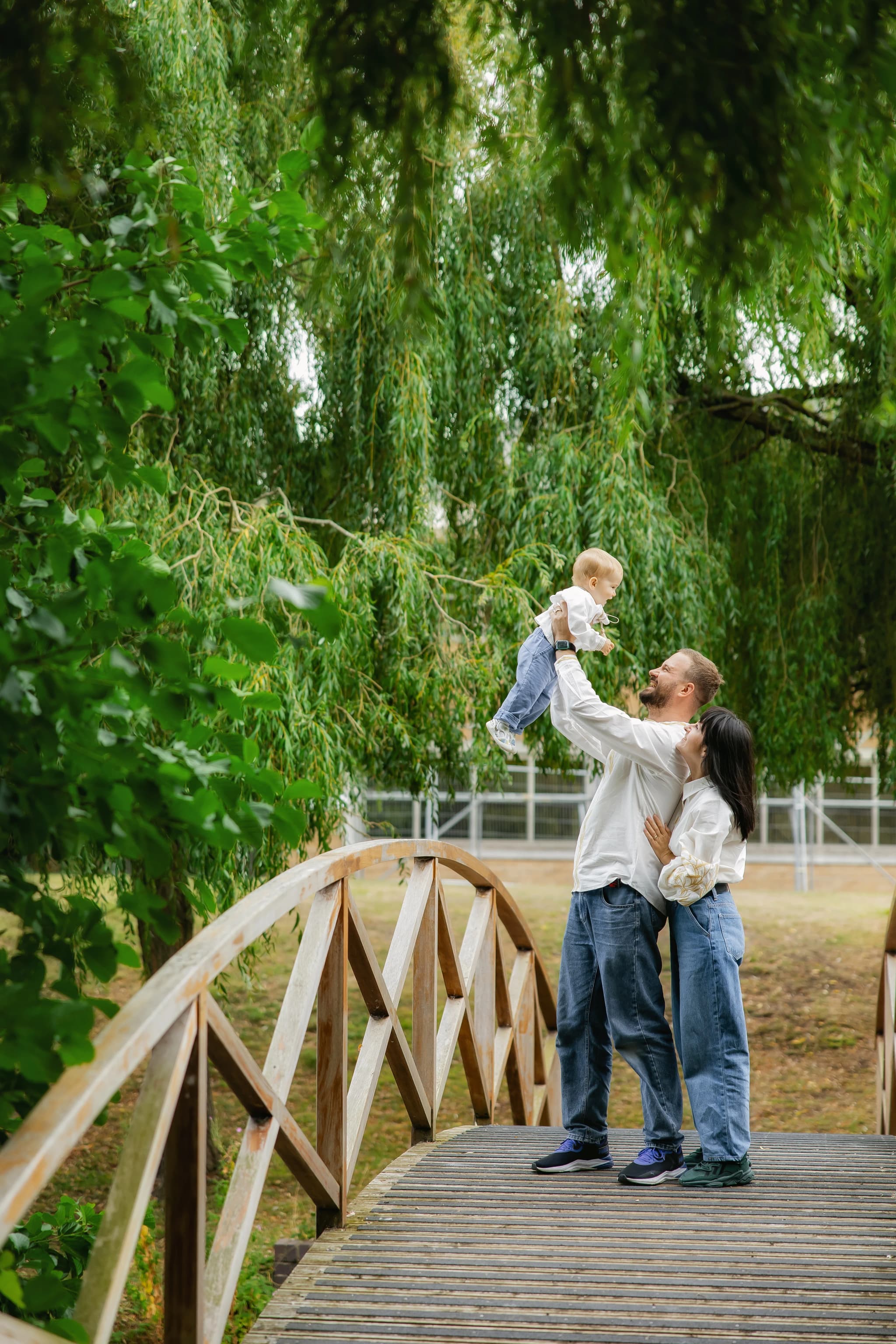
- ◆A shared colour thread, not matching outfits: Family sessions with a dog photograph most beautifully when family members wear clothing in a related tonal range — all in warm neutrals, all in earthy autumnal tones, all in cool greens and blues — rather than identical or rigidly matched outfits. Natural coherence reads more authentically than co-ordination.
- ◆Keep the dog as the visual constant: In a family-and-dog portrait, the dog is often the visual anchor and source of narrative joy. Clothing that allows the dog to be clearly seen and read — rather than clothing that might competitively dominate the photograph — serves the portrait best.
- ◆Children's clothing: Children's clothing in the same tonal range of the family group, in something genuinely comfortable for active, outdoor movement with a dog, works best. Children who are warm, comfortable, and at ease with the dog produce natural, joyful portraits; very formal or restrictive children's clothing can reduce natural movement and engagement.
Fabrics and Practical Clothing Choices
- ◆Dog hair visibility on fabric: Some fabrics collect and display dog hair significantly more than others. Light-coloured fine knits, velvet, and certain fleece fabrics are particularly prone to showing hair. If your dog sheds, a slightly darker or tightly-woven fabric is a practical choice. A lint roller immediately before the session is a basic essential.
- ◆Clothing that survives jumping and excitement: Dogs — particularly larger dogs — may jump, lean, or paw during the session. Clothing with delicate fastenings, a fragile fabric that snags, or silhouette features that are dramatically affected by any contact is a practical risk. Calm confidence in your clothing makes for a more relaxed session.
- ◆Outdoor surface and footwear: If the session is outdoors on grass, woodland paths, or similar terrain, footwear that works on those surfaces — not new or delicate shoes that will be ruined on wet grass or muddy paths — is important practical preparation. Beautiful footwear that actually works in the environment is always worth choosing over beautiful footwear that doesn't.
Outdoor Versus Studio Sessions
- ◆Outdoor natural environment: Outdoor woodland, parkland, meadow, or beach sessions reward clothing that is environmentally appropriate and visually coherent with the natural setting. Earthy, muted, warm tones look naturally at home in an outdoor environment. Seasonally appropriate layers — a well-fitted coat, quality boots — add to rather than detract from the portrait in cool-season outdoor sessions.
- ◆Studio portraits: Studio sessions allow for a slightly wider range of clothing choices. Backgrounds are controlled, so there is no competing natural environment to consider. The primary decisions in a studio context are about dog-coat contrast and making the portrait feel warm and authentic rather than clinical.
Practical Tips for Dog Portrait Sessions
- ◆Exercise your dog before the session: A well-exercised dog is a more relaxed, focused, and cooperative portrait subject. Arriving at a session with a dog that has already burned off its morning or afternoon energy produces significantly better results than arriving with a highly excited animal.
- ◆Bring high-value treats: The best portraits happen when the dog is genuinely engaged and looking at the camera or at you with natural attention and expression. High-value treats — something your dog truly responds to — held near the camera by the photographer produces that engagement reliably.
- ◆A lint roller is an essential item: Bring one. Use it immediately before the session, and expect to use it again between outfit changes or set-ups.
What to Avoid for Dog Portrait Sessions
- ◆Matching your dog's coat exactly: Wearing clothing in exactly the same tone as your dog's coat — a cream outfit with a cream dog, a dark coat with a black dog — creates a blending effect in which the dog is less clearly distinguished in the portrait. Contrast, however gentle, always produces cleaner, more readable photographs.
- ◆Overly formal or restrictive clothing: Dog portrait sessions involve interaction, movement, and genuine physical engagement. Very formal, fragile, or restrictive clothing makes this interaction stiff and unnatural — and the portraits reflect that. Confident, relaxed, genuinely comfortable clothing is always more effective.
- ◆Brand-new, delicate, or dry-clean-only items: A dog portrait session, particularly outdoors, is not the occasion for an irreplaceable garment. Dogs are exuberant, outdoor conditions are variable, and beautiful portraits require genuine physical engagement. Wear something lovely that you are also genuinely comfortable in.
Dog and owner portrait photography in Cambridgeshire
I photograph dogs and their owners across Cambridgeshire — outdoor sessions in woodland, parkland, and natural environments, as well as studio portraits. Sessions are relaxed, fun, and structured to capture the genuine bond between you and your dog. To find out more, please get in touch.

Yana Skakun
Photographer · England
Professional wedding, family and portrait photographer based in England. Passionate about capturing authentic emotions and timeless moments.
About Yana →dog and owner portrait what to wearpet photography outfit guide UKdog portrait session clothing tips Cambridgeshirewhat to wear dog photography coloursfamily dog portrait photo coordination
Portrait Tips — Portrait Photography in Cambridge & England
Portrait sessions with Yana Skakun are unhurried and personal — designed to produce images that feel genuinely like you, not a performance. Sessions are available in Cambridge, across East England, and at locations throughout the UK. This guide — What to Wear for Dog and Owner Portraits — is part of the photography journal: practical, experience-based advice drawn from real sessions across England. Whether you arrived searching for dog and owner portrait what to wear or pet photography outfit guide uk, the same care and attention shapes every session Yana photographs.
Portrait Photography sessions are available year-round, with bookings open across Cambridge, Ely, Huntingdon, Peterborough, and further afield — East England, London, the Midlands, and beyond. If you have specific questions about dog portrait session clothing tips cambridgeshire, mention it in your enquiry. Get in touch through the contact form above to check availability and discuss your session. Enquiries are welcomed from anywhere in the UK.
Continue Reading
Related Articles

Portrait Tips
Glasses and Glare in Photography: How to Get Great Results
6 min read · Read Article
Portrait Tips
Fake Tan Before a Photoshoot: Timing, Application, and What Can Go Wrong
6 min read · Read Article
Portrait Tips
Hair and Makeup for a Photoshoot: What Photographs Well
7 min read · Read Article
Get in Touch
Ready to Book Your Session?
Get in touch to discuss your vision — I'll reply within 24 hours.