Yana Skakun
What to Wear for an Orchard Family Session
By Yana Skakun·10 August 2027·8 min read
Orchard family portrait sessions offer one of Britain's most distinctive and seasonally rich outdoor photography settings — the gnarled, ancient character of apple, pear, and cherry trees changing dramatically through the seasons from spring blossom to summer leaf to autumn harvest to the stark sculptural beauty of bare winter branches. What your family wears for an orchard session should respond to the specific season in which you are shooting — the pale pink and white of spring blossom demands different clothing choices from the burnished golds and russets of a harvest-time autumn orchard. This guide helps you dress beautifully for your orchard session, whatever the season.
This guide covers seasonal colour palettes specific to orchard settings, coordination strategies for fruit tree environments, fabric choices suited to orchard terrain, and practical advice for family sessions in these exceptionally characterful outdoor locations.
📋 In this guide:
The Orchard Visual Register
Orchards have a visual character unlike any other outdoor setting — the ancient, sculptural quality of old fruit trees, their gnarled trunks and spreading branches creating natural archways and canopies, the ground beneath them rich with the history of decades of harvests and seasons. British traditional orchards — apple, pear, damson, plum, and cherry — are among the most beautiful and characterful outdoor portrait settings available, and they change completely through the year in a way that rewards very different clothing approaches by season.
- ◆Seasonal character changes completely through the year: No outdoor setting changes more dramatically through the seasons than an orchard — from the luminous pink and white of cherry and apple blossom in April and May, through the deep summer green of a canopy in full leaf, to the extraordinary palette of a harvest orchard in September and October, and finally to the stark sculptural beauty of bare winter branches against a winter sky. Each season demands genuinely different clothing considerations.
- ◆The warm organic tones of orchard bark and ground: The warm brown and grey of ancient orchard bark, the warm earth of the orchard floor, the occasional lichen on old trunks — these organic, earthy tones provide a consistent warm neutral ground throughout the year into which warm, natural palette clothing choices integrate beautifully.
- ◆Natural scale and intimacy — the orchard as an enclosed world: Old orchards have an intimate, enclosed quality — the spreading canopies of mature fruit trees creating a natural enclosed world that is separate from the wider landscape. This intimate, enclosed character rewards clothing choices with a natural, organic, and personally warm quality rather than starkly formal or sharply contemporary choices.
Seasonal Palette Guide
- ◆Spring blossom — soft blush, warm cream, pale sage (April–May): Spring blossom orchards are among the most beautiful portrait settings in Britain — the pale pink of apple blossom, the white of pear and cherry blossom against the first soft green of emerging leaves. Soft blush, warm cream, ivory, pale sage, and very soft dusty pink tones work beautifully with spring blossom — harmonising with the blossom palette without competing with it. Avoid strong saturated colours that fight the delicate blossom backdrop.
- ◆Summer leaf — warm neutrals, soft sage, dusty olive (June–August): A summer orchard in full canopy leaf has a deep, lush green quality punctuated by the warm tones of developing fruit. Warm creams, warm linen tones, soft sage, dusty olive, and gentle terracotta tones work well in summer orchard sessions — warm enough to photograph beautifully in dappled orchard canopy light without competing with the deep summer green.
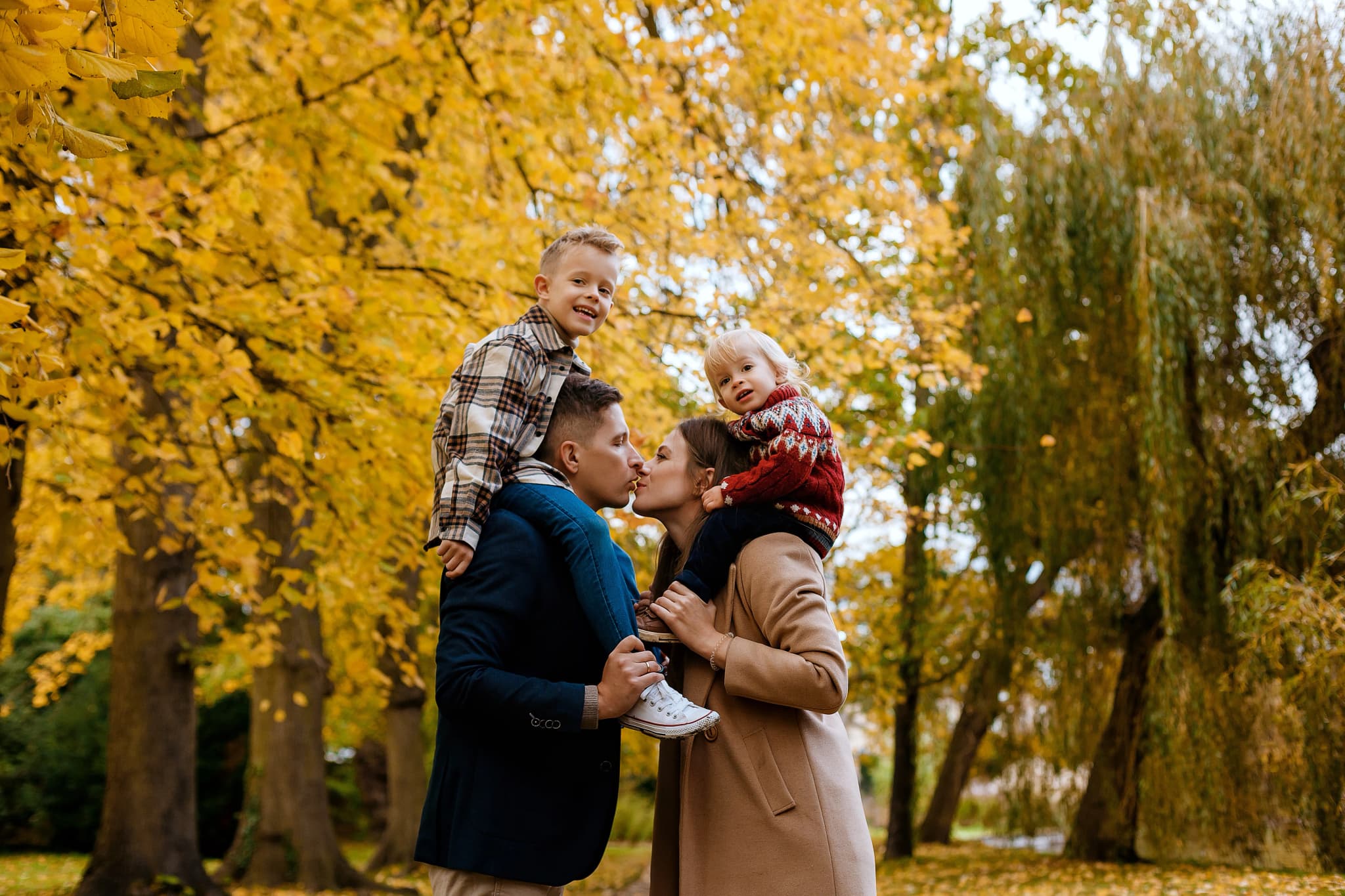
- ◆Autumn harvest — warm rust, terracotta, amber, rich burgundy (September–October): The harvest orchard is one of the most extraordinary portrait settings in British outdoor photography — the trees heavy with ripening fruit, the ground covered in fallen apples and golden-brown leaves, the warm amber quality of autumn light filtering through thinning canopy. Warm rust, terracotta, amber, soft mustard, and rich burgundy tones photograph with exceptional beauty against this harvest backdrop and the golden-hour quality of autumn orchard light.
- ◆Winter bare branches — warm charcoal, deep navy, rich plum (November–February): The stark sculptural beauty of a bare orchard in winter — gnarled branches against a winter sky, lichen-covered ancient trunks, the quiet geometry of dormant fruit trees — creates a dramatically different but equally beautiful portrait setting. Deep, warm colours — rich deep navy, warm charcoal, deep plum, warm burgundy — photograph with beautiful depth against the grey-silver winter orchard palette.
Family Coordination for Orchard Sessions
- ◆Build from the season's specific orchard palette: The most beautiful orchard family portraits are built on a palette drawn from the specific season's orchard character — the blossom pinks and creams of spring, the warm russets and ambers of harvest autumn, the warm neutrals and deep colours of winter. Coordination within this seasonally-derived palette creates portraits with a quality of genuine visual rootedness in the setting and season.
- ◆Warm natural tones work across all orchard seasons: While specific seasonal palette choices vary significantly, warm natural tones — warm cream, natural linen, dusty sage, soft warm neutrals — work harmoniously across all orchard seasons as coordination anchors. They sit beautifully against warm orchard bark throughout the year, providing a reliable coordination foundation whatever the season.
- ◆Layers are particularly valuable in orchard sessions: Orchard sessions frequently offer naturally varying light and temperature — the open sky between trees alternating with the shade of canopy, the cooler air of an autumn harvest morning giving way to afternoon warmth. Layers — a warm knit unbuttoned over a linen shirt, a soft cardigan over a summer dress — add visual depth and practical flexibility throughout.
Fabric and Style Choices
- ◆Natural fabrics suit orchard environments beautifully: Linen, soft cotton, fine wool, and natural fabric blends photograph beautifully in orchard settings — their natural texture and warmth complements the organic character of ancient fruit trees and orchard ground in a way that synthetic materials rarely achieve.
- ◆Relaxed and natural rather than sharply formal: Orchards invite a relaxed, natural, and organically warm quality of clothing choice — comfortable enough for children to run between the trees, climb accessible low branches, and explore freely, while carrying enough visual warmth and consideration to create beautifully coordinated family portraits.
- ◆Footwear for orchard terrain: Traditional orchard floors can be uneven — exposed roots, fallen fruit, rough ground, potentially muddy in wet conditions. Clean wellies in a coordinating colour for autumn and winter sessions, or clean boots and flat shoes for spring and summer, serve family members well for the practical terrain of an orchard session.
Practical Tips
- ◆Discuss the specific orchard and season with your photographer: Orchards vary significantly — a large traditional apple orchard, a small cottage garden fruit garden, a restored community orchard, a commercial cider orchard. The specific orchard's character, scale, and seasonal condition will meaningfully affect which clothing choices work most beautifully. Discussing the specific location beforehand allows the most informed palette decisions.
- ◆Autumn harvest sessions are the most booked — plan ahead: Autumn harvest orchard sessions — September to mid-October, when the trees are heavy with fruit and the light is at its most golden — are the most sought-after orchard portrait sessions and book early. Plan your clothing choices in the context of the specific orchard's anticipated harvest-season palette.
- ◆Spring blossom is also fleeting — timing matters: Apple and pear blossom in Britain typically peaks for one to two weeks in April to early May, depending on the variety and the season. Spring blossom orchard sessions book quickly and the timing window is narrow — photograph your family in blossom while it lasts.
What to Avoid
- ◆Colours that fight the seasonal orchard palette: Bright, saturated colours that have no relationship to the specific season's orchard palette — vivid blues against spring blossom, neon tones against harvest amber — create visual incongruity rather than harmony with the setting. Orchard portrait photography is most beautiful when clothing choices respond consciously to the specific season's palette rather than ignoring it.
- ◆Very formal clothing in a naturally informal outdoor setting: Orchards invite a relaxed, natural, and organically warm quality of family interaction — running between trees, picking up fallen apples, sitting in dappled light. Very formal attire restricts the natural interaction orchard photography does best and creates a visual tension between the formal clothing and the organically informal character of the orchard environment.
- ◆Bright white clothing in autumn and winter orchard conditions: Bright white photography in autumn and winter orchard conditions can create challenging exposure issues against the warm, deep tones of harvest orchards and winter bare branches. Warm cream and ivory are far more harmonious with orchard conditions than brilliant white throughout the year.
Orchard family portraits in Cambridgeshire
Cambridgeshire and the surrounding counties have beautiful traditional orchard settings for family portraits across every season. To discuss an orchard family portrait session, get in touch.

Yana Skakun
Photographer · England
Professional wedding, family and portrait photographer based in England. Passionate about capturing authentic emotions and timeless moments.
About Yana →what to wear orchard family portraitsorchard family session outfits Cambridgeshirewhat to wear apple orchard family photos UKautumn harvest orchard family portrait clothingspring blossom orchard family session outfits
Family Tips — Family Photography in Cambridge & England
Yana Skakun offers natural, relaxed family photography sessions across Cambridge, Cambridgeshire, and the wider East of England. Sessions take place outdoors — in parks, woodland, and countryside — or at your family home, wherever everyone feels most at ease. This guide — What to Wear for an Orchard Family Session — is part of the photography journal: practical, experience-based advice drawn from real sessions across England. Whether you arrived searching for what to wear orchard family portraits or orchard family session outfits cambridgeshire, the same care and attention shapes every session Yana photographs.
Family Photography sessions are available year-round, with bookings open across Cambridge, Ely, Huntingdon, Peterborough, and further afield — East England, London, the Midlands, and beyond. If you have specific questions about what to wear apple orchard family photos uk, mention it in your enquiry. Get in touch through the contact form above to check availability and discuss your session. Enquiries are welcomed from anywhere in the UK.
Continue Reading
Related Articles

Family Tips
Blended Family Photography: A Sensitive Guide to Step-Families, Co-Parenting & Group Portraits
11 min read · Read Article
Family Tips
Baby Milestone Photography: Capturing Every Stage of the First Year
10 min read · Read Article
Family Tips
Maternity Photography in England: When to Book, What to Wear & Where to Shoot
11 min read · Read Article
Get in Touch
Ready to Book Your Session?
Get in touch to discuss your vision — I'll reply within 24 hours.