Yana Skakun

Winter Newborn Photography: Cosy, Warm Studio Sessions
By Yana Skakun·18 July 2025·5 min read
A winter baby arrives into a world of long evenings, candlelight, and the particular quietness that cold weather brings to a home. Everything slows down in a way it does not in the middle of summer — there is less pressure to be out and about, less sense that you should be filling every day with visitors and outings, and more of an excuse to simply stay in, keep warm, and let the newborn days be exactly what they are meant to be. Studio newborn sessions for winter babies reflect that mood. Wrapped in warm-toned fabrics, lit by the soft, low quality of winter daylight coming through the studio windows, the resulting images have a cosiness and intimacy that is quite different from the airiness of a June session, and just as beautiful in its own way. This is a guide to what winter newborn photography actually involves in the UK, why the season suits the genre so well, and how to plan a session around a due date that could, as every parent of a newborn knows, shift by a week or two in either direction.
Why Winter Light Suits Newborn Photography So Well
Photographers spend a disproportionate amount of time thinking about the angle and quality of daylight, and winter gives us something genuinely useful to work with. Because the sun sits so much lower in the sky between November and February, the light entering a studio through a north- or east-facing window arrives at a shallow, raking angle rather than pouring straight down. That angle wraps around a small subject with real gentleness — it fills in shadows without flattening them completely, and it gives skin a soft, almost luminous quality that is very difficult to recreate with artificial lighting alone. In midsummer, by contrast, high overhead sun can be surprisingly hard to work with in a studio setting, often requiring diffusion and careful positioning to avoid harsh contrast.
The practical upshot is that winter mornings, even grey ones, are rarely a problem for newborn work. A session starting around half past nine, once the morning has properly broken but before midday flattens things out, tends to make the best use of the light available. On a genuinely bright winter day, that same window produces some of the most beautiful images of the year — a soft golden quality with real depth to it, without any of the harshness that direct summer sun can bring. I keep the studio warm regardless of the weather outside, generally around twenty-four to twenty-six degrees, because a warm room is what keeps a newborn settled, sleepy, and comfortable enough to be photographed in the poses that make this style of work possible.
The Winter Colour Palette
Newborn photography leans heavily on its colour palette, and winter happens to align with the tones that flatter this kind of image most naturally. Cream, warm ivory, oatmeal, soft dove grey, dusty rose, and rich burgundy all sit comfortably alongside the muted, low-contrast light of the season, and they photograph in a way that feels timeless rather than tied to a particular year or trend. I keep a wardrobe of wraps, bonnets, and layering fabrics in exactly these tones, along with a small collection of neutral wooden and woven props — baskets, blankets, simple backdrops — that work together without competing with each other or with the baby, who should always be the clear focus of every frame.
This is also where I gently steer parents away from anything too seasonal or too trend-driven. A jumper with a large snowflake print or a backdrop covered in tinsel might feel fitting in December, but by the following December it already looks dated, and by the time your child is a teenager looking back through their baby photographs, you want images that still feel current and considered rather than tied to a specific fortnight on the calendar. Subtle seasonal nods work far better than literal ones — a cream knit rather than a novelty jumper, a soft grey wrap rather than a printed Christmas scene.
Timing the Session: Why the First Two Weeks Matter
The single most useful piece of practical advice I give expectant parents is about timing, and it applies just as much in winter as any other season, if not more. Newborn photography, in the classic curled-up, deeply-asleep style, works best in the first fourteen days of a baby's life, and ideally within the first five to ten days. This is the window when babies are still sleeping in the deep, easily-settled way typical of the newborn stage, and when they still curl naturally into the compact poses that make this style of photography possible. After around two to three weeks, babies begin to stretch out, their sleep becomes lighter and more easily disturbed, and the poses that define classic newborn photography become considerably harder to achieve comfortably and safely.
Because babies do not arrive on a predictable schedule, I book winter sessions provisionally around an estimated due date and then confirm the actual date once the baby has arrived, usually with a few days' notice. Winter brings an added scheduling wrinkle that summer does not: the run-up to Christmas and New Year is genuinely busy for a lot of families, and daylight hours are at their shortest of the whole year, which narrows the window of good natural light in any given day. I keep this in mind when confirming dates in December especially, prioritising the best light of the day even if that means an earlier start than a session might need in June.
Keeping a Winter Newborn Warm, Safe, and Settled
Safety is the non-negotiable foundation of every newborn session I photograph, and winter adds a few specific considerations to the usual approach. The temperature of the studio matters enormously — a newborn who gets cold during undressing for a wrap change will wake, unsettle, and often stay unsettled for the rest of the session, so the room is kept warm well before the family arrives and stays that way throughout. I also factor in the practicalities of a British winter outside the studio door: buggies and car seats coming in from freezing temperatures need time to warm through, and babies arriving bundled in multiple layers need a calm, unhurried transition rather than being rushed straight in front of a camera.
Every pose that looks like a baby is balanced precariously on a prop is, in practice, either a composite of multiple safety-supported frames or supported directly by a parent or by me just out of shot, then blended or cropped afterwards. Nothing in a finished image reflects an actual risk taken during the session. I am trained in safe newborn posing and handling, I follow a baby's cues throughout rather than working to a fixed shot list, and if a baby is unsettled, hungry, or simply not in the mood on a given day, we slow down, feed, settle, and continue when they are ready. Winter sessions in particular tend to run at an unhurried pace for exactly this reason — there is no rush to chase outdoor light before it fades, so the whole appointment can flex around what the baby needs.
Booking around a winter due date
I hold provisional winter newborn dates from around thirty-two weeks of pregnancy and confirm the exact appointment once your baby has arrived, so there is no pressure to guess a date months in advance.
Enquire about winter availabilitySessions Around Christmas and New Year
Babies born in November and December often end up with a session that falls somewhere close to Christmas itself, and for a lot of families that timing becomes something to embrace rather than work around. A Christmas newborn session, with a few subtle seasonal touches — a cream knit rather than anything printed, perhaps a small collection of images near a softly lit tree at home, or simple sibling and parent portraits in coordinated warm tones — can create the kind of photograph a family looks forward to seeing again every December from then on. I keep the seasonal element restrained and secondary to the baby, so the images age well rather than reading as a single Christmas rather than the start of a whole childhood.
For families who would rather keep the session entirely separate from the holiday period, that is just as easy to arrange. Not every winter baby needs a Christmas theme, and plenty of the sessions I photograph in December and January are simply cosy, neutral, timeless newborn portraits with no seasonal reference at all. The decision is entirely down to what feels right for your family, and I am always happy to talk through both options before the day.
What to Wear if Parents and Siblings Are Joining In
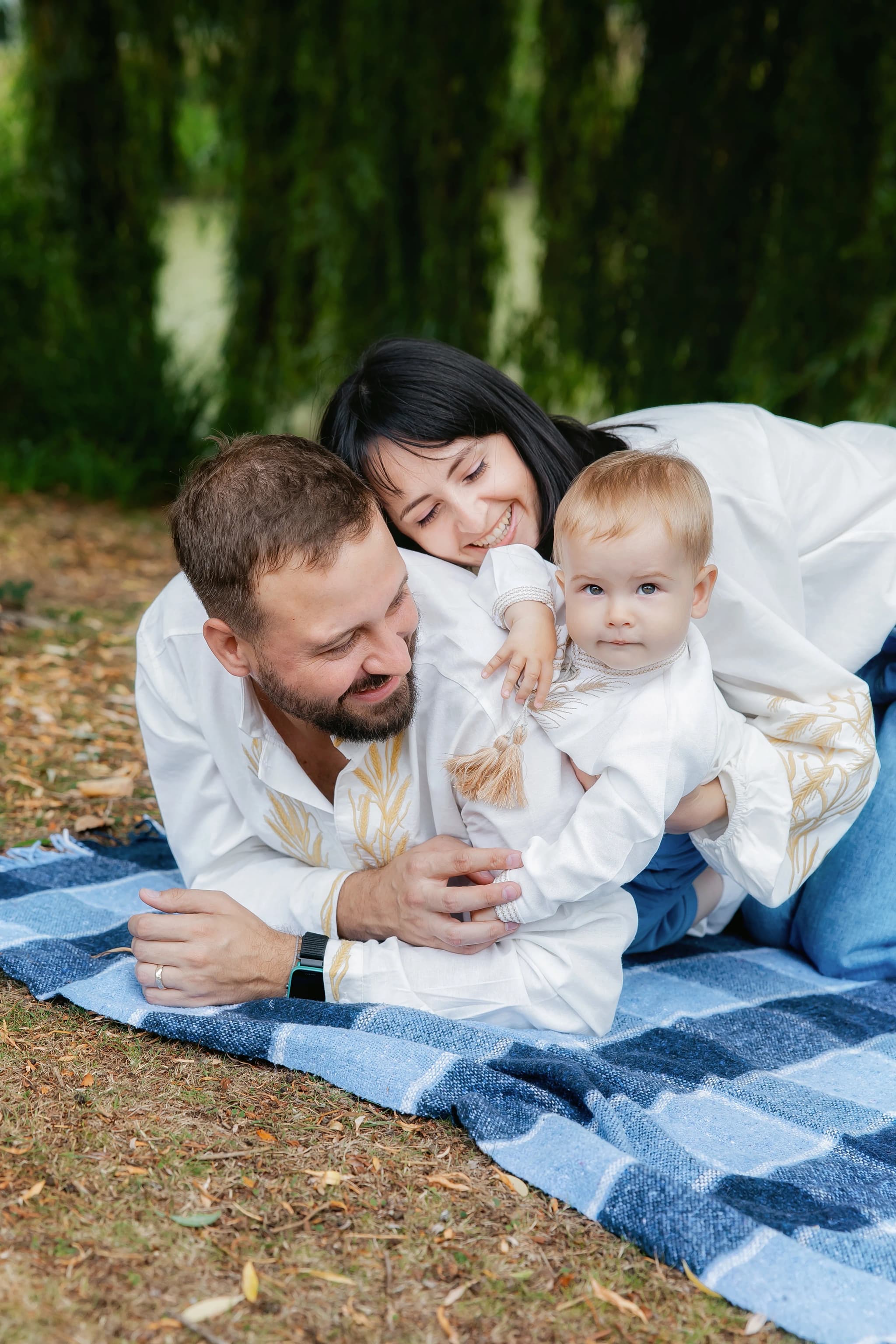
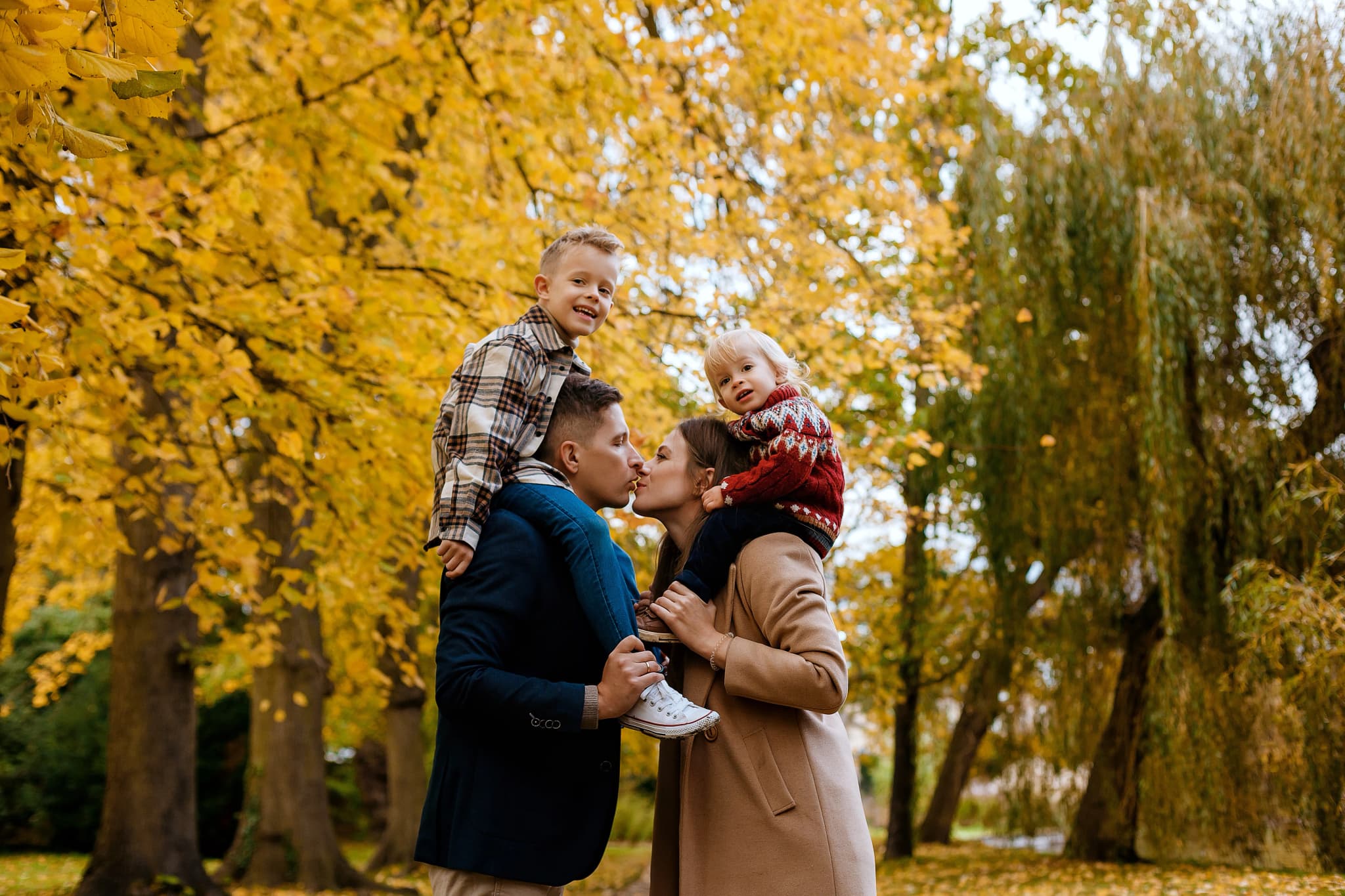
When parents or older siblings join part of the session, which most families choose to do for at least a handful of frames, clothing works best kept simple, coordinated, and within the same warm winter palette as the baby's wraps. Cream, oatmeal, camel, soft blush, warm grey, and deep burgundy all sit comfortably together without anyone visually competing with anyone else, and they photograph well against the cream and ivory tones typical of classic newborn styling. I generally suggest avoiding stark white, busy patterns, and anything with large logos or text, for the same reason those choices are best avoided in most portrait photography — they draw the eye away from faces, which is where it should stay.
Layers are genuinely useful in winter for a practical reason beyond styling: parents and older children are often standing or sitting still for stretches of the session while I work with the baby, and a room kept warm enough for a newborn can feel quite warm indeed for fully dressed adults. A layer that can come off between sequences keeps everyone comfortable without needing to compromise on how the finished images look.
After the Session: Gallery, Prints, and What to Expect
Once the session is complete, editing takes a little longer over winter simply because it is, unsurprisingly, the busiest time of year for newborn bookings — but the finished, retouched gallery is delivered online within the usual turnaround window, with a full set of curated images ready to view, download, and order prints from. Framed prints and small albums are particularly popular from winter sessions, and given how well the season's palette tends to photograph, they generally suit a wide range of home interiors without needing to be matched carefully to a colour scheme.
Winter babies get a season of photography all their own — softer, warmer, and quieter than any other time of year, with light that flatters a newborn in a way high summer sun simply cannot match. If your due date falls anywhere between late autumn and early spring and you would like to talk through timing, styling, or what a session actually involves, get in touch and I will hold a provisional date for you well ahead of the birth, ready to confirm as soon as your baby arrives.
See My Work
Newborn & Family Photography

Yana Skakun
Photographer · England
Professional wedding, family and portrait photographer based in England. Passionate about capturing authentic emotions and timeless moments.
About Yana →winter newborn photographywinter baby photoshoot UKChristmas newborn sessionCambridge newborn photographer wintercosy newborn photography
Newborn Tips — Newborn & Baby Photography in Cambridge & England
Newborn and baby sessions with Yana Skakun take place in the comfort of your own home — unhurried, led entirely by your baby's timings, and focused on the quiet intimacy of those first weeks. Sessions are available across Cambridge and the wider East of England. This guide — Winter Newborn Photography: Cosy, Warm Studio Sessions — is part of the photography journal: practical, experience-based advice drawn from real sessions across England. Whether you arrived searching for winter newborn photography or winter baby photoshoot uk, the same care and attention shapes every session Yana photographs.
Newborn & Baby Photography sessions are available year-round, with bookings open across Cambridge, Ely, Huntingdon, Peterborough, and further afield — East England, London, the Midlands, and beyond. If you have specific questions about christmas newborn session, mention it in your enquiry. Get in touch through the contact form above to check availability and discuss your session. Enquiries are welcomed from anywhere in the UK.
Frequently Asked Questions
When is the best time to do newborn photos?+
The ideal window is 5–14 days after birth. At this stage, babies sleep deeply and curl naturally into gentle poses. After 3 weeks, they become more alert and less likely to sleep through a session. However, lifestyle newborn sessions (awake, at home) work beautifully at any age up to 3 months.
How do you keep a newborn safe during a photoshoot?+
A professional newborn photographer is trained in safe posing techniques. All composite poses (baby appearing to support their own weight) are achieved through careful post-processing — the baby is always fully supported. Sessions are kept warm (babies need to be comfortable), and only experienced photographers should attempt posed newborn work.
How long does a newborn photo session take?+
Newborn sessions typically take 2–4 hours. The pace is entirely led by the baby — time is built in for feeding, settling, and nappy changes. There's no rushing. Lifestyle sessions, which are more relaxed and home-based, usually take 1.5–2 hours.
What should parents wear for a newborn photoshoot?+
Soft, neutral tones work beautifully — cream, blush, grey, and muted earth tones keep the focus on the baby. Avoid bold patterns and logos. Comfort is important: parents should feel relaxed and natural in their outfits. Your photographer may send a styling guide in advance.
Can siblings be included in newborn photos?+
Yes — sibling images are among the most treasured photos families have. Plan for a sibling session at the beginning, when children are freshest and most cooperative. Keep their involvement short and positive, and have another adult present to manage them while the photographer focuses on the newborn.
Get in Touch
Ready to Book Your Session?
Get in touch to discuss your vision — I'll reply within 24 hours.