Yana Skakun
Winter wedding photography: Tips for beautiful images in any light
By Yana Skakun·10 November 2026·7 min read
Winter weddings are among my favourite days to photograph, and I say that as someone who spends the rest of the year telling couples how wonderful golden hour in June can be. There is a particular quality to a UK winter wedding — the short days, the low sun, the candle-lit rooms, the frost on the churchyard grass — that produces images with a mood and a drama that summer simply cannot replicate. Couples who choose a December or January date sometimes worry they are settling for second best because the weather cannot be relied on and the light disappears by mid-afternoon. In my experience it is closer to the opposite: winter gives a photographer tools that summer does not, and the resulting galleries often have more atmosphere, more contrast, and more genuine warmth than a bright July afternoon ever produces. This guide covers how I actually plan and shoot winter weddings across Cambridgeshire and the wider UK, and the practical decisions that make the difference between a good winter wedding gallery and a great one.
Why Winter Light Behaves So Differently
In the depths of a UK winter, the sun barely climbs above the horizon. On a December day around Cambridge you might have somewhere in the region of seven to eight hours between sunrise and sunset, and the sun's maximum height in the sky stays low throughout that entire window — nothing like the near-overhead sun of a June afternoon. That low angle is the whole story. Light that arrives horizontally rather than from above wraps around faces instead of casting harsh shadows under the eyes and nose, which is exactly the kind of light portrait photographers spend the rest of the year waiting for at dawn and dusk. In winter, that quality of light is available for a much larger portion of the day, not just a fleeting twenty minutes.
The other effect of a low sun is colour. Because winter light travels through more atmosphere to reach the ground, it picks up warmer tones — ambers, golds, soft pinks in the sky at either end of the day — even on a day that feels cold and crisp underfoot. Combine that warm, raking light with bare trees, frosted ground, and the kind of clear winter sky that follows a cold snap, and you get images with a genuine sense of place and season that is instantly recognisable, rather than the slightly generic "sunny wedding" look that can apply to almost any warm-weather date.
The trade-off, of course, is quantity of daylight rather than quality. This is the single biggest planning consideration for a winter wedding, and it shapes almost every other piece of advice in this article.
Building the Timeline Around a Short Day
The most common mistake I see in winter wedding planning is a timeline built as if it were June, then squeezed to fit December. If the sun sets around 3:45pm to 4pm in Cambridgeshire in late December, a ceremony at 2pm leaves almost no usable daylight for couple portraits, group photographs, and any outdoor confetti moment before the light is gone. I always work backwards from sunset when planning a winter wedding day: find out the exact sunset time for the date and venue, then build the ceremony, drinks reception, and formal photographs around that fixed point rather than around a traditional afternoon schedule that assumes long summer evenings.
A ceremony at midday or just after gives the most flexibility. It allows time for family and group photographs straight afterwards while everyone is still gathered and dressed, followed by a dedicated portrait window for the couple in the last hour or so of good light — typically the window beginning around an hour and a half before sunset, when the light turns properly golden. A twenty-minute slot in that window, even squeezed between speeches or drinks, can produce some of the most striking images from the entire day. I would always rather a couple sacrifice ten minutes of the drinks reception for genuinely beautiful portrait light than skip it and rely entirely on flash-lit interior shots for the rest of the evening.
For couples who want more flexibility, an earlier ceremony — late morning, even — gives room for a full afternoon that includes portraits at two different points in the light: a softer, cooler set around early afternoon, and the warmer golden set as the sun drops. I discuss timeline options like this with every winter couple during planning, well before the day itself, so there are no surprises about how early it will get dark or how the photography schedule needs to flex around it.
Planning a winter wedding day
If you are considering a winter date, I am happy to talk through timeline options with your venue's sunset time in mind, well before you finalise the running order. Getting this right early makes a genuine difference to your gallery.
Get in touch about your dateCandlelight, Fires, and Interior Atmosphere
Winter weddings lean into interior spaces in a way summer weddings rarely do, and that is a genuine gift for documentary photography. Fireplaces, candle-lit long tables, strings of warm fairy lights, lanterns along a staircase — these are the visual language of a winter wedding, and modern cameras handle the low, warm light of a candle-lit room far better than photographers could manage even a decade ago. The result is images with real depth of atmosphere: faces lit from one side by candlelight, the rest of the room falling into soft shadow, guests leaning in close over a table because the room itself invites intimacy rather than the open, bright informality of a marquee in July.
Some of the most requested images from any winter wedding gallery are exactly these documentary moments — a speech caught in the warm light of a hearth, a couple's first dance lit only by fairy lights and candles, guests gathered close around a table because the cold outside makes the indoors feel like the whole point of the evening. I photograph these moments the same documentary way I approach the rest of the day: watching for genuine interaction and expression rather than staging anything, letting the warmth of the room do the work that a bright summer garden does in other seasons.
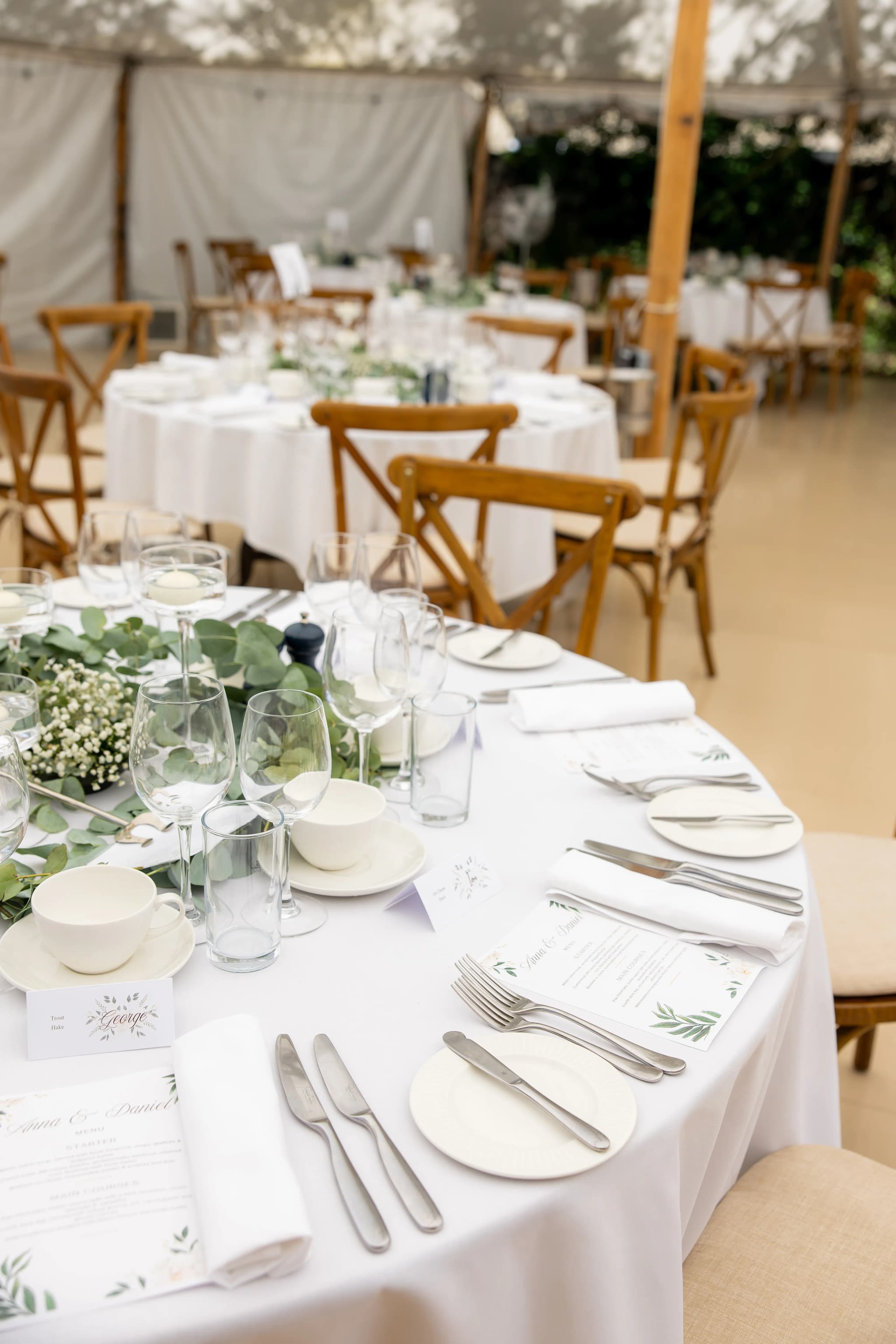
Practically, this means venues with real fireplaces, exposed beams, or good candle policies are worth prioritising if atmosphere matters to you. A barn or manor house with low beams and an open fire will photograph completely differently from a modern function room with fluorescent overhead lighting, even though both might be described as "cosy" in a venue brochure. If you are still choosing a winter venue, it is worth asking directly about their candle and lighting policy, since some venues restrict open flame for insurance reasons and rely instead on battery candles, which photograph almost as well but are worth knowing about in advance.
Working with Dramatic Winter Skies
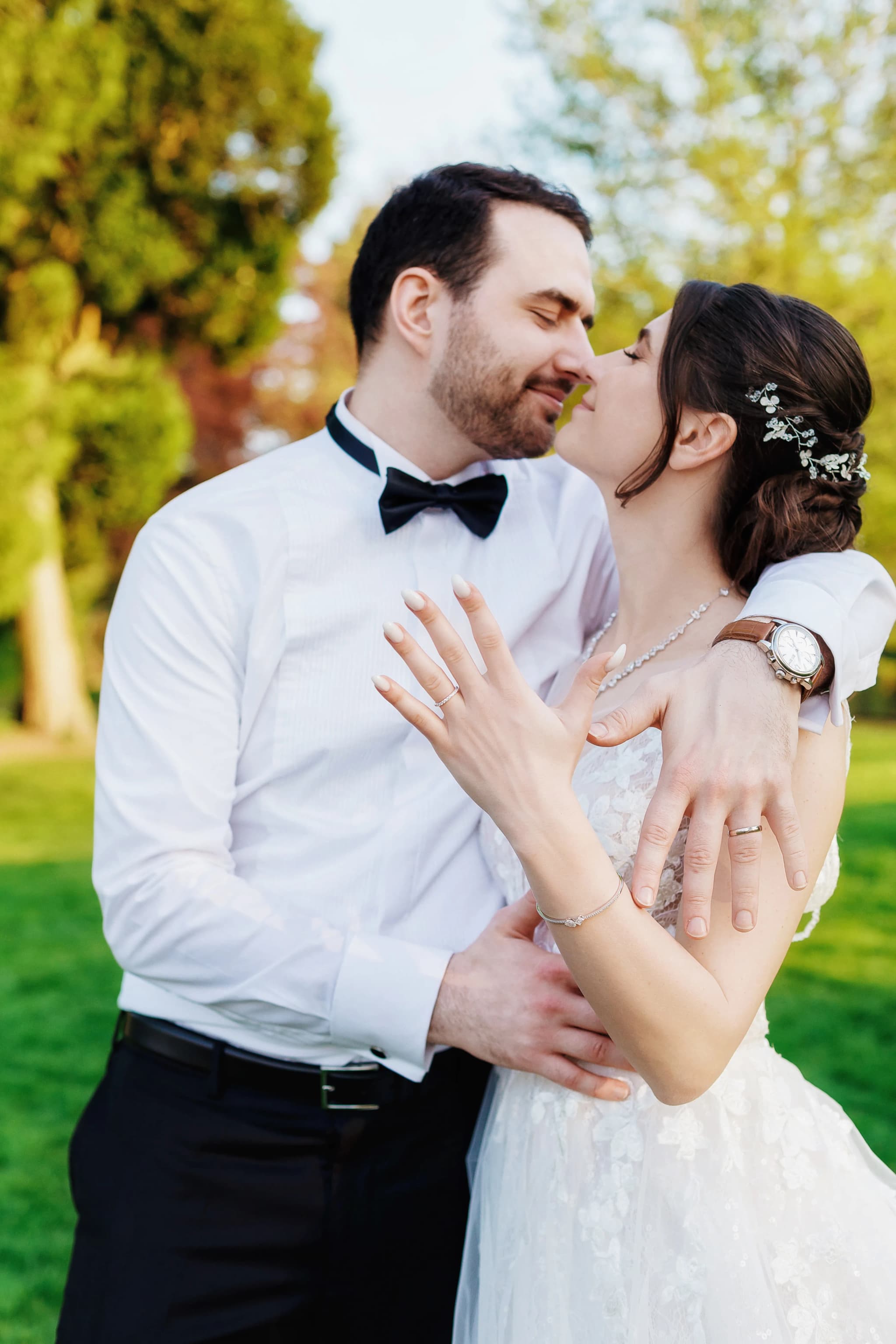
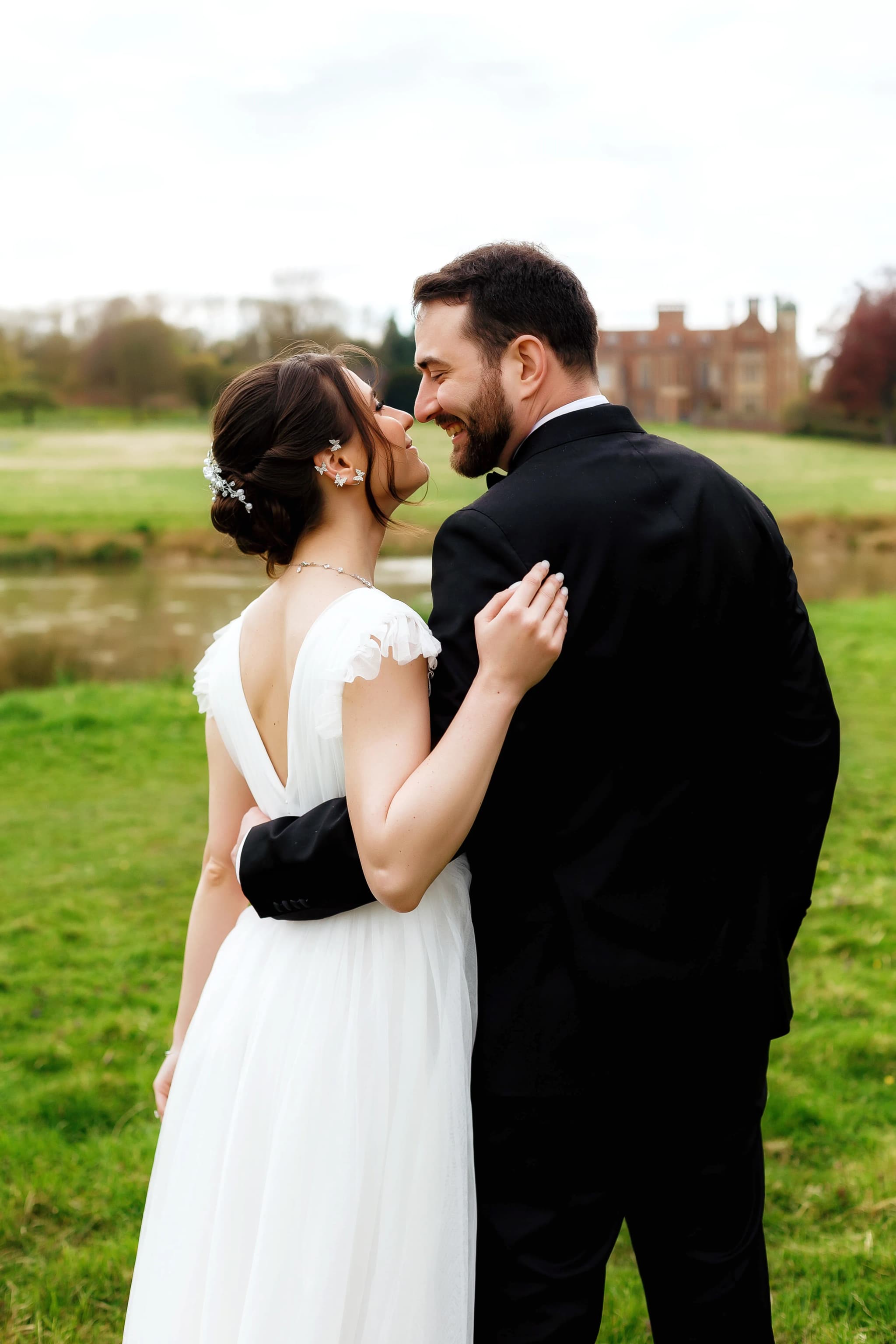
A clear winter sky at the end of the day does something a summer sky rarely does: it moves through genuine colour, from pale gold near the horizon through soft pink and violet higher up, sometimes against a backdrop of steel-grey cloud if the weather is changeable. I actively look for opportunities to use that sky in portraits, positioning couples against open ground or the silhouette of bare trees so the sky itself becomes part of the composition rather than a flat blue backdrop, which is often all a summer afternoon offers.
Overcast winter days have their own advantage, incidentally, and are not something to dread if your date turns out cloudy. A heavy grey sky acts as an enormous natural softbox, producing beautifully even, shadow-free light for portraits and group photographs without any of the squinting or harsh shadow lines that bright midday sun can create. Some of the most flattering group photographs I have taken have been on overcast winter afternoons precisely because the light is so soft and forgiving across a large group of people standing at different heights and angles.
Frost and mist add another layer worth planning for if the forecast allows. A cold, clear, still morning before a winter wedding can produce genuine mist over open ground and frost on grass and bare branches, both of which photograph beautifully and add a sense of place that no amount of styling can manufacture. If your ceremony or portrait time falls in the morning on a frosty day, it is worth building in a few minutes outdoors specifically to make use of it, even briefly.
What to Wear and Bring for Outdoor Winter Portraits
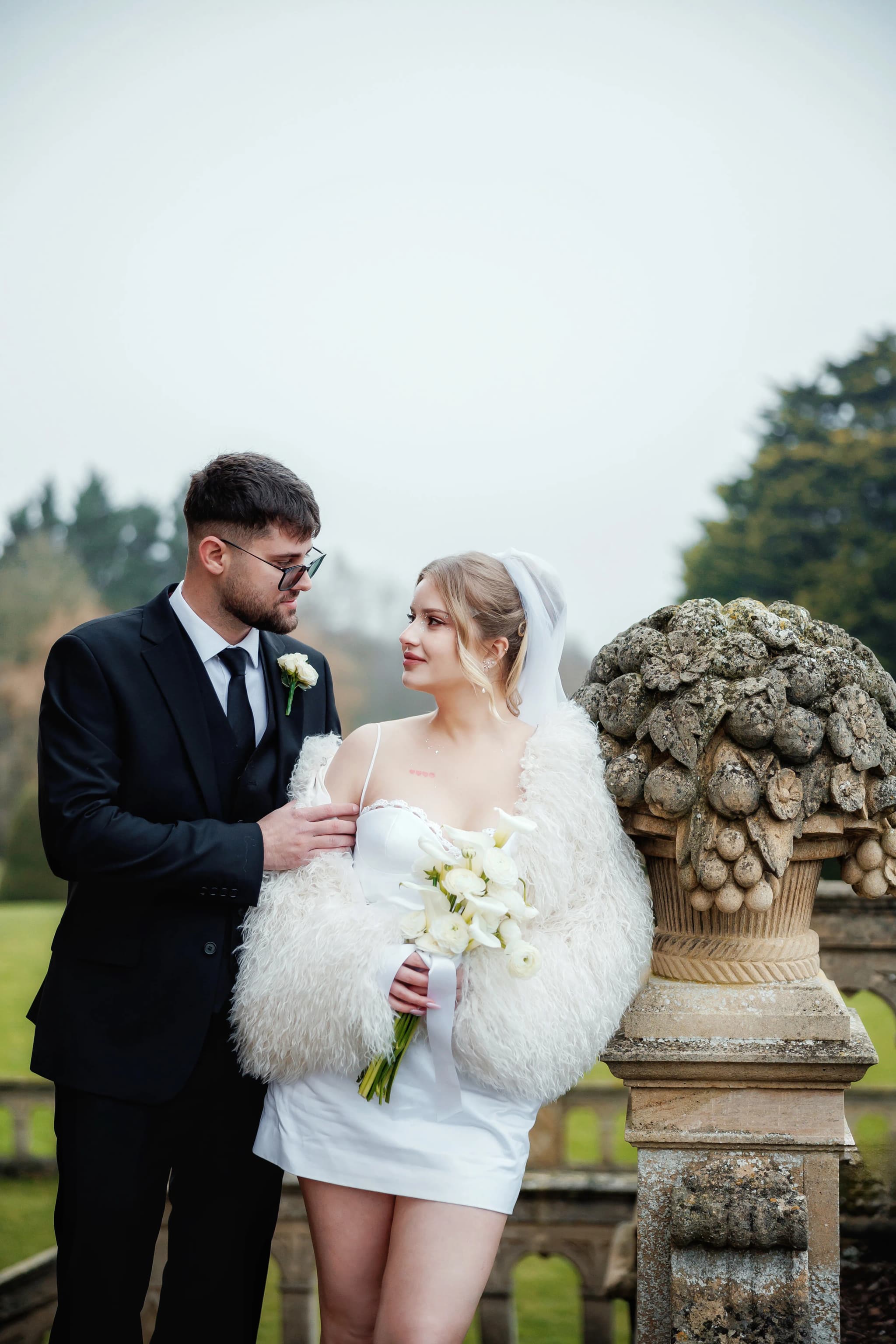
Comfort matters more in winter portraits than in any other season, because a couple who are visibly cold will show it in every frame — tense shoulders, forced smiles, hands pulled into sleeves. A beautiful coat worn over a wedding dress is not a compromise; it is genuinely elegant, and some of my favourite winter portraits include exactly that combination, the coat later removed for a handful of frames once the couple has warmed up slightly or found a more sheltered spot. Grooms benefit from a proper overcoat rather than relying on a suit jacket alone, and both partners are generally glad of gloves to hold between shots even if bare hands are wanted for a few specific frames.
For the wedding party and guests, practical footwear matters on frosty or muddy ground, particularly at rural venues with lawns or gravel paths. I always suggest having a pair of flat boots or wellies on hand for anyone walking any distance outdoors, with heels swapped back in just before the photographs if needed. A flask of something warm brought outside during the portrait window is a small thing that makes a genuine difference to how relaxed a couple looks in the resulting images — cold hands wrapped around a warm cup translate into a natural, unforced moment rather than a posed one.
I also recommend couples build in a few minutes to warm up indoors between the outdoor portrait session and re-joining their guests. Arriving back at a reception red-nosed and shivering is not the entrance most couples want, and a short pause by a fire or radiator before stepping back into the room makes the transition far more comfortable.
Practical Tips for a Smoother Winter Wedding Day
A few small planning decisions consistently make a real difference to how a winter wedding day runs and photographs. Build a genuine portrait window into the late-morning or afternoon timeline rather than treating it as something to squeeze in if there is time — the light is worth protecting on the schedule. Embrace the early darkness rather than fighting it: a reception that moves properly indoors by mid-afternoon and leans into candlelight and warm interior lighting will photograph with far more atmosphere than one that keeps the curtains open, hoping for daylight that has already gone.
Tell your wedding party in advance that outdoor portrait time will be brief and purposeful, so everyone is ready to move quickly rather than lingering in the cold. Encourage genuine movement and laughter rather than posed group lineups — motion and real interaction photograph far more naturally in low winter light than a static, held smile, which tends to look more obviously posed once the light gets moody. And if your date coincides with any seasonal decoration at your venue — wreaths, greenery, fairy lights already in place for the season — use it. These small details add texture and warmth to a gallery without any extra cost or planning on your part.
Finally, keep a realistic view of the weather. UK winter weather is genuinely changeable, and the best approach is flexibility rather than a rigid plan that depends on one specific outcome. I always have an indoor alternative scouted at every winter venue I photograph, so that rain or a sudden downpour becomes a change of location rather than a lost opportunity. Some of the loveliest portraits I have taken at winter weddings have happened at a window with rain visible outside, using the contrast between the dry, warm interior and the weather beyond the glass as part of the image itself.
Winter weddings ask for a bit more planning than a summer date, but the reward is a gallery with a genuinely different character — warmer interiors, more dramatic skies, softer portrait light for a longer stretch of the day, and an atmosphere that a bright June garden simply cannot offer. If you are planning a winter wedding anywhere in Cambridgeshire or further afield in the UK and want to talk through how the timeline and light will work for your specific venue and date, get in touch and we can start planning the details together.

Yana Skakun
Photographer · England
Professional wedding, family and portrait photographer based in England. Passionate about capturing authentic emotions and timeless moments.
About Yana →winter wedding photographywedding photography tips winterindoor wedding photographylow light wedding photoswinter wedding ideas
Photography Tips — Professional Photography in Cambridge & England
Yana Skakun is a professional photographer based in Cambridge, specialising in wedding, family, and portrait photography across England. Every session is personal — planned around your story, your people, and the moments that matter most. This guide — Winter wedding photography: Tips for beautiful images in any light — is part of the photography journal: practical, experience-based advice drawn from real sessions across England. Whether you arrived searching for winter wedding photography or wedding photography tips winter, the same care and attention shapes every session Yana photographs.
Professional Photography sessions are available year-round, with bookings open across Cambridge, Ely, Huntingdon, Peterborough, and further afield — East England, London, the Midlands, and beyond. If you have specific questions about indoor wedding photography, mention it in your enquiry. Get in touch through the contact form above to check availability and discuss your session. Enquiries are welcomed from anywhere in the UK.
Frequently Asked Questions
What camera settings should I use for outdoor portraits?+
For outdoor portraits, shoot in aperture priority mode. Use a wide aperture (f/1.8–f/2.8) to blur the background and isolate your subject. Keep ISO as low as possible in good light. In bright conditions, use a neutral density filter or switch to manual to avoid overexposure at wide apertures.
What is the golden hour in photography?+
Golden hour is the period roughly 30–60 minutes after sunrise and before sunset. The sun is low in the sky, producing warm, soft, directional light that flatters skin tones and creates beautiful long shadows. It's widely considered the best natural light for portrait and outdoor photography.
How do you get sharp photos in low light?+
In low light, increase your ISO (accepting some grain), use the widest aperture your lens allows, and slow your shutter speed to the slowest you can hand-hold without camera shake (roughly 1/focal length as a guide). Use image stabilisation if available, and consider a tripod for static subjects.
What is the rule of thirds in photography?+
The rule of thirds divides the frame into a 3×3 grid. Placing your subject on one of the four intersection points — rather than dead centre — creates a more dynamic, visually interesting composition. It's a guideline, not a rule: some of the most powerful images break it deliberately.
How do you edit photos to look professional?+
Professional editing starts with shooting in RAW format. In Lightroom or similar software, correct exposure, white balance, and contrast first. Recover shadow and highlight detail. Apply gentle colour grading for mood. Be conservative with skin retouching — the goal is natural enhancement, not transformation. Consistency across a set of images is what separates professional from amateur editing.
Continue Reading
Related Articles

Photography Tips
Photography Gift Vouchers: The Most Personal Present You Can Give
5 min read · Read Article
Photography Tips
Photo Books vs Photo Albums: What Is the Difference and Which Is Better?
5 min read · Read Article
Photography Tips
Photo Gift Ideas: Turning Professional Images into Meaningful Presents
5 min read · Read Article
Get in Touch
Ready to Book Your Session?
Get in touch to discuss your vision — I'll reply within 24 hours.