Yana Skakun

Winter Wonderland Wedding Photography Theme Ideas
By Yana Skakun·10 June 2026·6 min read
There's a particular kind of magic to a winter wedding that summer simply can't replicate. The low golden light, the bare silvery trees, the way candlelight pools warmly against a frosted window — when couples ask me about winter wonderland wedding photos, what they're really chasing is that feeling of stepping into a fairytale. After years of shooting December and January weddings across Cambridgeshire and Suffolk, I've learnt exactly how to bottle that frosted, candlelit atmosphere, and I want to share how you can build it into your own day.
Why winter light is your greatest asset
Most couples worry that short January days mean fewer photos. In truth, winter hands you the most flattering light of the entire year. The sun never climbs high in the UK between November and February, so you get that soft, raking golden-hour glow from roughly half past two in the afternoon — no harsh midday shadows, no squinting, just warmth.
The trade-off is timing. I always advise winter couples to bring their ceremony forward to around midday and schedule couple portraits for 2:30–3:15pm, before the light vanishes by four. We plan the day backwards from sunset, which gives us a relaxed window outdoors and plenty of time to retreat into candlelit interiors for the evening.
Building the frosted, candlelit palette
A true winter wonderland lives in restraint. The temptation is to throw everything white at it, but flat white reads cold and clinical on camera. The styling that photographs best layers icy tones against warm metallics: think soft dove greys, blush, deep evergreen and frosted blue, punctuated by brushed gold, antique brass and rivers of candlelight.
Candles are non-negotiable for this look, and they do double duty — they create the warmth that balances all those cool tones, and they give me gorgeous practical light to work with once the winter dark closes in. Cluster pillar candles of varying heights down banquet tables, line every windowsill, and ask your venue whether you can light the aisle with hurricane lanterns. A barn near Newmarket I shot in last December had a hundred tapers down the long table, and the images glowed like an oil painting.
Styling details that earn their place
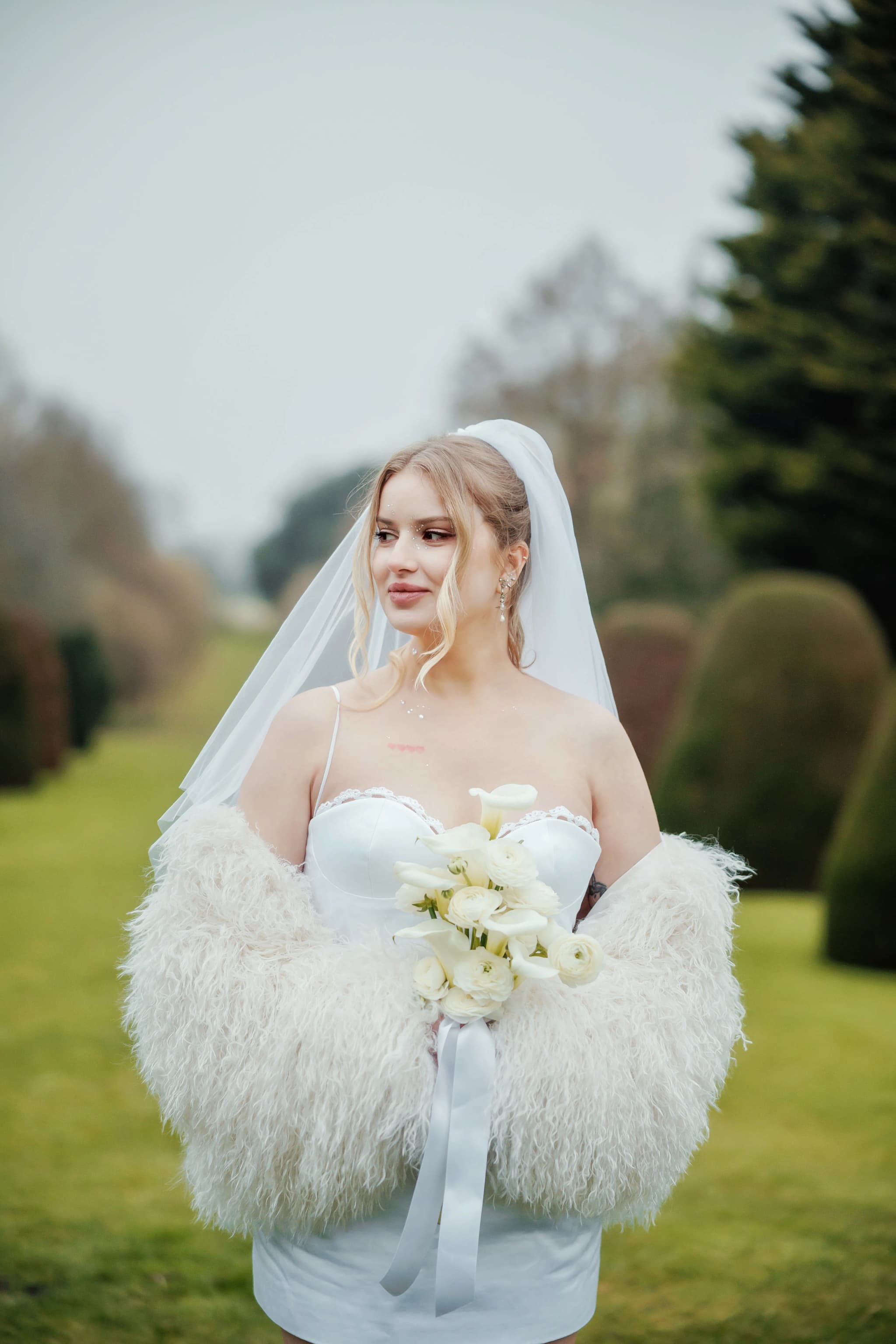
The best winter details are tactile. I'm always drawn to texture in cold weather — it's what stops a frosty scene from feeling sterile. A faux-fur stole around the bride's shoulders isn't just practical against an East Anglian wind; it photographs beautifully and gives us a few unforgettable portraits outdoors before you dash back into the warm.
Here are the details I'd prioritise if you're styling a winter wonderland day, in roughly the order they earn their keep on camera:
- ◆Faux-fur wrap or capelet: Keeps you warm for outdoor portraits and adds luxurious texture that catches the light beautifully.
- ◆Footed candelabras: Tall candlelight lifts the eye, fills evening frames with warmth, and looks magical in long-exposure shots.
- ◆Seasonal foliage: Eucalyptus, fir, holly and dried seed heads read far richer than out-of-season blooms and survive the cold.
- ◆Velvet accents: Napkins, ribbon or bridesmaid dresses in deep velvet absorb light and add depth that linen never will.
- ◆Frosted or amber glassware: Catches candlelight and scatters it across the table, giving photos that golden, dreamlike sparkle.
- ◆A statement entrance: Lanterns, foliage arches or a bare-branch installation make stunning establishing shots as guests arrive in the dark.
Choosing a venue that does the work for you
The right setting carries half the winter mood before a single candle is lit. Across Cambridgeshire and Suffolk I'm spoilt for choice: timber-framed barns with exposed beams glow under fairy lights, while grand country houses like those around Ely and Bury St Edmunds offer roaring fires and panelled rooms made for candlelight. If you're dreaming of true frost, a venue with good grounds and a few mature trees gives us the bare, sculptural backdrops that say winter at a glance.
Ask practical questions early. Is there covered space for photos if it sleets? Can the ceremony room hold real flame? Is there somewhere sheltered to gather guests so nobody is shivering between shots? A venue that says yes to candlelight and has a warm fireside corner will repay you tenfold in the final gallery.
Embracing the weather, whatever it does
I won't pretend every winter wedding gets a fresh dusting of snow — in reality, an East Anglian December is more likely to deliver moody grey skies, a sharp ground frost or proper fog rolling off the fens. The secret is to plan for atmosphere rather than a forecast. Mist is a gift to a photographer; it softens backgrounds and isolates you beautifully. Frost rimes every blade of grass into something photographable.
Bring a couple of clear umbrellas and a change of warm footwear, and trust me when I say we'll only step outside for ten or fifteen focused minutes. The rest of your magical winter day belongs indoors, wrapped in candlelight, which is precisely where a winter wonderland wedding looks its most enchanting anyway.
Dreaming of a frosted, candlelit winter wedding?
I photograph a limited number of winter weddings each year across Cambridgeshire, Suffolk and beyond, and the dates between November and February book up fast. Let's talk through your vision and make sure your day is captured exactly as you imagine it.
Check Your Date →

Yana Skakun
Photographer · England
Professional wedding, family and portrait photographer based in England. Passionate about capturing authentic emotions and timeless moments.
About Yana →winterwonderlandweddingphotography
Wedding Inspiration — Professional Photography in Cambridge & England
Yana Skakun is a professional photographer based in Cambridge, covering weddings, families, and portraits across England. Every session is personal — planned around your story, your people, and the moments that matter most. This guide — Winter Wonderland Wedding Photography Theme Ideas — is part of the photography journal: practical, experience-based advice drawn from real sessions across England. Whether you arrived searching for winter or wonderland, the same care and attention shapes every session Yana photographs.
Professional Photography sessions are available year-round, with bookings open across Cambridge, Ely, Huntingdon, Peterborough, and further afield — East England, London, the Midlands, and beyond. If you have specific questions about wedding, mention it in your enquiry. Get in touch through the contact form above to check availability and discuss your session. Enquiries are welcomed from anywhere in the UK.
Frequently Asked Questions
What camera settings should I use for outdoor portraits?+
For outdoor portraits, shoot in aperture priority mode. Use a wide aperture (f/1.8–f/2.8) to blur the background and isolate your subject. Keep ISO as low as possible in good light. In bright conditions, use a neutral density filter or switch to manual to avoid overexposure at wide apertures.
What is the golden hour in photography?+
Golden hour is the period roughly 30–60 minutes after sunrise and before sunset. The sun is low in the sky, producing warm, soft, directional light that flatters skin tones and creates beautiful long shadows. It's widely considered the best natural light for portrait and outdoor photography.
How do you get sharp photos in low light?+
In low light, increase your ISO (accepting some grain), use the widest aperture your lens allows, and slow your shutter speed to the slowest you can hand-hold without camera shake (roughly 1/focal length as a guide). Use image stabilisation if available, and consider a tripod for static subjects.
What is the rule of thirds in photography?+
The rule of thirds divides the frame into a 3×3 grid. Placing your subject on one of the four intersection points — rather than dead centre — creates a more dynamic, visually interesting composition. It's a guideline, not a rule: some of the most powerful images break it deliberately.
How do you edit photos to look professional?+
Professional editing starts with shooting in RAW format. In Lightroom or similar software, correct exposure, white balance, and contrast first. Recover shadow and highlight detail. Apply gentle colour grading for mood. Be conservative with skin retouching — the goal is natural enhancement, not transformation. Consistency across a set of images is what separates professional from amateur editing.
Continue Reading
Related Articles

Wedding Inspiration
Black Wedding Dress Photography: Styling the Anti-Bride Gown
6 min read · Read Article

Wedding Inspiration
10 Traditions You Can Ditch at Your Anti-Bride Wedding
6 min read · Read Article

Wedding Inspiration
What is a Quiet Luxury Wedding? The Old Money Aesthetic Explained
6 min read · Read Article
Get in Touch
Ready to Book Your Session?
Get in touch to discuss your vision — I'll reply within 24 hours.