Yana Skakun
London Restaurant & Private Dining Wedding Photography
Restaurant Wedding Photographer London
Documentary photography for London's finest restaurant weddings — from the food and the atmosphere to the people around the table.
A Wedding Built Around the Table
A restaurant wedding is a specific kind of celebration — one built around the pleasure of food, the intimacy of a smaller gathering, and the particular culture of a restaurant you love enough to give to your guests as a wedding venue. London's private dining rooms range from extraordinarily beautiful to strikingly minimal, from modern Shoreditch to historic Soho: each with a specific visual and atmospheric identity.
Restaurant wedding photography treats the food, the room and the occasion as equal documentary subjects — capturing not just the social energy of the gathering but the specific material of the restaurant: the courses as they arrive, the wine, the table settings, the kitchen moments and the hospitality that makes the venue what it is.
The result is a gallery that tells the complete story of a wedding day centered on one of London's finest dining experiences — the people, the food, and the city outside.
London Restaurant Wedding Venues
From Shoreditch to Soho — London's most photographically compelling restaurant wedding spaces.
Brat, Shoreditch
Txoko-inspired Basque wood-fire cooking, E1
Brat's upstairs private dining space — exposed brick, candlelight, central wood-fire grill as the room's visual and olfactory focal point — provides an intimate, atmospheric photography environment that has more in common with a wild Spanish farmhouse than a standard London private dining room. The cooking is the room's central drama; the photography approach includes the food, the fire, the candlelit faces and the intimate gathering character that defines the space.
The Clove Club, Shoreditch
Tasting menu dining, Shoreditch Town Hall, EC2
The Clove Club in Shoreditch Town Hall occupies a room of exceptional architectural character — the original Victorian municipal dining hall with its high ceiling, large windows and period detail. Private dining events in the main room provide a combination of formal grandeur and the intimacy of a 20–30 seat gathering. The cooking's visual quality — the plating, the courses, the presentation — provides genuine photographic material beyond the social coverage.
Café de Paris and Soho Late Rooms
Soho venue with late-night dining and dancing
Soho's late-night dining and event venues provide a specific London experience: the transition from dinner service to dancing in a space designed for both, the specific social atmosphere of London's theatreland neighbourhood at night, the particular visual character of Soho's architecture and streets as portrait territory. Restaurant weddings in Soho typically extend into the late evening and use the neighbourhood exterior — Carnaby Street, Berwick Street, the theatre district — for exterior portrait moments.
Rochelle Canteen (Arnold & Henderson)
Shoreditch school canteen, E2 — garden dining
The Rochelle Canteen occupies a Victorian school canteen in the heart of Shoreditch — white tiles, industrial windows, butcher-block tables — with a walled garden that in summer provides one of the most beautiful outdoor dining settings in London. The combination of the interior's graphic industrial simplicity and the garden's enclosed warmth produces photography of an elegant, minimal character specific to the space's culture and aesthetic.
Lyle's, Spitalfields
Refined simple cooking, Trade Street E1
Lyle's in Spitalfields provides a private dining environment of extreme visual simplicity — bare tables, whitewashed walls, natural light from the original industrial windows — that makes it one of the most photographically interesting restaurant wedding spaces in London precisely because the absence of decoration throws focus entirely onto the people, the food and the quality of light. Photography in this environment rewards a documentary minimalist approach.
Quo Vadis, Soho
Historic Dean Street institution, W1
Quo Vadis on Dean Street is one of London's most storied restaurant institutions — the private dining room above the main restaurant has hosted some of the most significant cultural gatherings of the past century. The combination of the building's history, the richness of the interior detail and the Dean Street Soho location provides a private dining wedding environment with genuine cultural gravitas and excellent photography potential.
London Wedding Photography Packages
Essential
£1,395
- 6 hours coverage
- 300+ edited images
- Online gallery
- Personal licence
Most Popular
Full Day
£2,395
- 10 hours coverage
- 500+ edited images
- Restaurant interior portraits
- Online gallery
Premium
£3,495
- 12 hours coverage
- 700+ edited images
- Fine art album
- Neighbourhood street portraits
Why Restaurant Weddings Photograph Exceptionally Well
The Food Is Part of the Story
Restaurant wedding photography treats the food as a primary documentary subject — not invisible background service but a genuine visual element of the day. The plating of the courses, the arrival of dishes, the reaction to food: these form a narrative thread through the reception coverage that pure social documentary misses. For couples whose choice of restaurant reflects genuine passion for food and cooking, the photography should acknowledge that the restaurant itself — its food, its culture, its kitchen — is part of what the day is about.
Private Dining Room Atmosphere
The best London restaurant private dining rooms have a specific atmospheric quality — candle or low directional light, intimate table dimensions, a room scale designed for 20–40 people rather than 200 — that produces photography of genuine warmth and intimacy. The photographs from a private dining restaurant wedding feel different from country house marquee coverage: closer, more personal, the physical scale of the gathering expressed in the visual scale of the images.
London Streets as Portrait Setting
Restaurant weddings in London are typically located in the city's most visually interesting neighbourhoods — Soho, Shoreditch, Clerkenwell, Bermondsey. The streets around these restaurants provide portrait settings of high visual quality: the character of the neighbourhood, the specific London street furniture, architecture and light quality that defines each area. A couple portrait session in Shoreditch on a wedding evening produces images that could only have been made in that specific place.
Small Gathering, Deep Coverage
Restaurant wedding receptions are typically smaller than country house weddings — 20–50 people rather than 150–200. This smaller gathering allows deeper, more individual coverage of each guest relationship, conversation and emotional moment. With 200 guests, documentary coverage covers the broad sweep; with 30 guests, the documentary coverage can include genuine intimate moments with each guest group throughout the day. The resulting gallery is more personally rich.
The Sommelier and the Toast
Restaurant wedding coverage includes the specific moments that restaurant culture provides and pub or marquee culture doesn't: the sommelier's wine choices and explanations, the kitchen sending out a special course, the head chef appearing to receive congratulations, the toast with a bottle of something extraordinary. These small moments of specific restaurant hospitality provide documentary images with a cultural specificity that enriches the gallery beyond standard social coverage.
Low Light Excellence
Restaurant lighting is designed for atmosphere, not photography — warm, directional, typically below 100 lux. A specialist in restaurant and low-light wedding photography produces images that carry the restaurant's atmospheric warmth rather than correcting it out with flash. The technical approach — fast primes, high ISO, specific warm tungsten colour management — produces images that look as though the room lit them perfectly, because the room did, with appropriate technical skill applied.
Frequently Asked Questions
What is the ideal guest count for a restaurant wedding?
London restaurant private dining rooms accommodate between 16 and 80 guests depending on the venue. The sweet spot for restaurant wedding photography is 20–40 guests — large enough for genuine social energy, intimate enough for deep individual coverage. Above 50 guests, a restaurant reception is typically spread across multiple tables in a larger format that begins to resemble a standard venue rather than a private dining experience. The photography approach adapts to any size, but the most genuinely intimate restaurant wedding coverage happens at the smaller end of the range.
How does photography work during the food service?
The food service is documented as ongoing coverage — arrival of courses, the table setting before guests arrive, the mid-course conversations, the reactions to dishes. Photographically, the approach is to work around the service rather than interrupt it: the photographer moves between the kitchen view and the table view during course changes, stops active documentary work during the main seated conversation periods after each course, and resumes for key moments (toasts, speeches, course arrivals). The service team are briefed to treat the photographer as invisible.
Can I have couple portraits done in the restaurant itself rather than outside?
Yes — the restaurant interior, particularly in early evening before guests arrive, provides an extraordinary portrait setting. An empty restaurant — the laid tables, the ambient lighting, the architectural character of the room — is a beautiful portrait environment. A 15-minute portrait session in the restaurant 30 minutes before guests arrive, with the room at its most visually pristine, produces images that could not be made at any other time during the day and that carry the specific aesthetic identity of the restaurant.
Does restaurant wedding photography include coverage of the ceremony?
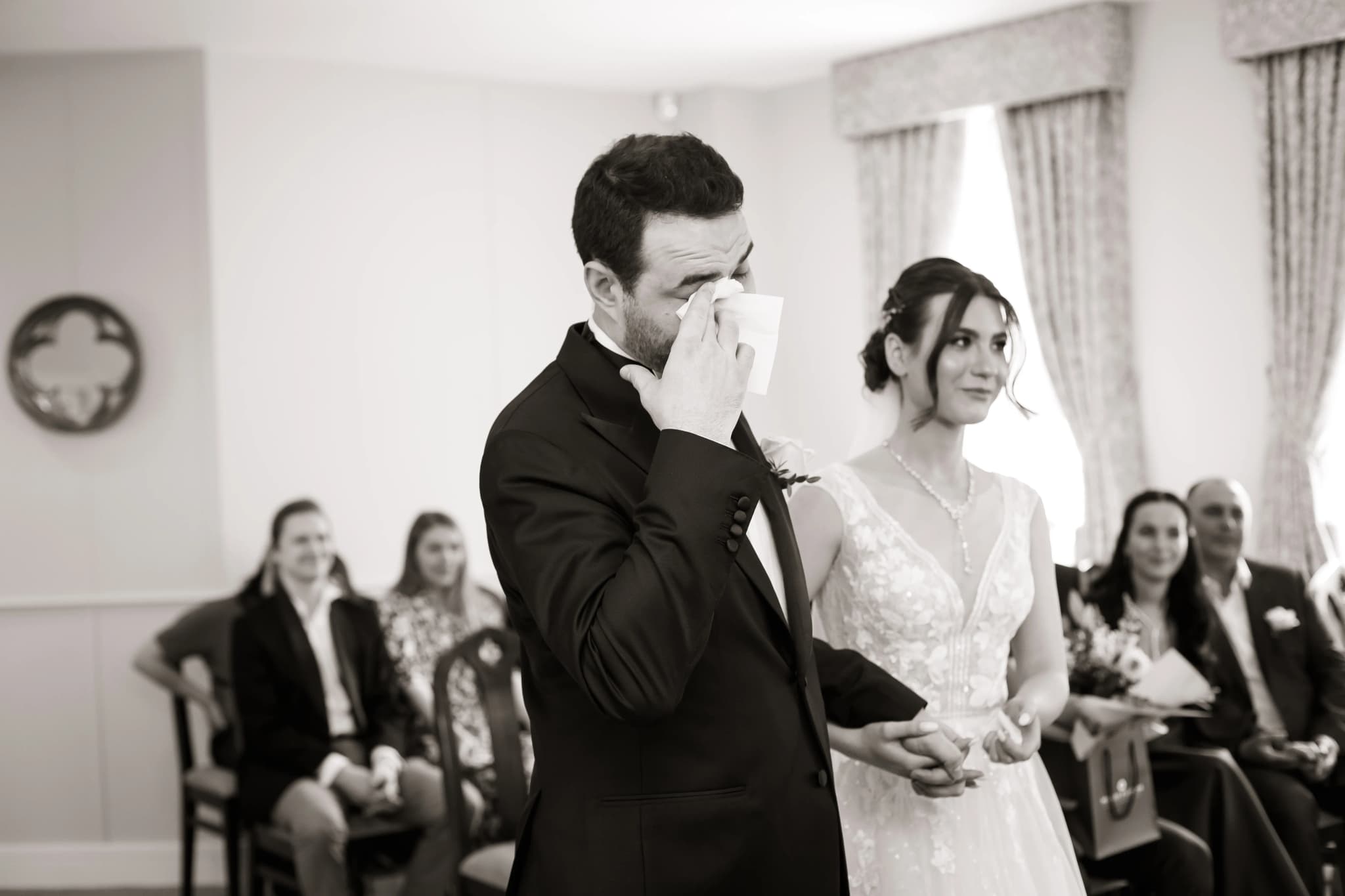
Yes — most restaurant weddings begin with a civil ceremony conducted in the private dining room or an adjacent space before guests arrive for the dining element. The ceremony can be photographed in the restaurant interior (with appropriate registrar permission) or the couple may marry at a separate venue before arriving at the restaurant. Full-day packages include ceremony coverage wherever it occurs, with the restaurant reception forming the second half of the coverage.
What about restaurants with strict 'no photography' or 'no flash' policies?
Most London restaurant private dining events do not prohibit photography — the venue has been booked privately and the photography is personal rather than commercial media. Where specific restrictions exist (some venues prohibit photography of the kitchen, others have agreement with existing Michelin evaluations), these are clarified with the venue before the wedding. Available-light-only photography is the default approach regardless — flash is generally avoided in restaurant environments to preserve the atmospheric quality that is central to the space.
Getting Married at a London Restaurant?
Private dining room, intimate supper club or full restaurant hire — let's discuss your wedding.
Get in Touch
Let's Create Together
Tell me about your vision and I'll be in touch within 24 hours.