Yana Skakun

Seating Arrangements and Photo Dynamics for Blended Families
By Yana Skakun·23 March 2027·5 min read
Blended families — step-parents, half-siblings, children from different relationships, step-grandparents — are increasingly common at the weddings I photograph, and I don't think they need special handling exactly, but they do need intentional planning. Done well, the result is a set of family photographs that actually reflects the real shape of your family, rather than a set of formal groupings that quietly erase the people who don't fit a traditional template.
Defining Family Before the Day
The most important decision, and one only you can make, is who you consider family for the purposes of your wedding photographs. Biological relation is one framework; emotional relationship is another, and they don't always overlap. A step-parent who raised you and a biological parent who wasn't present for most of your life are very different inclusions, and no photographer can make that call for you.
I always encourage couples to make these decisions before handing over a shot list, because they are decisions about relationships, not about photography logistics. Once the decisions are made, the logistics of actually capturing the groupings on the day are genuinely straightforward — it's the thinking beforehand that takes the real effort.
Structuring the Shot List
I find it helps to think in concentric circles, starting from the couple and working outward. The couple alone forms the foundation of every portfolio, followed by the couple with their own children, if either or both of you have them. From there, the couple with each side's immediate family in turn, then the couple with specific blended combinations — for example, the couple with all the children regardless of whose they are, or the couple with both sets of parents including step-parents. A full group shot bringing together all immediate family, however that's defined, comes last.
This structure means nobody is left wondering whether they're included, and it gives me, as the photographer, a clear sequence to work through efficiently on the day without holding up the schedule while everyone works out who should be standing where.
Half-Siblings and Step-Siblings
If the children in your family have complex relationships — half-siblings who don't see each other regularly, step-siblings who only met through your relationship — a single group shot of "all the kids" often works better than trying to label and separate every combination. In my experience, children are usually far more flexible and relaxed about these arrangements than the adults expect them to be.
Where there is genuine estrangement or tension between family members, separate shots are the cleaner and kinder option. A formal photograph is not the moment to force a togetherness that doesn't exist in real life — it will read as forced in the image, and it puts everyone involved in an uncomfortable position on what should be a happy day.
Blended families make for the most interesting photographs
I work through your shot list in advance and execute it efficiently on the day, so nobody is left standing around wondering where they fit.
Talk to me about your familyWhat to Tell Your Photographer
A short written brief makes an enormous difference. I ask couples to note down each person's name and their relationship to the couple, along with anyone who should not appear in the same frame as someone else. It's also worth flagging anyone one partner specifically wants included in shots that might not traditionally include them — a stepfather included in every shot with the bride's parents, for instance, rather than sidelined into a separate grouping because he isn't a biological parent.
This kind of brief takes perhaps ten minutes to write, usually a joint effort between both partners, and it saves a genuine amount of time and discomfort on the wedding day itself. Nobody has to make an awkward decision on the spot about where to stand, and nobody is left out because it simply didn't occur to anyone to mention them.
On the Day: Keeping It Relaxed
Even with a clear plan, I try to keep formal family photography moving quickly and without tension. Long waits between groupings are where awkwardness creeps in, particularly if there's any history between family members being asked to stand together. I work from the list in order, call groups by name rather than relationship label wherever there's any ambiguity, and keep the whole sequence brisk so people can get back to enjoying the day rather than standing in a line in front of a venue wondering how much longer it will take.
I also find it helps to have a designated family member on each side — someone who knows everyone and isn't needed in every single photograph — on hand to help gather people quickly between groupings. Weddings with a lot of extended and blended family tend to have more names and faces than a photographer meeting everyone for the first time can realistically keep track of alone, and a helpful relative who knows who's who makes the whole process noticeably faster.
When Both Partners Have Been Married Before
Second weddings involving blended families sometimes come with an additional layer of consideration — children who were present at a previous wedding, or family members who have mixed feelings about the day for reasons that have nothing to do with the couple getting married. I approach these weddings exactly as I would any other, but I do think it's worth a slightly longer conversation beforehand about anything sensitive, so nothing catches either of us by surprise on the day itself. Most of the time, this kind of preparation means the wedding day itself runs more smoothly, not less, because everyone already knows what to expect.
Involving Children from a Previous Relationship
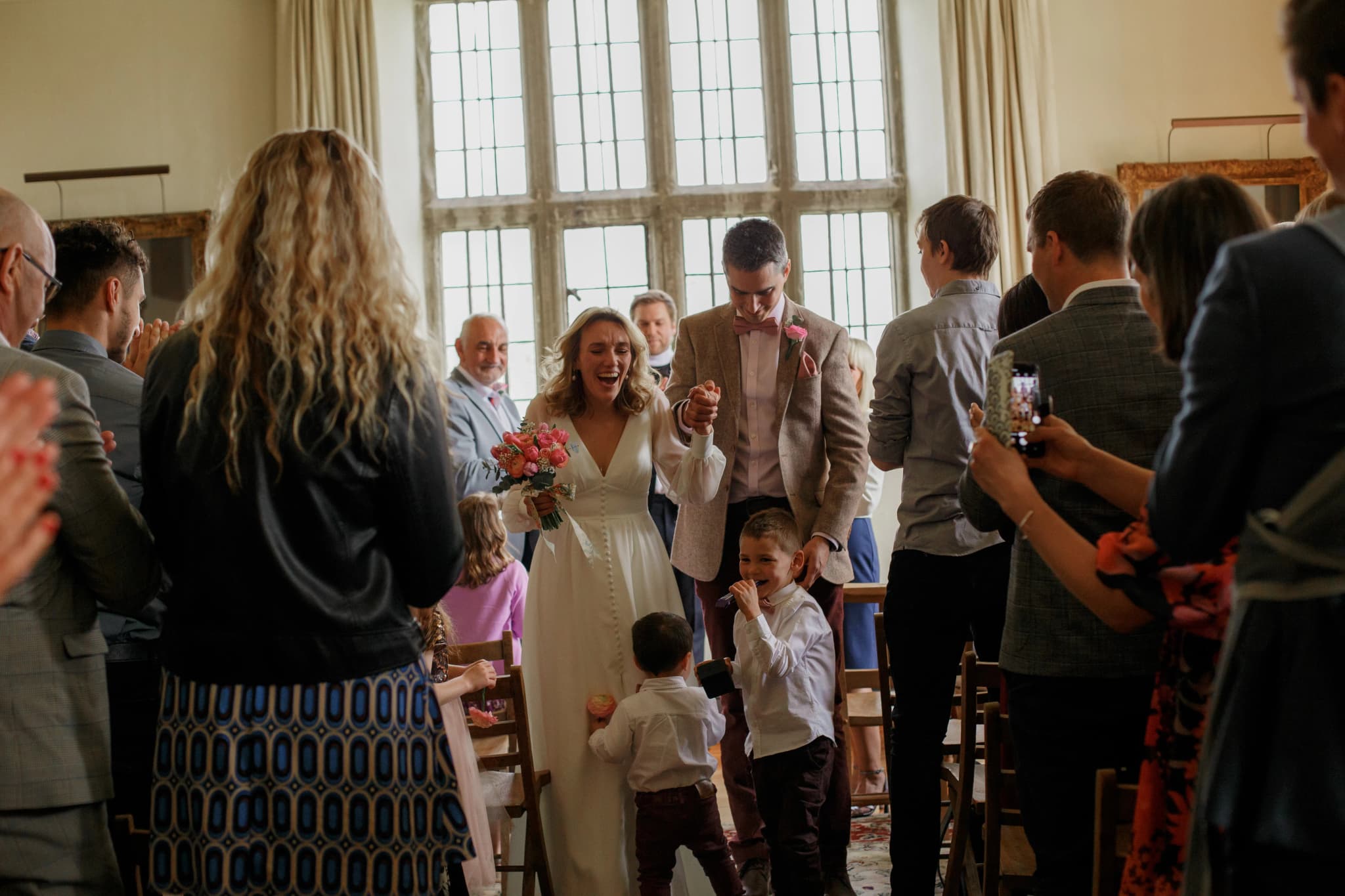
If children from a previous relationship are part of your wedding, it's worth thinking specifically about how you'd like them involved beyond the standard family portraits — walking down the aisle, standing with the couple during the ceremony, or having a dedicated moment together during the reception, such as a first dance that includes them alongside the couple's own. These aren't obligatory, but couples who plan them in advance tend to find they become some of the most meaningful images from the whole day, precisely because they acknowledge the family structure honestly rather than working around it.
I'd always recommend talking to the children themselves, age depending, about what they'd feel comfortable with, rather than assuming on their behalf. A shy teenager might prefer a quieter, less staged moment than a younger child who's excited to be included in everything.
Grandparents and Step-Grandparents
The same thinking applies a generation up. Step-grandparents who have been present for years often want to be included alongside biological grandparents, and there's no reason not to accommodate that if it reflects the real relationships involved. I'd suggest treating grandparent groupings with the same concentric-circle approach as the rest of the family — couple with each set of grandparents, followed by a fuller combined grouping if appropriate, always guided by who has actually been present and involved rather than strict biology.
Where there are simply too many grandparent-generation relatives to sensibly combine into one grouping, splitting into two or three smaller, more manageable photographs usually produces better images than trying to arrange everyone into a single crowded frame, and it gives each relationship its own moment rather than losing individuals in a large group.
The Result
Blended families often produce some of the warmest, most genuine images from a wedding day, precisely because the relationships involved have been chosen and built rather than simply inherited. Approached thoughtfully, the photography can reflect that — a family portfolio that looks like the family actually is, rather than a version edited down to fit convention.
A Conversation Worth Having Early
My last piece of advice is simply to have this conversation earlier than feels necessary. Couples often leave family planning until the final weeks before the wedding, when there's far less time and far more stress to work through decisions that deserve a calm, unhurried discussion. Talking it through months in advance, ideally at the point you book your photographer, means the shot list becomes a settled, comfortable plan rather than a last-minute scramble, and it gives everyone involved — including the wider family — time to adjust to whatever arrangement you decide on.
In my experience, the couples who plan this thoughtfully in advance are also the ones who relax most on the day itself, simply because there's no uncertainty left to resolve on the spot. That calm carries through into the photographs too — family groupings taken without tension or hesitation almost always look warmer and more natural than ones assembled in a rush.


Yana Skakun
Photographer · England
Professional wedding, family and portrait photographer based in England. Passionate about capturing authentic emotions and timeless moments.
About Yana →blended family wedding photosstep family wedding photographyblended family formals weddingstep siblings wedding photos
Wedding Tips — Wedding Photography in Cambridge & England
Yana Skakun is a professional wedding photographer based in Cambridge, covering weddings across England — from intimate elopements to full-day ceremonies at country houses, barns, and city venues. Every couple receives a relaxed, documentary approach that captures the day as it truly unfolds. This guide — Seating Arrangements and Photo Dynamics for Blended Families — is part of the photography journal: practical, experience-based advice drawn from real sessions across England. Whether you arrived searching for blended family wedding photos or step family wedding photography, the same care and attention shapes every session Yana photographs.
Wedding Photography sessions are available year-round, with bookings open across Cambridge, Ely, Huntingdon, Peterborough, and further afield — East England, London, the Midlands, and beyond. If you have specific questions about blended family formals wedding, mention it in your enquiry. Get in touch through the contact form above to check availability and discuss your session. Enquiries are welcomed from anywhere in the UK.
Frequently Asked Questions
How much does a wedding photographer cost in England?+
Wedding photography in England typically ranges from £1,500 to £4,000+ for a full day. Price depends on experience, coverage hours, and whether albums or engagement shoots are included. Most photographers charge between £2,000–£3,000 for 8–10 hours of coverage.
How early should you book a wedding photographer?+
For peak season (May–September), book 12–18 months in advance. For autumn and winter weddings, 9–12 months is usually sufficient. Popular photographers at popular venues fill up fast — as soon as you have a date and venue confirmed, start reaching out.
How many photos do you get from a wedding photographer?+
Most professional wedding photographers deliver 400–800 edited images for a full-day wedding. The exact number depends on coverage hours, how many guests there are, and the photographer's editing style. Quality matters more than quantity — a curated gallery of 500 images tells the story better than 1,500 unedited files.
Do you need a second photographer at your wedding?+
A second photographer is helpful if you want simultaneous coverage of getting-ready moments in different locations, multiple angles during the ceremony, or more candid coverage during the reception. It adds cost but significantly increases the variety and completeness of your gallery.
What is the difference between documentary and editorial wedding photography?+
Documentary (reportage) wedding photography captures moments as they happen — the photographer observes and doesn't intervene. Editorial photography involves deliberate direction: placing you in good light, shaping compositions, creating intentional portraits. Most photographers blend both styles throughout the day.
Continue Reading
Related Articles
Wedding Tips
Sustainable Eco-Friendly Wedding Guide — Planning a Green Celebration
15 min read · Read Article
Wedding Tips
Trash the Dress Session — Complete Planning and Photography Guide
14 min read · Read Article
Wedding Tips
Client Communication for Photographers — From Enquiry to Gallery Delivery
15 min read · Read Article
Get in Touch
Ready to Book Your Session?
Get in touch to discuss your vision — I'll reply within 24 hours.