Yana Skakun
Church Wedding vs Civil Ceremony: Photography Differences Explained
By Yana Skakun·16 March 2026·6 min read
Church weddings and civil ceremonies look and feel quite different as a photographer — and the choice between them has real implications for your photographs. Light, space, timing, restrictions, and emotional atmosphere all vary significantly. This guide explains exactly what changes for photography depending on which route you choose.
Lighting: the biggest photography difference
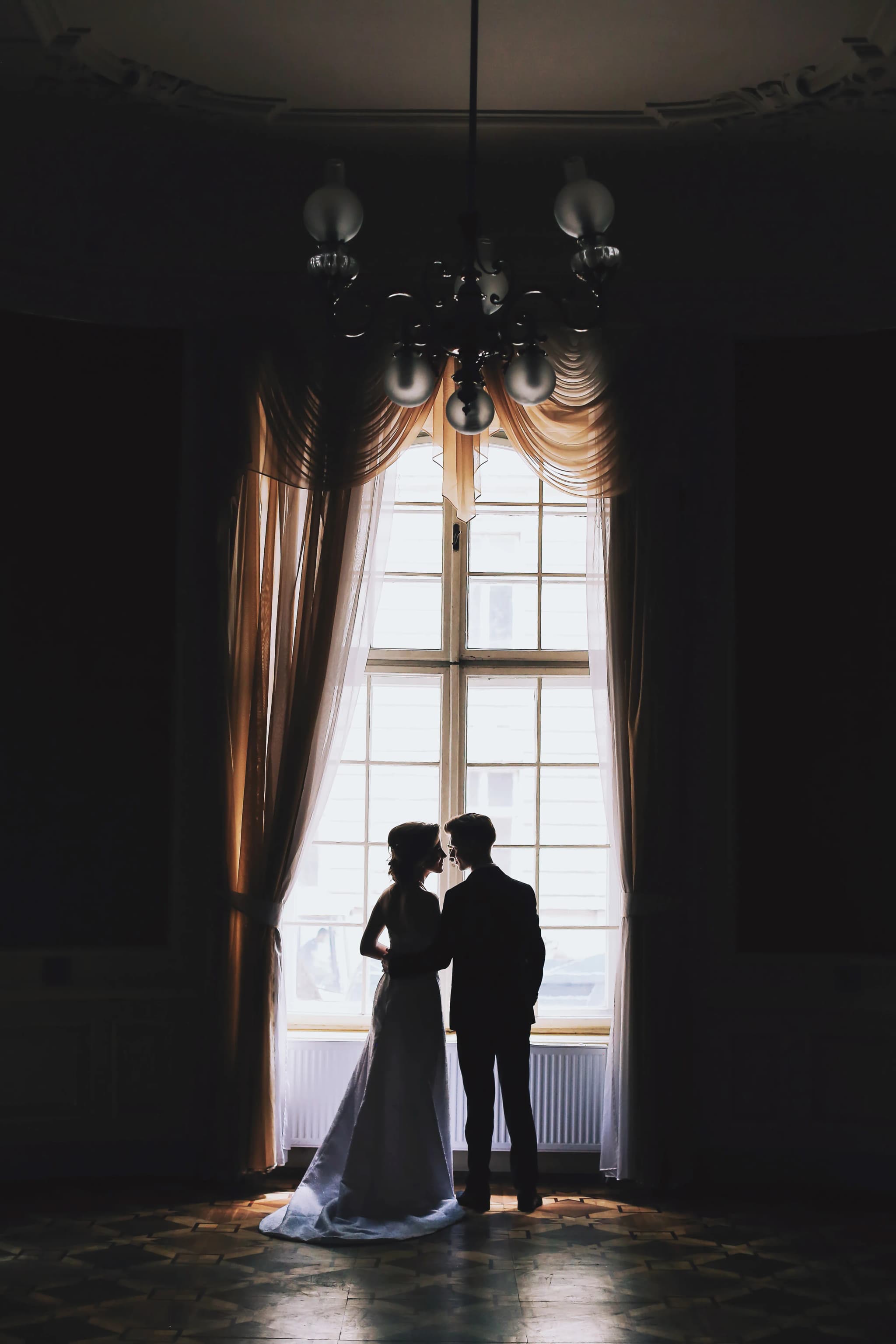
Light is the defining difference between church and civil ceremony photography. Most English churches present a challenging combination: stained glass windows creating pockets of colour, dark stone interiors, candles or low hanging chandeliers, and very low ambient light that varies dramatically between winter and summer.
Civil ceremony rooms — register offices, licensed hotel rooms, orangeries, barns — tend to offer more predictable, brighter light. Modern licensed venues often include floor-to-ceiling windows, white or neutral walls, and consistent artificial lighting. These conditions are generally more forgiving and produce more consistent results.
Church lighting characteristics
- –Low ambient light — high ISO/low shutter speed needed
- –Stained glass creates colourful, directional light pockets
- –Light varies significantly with season and time of day
- –Candles and chandeliers add atmosphere but challenge exposure
- –Position of sun relative to windows changes throughout day
Civil venue lighting characteristics
- –Generally brighter and more consistent
- –Modern venues often have large windows with good natural light
- –Artificial lighting more controllable and predictable
- –Less dramatic but more technically reliable
- –Interior colour palette typically neutral and photography-friendly
Photography restrictions
Many Church of England churches restrict or prohibit flash photography during the service. Some prohibit all photography during particular parts of the ceremony — the exchange of rings, signing of the register, Holy Communion. The officiating minister or verger sets these rules, which vary from church to church. It is always worth asking the vicar directly what is and isn't permitted.
Civil ceremony venues are generally more permissive. While the registrar typically asks photographers not to interrupt proceedings or use flash during vow exchanges, movement around the room during the ceremony is usually possible. This allows more angles, more candid coverage, and richer documentary coverage of the ceremony.
How to check your church's photography rules
Contact your vicar or church administrator before booking — not after. Ask specifically: Can the photographer move around during the service? Is flash permitted at any point? Are there any parts of the ceremony that must not be photographed? Some churches also charge a photography fee separately from the venue hire. Your photographer should also contact the church directly in the weeks before the wedding to confirm.
Physical space and angles
English churches offer a significant architectural advantage: the long nave creates a natural aisle shot that is one of the most dramatic and consistently beautiful wedding photographs. The architectural details — stone columns, vaulted ceilings, ancient wooden pews — provide a backdrop no licensed venue can replicate.
The limitation is access. Photographers are typically restricted to the back of the church, the side aisles if available, or specific permitted positions. Getting close to the couple during vows is often not possible. Civil ceremony spaces, particularly hotels and barns, often allow more flexible positioning — photographers can move around the perimeter of the room and get closer.
Ceremony length and pacing
A full Church of England service typically runs 45–75 minutes with hymns, readings, and address. This gives a photographer significantly more time to capture the ceremony — more moments, more reactions from guests, more narrative. Civil ceremonies at register offices average 15–20 minutes. Licensed venue ceremonies typically run 20–30 minutes with personalised content.
Longer ceremonies generally produce richer photography. With a 15-minute civil ceremony, the coverage is necessarily sparser — the key moments happen quickly. The longer ceremony arc of a church service creates more time for emotional reactions, quiet in-between moments, and documentary coverage of the full service.
| Factor | Church | Civil Ceremony |
|---|---|---|
| Light quality | Variable, often low | Generally better, more consistent |
| Flash use | Often restricted or banned | Usually permitted with care |
| Movement | Often limited to fixed positions | More flexible typically |
| Architecture | Dramatic, historic, unique | Varies widely by venue |
| Length | 45–75 minutes typical | 15–30 minutes typical |
| Photo restrictions | Set by vicar, vary by church | Set by registrar, generally light |
| Aisle shot | Almost always spectacular | Depends entirely on venue |
The confetti moment
Church exits almost universally involve a confetti line or petal throw outside the church doors — one of the most consistently joyful and photographically rich moments in a wedding day. The architecture of a church entrance, the burst of colour against stone, and the natural gathering of guests creates a setting that is very difficult to replicate at a civil venue. Many civil venues don't permit confetti at all, or restrict it to specific biodegradable types in designated areas.
What matters most for better photographs
Neither church nor civil ceremony is inherently better for photography. The best photographs come from venues with good natural light, relaxed couples, and photographers who have visited the space beforehand. A beautifully lit orangery civil ceremony can produce extraordinary photographs; a dark country church in December creates genuine technical challenges. The key factors aren't the ceremony type — they're light, access, and the comfort of the couple.
Church and Civil Ceremony Photography
I photograph both church ceremonies and civil ceremonies across Cambridge and England. Every venue is scouted before the day to understand the light and access — including speaking directly with church officials about any photography restrictions. Get in touch to discuss your ceremony type and what it means for coverage.
Enquire About Wedding Photography

Yana Skakun
Photographer · England
Professional wedding, family and portrait photographer based in England. Passionate about capturing authentic emotions and timeless moments.
About Yana →church vs civil wedding photographychurch wedding photography UKcivil ceremony photography Englandwedding photography restrictions churchregister office wedding photography
Wedding Tips — Wedding Photography in Cambridge & England
Yana Skakun is a professional wedding photographer based in Cambridge, covering weddings across England — from intimate elopements to full-day ceremonies at country houses, barns, and city venues. Every couple receives a relaxed, documentary approach that captures the day as it truly unfolds. This guide — Church Wedding vs Civil Ceremony: Photography Differences Explained — is part of the photography journal: practical, experience-based advice drawn from real sessions across England. Whether you arrived searching for church vs civil wedding photography or church wedding photography uk, the same care and attention shapes every session Yana photographs.
Wedding Photography sessions are available year-round, with bookings open across Cambridge, Ely, Huntingdon, Peterborough, and further afield — East England, London, the Midlands, and beyond. If you have specific questions about civil ceremony photography england, mention it in your enquiry. Get in touch through the contact form above to check availability and discuss your session. Enquiries are welcomed from anywhere in the UK.
Frequently Asked Questions
How much does a wedding photographer cost in England?+
Wedding photography in England typically ranges from £1,500 to £4,000+ for a full day. Price depends on experience, coverage hours, and whether albums or engagement shoots are included. Most photographers charge between £2,000–£3,000 for 8–10 hours of coverage.
How early should you book a wedding photographer?+
For peak season (May–September), book 12–18 months in advance. For autumn and winter weddings, 9–12 months is usually sufficient. Popular photographers at popular venues fill up fast — as soon as you have a date and venue confirmed, start reaching out.
How many photos do you get from a wedding photographer?+
Most professional wedding photographers deliver 400–800 edited images for a full-day wedding. The exact number depends on coverage hours, how many guests there are, and the photographer's editing style. Quality matters more than quantity — a curated gallery of 500 images tells the story better than 1,500 unedited files.
Do you need a second photographer at your wedding?+
A second photographer is helpful if you want simultaneous coverage of getting-ready moments in different locations, multiple angles during the ceremony, or more candid coverage during the reception. It adds cost but significantly increases the variety and completeness of your gallery.
What is the difference between documentary and editorial wedding photography?+
Documentary (reportage) wedding photography captures moments as they happen — the photographer observes and doesn't intervene. Editorial photography involves deliberate direction: placing you in good light, shaping compositions, creating intentional portraits. Most photographers blend both styles throughout the day.
Continue Reading
Related Articles

Wedding Tips
Sustainable Eco-Friendly Wedding Guide — Planning a Green Celebration
15 min read · Read Article
Wedding Tips
Trash the Dress Session — Complete Planning and Photography Guide
14 min read · Read Article
Wedding Tips
Client Communication for Photographers — From Enquiry to Gallery Delivery
15 min read · Read Article
Get in Touch
Ready to Book Your Session?
Get in touch to discuss your vision — I'll reply within 24 hours.