Yana Skakun

Professional Headshots for Clinical Psychologists: Authority and Accessibility in Mental Health Practice
By Yana Skakun·6 August 2025·5 min read
A clinical psychologist's headshot has to do something most professional photographs never attempt: it has to make a complete stranger feel safe enough to consider sharing the most difficult parts of their life with the person in the frame. Someone scrolling a Psychology Today profile or an NHS trust website at eleven at night, trying to decide whether to make an appointment, is not evaluating a haircut or a suit. They are asking, often without fully realising it, a single question — can I trust this person? — and the photograph is doing a disproportionate amount of the work in answering it. I have photographed clinical psychologists across NHS and private practice in and around Cambridge, and the brief is always some version of the same thing: look qualified, look calm, and above all, look like someone it would be safe to sit across from.
Why This Is a Different Kind of Headshot
Most professional headshots exist to communicate competence and confidence — the kind of photograph a solicitor or a management consultant needs, where sharpness and polish read as authority. A clinical psychologist needs authority too, since their doctoral-level qualification and HCPC registration set them apart from counsellors and other mental health practitioners who do not hold that protected title, and a photograph that looks amateurish undercuts that credibility before a client has read a word of a biography. But authority on its own can tip into something cold, and for a profession built on relationship and trust, that is a genuine liability.
I think about this brief as balancing two things that pull in slightly different directions: the visual language of expertise — good posture, appropriate dress, sharp focus, a composed frame — and the visual language of warmth — soft light, a relaxed set to the shoulders, eyes that hold the camera without staring it down, an expression that looks like the start of a real conversation rather than the end of a photo shoot. Getting both into one image, rather than defaulting to either at the expense of the other, is the actual problem I am solving in every session with a psychologist.
It matters more here than in most professional photography because of what the client on the other end is going through. Someone researching a psychologist for the first time is often anxious, sometimes in crisis, frequently ashamed of needing help at all. A headshot that looks stern or overly staged can quietly reinforce the fear that therapy will be judgmental. A headshot that looks warm without looking unserious can do the opposite — it can lower the threshold just enough for someone to pick up the phone.
Lighting and Expression: Photographing Warmth Without Losing Professionalism
The single biggest technical decision in a psychologist's headshot is the lighting, because hard light and warmth do not coexist well. A single harsh key light with heavy shadow under the brow and jaw is a look that suits editorial fashion or corporate finance portraits, where a slightly severe edge is often the point — and it is close to the last thing you want on a clinical psychologist. I favour a softer, more even setup — large diffused sources, gentle falloff, minimal shadow under the eyes — because it reads as approachable rather than austere, without sacrificing the clarity a professional photograph still needs.
Expression is the other half, and it cannot be manufactured convincingly on demand. A forced smile is one of the most immediately legible things in photography; viewers register insincerity in a fraction of a second even if they could not say why. What I am actually working for is a genuine, settled expression — closer to the moment just after a real laugh has faded, or the quiet attentiveness of someone properly listening. I get there by talking with the person throughout the session rather than issuing instructions, asking about their work and what drew them into clinical psychology in the first place. The best frames almost always come a beat after an actual response, not on command.
A slight forward lean, a level or gently tilted head, and steady but not fixed eye contact all read as engaged rather than confrontational. I also pay close attention to the mouth and eyes together, since a photograph where the mouth is smiling but the eyes are not tends to look uneasy on screen, and clients scrutinising these images are often, whether consciously or not, well practised at reading incongruent expressions for a living.
Choosing the Right Setting: Consulting Room, Studio, or Outdoors
Where the photograph is taken changes what it communicates almost as much as lighting and expression do. A psychologist's own consulting room, photographed with a shallow depth of field so the background softens into gentle, out-of-focus tones, can be a genuinely effective choice. It grounds the image in a real, specific place, and for private practitioners it lets a prospective client see a hint of the actual room they might one day sit in. The caveat is that consulting rooms vary enormously in how photogenic they are, and a cluttered or clinical-looking room can undercut the effect.
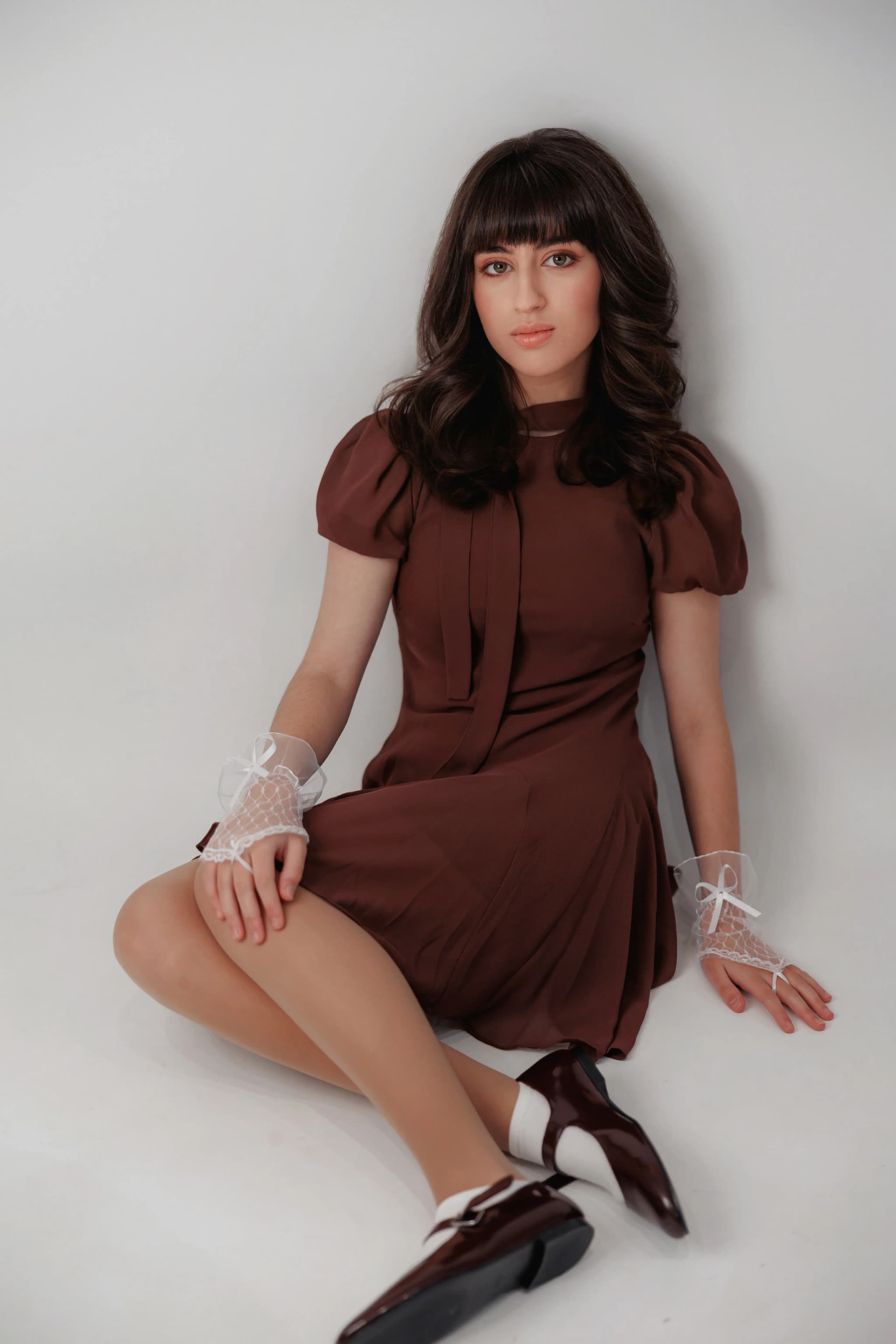
A neutral studio backdrop is the more dependable option, and what I recommend most often, particularly for psychologists who want a consistent image across a website, a directory listing, and printed materials. A plain, warm-toned backdrop — soft greys, muted taupes, gentle warm neutrals — keeps the visual attention on the face and expression and avoids the starkness of pure white or cool grey, which tend to read as clinical-catalogue or severe-corporate. Outdoor, natural-light portraits are a third option, especially for private practitioners who want their photography to feel less corporate, though this is generally not the right call for NHS-facing photography, where a consistent, studio-neutral look tends to sit better alongside colleagues' images on a trust website.
Wardrobe: Avoiding Both Extremes
Clothing advice for this brief sits between two failure states, and most of my guidance beforehand is about steering away from both. At one end is the overly clinical look — a stiff, dark suit, a tightly buttoned collar, anything that reads as boardroom rather than consulting room. It photographs as competent but distant, and for a profession built on emotional accessibility, distance is rarely the impression a practitioner wants to lead with. At the other end is dressing too casually, which can read as a lack of seriousness about the qualification, particularly for practitioners early in building a private practice.
The middle ground that photographs well is smart-casual with texture and warmth: knitwear over a shirt, soft-structured blazers rather than sharply tailored ones, muted or warm colours rather than stark black and white, which can create harsh contrast under studio lighting. Solid colours generally photograph better than busy patterns, which can be distracting in a small profile image and date a photograph quickly. I also ask where the image will be used — a headshot for a formal NHS trust page can sit slightly smarter than one for a private practice website with a softer, more personal brand.
Practitioners Working With Trauma and With Children
Psychologists whose work centres on trauma need their photography to do something slightly different again, because their client base is disproportionately likely to be in a heightened state of vigilance when they first encounter the image. Intense eye contact, dramatic lighting, or a severe expression can work against the practitioner before a first conversation has even happened, so I lean further towards soft, indirect light and a slightly more relaxed, angled pose for this group — a gentler expression than a full engaged smile, but no less genuine for it.
For psychologists working with children, the photograph often needs to reassure two audiences at once: the parent evaluating credibility and the child who may eventually see the image in a waiting room or on a website designed with them in mind. A slightly brighter, more approachable style earns its place here — still professional, but with more visible warmth and a setting that feels less austere than a typical adult-facing headshot. Some child and adolescent specialists also ask for a secondary, more playful image for pages aimed at younger clients, and I am always glad to build that into a session.
A note on NHS, academic, and private practice sessions
I photograph clinical psychologists across the full range of the profession — NHS Consultant Clinical Psychologists needing a photograph appropriate to a leadership and supervisory role, private practitioners building a presence on Psychology Today, BACP, or BABCP directories, and academic and research psychologists based at institutions such as Cambridge's Department of Psychiatry or the MRC Cognition and Brain Sciences Unit who need images for publications, media commentary, and conference profiles. Each context calls for a slightly different balance of formality and warmth, and I tailor the session accordingly.
Get in touch about corporate and professional photographyHow These Photographs Actually Get Used
It is worth planning a session around the practical reality of where a psychologist's headshot ends up, because the same image is usually asked to work far harder than a single portrait needs to. A practice website homepage, a Psychology Today or Counselling Directory listing, BACP or BABCP member profiles, an NHS trust staff page, a LinkedIn profile, and printed materials such as a leaflet or conference name badge can all draw on the same one or two images. That means the photograph needs to crop well both square and portrait, hold up at both a hero-image size and a thumbnail, and remain legible in black and white as well as colour, since some directories still convert images automatically.
For psychologists with any degree of media or press visibility — commenting on mental health stories or appearing in trust newsletters — I recommend capturing a small set of variations within the same session: a tighter head-and-shoulders crop for directory thumbnails, a slightly wider frame for a website hero image, and one alternative, quieter expression as a backup for use alongside more serious subject matter. Planning for this range during the session, rather than cropping a single image after the fact to fit every use case, produces noticeably better results.
If you are a clinical psychologist in NHS, private, or academic practice in or around Cambridge and would like to talk through what a session for you might look like, get in touch and we can discuss the right setting, wardrobe, and approach for the specific contexts your photograph needs to work in.


Yana Skakun
Photographer · England
Professional wedding, family and portrait photographer based in England. Passionate about capturing authentic emotions and timeless moments.
About Yana →clinical psychologist headshots UKHCPC registered psychologist photo UKprivate practice psychologist photography Cambridgecounselling psychologist headshots UKmental health professional headshots CambridgePsychology Today profile photo UK
Headshot Tips — Professional Headshot Photography in Cambridge & England
Professional headshot sessions with Yana Skakun are clean, efficient, and designed to produce images that represent you authentically across every professional context — LinkedIn, company websites, speaker profiles, and press. Sessions available in Cambridge and across England. This guide — Professional Headshots for Clinical Psychologists: Authority and Accessibility in Mental Health Practice — is part of the photography journal: practical, experience-based advice drawn from real sessions across England. Whether you arrived searching for clinical psychologist headshots uk or hcpc registered psychologist photo uk, the same care and attention shapes every session Yana photographs.
Professional Headshot Photography sessions are available year-round, with bookings open across Cambridge, Ely, Huntingdon, Peterborough, and further afield — East England, London, the Midlands, and beyond. If you have specific questions about private practice psychologist photography cambridge, mention it in your enquiry. Get in touch through the contact form above to check availability and discuss your session. Enquiries are welcomed from anywhere in the UK.
Frequently Asked Questions
What should I wear for a professional headshot?+
Solid colours photograph better than patterns. Navy, grey, charcoal, and burgundy are universally flattering. Avoid white (creates exposure issues), black (can look flat), and bright neons. Make sure your clothing fits well and is freshly pressed. Bring 2–3 outfit options to give yourself variety.
How do I prepare for a headshot session?+
Get a good night's sleep. Stay hydrated in the days before. If you're having hair and makeup done, schedule it for the morning of the shoot. Bring the clothes you plan to wear on a hanger. Arrive 10 minutes early to settle in before the camera comes out. Most importantly — don't stress. A good photographer will guide you.
How long does a professional headshot session take?+
A standard headshot session takes 30–60 minutes. This covers 2–3 outfits and multiple expressions and angles. Corporate team headshots at a single location can be scheduled at 15–20 minutes per person.
How often should you update your professional headshot?+
Every 2–3 years, or whenever your appearance changes significantly — new hairstyle, weight change, or notable ageing. Your headshot should look like you when you walk into a meeting, not like you five years ago. Outdated headshots undermine trust, particularly in client-facing roles.
What is the difference between a headshot and a business portrait?+
A headshot is a tight crop of the face and upper chest, focused entirely on professional presence and approachability. A business portrait typically includes more of the body and often incorporates environment or context — an office setting, equipment, or a workspace that communicates your profession.
Continue Reading
Related Articles

Headshot Tips
LinkedIn Headshots for Cambridge Graduates: Start Your Career With the Right First Impression
7 min read · Read Article
Headshot Tips
Professional Photography for Small Businesses: The Complete Guide
12 min read · Read Article
Headshot Tips
Corporate Team Photography: Professional Headshots for Your Entire Organisation
9 min read · Read Article
Get in Touch
Ready to Book Your Session?
Get in touch to discuss your vision — I'll reply within 24 hours.