Yana Skakun

Tips for Photographing Your Own Kids at Your Wedding
By Yana Skakun·9 March 2027·5 min read
When your own children are part of your wedding party, the emotional stakes are different from any other family photograph. These are not just formal shots to tick off a list — they are images that will sit on bookshelves for decades, pulled out and shown to those children when they are grown, perhaps at their own weddings one day. Getting them right takes preparation, patience, and a photographer who understands that children do not perform on command the way adults sometimes feel obliged to.
Before the Day: Involve Them in the Planning
Children who feel included in the wedding preparation are significantly easier to photograph on the day itself. Show them images of what the day might look like, talk them through what will happen and roughly when, and let them have a small choice within the planning — the colour of their shoes, which flower they carry, whether they walk beside you or slightly ahead. A child who feels like a genuine participant rather than a prop being positioned cooperates completely differently once the camera comes out.
This preparation matters more the younger the child is, but it is worth doing at every age. Older children and teenagers benefit just as much from knowing roughly what is expected of them and when they will have a genuine break from being “on,” rather than feeling like the day is an endless string of photograph requests with no clear end point.
I also find it helps enormously to meet the children before the day where possible, even briefly at an engagement session or a short pre-wedding visit. A child who has already met me, and ideally already had a slightly silly, low-pressure interaction with me, is far more relaxed when I appear again on the wedding day itself with a camera in hand.
The Key Shots to Prioritise
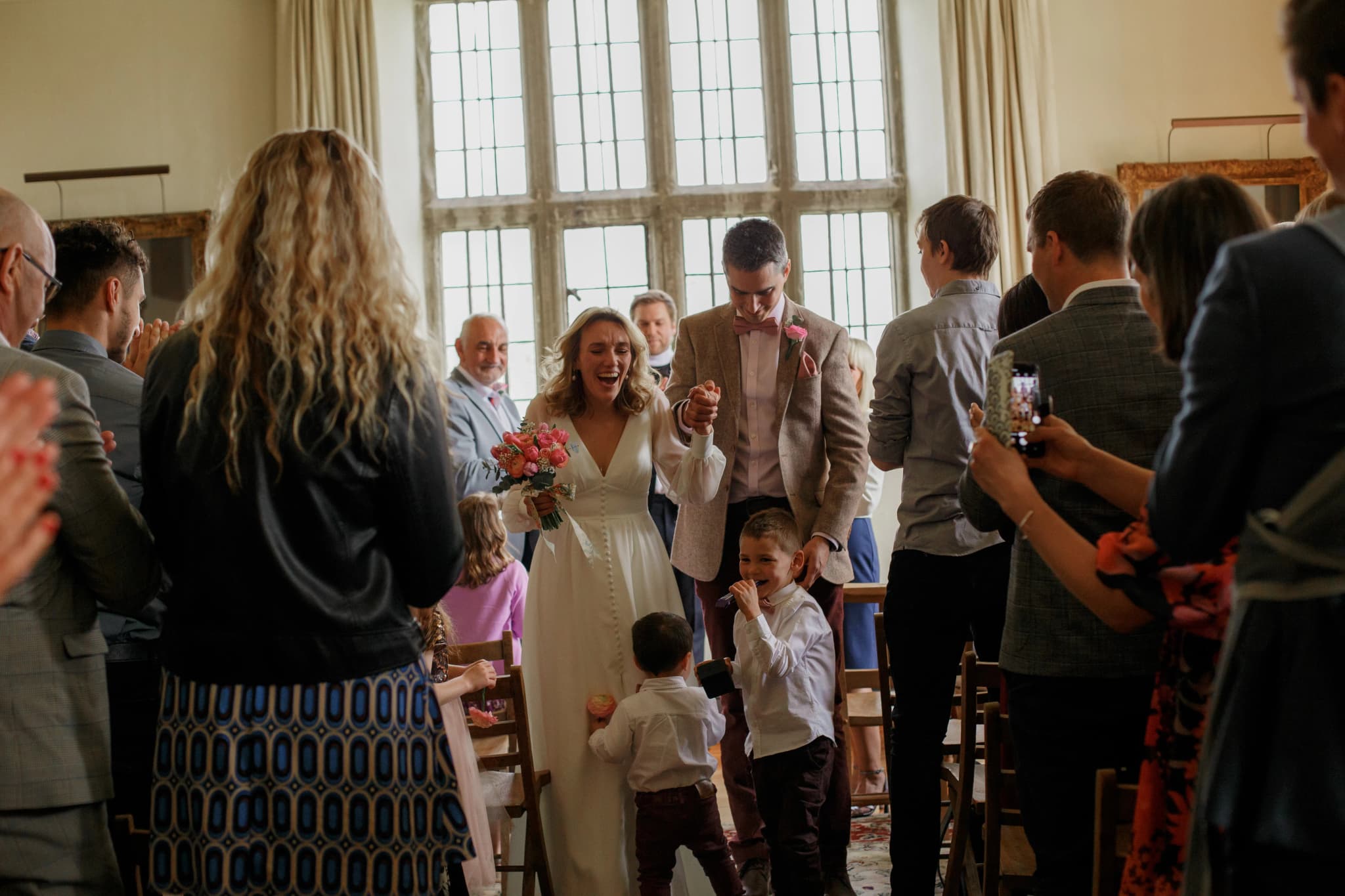
It is worth briefing your photographer explicitly on which moments involving your children matter most to you, since these are easy to miss in the general flow of a wedding day unless someone is specifically watching for them. The first look, if children see you in your wedding outfit for the first time on the day, often produces a reaction worth everything on its own — genuine, unguarded, and completely unrepeatable. Walking down the aisle, whether children are beside you or watching from a pew, is another moment worth protecting deliberately in the plan.
The vow moment itself can produce extraordinary unplanned reactions from children who have not been briefed on expected ceremony behaviour — a puzzled expression, a sudden giggle, a look passed between siblings. A private family moment, just a few minutes alone together as a family before the reception properly begins, is worth scheduling explicitly rather than hoping it happens spontaneously in the gaps between other commitments. And the end of the night, tired children leaning against parents with shoes off and full of food, tends to produce some of the most tender, honestly domestic images of the whole day.
Beyond these specific moments, I try to stay alert throughout the day for the small unscripted interactions between parents and children — a hand held during a quiet moment, a child fixing a parent's collar, a shared laugh during the speeches. These are rarely requested explicitly because nobody thinks to ask for them in advance, but they are often the images that mean the most once the day is a memory rather than a schedule.
A note on getting married with your children in the party
These are some of the most meaningful photographs I take, and I build every wedding timeline with children's actual attention spans in mind rather than an idealised schedule. If you are marrying with your own children involved, it is worth talking through their ages and personalities with me in advance so we can plan around them properly.
Get in touch about your weddingThe Timing Problem and How to Solve It
Children's windows of cooperation are narrow and genuinely unpredictable, which makes timing the single most important practical factor in getting good images of them on a wedding day. The formal family photograph session should be scheduled when your children are most likely to be settled — usually shortly after the ceremony while energy is still reasonably high, and before the reception meal rather than after it. Once dancing starts and the evening runs late, younger children are typically either overtired or overstimulated, and either state makes posed photographs genuinely difficult, however patient everyone tries to be.
I generally recommend keeping the formal family session itself short, ten to fifteen minutes at most, and supplementing it with documentary photographs captured throughout the day when children are relaxed and unposed rather than lined up for a group shot. A short, well-timed formal session combined with plenty of candid coverage across the day tends to produce a far better overall set of images than a single long session that exhausts everyone's patience, children and adults alike.
It is also worth building in slightly more buffer time than feels necessary around any segment involving children. A five-minute allowance for a nappy change, a shoe that has come off, or a sudden need for a snack saves the rest of the schedule from a knock-on delay, and means nobody is rushing a child through a moment that needs a little patience.
The Emotional Reality of the Day
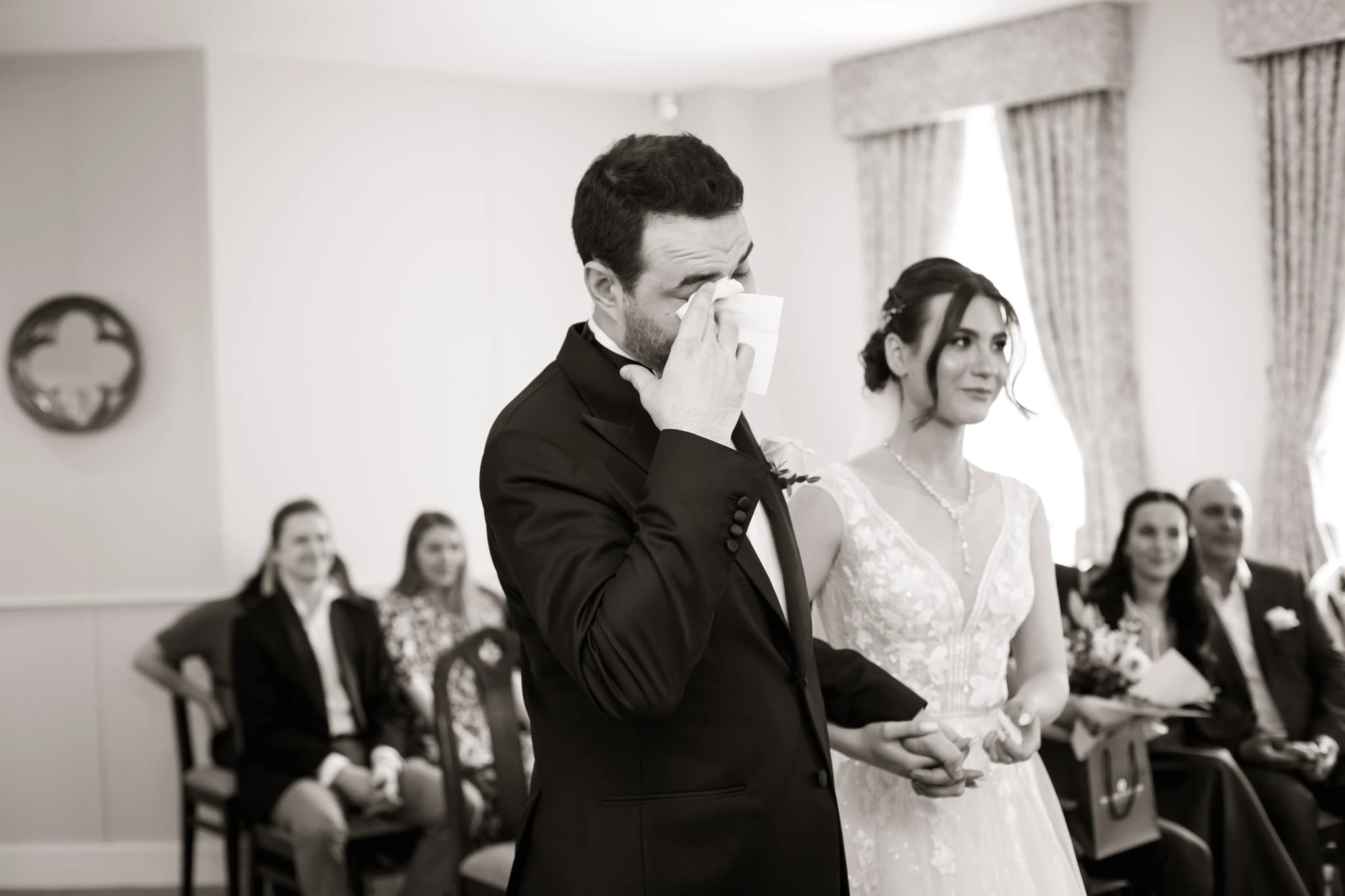
Parents photographing their children at their own wedding are usually balancing enormous emotion, often more than they expect going into the day. The photograph of a parent wiping away a tear while their child stands beside them in wedding clothes is one of the most powerful images in the whole genre of family wedding photography, and it is not something that can be manufactured or requested — it happens because the moment is genuinely overwhelming, and my job is simply to be ready when it does.
I would encourage any parent marrying with children in the party not to suppress these moments for the sake of composure. Let the emotion happen where it wants to happen, and trust that it will be photographed with care rather than intrusion. Some of the images parents treasure most from their wedding day are not the polished, fully composed portraits but the raw, unguarded seconds where the reality of the day — and the family being formed or celebrated by it — is plainly visible on someone's face.
Choosing an Outfit Your Child Will Actually Wear All Day
The most beautifully chosen outfit for a child is worthless in photographs if the child refuses to keep it on, and practicality deserves at least as much weight as appearance when choosing what your children will wear. Scratchy fabric, tight collars, or shoes that pinch are all common reasons a child ends up refusing to cooperate later in the day, and none of it is really about behaviour — it is discomfort expressing itself as resistance. Trying the full outfit on well before the day, including any shoes, and having your child wear it for a normal length of time at home is a simple way to catch problems while there is still time to fix them.
It is also worth packing a small emergency kit for the day itself — a spare pair of comfortable shoes, a stain-removal wipe, a hairbrush, and perhaps a favourite small toy or comfort object that can be kept out of shot but nearby if a child needs reassurance during a longer stretch of the day. These small preparations rarely feel necessary until the moment they save a photograph.
Involving Stepchildren and Blended Families
Weddings involving blended families bring an additional layer of care into how photography is planned, and it is worth thinking through in advance rather than assuming it will resolve itself naturally on the day. Making sure every child feels equally included in group photographs, and that no arrangement of who stands where inadvertently signals a hierarchy between siblings or half-siblings, takes a little forethought but makes a genuine difference to how the day feels for everyone involved, children especially.
I always ask, well before the wedding day, about family structure and any particular sensitivities so I can plan formal group combinations that reflect the family as it actually is, rather than defaulting to a generic list that assumes a simpler structure. A brief conversation about this in advance saves an awkward, rushed decision being made on the day itself, under time pressure, when it is much harder to get right.
If you are getting married with your own children as part of the day, get in touch and I would love to talk through how to document your family properly, on your terms.


Yana Skakun
Photographer · England
Professional wedding, family and portrait photographer based in England. Passionate about capturing authentic emotions and timeless moments.
About Yana →couple with child wedding photosphotographing own children weddingfamily wedding photos with kidswedding photos mum dad kids
Wedding Tips — Wedding Photography in Cambridge & England
Yana Skakun is a professional wedding photographer based in Cambridge, covering weddings across England — from intimate elopements to full-day ceremonies at country houses, barns, and city venues. Every couple receives a relaxed, documentary approach that captures the day as it truly unfolds. This guide — Tips for Photographing Your Own Kids at Your Wedding — is part of the photography journal: practical, experience-based advice drawn from real sessions across England. Whether you arrived searching for couple with child wedding photos or photographing own children wedding, the same care and attention shapes every session Yana photographs.
Wedding Photography sessions are available year-round, with bookings open across Cambridge, Ely, Huntingdon, Peterborough, and further afield — East England, London, the Midlands, and beyond. If you have specific questions about family wedding photos with kids, mention it in your enquiry. Get in touch through the contact form above to check availability and discuss your session. Enquiries are welcomed from anywhere in the UK.
Frequently Asked Questions
How much does a wedding photographer cost in England?+
Wedding photography in England typically ranges from £1,500 to £4,000+ for a full day. Price depends on experience, coverage hours, and whether albums or engagement shoots are included. Most photographers charge between £2,000–£3,000 for 8–10 hours of coverage.
How early should you book a wedding photographer?+
For peak season (May–September), book 12–18 months in advance. For autumn and winter weddings, 9–12 months is usually sufficient. Popular photographers at popular venues fill up fast — as soon as you have a date and venue confirmed, start reaching out.
How many photos do you get from a wedding photographer?+
Most professional wedding photographers deliver 400–800 edited images for a full-day wedding. The exact number depends on coverage hours, how many guests there are, and the photographer's editing style. Quality matters more than quantity — a curated gallery of 500 images tells the story better than 1,500 unedited files.
Do you need a second photographer at your wedding?+
A second photographer is helpful if you want simultaneous coverage of getting-ready moments in different locations, multiple angles during the ceremony, or more candid coverage during the reception. It adds cost but significantly increases the variety and completeness of your gallery.
What is the difference between documentary and editorial wedding photography?+
Documentary (reportage) wedding photography captures moments as they happen — the photographer observes and doesn't intervene. Editorial photography involves deliberate direction: placing you in good light, shaping compositions, creating intentional portraits. Most photographers blend both styles throughout the day.
Continue Reading
Related Articles
Wedding Tips
Sustainable Eco-Friendly Wedding Guide — Planning a Green Celebration
15 min read · Read Article
Wedding Tips
Trash the Dress Session — Complete Planning and Photography Guide
14 min read · Read Article
Wedding Tips
Client Communication for Photographers — From Enquiry to Gallery Delivery
15 min read · Read Article
Get in Touch
Ready to Book Your Session?
Get in touch to discuss your vision — I'll reply within 24 hours.