Yana Skakun

Garden Engagement Sessions: The Private and Personal Portrait Setting
By Yana Skakun·17 April 2026·8 min read
Not every couple wants their engagement session in a public park, on a city street, or at a well-known destination full of other people's photoshoots happening at the same time. For many couples — particularly those with a beautiful private garden, or access to the walled gardens and estate grounds available across Cambridgeshire — a garden setting produces portraits with a quality of intimacy and personal meaning that more public locations simply cannot match.
Why a Garden Setting Feels Different
A garden engagement session says something specific about the couple: that this is their space, their story, their place. Even when the garden belongs to a parent or a friend rather than the couple themselves, there is usually a personal connection behind the choice — the garden where a childhood was spent, the one where the proposal happened, the one attached to the house the relationship grew up in. The resulting images carry a biographical weight that stock-location portraits, however pretty, rarely achieve.
There is also a practical comfort to shooting somewhere familiar. Couples who are relaxed in a space they know intimately photograph more naturally than couples who are performing for the camera in an unfamiliar public setting, self-conscious about passers-by or other groups sharing the same popular spot. A garden removes that audience entirely, and the difference in how people hold themselves is visible in the finished images.
Photographing in Private Gardens
If you have a garden — even a modest one — it is worth seriously considering for at least part of your engagement session. The authenticity of photographing in a space you know intimately, that reflects your taste and your history together, produces something genuinely different from a session at an unfamiliar location. Good elements to look for in a private garden include established trees or hedges that add depth to the background, flowering borders in seasonal colour, brick walls or garden structures with some character, and patios or seating areas that reflect how you actually use the space day to day.
I often walk a private garden with a couple beforehand, even briefly on a phone call, to identify the two or three spots that will photograph best rather than trying to use the whole space evenly. A small, well-chosen corner with good light usually produces stronger images than an attempt to cover an entire garden in one session.
Walled Gardens and Estate Grounds
Cambridgeshire has a remarkable concentration of historic estates with accessible walled gardens, formal parterre gardens, and ornamental grounds. These locations provide a structured, elegant backdrop that combines the private quality of a garden setting with the visual grandeur of proper historic design — clipped hedges, symmetrical planting, weathered brick walls that have been standing for centuries.
Locations such as Anglesey Abbey, managed by the National Trust, Wimpole Estate, and various privately-owned estate gardens available for photography sessions offer something entirely different to the public park or city street engagement shoot. These grounds are typically at their best during specific windows through the growing season, so advance booking and, where required, formal permission from the estate are essential parts of planning a session there.
I keep a working list of which estate gardens are currently open for private photography sessions and roughly what they cost to access, since this changes from year to year and is not always obvious from an estate's public website.
A note on planning a garden session
If you are considering a garden engagement session, whether in your own garden or at one of the Cambridgeshire estates, get in touch early. Estate gardens often require advance permission, and even private gardens benefit from planning around what is actually in bloom when you book.
Get in touch about your garden sessionWhat Makes Garden Engagement Photography Work
Garden photography is more season-dependent than most locations, and it is worth being honest with couples about this from the outset. The difference between a garden in May, with roses and peonies in full bloom, and the same garden in October, with spent borders and bare hedges, is significant. Understanding the peak season for the specific garden you are using, and timing the session accordingly, makes an enormous difference to the final images, so I always ask what the garden looks like across the year before suggesting a date.
Time of day matters just as much as season. Gardens with mature trees create complex, dappled light conditions that are beautiful when managed correctly but can be unflattering if shot at the wrong moment. Early morning and late afternoon produce warm, directional light that works with garden settings naturally, while midday summer sun creates harsh, unflattering shadows across faces and is best avoided wherever the schedule allows.
Colour is the third consideration. Gardens typically have a strong existing colour palette, whether that is the soft pastels of an early summer border or the deep greens of a shaded lawn, and clothing that either harmonises with or thoughtfully contrasts that palette produces far more cohesive images than clothing chosen without any reference to the setting.
Mood and Movement in a Garden Session
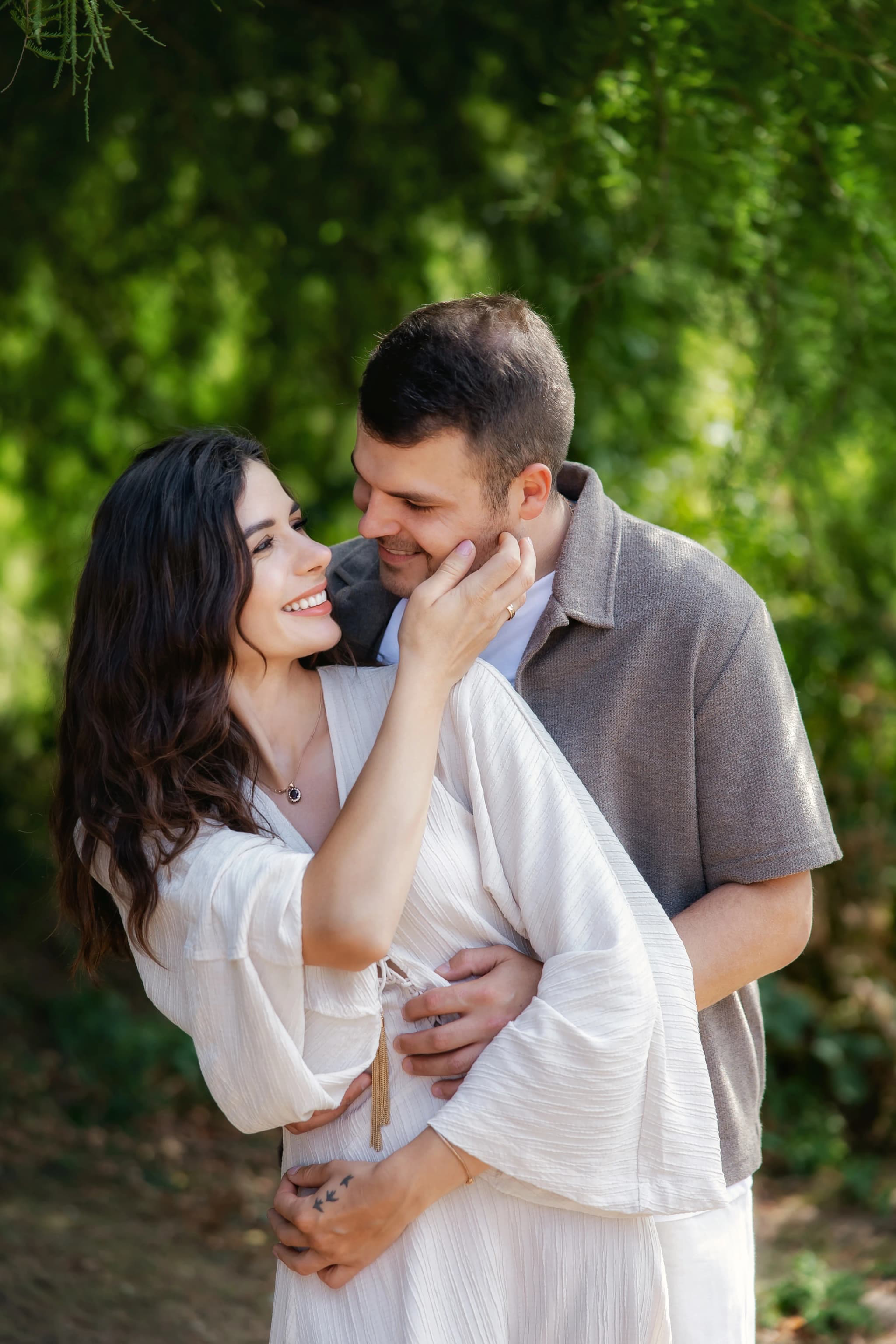
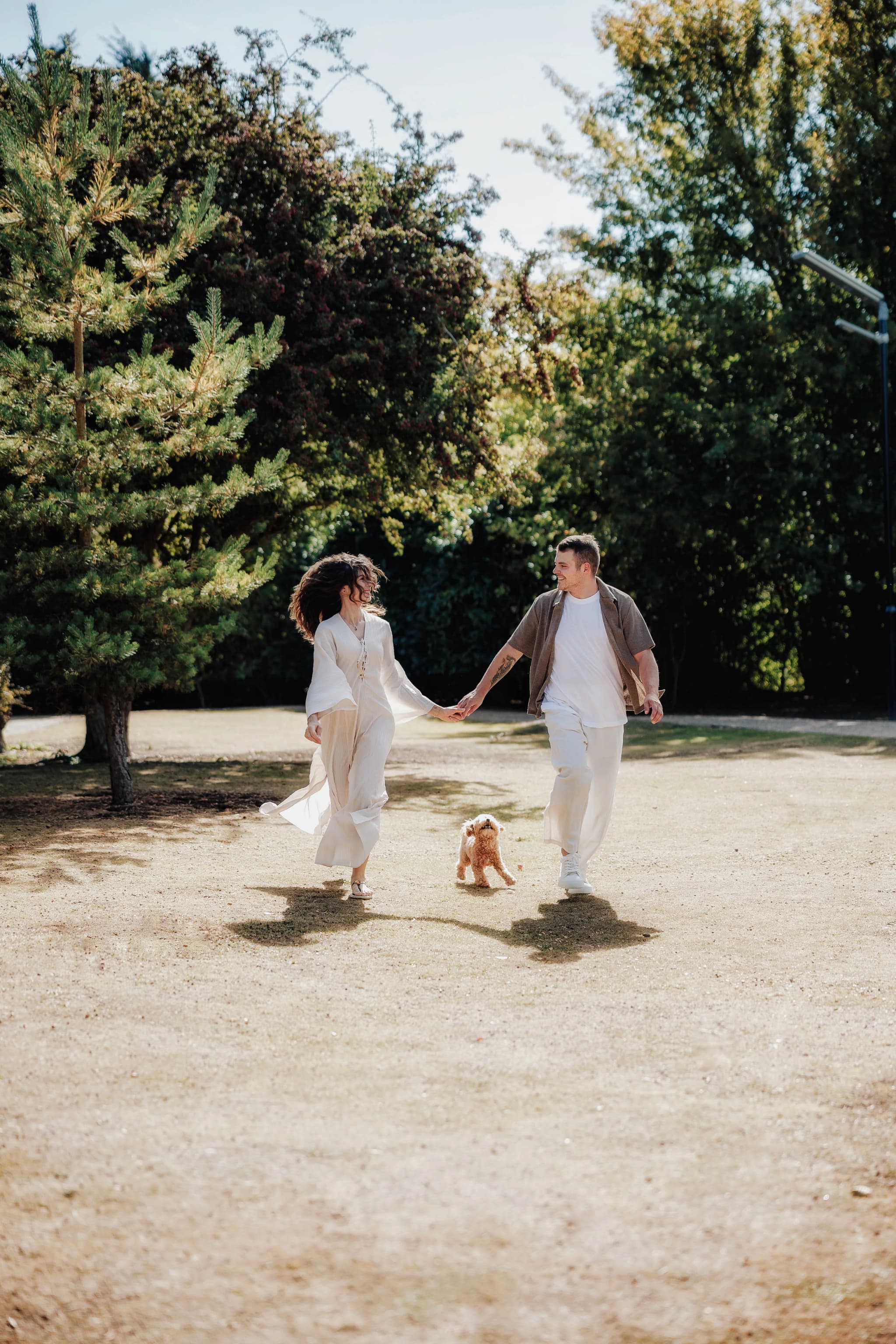
Garden settings naturally invite slower, quieter, more intimate portrait moments than a busy public location does. Walking along a path together, sitting on a bench in conversation, tending a border, or simply standing still among the planting — the narrative opportunities of a garden session feel authentic rather than staged, because they mirror the small, ordinary things couples actually do together in a garden. I try to let the space suggest the movement rather than imposing poses on top of it, and the images end up feeling genuinely personal as a result.
I also find that couples relax into a garden session at a different pace than they do in a busier public location. There is no queue of other people waiting for the same photogenic spot, no awareness of being watched by strangers, and that absence of an audience tends to soften a couple's body language within the first ten minutes in a way that can take considerably longer to achieve somewhere more exposed.
A garden setting does not have to be the whole session, either. Many couples choose to begin in a private garden or estate garden for the quieter, more intimate portraits, then move somewhere with a different character — a nearby stretch of open countryside, a Cambridge street, or the riverside — for a second half with more variety in backdrop. This combination gives a set of final images with genuine range, rather than thirty photographs that all look very similar because they were shot in the same few square metres. Where a move between locations is planned, I factor the travel time into the session length so neither half feels rushed, and I usually recommend keeping the garden portion for whichever part of the day has the softer, more forgiving light, since that is where the quieter, close-up portraits benefit most.
Booking and Access for Estate Gardens
Booking a session at one of Cambridgeshire's estate gardens usually involves a small amount of advance administration that is worth building into your planning timeline. Some properties, particularly National Trust sites, have specific policies around private photography sessions on their grounds, sometimes requiring a small fee or advance notice separate from a standard visitor entry ticket. I keep track of the current requirements for the gardens I use most often and can advise on what is needed well before the day itself, so there are no surprises at the gate.
It is also worth checking whether a garden is open to the general public on the day you have in mind, since a session shot around normal visiting hours will inevitably include other visitors in the background of wider shots. For couples who want a genuinely private feel to their images, an early morning slot before opening, where a property allows it, tends to produce the cleanest and calmest results.
Budgeting for a garden engagement session should account for any entry or private-hire fee alongside the photography fee itself, and it is worth asking early whether a property offers a reduced rate for a shorter session outside of normal visiting hours, since some do and it can make a considerable difference to the overall cost of using a well-known estate garden.
If a garden setting sounds right for your engagement session, whether your own or one of the estate gardens around Cambridgeshire, get in touch and we can plan the timing and location together.

Yana Skakun
Photographer · England
Professional wedding, family and portrait photographer based in England. Passionate about capturing authentic emotions and timeless moments.
About Yana →garden engagement session UKprivate garden couple photography UKwalled garden engagement sessionestate grounds engagement photography Cambridgeshireoutdoor garden engagement photos UKintimate garden portrait session UK
Engagement — Engagement & Love Story Photography in Cambridge & England
Engagement and pre-wedding sessions with Yana Skakun offer a natural way to get comfortable in front of the camera before your wedding day. Sessions take place at meaningful personal locations — Cambridge, the Cambridgeshire countryside, coast, woodland, or wherever your story began. This guide — Garden Engagement Sessions: The Private and Personal Portrait Setting — is part of the photography journal: practical, experience-based advice drawn from real sessions across England. Whether you arrived searching for garden engagement session uk or private garden couple photography uk, the same care and attention shapes every session Yana photographs.
Engagement & Love Story Photography sessions are available year-round, with bookings open across Cambridge, Ely, Huntingdon, Peterborough, and further afield — East England, London, the Midlands, and beyond. If you have specific questions about walled garden engagement session, mention it in your enquiry. Get in touch through the contact form above to check availability and discuss your session. Enquiries are welcomed from anywhere in the UK.
Frequently Asked Questions
What is the point of an engagement shoot?+
An engagement shoot lets you and your partner get comfortable in front of the camera before your wedding day. You'll learn how to move, where to look, and how to interact naturally — so wedding portraits feel relaxed rather than awkward. It also gives you and your photographer a chance to work together before the big day.
How long does an engagement photo session take?+
Most engagement sessions last 60–90 minutes. This gives enough time to warm up, explore two or three locations, try a few different looks, and capture a variety of shots without feeling rushed.
What should you wear for an engagement photoshoot?+
Wear outfits that feel like you — not something you'd only wear once. Complementary colours work well (you don't have to match exactly). Avoid bold logos and very small patterns. Bring a second outfit if you'd like variety. Think about where the shoot is happening and dress for the setting.
When should you do an engagement shoot?+
Ideally 6–12 months before your wedding — early enough that you can use the images for save-the-dates, but close enough to your wedding that the images feel current. Early morning or the hour before sunset gives the best natural light.
Where are good locations for engagement photos in England?+
Cambridge's Backs and botanic garden, London's parks and riverside, the Cotswolds countryside, coastal spots in Cornwall and Dorset, and historic estate gardens all make beautiful backdrops. Your photographer can suggest locations that suit your style and will photograph well in the season you're shooting.
Continue Reading
Related Articles

Engagement
Cotswolds Engagement Photography: Honey-Stone Villages & Rolling Hills
7 min read · Read Article
Engagement
Suffolk Countryside Engagement Shoot: Lavender Fields & Country Lanes
6 min read · Read Article
Engagement
Norfolk Coast Engagement Photos: Windswept & Beautiful
7 min read · Read Article
Get in Touch
Ready to Book Your Session?
Get in touch to discuss your vision — I'll reply within 24 hours.