Yana Skakun
Hinchingbrooke House Wedding Photography: Tudor Mansion Near Huntingdon
By Yana Skakun·8 April 2026·8 min read
Hinchingbrooke House is one of the most historically layered buildings in Cambridgeshire — a Tudor mansion built from the materials of a dissolved Benedictine nunnery, with strong connections to Oliver Cromwell, whose family owned it for generations, and set in seven acres of gardens and grounds on the western edge of Huntingdon. Approaching the gatehouse arch for the first time, most couples say the same thing: they had no idea a building with this much history and this much character was sitting so close to home. As a wedding venue and photography location, Hinchingbrooke has genuine historical depth and considerable architectural range, and it rewards a photographer who takes the time to understand what the building actually is before turning up with a camera.
Huntingdon itself is often overlooked in favour of Cambridge when couples in the area think about wedding venues, but Hinchingbrooke shows exactly why that is a mistake. A building of this age and significance, with grounds this substantial, sitting essentially on the edge of a market town rather than requiring a long drive out into the countryside, is a genuine rarity, and I always encourage couples weighing up their options to give it proper consideration.
The Tudor Building and Its Many Phases
Hinchingbrooke's building grew through multiple phases from the dissolved priory buildings on the site — the great entrance gateway arch, the Tudor hall behind it, and the later additions of the seventeenth century all sit alongside one another, creating a layered facade of different periods and materials rather than a single uniform design. The combination of flint, brick, and reused medieval stone creates a richly textured architectural backdrop that changes character depending on where you stand and what time of day the light is hitting it.
The gatehouse arch in particular is one of the strongest framing elements I use anywhere in Cambridgeshire. Shot from directly beneath it looking out towards the drive, or from the drive looking back through the arch towards the house, it does the work that a photographer would otherwise have to create artificially with props or staging. I also look for the junctions between building phases — the places where Tudor flintwork meets later brick — because those transitions photograph with a texture and depth that a single flat facade simply cannot match.
Because the building is now in use as a school, the practical access for wedding photography is more constrained than at a dedicated wedding venue, and I always plan a session around confirmed access windows rather than assuming the whole building and grounds are available. Knowing in advance exactly which areas are included in the wedding hire saves time on the day and avoids any awkward conversations mid-session.
The Grounds and Gardens
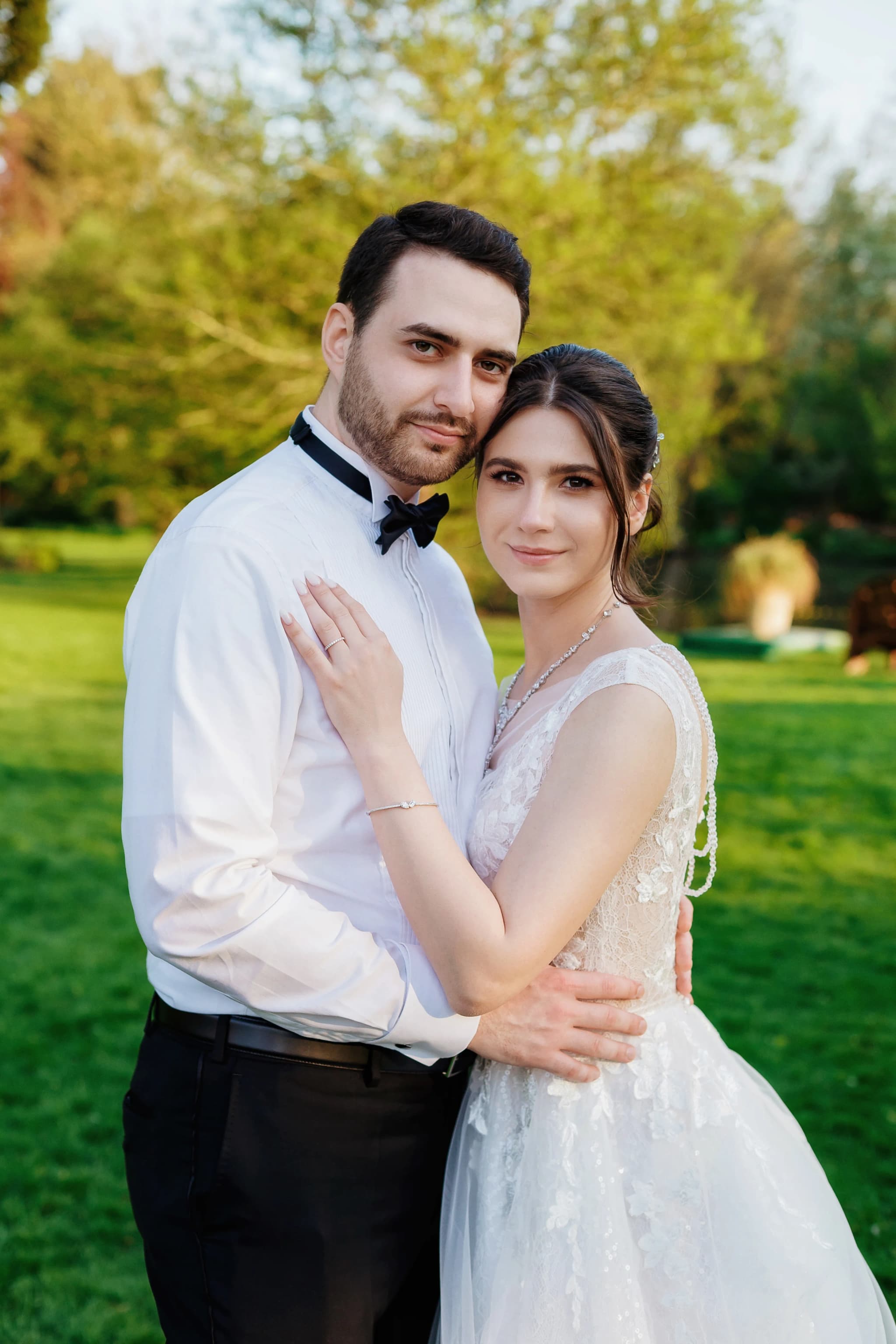
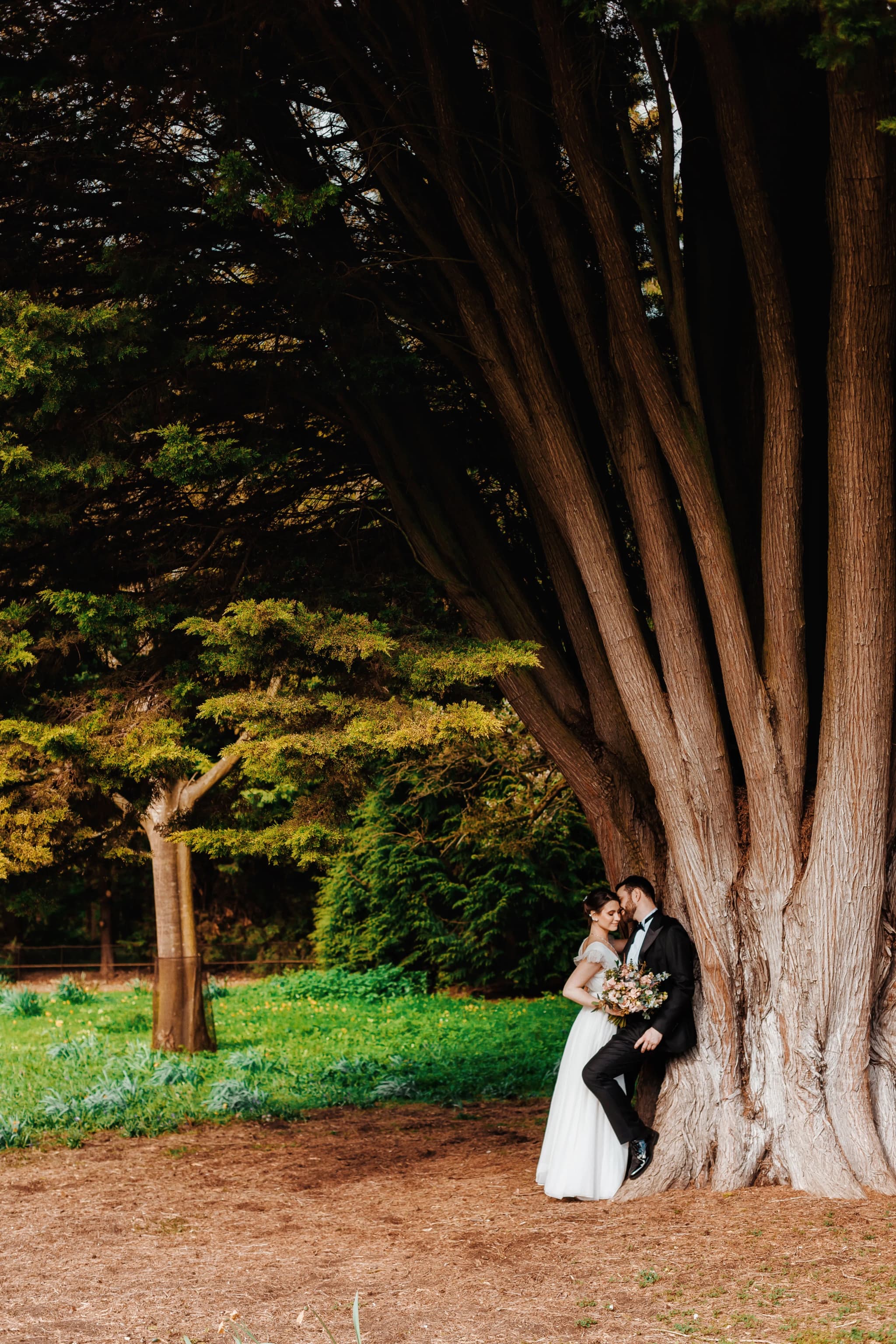
Hinchingbrooke's seven acres of grounds include formal lawns, mature specimen trees, a walled area, and open paddocks that give a genuine sense of private parkland despite the building's current use as Hinchingbrooke School. The mature trees around the lawns are old enough to provide proper dappled shade for portraits in summer, which matters enormously on a hot afternoon when direct sun becomes the enemy of flattering light rather than an asset.
The formal lawn areas work well for larger group photographs, where you need open, level ground and enough space to arrange twenty or thirty people without anyone standing awkwardly behind someone else. The walled section of the grounds, by contrast, is where I tend to take couples for quieter, more intimate portraits once the group shots are done — the enclosure creates a natural sense of privacy even with a wedding breakfast happening a hundred metres away.
Wedding hire at Hinchingbrooke includes exclusive use of designated areas for the duration of the booking, and I always recommend couples confirm current access arrangements directly with the venue well ahead of the day, since a school site can have different constraints from year to year. I build my shot list around whatever access is confirmed, rather than the other way around.
Cromwell Connections
The Cromwell family owned Hinchingbrooke for generations. It passed to Richard Cromwell, Oliver Cromwell's grandfather, who transformed the buildings substantially in the sixteenth century, converting the dissolved nunnery into the grand house that forms the core of what survives today. Oliver Cromwell himself grew up in Huntingdon, a matter of a few minutes' walk from Hinchingbrooke, and the family's presence in the town shaped the area's history for decades.
For couples with an interest in English history, this connection gives the house a narrative weight that goes well beyond its architectural interest, and it is often the detail that first drew them to the venue. The nearby Cromwell Museum in Huntingdon town centre provides an easy complementary visit either before the wedding, if you want photographs that lean into the history, or afterwards as a way of marking the connection for guests who have travelled from further afield.
I find that couples who know this history in advance often want it reflected subtly in the photographs — not through anything staged or costumed, but through choosing angles and details that emphasise the age and weight of the building rather than treating it as a generic backdrop. A little research before the day genuinely changes what a photographer notices while working.
A note on wedding photography at Hinchingbrooke House
Hinchingbrooke House is one of Cambridgeshire's most historically rich wedding venues — Tudor architecture, genuine Cromwell connections, and beautiful grounds close to Huntingdon town centre. I photograph weddings here with an eye for the building's layered history as well as its more straightforward beauty.
Discuss your Hinchingbrooke weddingLight and Timing at Hinchingbrooke
The gatehouse and main facade face broadly south-east, which means the front of the building catches good direct light through the morning, softening into a warmer glow as the afternoon progresses. For an early afternoon ceremony, this generally means the facade is at its most flattering in the couple of hours immediately following, making it a good window for formal group photographs against the house itself before the light flattens out later in the day.
The mature trees around the lawns become particularly useful in the middle of the day, when the sun is highest and least flattering for portraits taken in open ground. Moving under the canopy for ten or fifteen minutes at that point in the day protects against harsh shadows under the eyes and squinting, and it is a shift I plan into the timeline in advance rather than improvising on the spot.
Planning Your Wedding Day Around the Venue
Because Hinchingbrooke is a working school site for most of the year, timing and access require more careful coordination than at a purpose-built wedding venue. I always recommend a pre-wedding conversation, ideally with a site visit if your timeline allows it, so that the group photograph locations, the ceremony space, and the reception area are all mapped out before the day itself rather than being worked out on the fly.
This kind of preparation matters more at a venue like Hinchingbrooke than at a location I already know intimately, precisely because the building's scale and history mean there is a great deal to see and use well, and a rushed, unplanned approach risks missing what makes the venue special in the first place. A little advance planning turns those seven acres and that layered Tudor facade into a coherent set of images rather than a scattered handful of pretty but disconnected shots.
I also find it worth discussing with couples in advance how they want the building's history reflected, if at all, in their photographs. Some want the Tudor and Cromwell connections front and centre, choosing angles and details that emphasise the age of the building; others simply want a beautiful, historic setting without needing every image to reference the history explicitly. Neither approach is wrong, but knowing which one a couple prefers shapes the choices I make throughout the day.
If Hinchingbrooke House is on your shortlist, or you have already booked and are looking for a photographer who understands the building's history and how to use its grounds well, get in touch and I would be glad to talk through your day. Whether you want the Tudor architecture and Cromwell history woven visibly through your gallery or simply want a beautiful, historic backdrop for your celebration, a short conversation beforehand ensures the day is planned around what actually matters to you.


Yana Skakun
Photographer · England
Professional wedding, family and portrait photographer based in England. Passionate about capturing authentic emotions and timeless moments.
About Yana →Hinchingbrooke House weddingTudor mansion wedding CambridgeshireHinchingbrooke House wedding photographermedieval priory wedding Huntingdonhistoric wedding venue Huntingdon
Venue Spotlights — Wedding & Portrait Photography in Cambridge & England
Yana Skakun photographs weddings and portrait sessions at venues across Cambridge, East England, London, and beyond. Venue scouting and creative collaboration are part of every booking — every location is worked with rather than against. This guide — Hinchingbrooke House Wedding Photography: Tudor Mansion Near Huntingdon — is part of the photography journal: practical, experience-based advice drawn from real sessions across England. Whether you arrived searching for hinchingbrooke house wedding or tudor mansion wedding cambridgeshire, the same care and attention shapes every session Yana photographs.
Wedding & Portrait Photography sessions are available year-round, with bookings open across Cambridge, Ely, Huntingdon, Peterborough, and further afield — East England, London, the Midlands, and beyond. If you have specific questions about hinchingbrooke house wedding photographer, mention it in your enquiry. Get in touch through the contact form above to check availability and discuss your session. Enquiries are welcomed from anywhere in the UK.
Frequently Asked Questions
What should I look for when visiting a wedding venue?+
Look at the natural light at the time of day your ceremony will take place. Walk outside and consider where portraits will happen — is there an area with shade, a garden, a meaningful backdrop? Ask about vendor restrictions (some venues require you to use their preferred photographer list). Check logistics: where do guests park, where does the bridal party get ready, is there a bridal suite?
How far in advance should you book a wedding venue?+
Popular venues book 18–24 months ahead, especially for peak season (May–September) Saturdays. If you're flexible on date and day of week, 12 months is usually sufficient. Always view a venue before booking — photos online rarely show the full picture of scale, light, or atmosphere.
What questions should you ask a wedding venue?+
Ask: what's included in the venue hire? Can you bring your own caterer? What are the noise restrictions and finishing times? Is there accommodation on site? What's the plan if it rains for outdoor ceremonies? What is the minimum and maximum guest capacity? Are there any vendor restrictions or preferred supplier lists?
How do venue locations affect wedding photography?+
Venue architecture, grounds, and natural light dramatically affect the quality of wedding photography. Beautiful venues with varied backdrops, good natural light in the key rooms, and outdoor space for portraits make the photographer's job much easier. When choosing a venue, visiting at the same time of day as your planned ceremony is helpful for assessing the light.
What makes a venue photogenic for weddings?+
Natural light (large windows, north-facing rooms), textured backgrounds (stone walls, wooden beams, floral arrangements), varied outdoor spaces (gardens, courtyards, woodland, water features), and interesting architectural details. Venues that feel authentic to their setting — a barn that's actually rustic, a manor house with period features — photograph better than generic white box venues.
Continue Reading
Related Articles

Venue Spotlights
Beach and Coastal Portrait Photography in England
13 min read · Read Article
Venue Spotlights
Autumn Photography Locations in Cambridgeshire: The Complete Seasonal Guide
12 min read · Read Article
Venue Spotlights
Cherry Blossom Photography Locations in England: Where & When to Shoot
11 min read · Read Article
Get in Touch
Ready to Book Your Session?
Get in touch to discuss your vision — I'll reply within 24 hours.