Yana Skakun
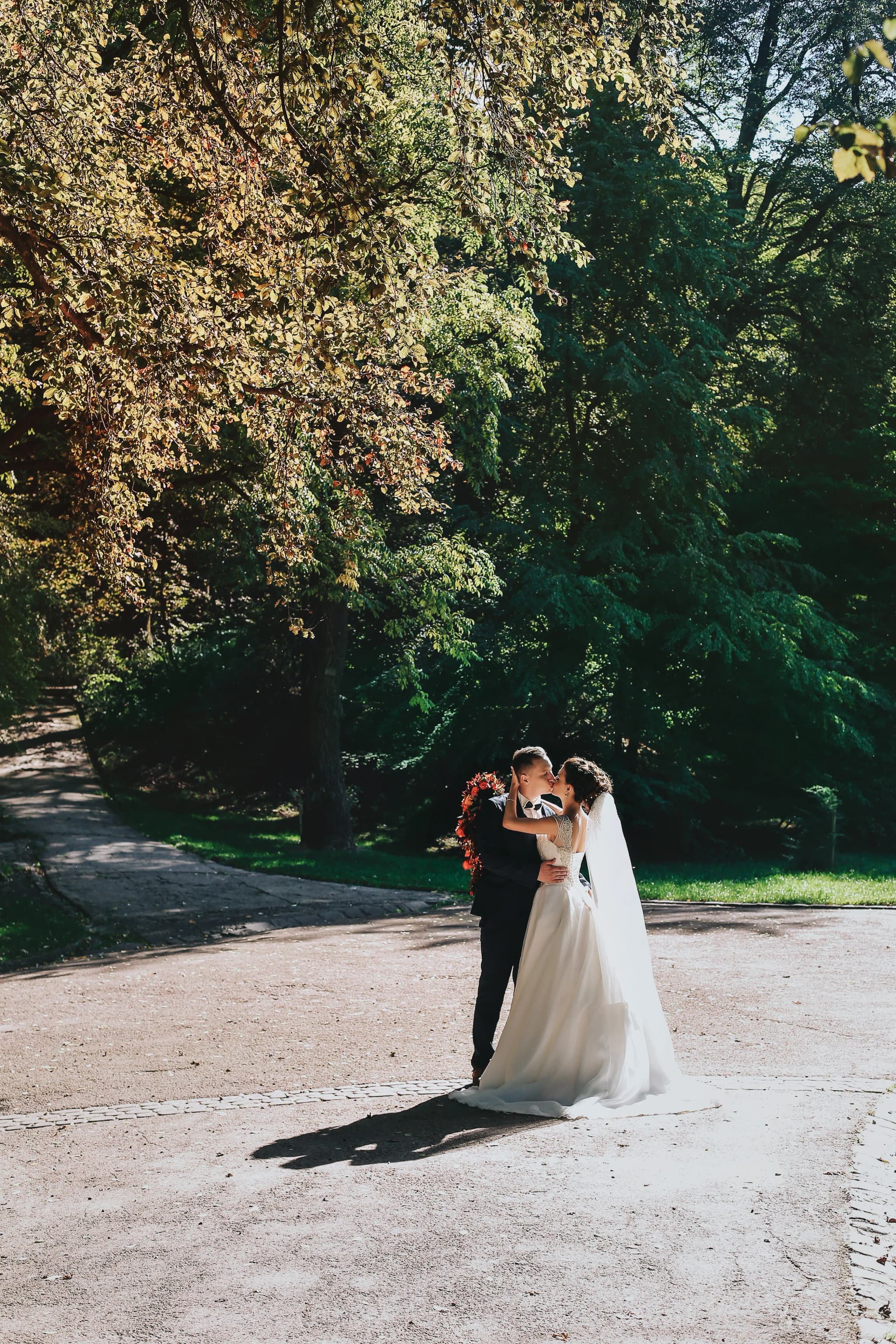
Kew Gardens Wedding Photography: Botanical Splendour in West London
By Yana Skakun·12 March 2026·8 min read
Kew Gardens is one of the most extraordinary wedding photography locations in England — 300 acres of UNESCO World Heritage Site botanical gardens on the Thames in west London, with Victorian glasshouses, Japanese gardens, ancient woodland, wildflower meadows, and some of the finest specimen trees in the country. For couples who want maximum photographic variety within a single licensed venue, Kew is genuinely exceptional, and it is a location I return to again and again because it rewards a photographer who knows it well. Every visit still turns up new light, a tree in a different state of colour, or a corner of the garden I had not fully explored on previous shoots. This guide draws on that experience to help couples planning a Kew wedding understand what the gardens actually offer, how the venue works in practice, and how to plan a timeline that makes the most of the light and the space.
Photography Locations Within Kew Gardens
The Palm House — Kew's iconic Victorian cast-iron glasshouse — is the most recognisable photography location on the estate, and for good reason. Its curved iron and glass structure reflects in the Pond directly in front of it, creating one of the most dramatic architectural reflections available anywhere in Britain. The interior is extraordinary in a completely different way: soaring tropical palms and tree ferns create a genuine jungle atmosphere, with warm, humid, filtered light that produces imagery unlike anything achievable in an English outdoor setting. The Palm House Pond surroundings, with their ornamental bedding, formal gravel paths, and the glasshouse itself as backdrop, form the single most photographically iconic setting at Kew and are usually where I recommend couples spend a meaningful portion of their portrait time.
The Temperate House, the world's largest surviving Victorian glasshouse, offers even more dramatic interior scale — palms reaching some fifteen metres inside a light-filled glass cathedral that recently underwent an extensive, multi-year restoration. The quality of light inside, filtered through acres of glass and softened further by dense tropical foliage, is extraordinarily flattering for portraiture and works beautifully even on a grey day when outdoor light elsewhere in the gardens is flat. The Waterlily House, smaller and more intimate, holds Amazonian water lilies floating in a still pool surrounded by tropical planting, and creates the kind of quiet, reflective portraits that are simply not possible anywhere outdoors.
The Japanese Minka House and its surrounding Japanese landscape garden offer a completely different aesthetic — raked gravel, maples, clipped pines, and an authentic wooden farmhouse creating a meditative setting that feels a world away from the rest of the gardens. The Treetop Walkway lifts couples eighteen metres above the woodland floor for elevated portraits with the canopy as foreground and glimpses of the London skyline in the distance, a location I use less for formal portraits and more for a genuinely different perspective within the day's gallery. The Bluebell Wood, at its best in late April and into early May, transforms the woodland floor into a carpet of blue for a fortnight or so each spring — one of England's most beautiful natural photographic settings and one that requires precise timing to catch.
Beyond these headline locations, Kew has quieter corners that photograph just as well and are far less busy on a wedding day. The Rock Garden, the Grass Garden, the avenues of mature limes near the Broad Walk, and the area around the Ruined Arch each offer their own texture and light. I always walk a Kew wedding couple through a shortlist of two or three locations rather than trying to cover the entire estate in the time available — the gardens are large enough that trying to see everything usually means seeing nothing properly.
Kew As a Wedding Venue
Kew Gardens hosts wedding ceremonies and receptions in a small number of licensed spaces, most notably the Nash Conservatory, the Orangery, and the Shirley Sherwood Gallery of Botanical Art. The Orangery — an eighteenth-century building designed by Sir William Chambers, entirely naturally lit through tall arched windows — is one of the most sought-after ceremony and reception spaces in west London, and its popularity means dates book up well in advance. The Nash Conservatory offers a more intimate licensed space with direct access onto the formal garden surrounding it, which works well for smaller weddings that still want that immediate connection to the gardens for photographs between the ceremony and the reception.
Because Kew operates as a public botanical garden as well as a wedding venue, photography arrangements need to be agreed specifically with the venue's events team as part of the booking process. This is worth understanding early: the gardens are open to paying visitors throughout the day, so certain iconic spots — the Palm House Pond in particular — can be busy with the general public during peak visiting hours. Exclusive or semi-exclusive access to specific areas can sometimes be arranged for a defined window, and this is something to discuss with the venue directly when the booking is confirmed, then factor into the photography timeline. Working with a photographer who has shot at Kew before and understands both the licensing arrangements and the practical rhythm of a public garden makes a genuine difference to how smoothly the day runs.
Kew also enforces its own policies around professional photography equipment, tripods, and additional lighting within the gardens, and these can vary depending on which areas are booked and at what time of year. I liaise directly with the events team ahead of any Kew wedding to confirm exactly what is permitted, so there are no surprises on the day itself and no time lost negotiating access while the light is at its best.
Seasonal Highlights for Kew Weddings
Every season at Kew offers something genuinely outstanding, which is part of why the gardens are such a compelling wedding location year-round rather than only in summer. The Orchid Festival in February fills the Palm House with extraordinary tropical colour and is a wonderful backdrop for a winter wedding when the outdoor gardens are quieter and more subdued. The Cherry Walk in late March provides one of the most spectacular blossom tunnels in England — a cloud of pink and white over the path for a window of roughly two weeks, timing that shifts slightly year to year depending on the spring weather.
The Bluebell Wood in late April, the roses in the formal Rose Garden through June, and the wildflower meadows at their peak in July and August each create settings that essentially only Kew, among London's wedding venues, can offer within a single site. Autumn at Kew is spectacular in its own right — the arboretum holds some of the finest mature specimen trees in Britain, many planted well over a century ago, and their autumn colour from October through into November rivals anything in the countryside while remaining a short journey from central London. I keep a rolling sense of which areas of the gardens are at their best across the year, and for couples who have some flexibility on their wedding date, that seasonal knowledge can genuinely shape which month makes sense for the images they want.
Planning a Photography Timeline That Works With the Gardens
A Kew wedding photography timeline needs to account for the scale of the site and the fact that it remains open to the public for most of the day. I generally recommend building in enough time to walk between locations at an unhurried pace — the distance from the Palm House to the Japanese Garden or the Temperate House is not short, and rushing between them in wedding shoes eats into the time meant for actual photographs. Where possible, I aim for couple portraits either in the earlier part of the afternoon, when the light through the glasshouses is at its most flattering, or in the last hour or so before the gardens close, when visitor numbers thin out considerably and certain areas can feel almost private.
Weather is worth planning around as well, more so than at many venues, precisely because Kew's glasshouses give a wedding day genuine flexibility. A wet or overcast forecast is far less of a concern here than at a purely outdoor venue, because the Palm House, Temperate House, and Waterlily House all provide beautiful, entirely weatherproof photographic settings that do not feel like a compromise or a backup plan. I always build a wet-weather sequence into a Kew timeline as standard, not as an afterthought, because the interior locations are strong enough to stand on their own.
Group and family photographs work best gathered in one or two accessible locations near the ceremony or reception space, rather than trying to move a full wedding party across the gardens. I typically suggest the Orangery lawn or the area immediately around the Nash Conservatory for these, keeping the wider gardens — the Palm House Pond, the Japanese Garden, the Treetop Walkway — for the couple portraits where a smaller group can move more freely and spend proper time in each setting.
Kew Gardens wedding photography
I photograph weddings and portrait sessions at Kew Gardens with detailed knowledge of the best light, locations, and seasonal timing across the estate, and I liaise directly with the venue's events team to plan access ahead of the day.
Enquire about Kew Gardens wedding photographyWorking Around the Public Gardens on Your Wedding Day
It is worth setting expectations honestly: Kew is a working public attraction, and even with a licensed ceremony space booked, other visitors will generally be present in the wider gardens during your wedding day. In practice this is far less disruptive than couples often expect. Visitors are almost always respectful of a wedding party, and a good part of my role on the day is choosing angles, timing, and locations that keep the images feeling intimate and uncrowded regardless of who else happens to be nearby. Early morning or late-afternoon slots, and the quieter corners of the gardens away from the main visitor routes, are usually all that is needed to achieve that.
I also keep a mental map of which parts of Kew tend to be busiest at which times of day and year — the Palm House Pond at midday on a sunny bank holiday is a very different proposition to the same spot on a Tuesday afternoon in November — and I factor that directly into the shot list and running order I put together with each couple in advance. None of this needs to be something you worry about; it is simply part of the planning that happens before the day so that on the day itself you can focus entirely on getting married.
Kew Gardens rewards proper planning more than almost any other wedding venue I work at, simply because there is so much within the one site — glasshouses, woodland, formal gardens, and some of the finest mature trees in England, all photographable across every season of the year. Getting the most from it means understanding the venue's licensing arrangements, building a realistic timeline around its scale, and knowing, from experience, exactly where the light and the crowds will be at any given hour. If you are considering Kew for your wedding day and would like to talk through locations, seasonal timing, or how a realistic photography timeline might look, get in touch and I would be glad to help you plan it properly.

Yana Skakun
Photographer · England
Professional wedding, family and portrait photographer based in England. Passionate about capturing authentic emotions and timeless moments.
About Yana →Kew Gardens weddingKew wedding photographerRoyal Botanic Gardens wedding photographyKew Gardens wedding venue
Venue Spotlights — Wedding & Portrait Photography in Cambridge & England
Yana Skakun photographs weddings and portrait sessions at venues across Cambridge, East England, London, and beyond. Venue scouting and creative collaboration are part of every booking — every location is worked with rather than against. This guide — Kew Gardens Wedding Photography: Botanical Splendour in West London — is part of the photography journal: practical, experience-based advice drawn from real sessions across England. Whether you arrived searching for kew gardens wedding or kew wedding photographer, the same care and attention shapes every session Yana photographs.
Wedding & Portrait Photography sessions are available year-round, with bookings open across Cambridge, Ely, Huntingdon, Peterborough, and further afield — East England, London, the Midlands, and beyond. If you have specific questions about royal botanic gardens wedding photography, mention it in your enquiry. Get in touch through the contact form above to check availability and discuss your session. Enquiries are welcomed from anywhere in the UK.
Frequently Asked Questions
What should I look for when visiting a wedding venue?+
Look at the natural light at the time of day your ceremony will take place. Walk outside and consider where portraits will happen — is there an area with shade, a garden, a meaningful backdrop? Ask about vendor restrictions (some venues require you to use their preferred photographer list). Check logistics: where do guests park, where does the bridal party get ready, is there a bridal suite?
How far in advance should you book a wedding venue?+
Popular venues book 18–24 months ahead, especially for peak season (May–September) Saturdays. If you're flexible on date and day of week, 12 months is usually sufficient. Always view a venue before booking — photos online rarely show the full picture of scale, light, or atmosphere.
What questions should you ask a wedding venue?+
Ask: what's included in the venue hire? Can you bring your own caterer? What are the noise restrictions and finishing times? Is there accommodation on site? What's the plan if it rains for outdoor ceremonies? What is the minimum and maximum guest capacity? Are there any vendor restrictions or preferred supplier lists?
How do venue locations affect wedding photography?+
Venue architecture, grounds, and natural light dramatically affect the quality of wedding photography. Beautiful venues with varied backdrops, good natural light in the key rooms, and outdoor space for portraits make the photographer's job much easier. When choosing a venue, visiting at the same time of day as your planned ceremony is helpful for assessing the light.
What makes a venue photogenic for weddings?+
Natural light (large windows, north-facing rooms), textured backgrounds (stone walls, wooden beams, floral arrangements), varied outdoor spaces (gardens, courtyards, woodland, water features), and interesting architectural details. Venues that feel authentic to their setting — a barn that's actually rustic, a manor house with period features — photograph better than generic white box venues.
Continue Reading
Related Articles

Venue Spotlights
Beach and Coastal Portrait Photography in England
13 min read · Read Article
Venue Spotlights
Autumn Photography Locations in Cambridgeshire: The Complete Seasonal Guide
12 min read · Read Article
Venue Spotlights
Cherry Blossom Photography Locations in England: Where & When to Shoot
11 min read · Read Article
Get in Touch
Ready to Book Your Session?
Get in touch to discuss your vision — I'll reply within 24 hours.