Yana Skakun
Leeds Castle Wedding Photography: A Fairytale Venue in Kent
By Yana Skakun·12 March 2026·8 min read
Leeds Castle in Kent is, by a wide margin, one of the most photographically extraordinary wedding venues I work at in England — a medieval castle rising from a lake in the Kent Weald, its stone towers and battlements reflected in still water, surrounded by five hundred acres of parkland, formal gardens, and ancient woodland. I have photographed weddings at country houses, barns, city hotels, and marquees across the east of England, and very few venues offer the combination Leeds Castle does: genuine medieval architecture, water reflections that change character throughout the day, and an English pastoral landscape that unfolds in every direction from the castle walls. It is a full day's drive from Cambridge and worth every mile of it.
The Lake and the Causeway
The castle's defining photographic quality is its relationship with water. Leeds Castle stands on two islands in a lake formed by the River Len, and every approach to the building offers reflections of the medieval towers, the keep, and the gatehouse in the surrounding water. On a still morning, before any wind has disturbed the surface, the reflections are close to a perfect mirror — genuinely difficult to tell, in a photograph, which half of the frame is stone and which is water. I try to build in time early in the day, before guests arrive and before any breeze picks up, to make the most of these conditions if the couple is getting ready on site.
The long causeway approach to the castle, crossing the lake with the main gatehouse directly ahead, is the most photographed viewpoint in Kent for good reason. Couple portraits taken on this causeway, with the castle reflected in the water behind them, are consistently among the strongest images from any wedding here. The light on the causeway shifts constantly through the day — flat and even under cloud, dramatic and directional in low sun, entirely different again at dusk when the castle's windows begin to glow against the darkening water. I always plan at least one dedicated portrait slot on or near the causeway, timed to whichever light window suits the couple's day best.
Swans and waterfowl are a near-constant presence on the lake, and while I never rely on them for a shot, they do turn up in the background of images with a regularity that adds something genuinely lovely to the location — a detail unique to this particular castle among the venues I work at.
Gardens and Grounds
The walled garden adjacent to the castle keep is one of the most intimate portrait settings on the estate — enclosed stone walls, formal planting beds, and the castle's own walls rising immediately above, creating a sense of enclosure and grandeur at the same time. It is a favourite for smaller, quieter portrait moments away from the main wedding party, particularly for couples who want a few minutes of calm between the ceremony and the reception.
The Wood Garden, with its stream and naturalistic planting, offers a completely different character to the formal walled garden — lush, informal, and genuinely spectacular in spring when bulbs and early flowering shrubs are at their best. It photographs beautifully for couples who want something softer and greener than the castle's stone backdrop, and it is far enough from the main visitor routes that it stays quiet even on a day when the wider grounds are busy.
Beyond the gardens, the parkland avenues — great oaks and chestnuts lining the drives towards the castle — give classic English landscape settings that frame a couple with natural grandeur rather than architecture. I use these for wider, more editorial portraits, particularly later in the afternoon when the light comes in low through the tree line. The estate also includes an aviary, a maze, and grotto, and while these are more novelty than core portrait locations, a few minutes spent at the maze entrance or among the aviary's planting can add a lighter, more playful set of images to round out a couple's gallery.
Ceremony and Reception Rooms
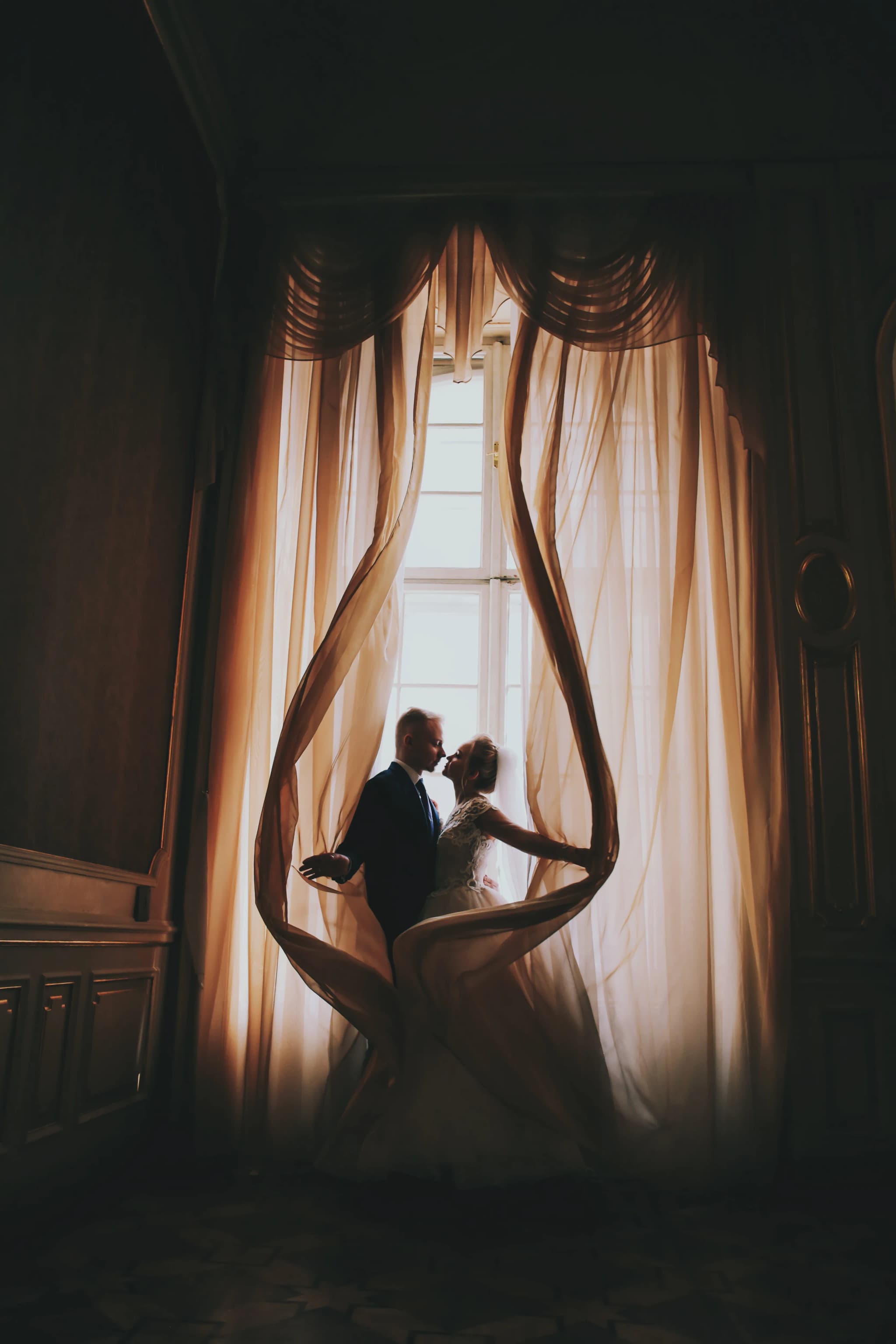
Leeds Castle's interior rooms are magnificent, and several are licensed for ceremonies and available for wedding breakfasts and receptions. The Henry VIII Banqueting Suite — a purpose-built medieval great hall with a barrel-vaulted ceiling, stone walls, and tapestries — has the scale and character to produce genuinely cinematic interior wedding photography, whether the couple is marrying there directly or simply using it for their reception. The Great Hall and the Queen's private apartments offer smaller, more intimate settings with their own distinct character, and both benefit from tall windows that let in a good amount of natural light, which makes a real difference to ceremony photography when supplementary lighting would otherwise be needed.
Because the interior rooms vary so much in scale and light, I always ask couples in advance which room their ceremony and reception will be held in, and I visit or research the room's specific light conditions ahead of the day wherever possible. A ceremony in the Banqueting Suite at midday, with strong sun coming through the tall windows, needs a different approach to metering and positioning than an evening reception in the same room lit mostly by candlelight and the room's own fittings. Knowing this in advance means I am not working it out for the first time on the wedding day itself.
Planning the Day Around the Light
Because Leeds Castle offers so many distinct settings — lake, causeway, walled garden, Wood Garden, parkland, and several interior rooms — the single most valuable thing a couple can do in advance is build a small amount of flexibility into their photography timeline rather than trying to visit every location. I would always rather spend twenty unhurried minutes at two or three locations that suit the day's light than rush through six locations in the same amount of time. When couples ask for a suggested running order, I generally recommend prioritising the causeway and lake for either the earliest available light after the ceremony or the last hour before sunset, since both ends of the day tend to produce the strongest reflections and the most flattering light on the castle's stonework.
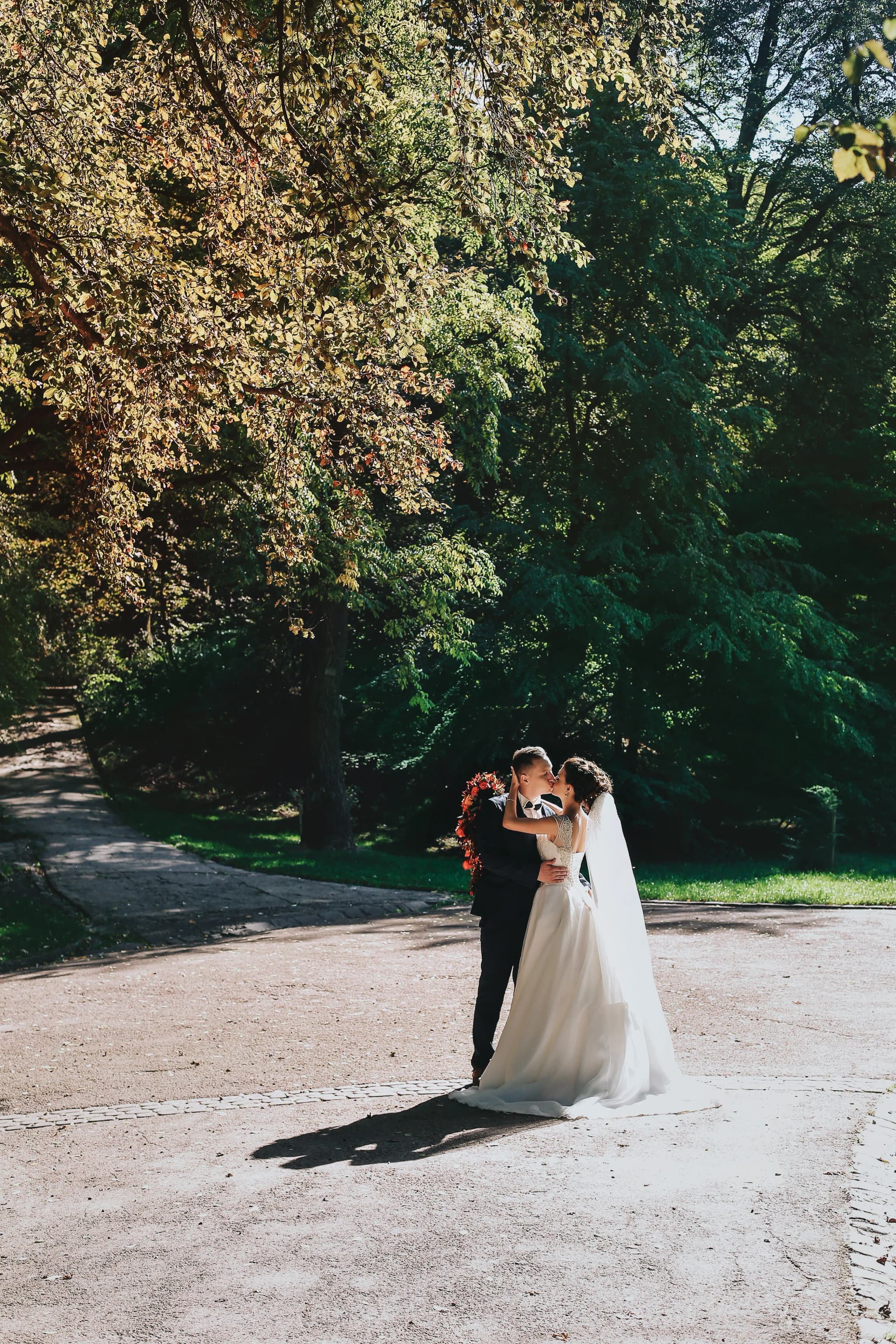
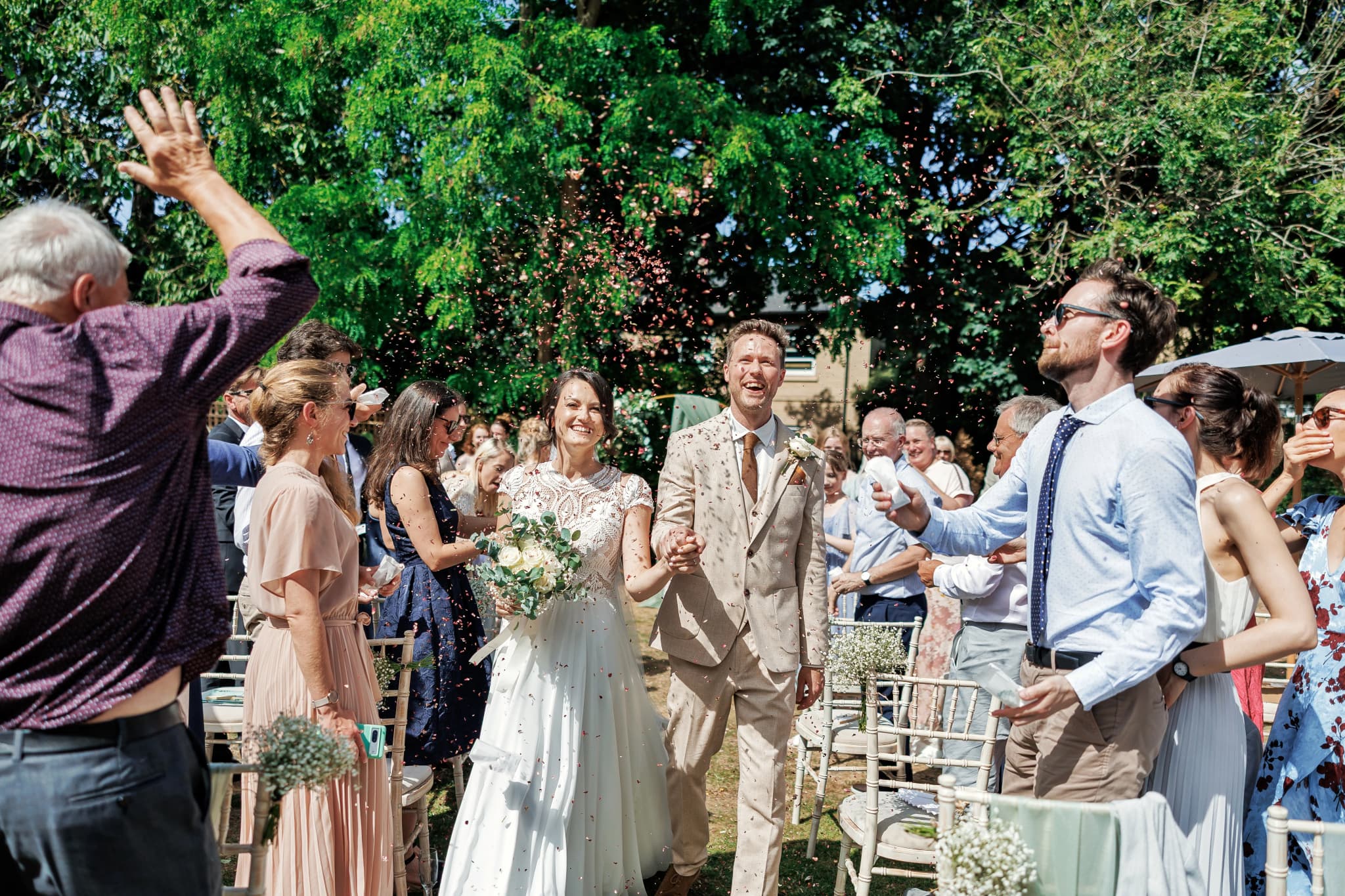
Confetti moments and group photographs tend to work well just outside the ceremony room, with the walled garden or a parkland avenue as a natural next stop for couple portraits once the formal group shots are done. Late afternoon and early evening are, in my experience, the best time for the wider landscape shots — the low sun coming through the parkland trees and catching the castle's towers is difficult to match at any other point in the day. If the wedding breakfast is scheduled indoors, I try to negotiate a short window either just before or just after the meal to step back outside while there is still good light left, rather than leaving the outdoor portraits until it is too dark to use them well.
Seasonal Character of the Grounds
Spring at Leeds Castle is genuinely one of the best times to marry here photographically — the Wood Garden fills with daffodils, bluebells, and flowering shrubs, and the lake reflects the fresh green growth of the parkland trees as they come into leaf. Summer brings the richest green of the wider gardens and the longest evening light, with late golden hour reflecting deep orange and amber across the lake surface, which suits couples wanting a classic warm-toned wedding album. Autumn turns the parkland to gold and rust, and misty autumn mornings over the still lake have an atmospheric quality that couples marrying earlier in the day, in particular, benefit from. Winter weddings here, while less common, have their own extraordinary character — frost on the battlements, bare trees reflected in perfectly still water, and interiors that feel especially warm and inviting by contrast. Whatever season a couple chooses, I plan the day's photography around what that particular time of year does best at this venue, rather than applying the same approach regardless of the date.
Marrying at Leeds Castle?
I travel to Leeds Castle for weddings and know the lake, causeway, gardens, and interior rooms well, along with how the light moves across the grounds through the seasons. Get in touch to talk through your date and how the day might run.
Enquire about Leeds Castle wedding photographyLeeds Castle rewards a couple who is willing to give the grounds a little time rather than treating it as a single backdrop — the lake and causeway alone can carry a whole portrait sequence, and the gardens, parkland, and interior rooms each add something genuinely different to a wedding gallery. I have found that the weddings which get the very best out of this venue are the ones where the timeline leaves room to move between two or three locations unhurried, rather than trying to capture everything the estate offers in a single rushed hour. If you are planning a wedding at Leeds Castle, or considering it as one of a few venues, I would be glad to talk through timings, seasons, and what the light does across the grounds — get in touch and we can start planning.


Yana Skakun
Photographer · England
Professional wedding, family and portrait photographer based in England. Passionate about capturing authentic emotions and timeless moments.
About Yana →Leeds Castle weddingLeeds Castle wedding photographerKent castle wedding photographyLeeds Castle photography
Venue Spotlights — Wedding & Portrait Photography in Cambridge & England
Yana Skakun photographs weddings and portrait sessions at venues across Cambridge, East England, London, and beyond. Venue scouting and creative collaboration are part of every booking — every location is worked with rather than against. This guide — Leeds Castle Wedding Photography: A Fairytale Venue in Kent — is part of the photography journal: practical, experience-based advice drawn from real sessions across England. Whether you arrived searching for leeds castle wedding or leeds castle wedding photographer, the same care and attention shapes every session Yana photographs.
Wedding & Portrait Photography sessions are available year-round, with bookings open across Cambridge, Ely, Huntingdon, Peterborough, and further afield — East England, London, the Midlands, and beyond. If you have specific questions about kent castle wedding photography, mention it in your enquiry. Get in touch through the contact form above to check availability and discuss your session. Enquiries are welcomed from anywhere in the UK.
Frequently Asked Questions
What should I look for when visiting a wedding venue?+
Look at the natural light at the time of day your ceremony will take place. Walk outside and consider where portraits will happen — is there an area with shade, a garden, a meaningful backdrop? Ask about vendor restrictions (some venues require you to use their preferred photographer list). Check logistics: where do guests park, where does the bridal party get ready, is there a bridal suite?
How far in advance should you book a wedding venue?+
Popular venues book 18–24 months ahead, especially for peak season (May–September) Saturdays. If you're flexible on date and day of week, 12 months is usually sufficient. Always view a venue before booking — photos online rarely show the full picture of scale, light, or atmosphere.
What questions should you ask a wedding venue?+
Ask: what's included in the venue hire? Can you bring your own caterer? What are the noise restrictions and finishing times? Is there accommodation on site? What's the plan if it rains for outdoor ceremonies? What is the minimum and maximum guest capacity? Are there any vendor restrictions or preferred supplier lists?
How do venue locations affect wedding photography?+
Venue architecture, grounds, and natural light dramatically affect the quality of wedding photography. Beautiful venues with varied backdrops, good natural light in the key rooms, and outdoor space for portraits make the photographer's job much easier. When choosing a venue, visiting at the same time of day as your planned ceremony is helpful for assessing the light.
What makes a venue photogenic for weddings?+
Natural light (large windows, north-facing rooms), textured backgrounds (stone walls, wooden beams, floral arrangements), varied outdoor spaces (gardens, courtyards, woodland, water features), and interesting architectural details. Venues that feel authentic to their setting — a barn that's actually rustic, a manor house with period features — photograph better than generic white box venues.
Continue Reading
Related Articles

Venue Spotlights
Beach and Coastal Portrait Photography in England
13 min read · Read Article
Venue Spotlights
Autumn Photography Locations in Cambridgeshire: The Complete Seasonal Guide
12 min read · Read Article
Venue Spotlights
Cherry Blossom Photography Locations in England: Where & When to Shoot
11 min read · Read Article
Get in Touch
Ready to Book Your Session?
Get in touch to discuss your vision — I'll reply within 24 hours.