Yana Skakun
Peckforton Castle Wedding Photography: The Sandstone Fairy Tale
By Yana Skakun·22 March 2026·8 min read
There are a handful of wedding venues in England where the building itself does most of the heavy lifting for a photographer, and Peckforton Castle is one of them. It is a genuine, full-scale Victorian Gothic castle — not a folly, not a converted barn dressed up with turrets, but a complete and habitable castle built in the 1840s on a sandstone ridge above the Cheshire Plain, surrounded by fifty acres of ancient woodland. I have photographed weddings there across different seasons and different weather, and it remains one of the most rewarding venues I work at anywhere in the country. This guide is for couples who are considering Peckforton, or who have already booked it and want to understand how to get the most from the castle, the grounds, and the light across the course of the day.
A Castle That Is Actually a Castle
Peckforton was designed by the architect Edward Blore for the first Baron Tollemache and completed in 1851. Nikolaus Pevsner, in his survey of English architecture, described it as one of the most ambitious and expensive attempts to build a genuine castle in the medieval manner during the Victorian period. The distinction matters for photography. A great many Victorian Gothic buildings borrow medieval details — pointed arches, turrets, crenellations — and apply them to what is really a church, a school, or a manor house. Peckforton is laid out as an actual castle would have been: a gatehouse you pass through, round towers at the corners, a great hall at the centre, a great chamber, a kitchen court, and gardens arranged around the whole. Every room, however, is finished to full Victorian comfort, so none of the atmosphere comes at the expense of practicality on the day.
The stone itself is part of what makes Peckforton so photogenic. It is built from local sandstone with a warm, faintly pink-red colour that shifts through the day — pale and almost grey under flat overcast light, then deepening into rust and copper tones as the sun drops in the afternoon. The gatehouse arch, the round towers, and the battlements all give strong architectural frames to work with, so a portrait taken against the castle wall rarely needs much else added to it.
The Great Hall as a Ceremony Space
The Great Hall is, for most couples, the heart of a Peckforton wedding. It has a soaring timber roof, a stone floor, and a run of tall Gothic windows along one side that flood the room with natural light on a clear day. What makes the hall so good to photograph in is that the light comes from height rather than from the side at eye level, so it falls across the room in broad, even beams rather than harsh directional shafts. On a bright morning or early afternoon, that light catches the stone tracery of the windows and lays patterns across the floor that need no additional lighting at all — I regularly photograph ceremonies here using nothing but what the room itself provides.
Beyond the hall, the adjoining drawing rooms and dining rooms have a more intimate, domestic character — panelled walls, deep window seats, and furnishings in keeping with a Cheshire country estate. These rooms are where I tend to photograph the smaller, quieter moments of the day: speeches, first looks, family portraits that need a controlled indoor setting away from weather. The contrast between the grandeur of the hall and the warmth of these smaller rooms gives a wedding gallery from Peckforton a real sense of range.
The Woodland and Grounds
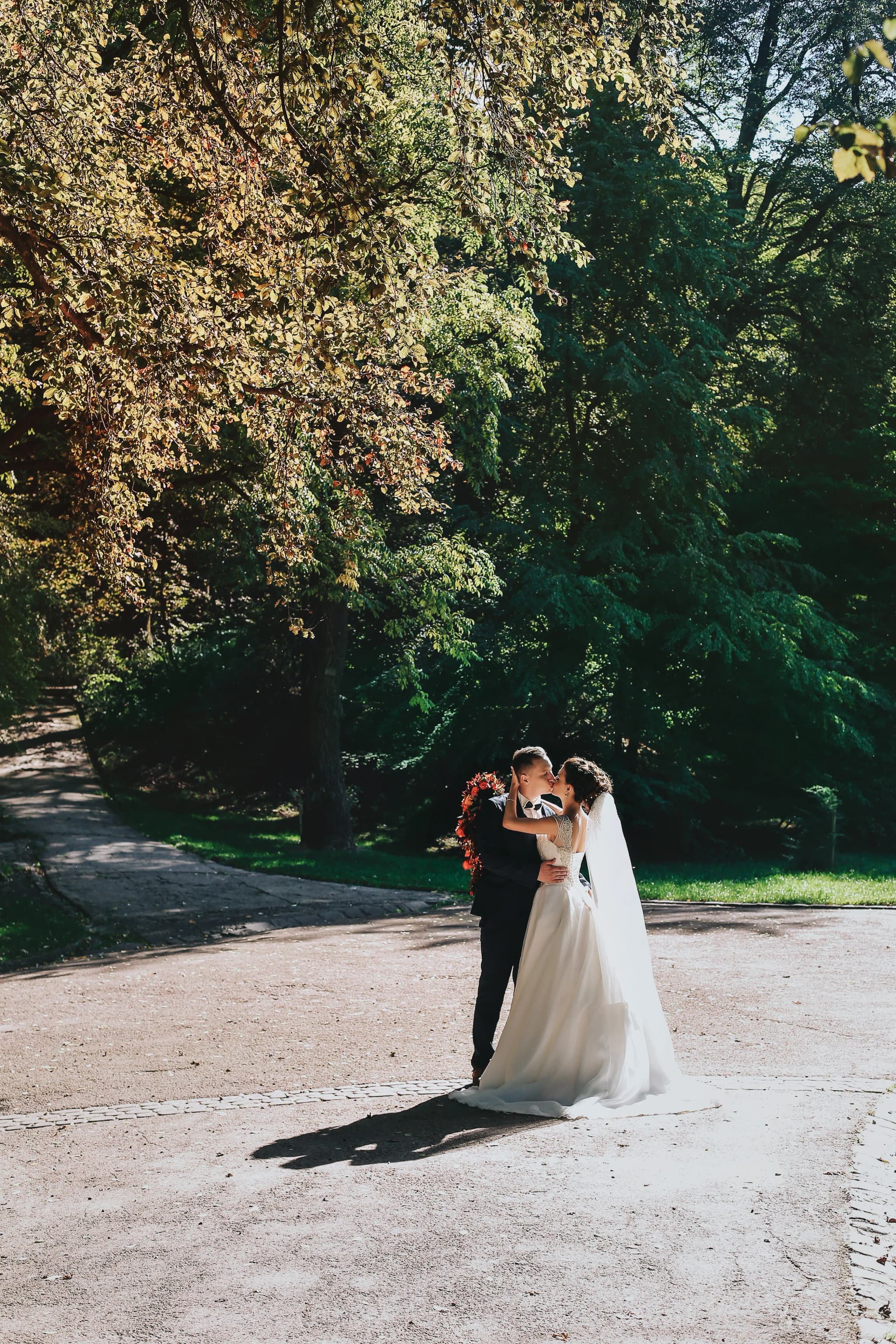
The fifty acres surrounding the castle are not landscaped gardens in the formal sense — they are genuine mixed woodland, mostly oak and beech, with paths winding away from the castle into the trees. Two times of year stand out in particular. In May, the woodland floor beneath the oak canopy carpets over with bluebells, and the dappled light filtering down through new leaves gives portraits taken there a softness that is very hard to recreate artificially. In October, the same woodland turns gold and copper, and the combination of autumn colour against the pink-red sandstone of the castle walls is one of the most striking backdrops I photograph anywhere in Cheshire.
Away from the seasonal highlights, the woodland is useful throughout the year simply as a change of register from the castle's interior grandeur. After a ceremony in the Great Hall, moving a couple out into the trees for twenty minutes gives a set of images that feel private, textured, and quiet — a contrast to the formal group shots and the architectural portraits taken closer to the building. I try to build that contrast into every Peckforton wedding gallery, so it does not become a single mood repeated across every frame.
The battlements themselves are worth mentioning separately. From the top of the towers, the view opens out across the flat farmland of the Cheshire Plain, running west toward the Welsh hills and south toward the Wrekin. Late in the afternoon, with the sun low over that landscape, it is one of the few genuinely panoramic backdrops available at any wedding venue in the region, and it works particularly well for portraits of the couple alone, away from the noise of the reception below.
How the Light Changes Through the Day
Because Peckforton sits on high ground with woodland to the east and open plain to the west, the quality of light shifts noticeably as a wedding day progresses. Morning preparation photography, usually done in the castle's bedrooms and dressing rooms, benefits from soft, indirect light through the smaller windows — flattering for close, quiet portraits of getting ready. By midday, when most ceremonies take place, the Great Hall is at its brightest, and this is when the Gothic window light is doing the most work.
The real gift of Peckforton, though, is the late afternoon and early evening. As the sun drops toward the Welsh hills in the west, it lights the castle's western elevation directly, turning the sandstone a deep amber and throwing long shadows from the towers across the lawns. This is the window I try to protect for couple portraits whenever I am planning the timeline with a couple in advance — even twenty minutes taken away from the reception during this light produces some of the strongest images from the entire day.
Planning a wedding at Peckforton Castle
If you have booked Peckforton, or are still deciding, I am always happy to talk through timing and locations around the estate so the day makes the most of the light and the castle's architecture.
Enquire about Peckforton Castle photographyPractical Advice for Couples Planning Their Day
Because Peckforton is used exclusively for weddings and private events — there is no public visitor access — the entire castle and grounds belong to you and your guests for the duration of the booking. That is a significant practical advantage for photography. It means there is no need to work around visitors wandering through the background of a ceremony, no roped-off areas, and no time restrictions on which rooms can be used when. I can move freely between the Great Hall, the state rooms, the towers, and the grounds throughout the day without coordinating around anyone else's schedule but yours.
Most couples marrying at Peckforton also have their wedding party and close family staying on site the night before, which changes the tone of the morning considerably. Rather than everyone arriving separately and rushing to get ready, preparation photography tends to be relaxed and unhurried — breakfast in the dining room, dressing in the castle's bedrooms, and no travel time eating into the morning. If your timeline allows it, I would always recommend building in a little slack for this: the quiet, low-key moments before a wedding often produce photographs that couples come back to as often as the formal portraits.
Weather is worth planning for sensibly rather than anxiously. Peckforton works beautifully in every condition — the Great Hall means a wet day is never a problem for the ceremony itself, and even brief clear spells in the grounds are usually enough for a strong set of outdoor portraits. I keep a flexible approach to the timeline on the day so that if the weather opens up for twenty minutes in the afternoon, we can take advantage of it rather than sticking rigidly to a plan made weeks in advance.
Peckforton Castle is, without much competition, one of the most complete wedding settings I photograph at — a building with genuine architectural weight, grounds that change character with the seasons, and light that moves through the day in a way that rewards a photographer who knows the estate well. If you are planning a wedding at Peckforton, or considering it alongside other Cheshire venues, get in touch and I would be glad to talk through how the day might come together.


Yana Skakun
Photographer · England
Professional wedding, family and portrait photographer based in England. Passionate about capturing authentic emotions and timeless moments.
About Yana →Peckforton Castle weddingCheshire castle weddingPeckforton Castle wedding photographerGothic castle wedding EnglandCheshire wedding venues castle
Venue Spotlights — Wedding & Portrait Photography in Cambridge & England
Yana Skakun photographs weddings and portrait sessions at venues across Cambridge, East England, London, and beyond. Venue scouting and creative collaboration are part of every booking — every location is worked with rather than against. This guide — Peckforton Castle Wedding Photography: The Sandstone Fairy Tale — is part of the photography journal: practical, experience-based advice drawn from real sessions across England. Whether you arrived searching for peckforton castle wedding or cheshire castle wedding, the same care and attention shapes every session Yana photographs.
Wedding & Portrait Photography sessions are available year-round, with bookings open across Cambridge, Ely, Huntingdon, Peterborough, and further afield — East England, London, the Midlands, and beyond. If you have specific questions about peckforton castle wedding photographer, mention it in your enquiry. Get in touch through the contact form above to check availability and discuss your session. Enquiries are welcomed from anywhere in the UK.
Frequently Asked Questions
What should I look for when visiting a wedding venue?+
Look at the natural light at the time of day your ceremony will take place. Walk outside and consider where portraits will happen — is there an area with shade, a garden, a meaningful backdrop? Ask about vendor restrictions (some venues require you to use their preferred photographer list). Check logistics: where do guests park, where does the bridal party get ready, is there a bridal suite?
How far in advance should you book a wedding venue?+
Popular venues book 18–24 months ahead, especially for peak season (May–September) Saturdays. If you're flexible on date and day of week, 12 months is usually sufficient. Always view a venue before booking — photos online rarely show the full picture of scale, light, or atmosphere.
What questions should you ask a wedding venue?+
Ask: what's included in the venue hire? Can you bring your own caterer? What are the noise restrictions and finishing times? Is there accommodation on site? What's the plan if it rains for outdoor ceremonies? What is the minimum and maximum guest capacity? Are there any vendor restrictions or preferred supplier lists?
How do venue locations affect wedding photography?+
Venue architecture, grounds, and natural light dramatically affect the quality of wedding photography. Beautiful venues with varied backdrops, good natural light in the key rooms, and outdoor space for portraits make the photographer's job much easier. When choosing a venue, visiting at the same time of day as your planned ceremony is helpful for assessing the light.
What makes a venue photogenic for weddings?+
Natural light (large windows, north-facing rooms), textured backgrounds (stone walls, wooden beams, floral arrangements), varied outdoor spaces (gardens, courtyards, woodland, water features), and interesting architectural details. Venues that feel authentic to their setting — a barn that's actually rustic, a manor house with period features — photograph better than generic white box venues.
Continue Reading
Related Articles

Venue Spotlights
Beach and Coastal Portrait Photography in England
13 min read · Read Article
Venue Spotlights
Autumn Photography Locations in Cambridgeshire: The Complete Seasonal Guide
12 min read · Read Article
Venue Spotlights
Cherry Blossom Photography Locations in England: Where & When to Shoot
11 min read · Read Article
Get in Touch
Ready to Book Your Session?
Get in touch to discuss your vision — I'll reply within 24 hours.